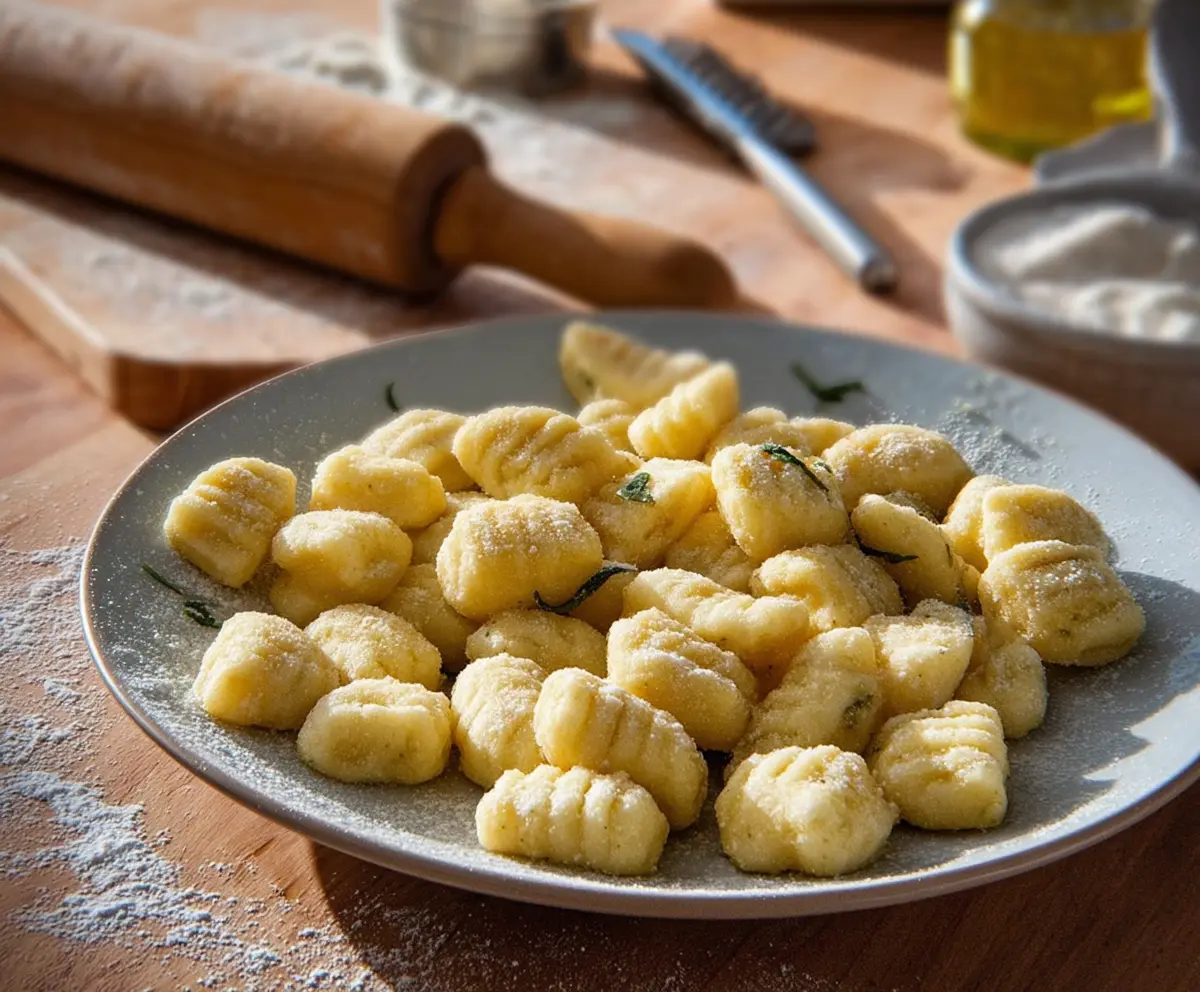
Homemade potato gnocchi are little pillows of joy! Made from simple ingredients like potatoes and flour, they are soft, fluffy, and perfect for soaking up your favorite sauce.
Making gnocchi is a fun activity, and they taste way better than store-bought ones! I love tossing them in butter and sage for a quick meal that feels fancy without much effort. 🍽️
Key Ingredients & Substitutions
Potatoes: I recommend using russet or Yukon gold potatoes for the best texture. They are starchy, which helps make fluffy gnocchi. If you want a healthier option, you could use sweet potatoes, but keep in mind that they’ll have a different flavor.
Flour: All-purpose flour is ideal, but you can use gluten-free flour blends if needed. Just ensure they are designed for baking, as some might absorb moisture differently. Don’t skip dusting your work surface to prevent sticking!
Egg: The egg helps bind the ingredients together. If you’re vegan, you can use a flax egg (1 tablespoon flaxseed meal mixed with 2.5 tablespoons water), but this might change the texture slightly.
Sage and Parmesan: Fresh sage adds great flavor, but feel free to replace it with thyme or basil. For cheese, any grated cheese will work, including Pecorino or even nutritional yeast for a dairy-free option!
How Do I Make the Perfect Gnocchi Dough?
Creating the perfect gnocchi dough is key to ensuring they turn out fluffy. Start with warm but cooled potatoes to avoid a sticky mess. Here’s a simple breakdown:
- After mashing or ricing the potatoes, let them cool slightly to allow moisture to escape.
- Mix in salt and the beaten egg gently to maintain a light texture. Don’t overmix!
- Add flour gradually—start with one cup and adjust. The dough should be smooth but slightly tacky, not dry.
- Using too much flour can make them tough, so go easy!
Remember, it’s better to have a softer dough than one that’s too firm. Happy cooking! 🍽️
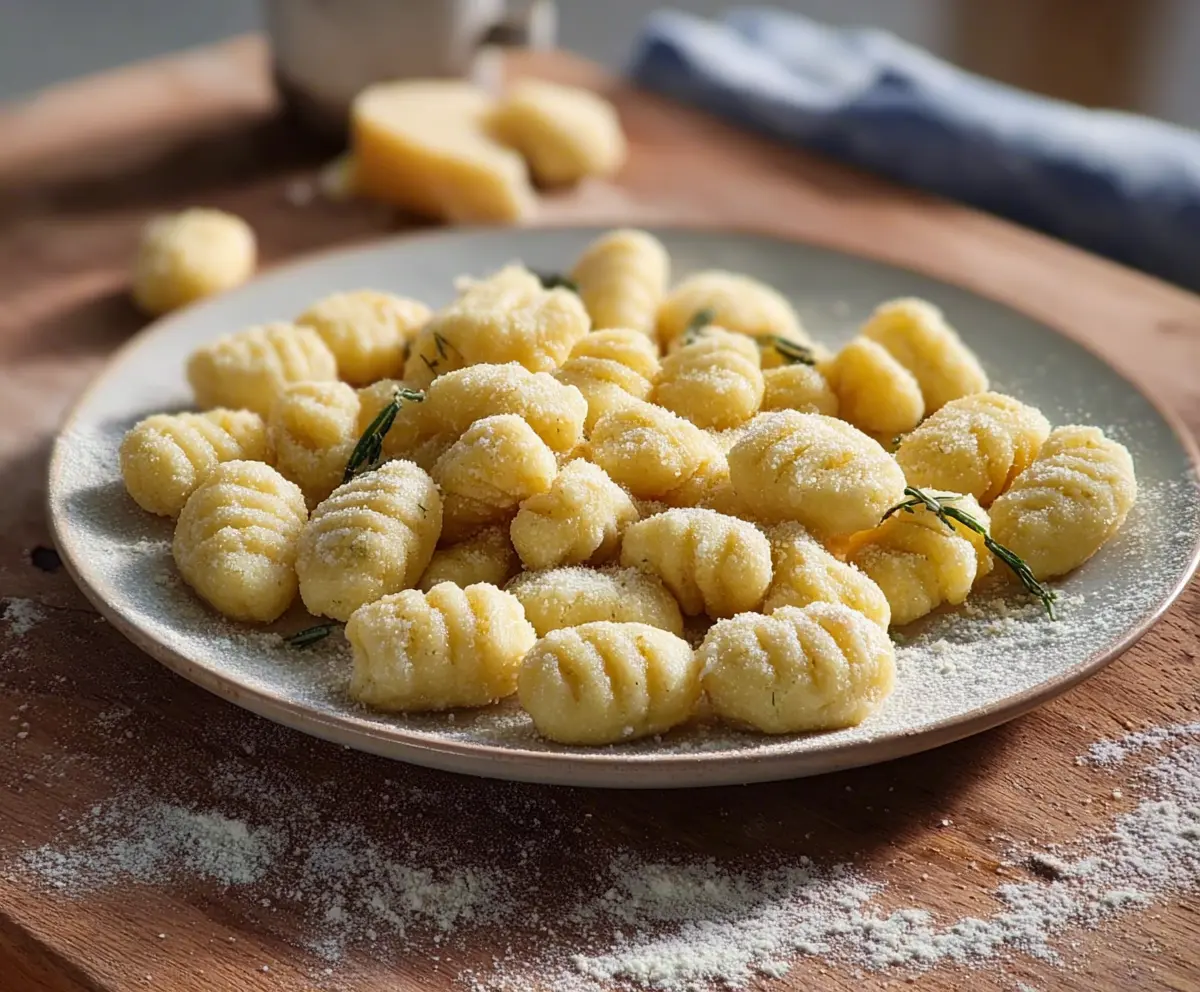
Homemade Potato Gnocchi
Ingredients You’ll Need:
For the Gnocchi:
- 2 pounds (about 900 g) russet potatoes or Yukon gold potatoes
- 1 to 1 ½ cups (125-190 g) all-purpose flour, plus extra for dusting
- 1 large egg
- 1 teaspoon salt
Optional for Serving:
- 1 tablespoon unsalted butter
- Fresh sage leaves
- Grated Parmesan cheese
How Much Time Will You Need?
This recipe takes about 30-40 minutes to prepare the gnocchi and approximately 10 minutes to cook them. So, you’re looking at roughly an hour total from start to finish—perfect for a cozy meal!
Step-by-Step Instructions:
1. Cook the Potatoes:
Start by placing whole potatoes (with their skins on) in a large pot. Fill the pot with cold water, making sure the potatoes are fully submerged. Bring the water to a boil and cook the potatoes until they are tender and can be easily pierced with a fork. This should take about 30 to 40 minutes, depending on their size. Once done, drain the potatoes and let them cool until they can be handled comfortably.
2. Peel and Mash:
While the potatoes are still warm, peel off the skins. To ensure a nice texture, you can either use a potato ricer or mash them very finely using a fork or a masher. Spread the mashed potatoes out on a clean surface to cool slightly. This step is important—working with warm but not hot potatoes will help your dough stay soft and pliable.
3. Make the Dough:
On your clean surface, create a mound with the cooled mashed potatoes. Sprinkle salt over them, then beat the egg lightly and pour it over the potatoes. Next, add 1 cup of flour on top. Using clean hands, gently mix and knead the mixture just until a smooth dough forms. Add more flour as needed to prevent sticking, but keep the dough soft; overworking it can make the gnocchi dense.
4. Shape the Gnocchi:
Divide the dough into 4 equal pieces. Roll each piece into a long rope about ¾ inch (2 cm) thick. Cut the rope into ¾ inch (2 cm) pieces. To give the gnocchi their classic shape, you can roll each piece gently over the tines of a fork or a gnocchi board to create ridges, helping sauce cling better.
5. Cook the Gnocchi:
Bring a large pot of salted water to a boil. Working in batches (to prevent them from sticking together), drop the gnocchi into the boiling water. Once they float to the surface (usually after about 2-3 minutes), let them cook for an additional 30 seconds before using a slotted spoon to scoop them out.
6. Serve:
You can toss the cooked gnocchi immediately with melted butter and fresh sage leaves for flavor, sprinkle with grated Parmesan cheese, or add your favorite sauce—like marinara, pesto, or buttery sage sauce!
7. Optional Finish:
If you’d like a deliciously golden texture, melt 1 tablespoon of butter in a sauté pan over medium heat. Add fresh sage leaves and cook until they release their fragrant aroma. Then add the drained gnocchi and sauté gently until the gnocchi are slightly golden on the outside.
8. Enjoy:
Serve the gnocchi warm and enjoy your homemade Italian delight! These tender, pillowy dumplings are sure to impress.
This recipe yields a comforting, satisfying dish that’s perfect for a family dinner or a treat for yourself. Buon Appetito!
Can I Use Different Types of Potatoes?
Yes, while russet and Yukon gold potatoes are best for texture, you can experiment with other varieties. Just keep in mind that different potatoes have varying starch contents, which can affect the texture of the gnocchi.
How Can I Thicken the Dough?
If your gnocchi dough is too sticky, gradually add more flour, a tablespoon at a time, until you reach a workable consistency. Be careful not to add too much flour, as this can make the gnocchi dense. The goal is a soft dough that holds together without sticking excessively.
Can I Make Gnocchi in Advance?
Absolutely! You can prepare gnocchi up to a day ahead. Simply spread them out on a floured baking sheet and refrigerate. When you’re ready to cook, you can drop them directly into boiling water from the fridge—no need to thaw!
What Sauce Pairs Best with Gnocchi?
Gnocchi pairs well with a variety of sauces! Classic options include marinara, pesto, and brown butter with sage. For a creamier dish, a Alfredo or a garlic cream sauce works beautifully too. Enjoy experimenting!