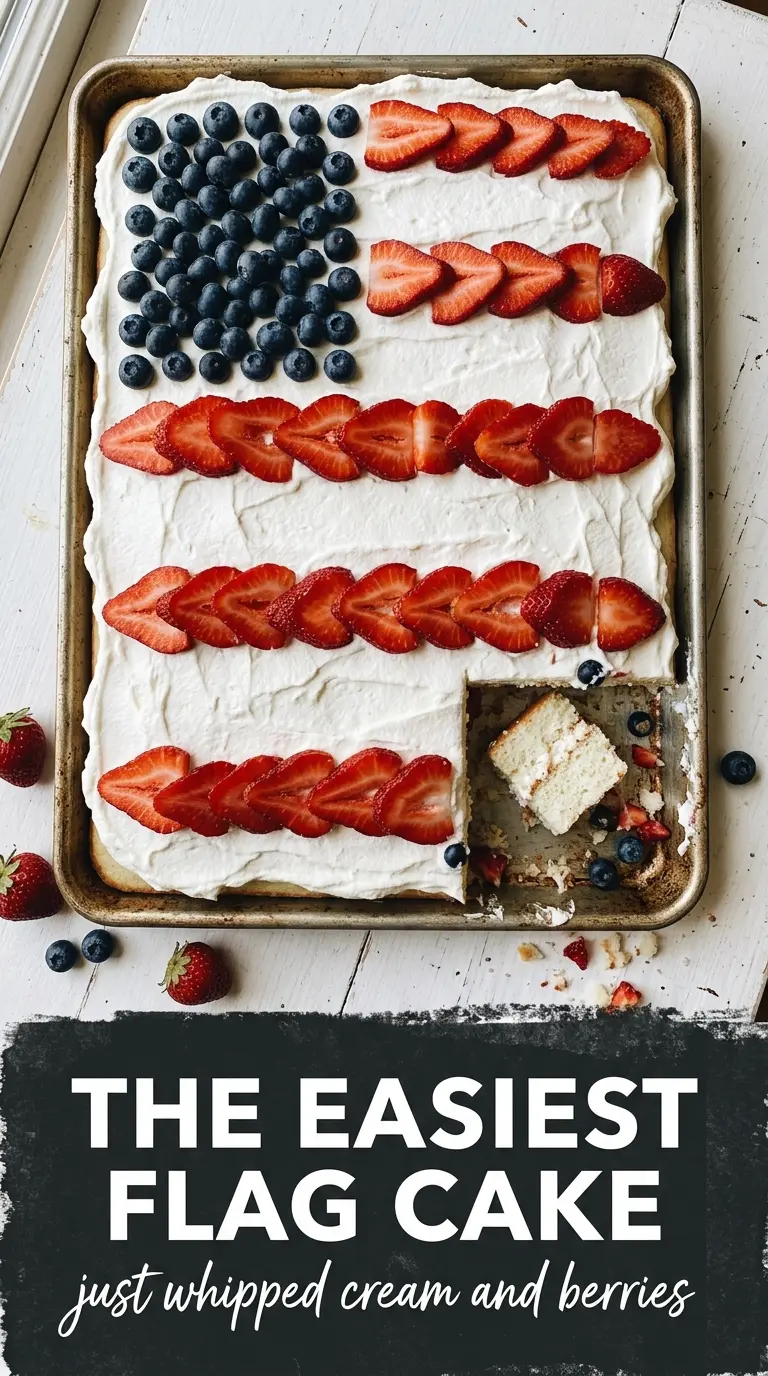
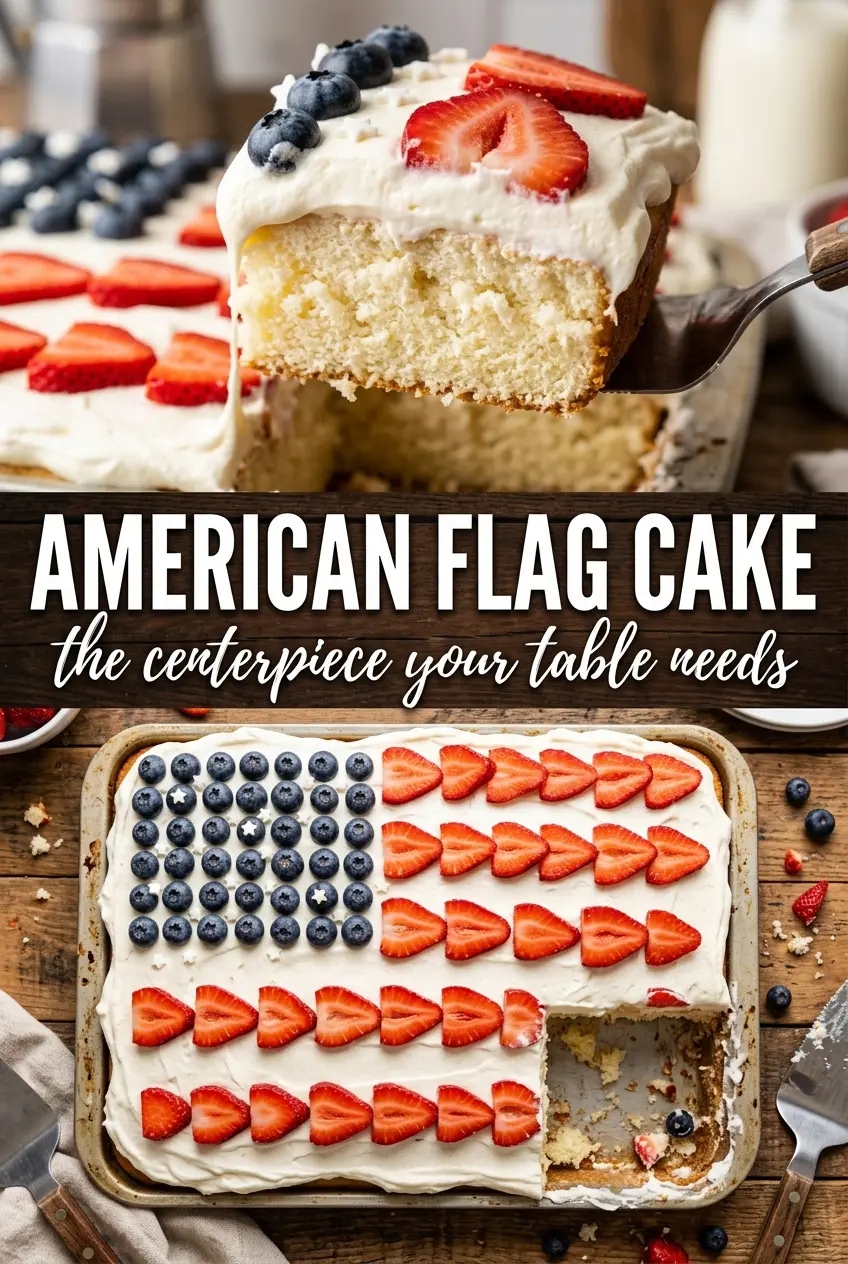
American Flag Cake gets attention fast because it looks festive before anyone even takes a bite, but the part that keeps it on the table is the combination of soft white cake, thick vanilla buttercream, and fresh fruit that actually tastes bright instead of cloying. The blueberry corner stays neat, the strawberry stripes bring clean color and a little tartness, and the white sections keep the whole thing from feeling heavy. It’s the kind of dessert that reads as celebration the second it comes out of the fridge.
The best version of this cake depends on two simple things: a fully cooled base and a frosting that can hold its shape without tearing the cake underneath. A warm cake will slide around under the fruit and soften the buttercream into a mess, so patience matters here. I also prefer slicing the strawberries lengthwise so the stripes look tidy and the fruit lies flat instead of rolling around.
Below, I’m walking through the little details that make the flag design stay crisp, plus the easiest way to switch out the white stripes if you don’t want to use banana slices. The decorating part looks elaborate, but once the cake is cold and the fruit is prepped, it comes together in a very straightforward way.
The frosting held its shape beautifully, and the blueberries stayed put instead of sliding around when I sliced it. I made it the night before, and the cake still looked clean and sharp the next day.
Save this American Flag Cake for the holidays when you want a sheet cake that slices cleanly and still looks sharp after decorating.
The Small Mistake That Makes the Flag Slide Around
Most flag cakes get messy for one reason: the base is still warm when the frosting goes on. Even a little heat softens the buttercream, and once the fruit is arranged on top, that warmth turns into slipping stripes and a blue corner that drifts out of place. Let the cake cool all the way through, not just until the top feels room temperature.
The other thing that matters is the frosting thickness. A thin layer won’t anchor the fruit. You want enough buttercream to act like glue, but not so much that the surface turns bumpy and the stripes lose their shape. A smooth, even coat gives the fruit something stable to sit on and makes the finished cake look clean from the first slice to the last.
What the Buttercream, Berries, and Cake Mix Are Each Doing Here
- White cake mix — The boxed mix keeps the cake light, even, and sturdy enough to carry a heavy layer of frosting and fruit. If you want the easiest route, this is the place to lean on convenience; homemade white cake works too, but it doesn’t buy you much extra for the decorating effort.
- Butter — Softened unsalted butter is what gives the frosting body and that classic bakery-style spread. Salted butter works in a pinch, but the buttercream can taste a little flat or too salty depending on the brand, so unsalted gives you more control.
- Powdered sugar — This is what makes the frosting hold its shape. If you cut it too far, the buttercream turns loose and won’t support the strawberries. Add it gradually so the mixture stays smooth instead of clouding the kitchen in sugar dust and ending up grainy.
- Heavy cream — Cream loosens the frosting just enough to spread across a large sheet cake without tearing the surface. Add it slowly, because you can always thin frosting a little more, but you can’t take liquid back out once it’s in.
- Fresh strawberries and blueberries — Fresh fruit matters here because frozen fruit releases too much moisture and softens the frosting almost immediately. Slice the strawberries lengthwise so they lie flat and make tidy stripes instead of rounded little bumps.
- Banana slices or extra frosting — Banana gives the white stripes a soft, old-school flag cake look, but it browns after a while. If the cake needs to sit for a few hours, piping extra white frosting between the strawberry rows keeps the design cleaner and holds up better.
Building the Flag Design Without Damaging the Cake
Baking the Base Evenly
Bake the cake in a 12×18 sheet pan if you have one, or use two 9×13 pans joined visually when you decorate. The goal is a level surface, because a domed cake makes the flag pattern look crooked and gives the fruit places to slide. Cool the cake completely before you even think about frosting. If it’s still warm in the middle, the top will feel fine for a minute and then collapse under the weight of the buttercream.
Whipping the Frosting to a Spreadable Consistency
Beat the butter until it turns pale and fluffy, then add the powdered sugar a little at a time so the frosting stays smooth. Once the vanilla goes in, use the cream to adjust the texture until it spreads in thick swoops and holds soft ridges. If it looks greasy or loose, it needs more sugar, not more beating. Overmixing doesn’t help once the frosting is already smooth.
Frosting the Surface Smoothly
Spread the buttercream over the entire top in one even layer, working gently so you don’t pull crumbs into the frosting. A slightly thick coat is better than a thin one here because it gives you a stable base for the fruit. Try to flatten the top as much as possible before decorating; every ridge shows up once the berries go on.
Placing the Fruit in Clean Rows
Start with the blueberry rectangle in the upper left corner and pack the berries close together so the canton looks solid from above. Then line up the strawberry slices in straight rows across the rest of the cake, keeping the fruit flat and overlapping just enough to hide frosting beneath. If the rows wander, stop and straighten them before moving on. The design looks polished when the stripes are uniform, not when they’re perfect in theory but wobbly in practice.
Ways to Adjust the Cake for Different Needs
Banana White Stripes
Use thin banana slices for the white stripes if you want the classic look and don’t mind serving the cake soon after assembling it. Bananas add a soft sweetness, but they brown as they sit, so this version works best when the cake goes from fridge to table the same day.
Frosting-Only White Stripes
Pipe or spread extra white buttercream between the strawberry rows if you need a cleaner finish or want the cake to hold longer. This version skips the fruit browning issue and gives the surface a more polished, bakery-style appearance.
Gluten-Free Version
Use a gluten-free white cake mix and keep the rest of the method the same. The decorating technique doesn’t change, but gluten-free cakes can be a little more delicate, so cool them completely before frosting and lift slices with a wide spatula.
Make-Ahead Assembly
Bake and frost the cake a day ahead, then add the fruit closer to serving if you want the stripes to stay crisp. The buttercream acts as a barrier, but berries still release a little moisture over time, so the design looks freshest when the fruit goes on the same day.
Storage and Reheating
- Refrigerator: Store covered for up to 3 days. The fruit stays freshest on day one and two, and the cake will soften slightly as it chills.
- Freezer: Freeze the unfrosted cake layers for up to 2 months. I don’t recommend freezing the finished decorated cake because the fruit turns watery and the frosting loses its clean look.
- Reheating: This cake is served cold or at cool room temperature, not reheated. If it’s been refrigerated, let it sit out for 20 to 30 minutes so the frosting softens before slicing.
Answers to the Questions Worth Asking
American Flag Cake
Ingredients
Equipment
Method
- Heat oven to the temperature listed on the white cake mix boxes, then bake two white cake mixes in a large 12x18 sheet pan or two 9x13 pans joined together. Bake for the time directed on the box until a toothpick comes out clean, then cool completely.
- Beat softened unsalted butter until fluffy, about 2-3 minutes. Scrape the bowl as needed.
- Gradually add powdered sugar, then mix until combined and no dry pockets remain. Beat in vanilla extract.
- Add heavy cream 1 tablespoon at a time and beat until smooth and spreadable. If it’s too thick, add up to 2 more tablespoons; if too thin, beat in a little more powdered sugar.
- Frost the entire top of the cooled sheet cake with a thick, even layer of white buttercream. Use an offset spatula for a flat surface.
- In the upper left corner, arrange fresh blueberries in a dense rectangle to form the canton. Press gently so the fruit sits level on the frosting.
- Create red stripes by arranging sliced fresh strawberries flat across the length of the cake. Place rows so the slices are uniform from one side to the other.
- Fill the white stripes by piping extra frosting in rows between the strawberry rows, or place thin banana slices if using fruit stripes. Make each white stripe consistent in width.
- Refrigerate until ready to serve for at least 1 hour, uncovered if your frosting is firm enough to avoid surface softening. This helps the fruit set and the slices hold their shape.
- Slice into squares and serve chilled, keeping the top fruit pattern visible. Store any leftovers in the refrigerator until used.