An American flag charcuterie board makes the table feel finished before anyone even grabs a cracker. The best versions look bold from across the room, but they also hold together as people start serving themselves, which is where a lot of patriotic boards fall apart. This one leans into clean lines, tight packing, and ingredients that keep their shape, so the flag still reads clearly after the first round of guests head in.
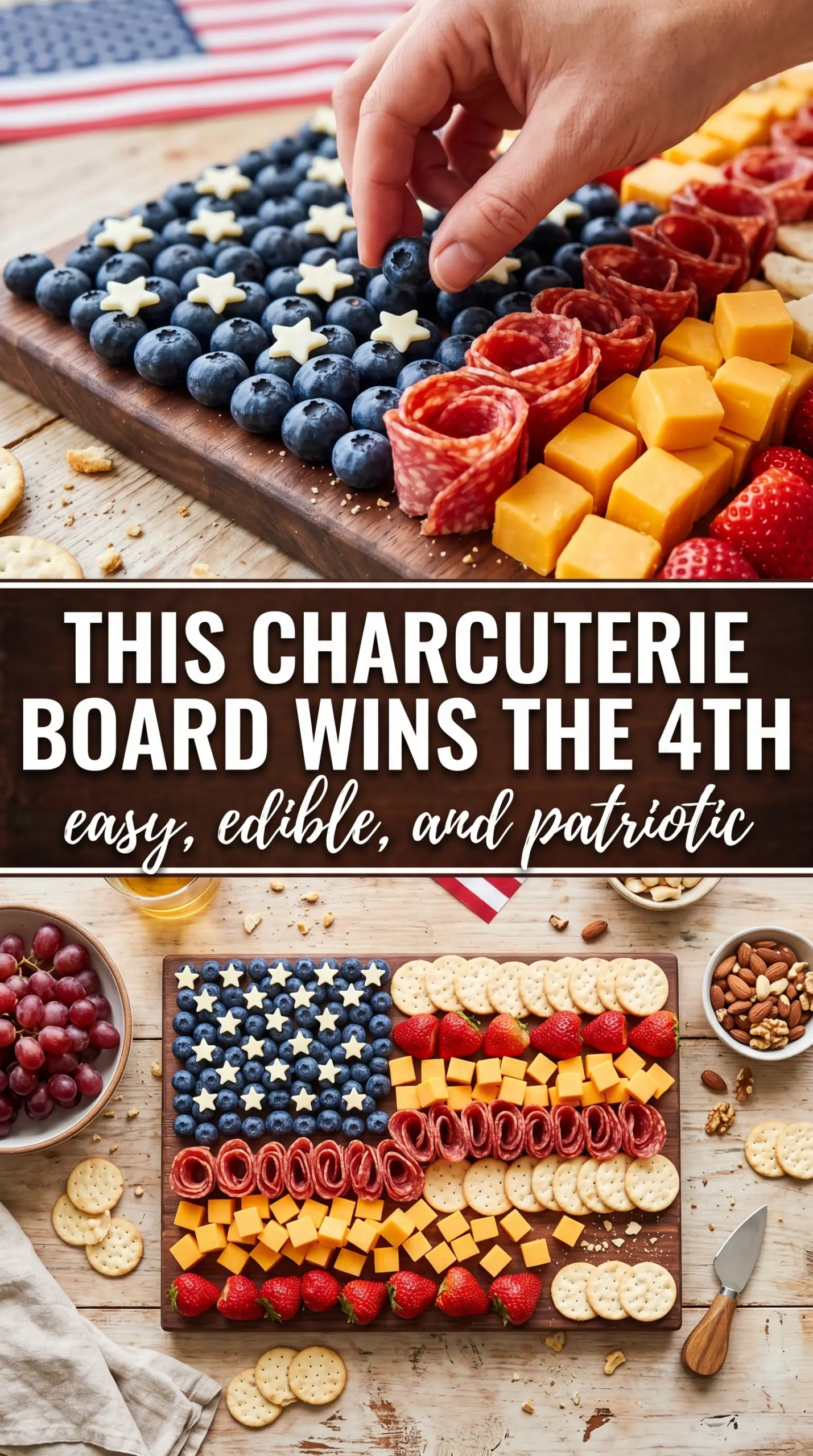
The trick is treating the board like a pattern, not a pile. Blueberries need to be packed tightly in the canton so the corner looks solid, while the cheeses and cured meats are layered in rows that run all the way across the board. Rolling the salami instead of laying it flat gives the “stars” enough height to stand out, and using both strawberries and prosciutto helps the red stripes look full instead of patchy.
Below, I’ve included the small details that make the layout easier to build, plus a few swaps and make-ahead tips that help when you’re assembling this for a crowd.
I made this for our block party and the flag stayed neat even after people started snacking. The blueberries packed into the corner looked perfect, and the rolled salami made the top left section stand out right away.
Save this American flag charcuterie board for a patriotic appetizer that looks dramatic and comes together without cooking.
The Part Most Flag Boards Get Wrong: Keeping the Stripes Clean
The difference between a crisp flag board and a crowded snack tray comes down to boundaries. Each stripe needs its own lane, and the ingredients need enough density to read as a solid band from a few feet away. If the rows are loose, the whole design starts looking like a mixed board instead of a flag.
That’s why the blueberries go in first. They establish the canton shape before anything else can drift into that corner. After that, the meats and cheeses should be placed in long, deliberate rows with just enough overlap to hide the board underneath. The goal isn’t symmetry for its own sake. It’s visual clarity, which matters a lot when you’re building something meant to be recognized at a glance.
- Blueberries — These create the blue canton, and they need to be packed tightly so the corner reads as a block of color instead of scattered fruit. Smaller berries work better than oversized ones because they fill gaps cleanly.
- Rolled salami — Rolling the slices gives the “stars” texture and height. Flat salami won’t give you the same raised look, and the corner loses some of its flag-like character.
- White cheddar or provolone — This is the cleanest way to get bright white stripes that hold their shape. Mozzarella balls work too, but slice them only if you want the stripe to look more structured than rustic.
- Prosciutto and strawberries — These help reinforce the red stripes when the pepperoni alone looks too sparse. Prosciutto folds add volume, while strawberries bring a fresher sweetness that balances the cured meats.
What Each Ingredient Is Actually Doing in This Recipe
- Primary ingredient (the star) — Quality matters most. Choose the best you can find.
- Cooking medium (oil, butter, or broth) — This carries flavors and prevents dryness.
- Seasonings (salt, pepper, spices, herbs) — Layer flavors so nothing overpowers. Build depth gradually.
- Aromatics (garlic, onion, herbs) — Cook with fat to bloom flavors. Become the foundation.
- Supporting ingredients — Complement the main ingredient without overpowering it.
- Sauce or liquid (if applicable) — Brings flavors together. Balance richness with acid.
- Acid (lemon, vinegar, wine, or other) — Brightens and prevents flat-tasting results.
- Final finish (garnish, glaze, or sauce) — Prevents one-dimensional taste and adds visual appeal.
How to Build the Flag So It Stays Sharp on the Table
Lay Down the Canton First
Start with the upper left corner and mentally map out a rectangle before placing anything else. Fill it with blueberries, pressing them close enough that the board doesn’t show through. Tuck the rolled salami into the center of that section so it looks intentional rather than randomly dropped in. If the canton is too small, the rest of the board will feel off, so give it generous space.
Run the Red and White Stripes Straight Across
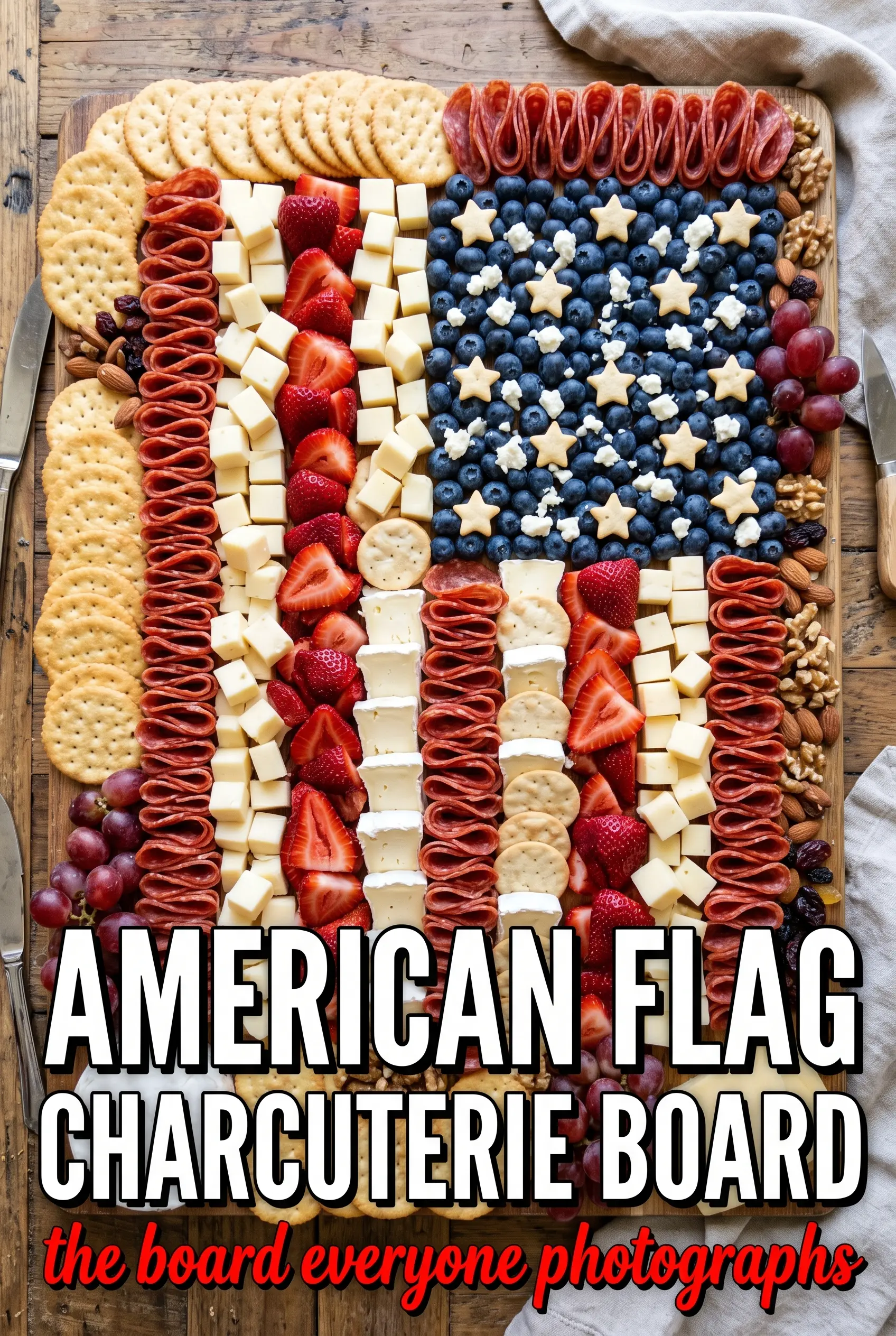
Once the corner is set, build the stripes from the top right across the full board. Alternate pepperoni, white cheese, and red accents like prosciutto or strawberries so each band stays distinct. Keep the rows tight and even; gaps make the flag look unfinished, and thin rows disappear fast once people start serving. If one stripe looks weak, add more of the same ingredient instead of mixing in something new.
Finish With the Edges and the Crackers
Use rosemary sprigs at the corners and along the outer edges to frame the board and give it a polished finish. Then arrange crackers around the perimeter instead of scattering them through the flag itself. That keeps the pattern intact and gives guests an easy place to start. The crackers are also the first thing to slide around if you put them under the meat or fruit, so leave them on the outside where they belong.
How to Adapt This for a Bigger Crowd, a Simpler Board, or a Different Diet
Gluten-Free Flag Board
The board itself is naturally gluten-free, so the only thing to watch is the crackers. Use certified gluten-free crackers or crisp vegetable dippers on the outside edge. Keep the ingredients separated enough that the board still reads clearly, since crowded gluten-free crackers can make the layout look messy fast.
Make It More Kid-Friendly
Swap some of the prosciutto for extra strawberries and add more white cheese so the board leans a little sweeter and milder. Kids usually go for the fruit and cheese first, and this version still keeps the flag shape without depending so heavily on cured meat.
Stretch It for a Larger Party
Use a larger board and increase the ingredients proportionally, especially the blueberries and sliced cheese, which are what make the flag read from a distance. Don’t just spread the same amount over a bigger surface — that makes the design look thin and unfinished. Add extra crackers around the perimeter if you’re serving more than a dozen people.
Storage and Holding Ahead
- Refrigerator: Assemble the board up to 4 hours ahead, then cover and refrigerate. The berries can soften a little, but the structure holds if you keep the crackers separate until serving.
- Freezer: This doesn’t freeze well. The fruit and cheese texture changes too much, and the board is best built fresh.
- Reheating: Not needed. If the board has been chilled, let it sit out 15 to 20 minutes before serving so the cheese tastes fuller and the cured meats loosen up a bit.
Answers to the Questions Worth Asking
American Flag Charcuterie Board
Ingredients
Equipment
Method
- Set a large rectangular wooden board or serving tray and mentally divide the upper left into a canton rectangle.
- Pack the blueberries tightly into the canton to create a solid blue base.
- Tuck the rolled salami pieces into the center of the blue canton to resemble stars.
- Starting from the top right, layer the pepperoni slices in a clean row across the full width of the board to form a red stripe.
- Create the white stripes by adding rows of sliced white cheddar or provolone, alternating with rows of mozzarella balls and continuing down the full board.
- Add prosciutto folds or strawberry halves along the red stripe areas to reinforce the red sections and fill any gaps.
- Tuck rosemary sprigs at the corners and edges, then arrange crackers around the perimeter and serve.