American russet potato salad has that old-school, picnic-table comfort people reach for first: creamy, tangy, sturdy enough to hold its shape, and full of the soft crunch from celery and onion. Russet potatoes give it a classic mashed-on-the-edge tenderness that soaks up the dressing without turning slick or waxy, which is a big part of why this version tastes like the potato salad many of us grew up with.
The trick is in the potato treatment. Russets need to be cooked until just tender, then cooled completely before they meet the dressing, or they’ll break down into a gluey mash when you fold everything together. The dressing also leans on both mayonnaise and yellow mustard, which keeps the salad creamy but gives it the sharp, familiar bite that makes a second scoop feel inevitable.
Below, I’m walking through the one part that matters most for texture, plus a few easy swaps and storage notes so you can make it ahead without losing that classic creamy finish.
The potatoes held their shape after chilling, and the dressing soaked in instead of pooling at the bottom. I loved the balance from the mustard and relish.
Save this classic russet potato salad for picnics, cookouts, and any time you want that creamy mustard-relish dressing with a true traditional texture.
The Difference Between Creamy and Gluey Starts with the Potatoes
Russet potatoes can make a great potato salad, but they can also fall apart fast if you rush them. Their starch is what gives this salad its soft, classic body, but that same starch turns gummy if the cubes get overworked or tossed while they’re still hot and fragile. The goal is tender chunks that hold together just enough to catch the dressing, not a bowl of mashed potatoes with add-ins.
The other mistake happens after draining. If the potatoes sit steamy in a colander, they keep cooking and the edges start to collapse. Spread them out and let them cool completely before mixing. That cooling time matters because the dressing clings better to cool potatoes, and the salad keeps its shape after a long chill in the fridge.
What Each Ingredient Is Actually Doing in This Salad
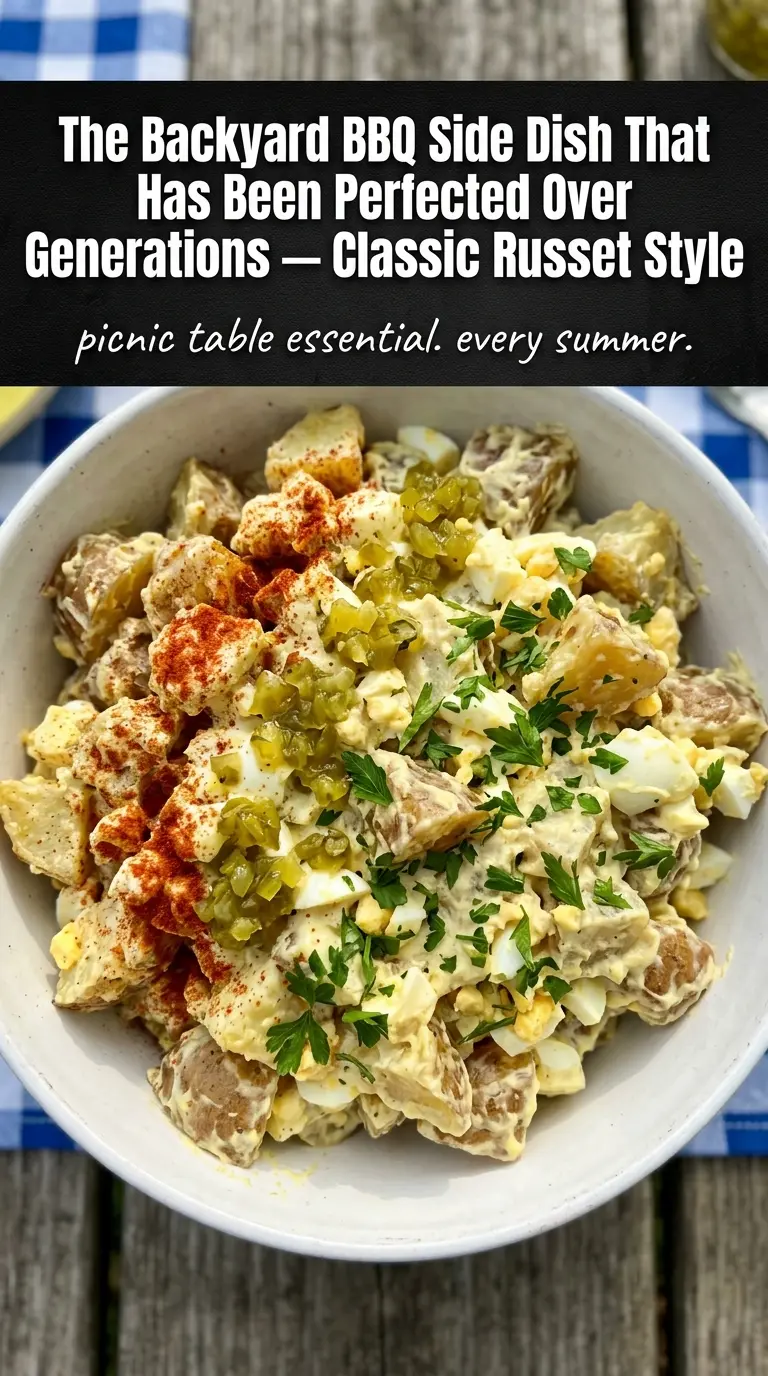
- Russet potatoes — These are the backbone of the salad. They cook up fluffy and absorb the dressing well, which gives you that traditional creamy texture. Waxy potatoes stay firmer, but they don’t soak up flavor the same way.
- Mayonnaise — This is what makes the salad creamy and rich. Use a good full-fat mayo here; light versions can taste thin and don’t coat the potatoes as well. If you need a substitute, sour cream can replace part of it, but the salad will be tangier and less stable.
- Yellow mustard and white vinegar — Together they keep the dressing from tasting flat. Mustard brings that familiar deli-style tang, and vinegar sharpens everything just enough to cut through the mayo. Don’t skip both, or the salad will taste heavy.
- Sweet pickle relish — This adds sweetness, crunch, and a little briny pickle bite in one spoonful. Finely chopped sweet pickles can work if that’s what you have, but relish distributes more evenly through the salad.
- Hard-boiled eggs — They make the salad richer and give it that classic American picnic feel. Chop them small so they disappear into the mix instead of turning the salad chunky in an awkward way.
- Celery and onion — These are the texture and backbone of contrast. Celery stays crisp, and the onion gives a sharp bite that keeps the salad from tasting one-note. Dice the onion finely so it softens into the dressing instead of dominating every forkful.
Building the Salad So It Stays Creamy After Chilling
Cooking the Potatoes to the Right Point
Boil the peeled, cubed potatoes in salted water until they’re just tender when pierced with a fork. They should break cleanly, not crumble. If they’re cooked past that point, they’ll absorb too much water and turn the final salad soft and pasty. Drain them well, then spread them out so steam can escape before you mix anything in.
Mixing the Dressing Separately
Stir the mayonnaise, mustard, vinegar, sugar, salt, and pepper together before it goes near the potatoes. That keeps the seasoning even and prevents pockets of straight mayo or mustard from showing up in the bowl. The dressing should taste a little stronger than you want the final salad to taste, because the potatoes will mellow it as they chill.
Folding Without Crushing the Texture
Add the potatoes, eggs, celery, onion, and relish to a large bowl, then pour the dressing over the top. Fold gently with a spatula instead of stirring hard. If you beat it up, the russets will break down and the salad will get dense. Stop as soon as everything is coated and the salad still has some visible texture.
Chilling Before Serving
Cover and refrigerate for at least 2 hours. That rest time gives the potatoes a chance to absorb the dressing and lets the onion soften just enough. If you serve it right away, the flavors will taste a little separated and the dressing can seem loose. Right before serving, sprinkle with paprika for that traditional finish.
How to Adapt This for Different Tables and Different Fridges
Dairy-Free Version That Still Tastes Creamy
This recipe is already dairy-free as written, which makes it easy to bring to potlucks and cookouts. Just check your mayonnaise label, since some brands use ingredients or processing steps you may want to avoid. The texture stays exactly the same.
Make It a Little Tangier
Add an extra teaspoon of vinegar or a touch more mustard if you like a sharper finish. That gives the salad more bite and helps balance the richness of the mayo. Don’t add too much at once, because russets can take on a lot of dressing and the flavor can swing from balanced to harsh fast.
How to Make It Ahead for a Crowd
This salad is better after it rests, so making it a day ahead works well. If it thickens in the fridge, stir in a spoonful or two of mayonnaise before serving to loosen it back up. The potatoes will have absorbed some of the dressing, which is exactly why the flavor tastes deeper the next day.
Gluten-Free by Default
This salad is naturally gluten-free as long as your mustard, relish, and mayonnaise are labeled gluten-free. That’s the only place cross-contact usually sneaks in. The rest of the ingredients are straightforward and stable.
Storage and Reheating
- Refrigerator: Store covered for up to 4 days. The potatoes will soften a bit more as they sit, but the flavor gets better by day two.
- Freezer: Don’t freeze this salad. Mayo tends to separate after thawing, and the potatoes turn grainy and watery.
- Reheating: This salad is meant to be served cold. If it has tightened up in the fridge, let it sit at room temperature for 15 to 20 minutes and stir gently before serving instead of warming it.
Questions I Get Asked About This Recipe
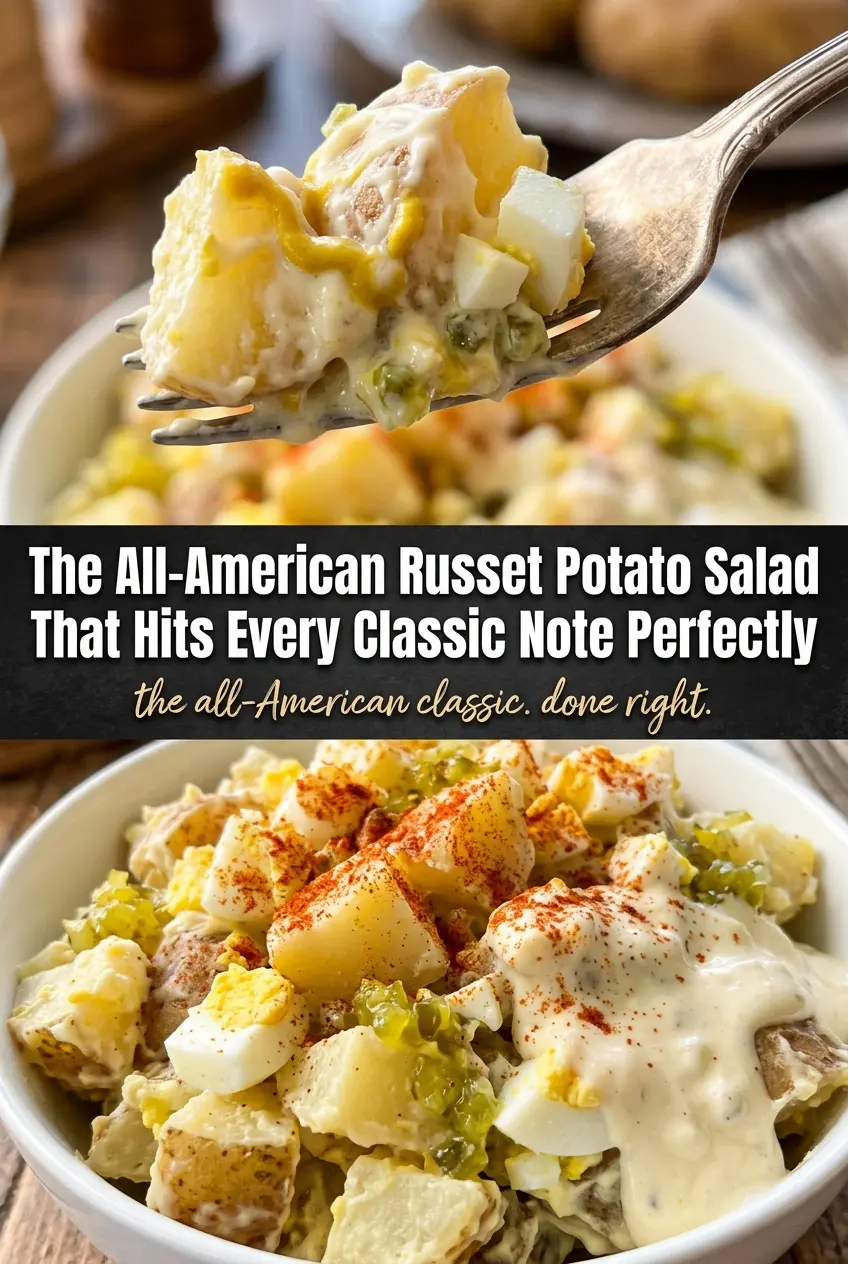
American Russet Potato Salad
Ingredients
Equipment
Method
- Bring a large pot of water to a boil, then cook the russet potatoes at 212°F for 12-15 minutes until tender when pierced. Drain and cool completely so the salad stays creamy instead of gummy.
- In a large mixing bowl, combine the cooled russet potatoes, chopped hard-boiled eggs, diced celery, finely diced onion, and sweet pickle relish. Stir just until evenly distributed with no dry pockets of vegetables.
- In a separate bowl, whisk together mayonnaise, yellow mustard, white vinegar, sugar, salt, and pepper until smooth and cohesive. Taste and adjust with more salt and pepper if needed.
- Pour the dressing over the potato mixture and fold gently to coat every piece. Fold slowly to keep potato cubes intact.
- Cover and refrigerate for at least 2 hours to let flavors meld and the texture firm up. The surface should look creamy and thick when ready to serve.
- Sprinkle paprika over the top just before serving for a traditional finishing color. Serve chilled with a scoop that holds its shape.