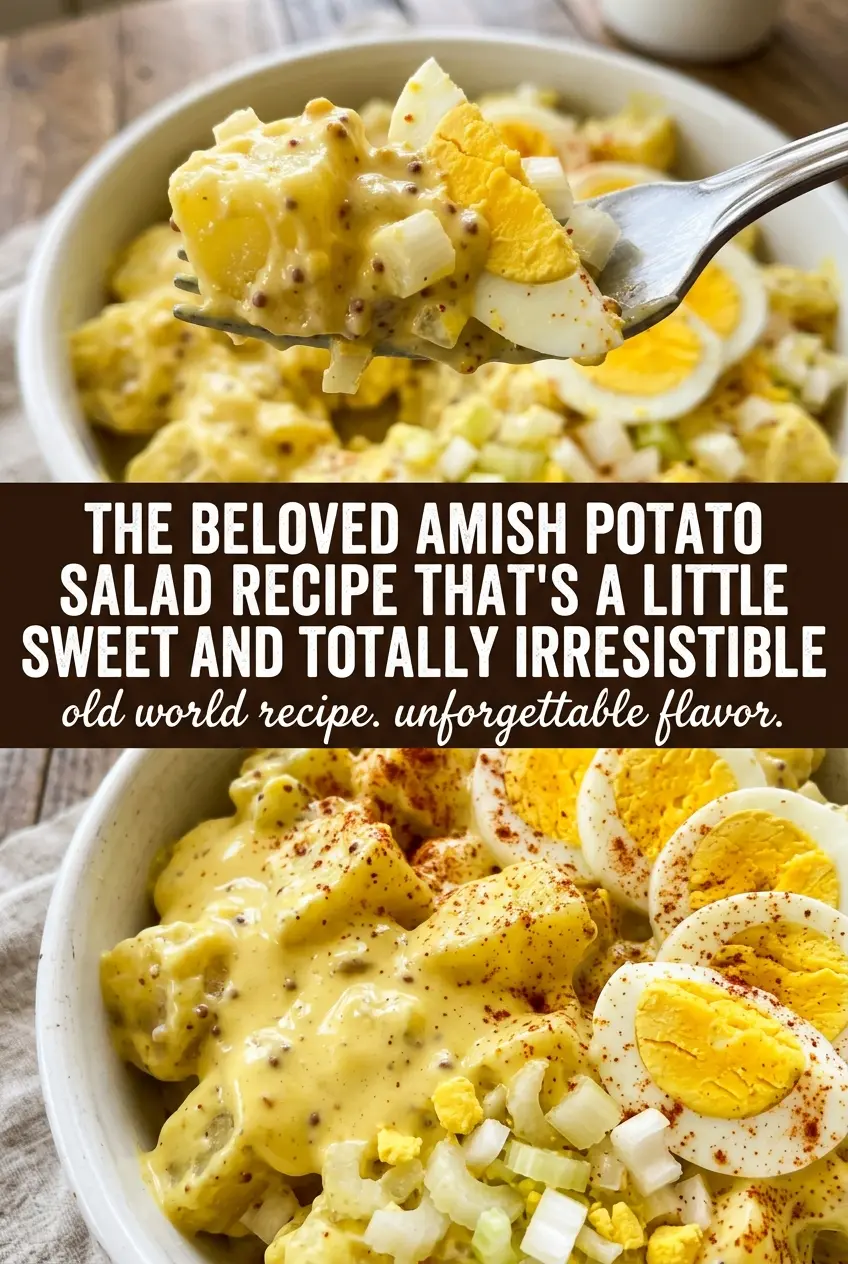
Amish potato salad lands in that sweet spot between creamy and tangy, with tender potatoes, chopped eggs, and just enough crunch from celery and onion to keep every bite lively. The dressing clings to the potatoes instead of sliding off, and after a few hours in the fridge it settles into that familiar church-potluck texture that tastes even better cold.
What makes this version work is the balance. The sugar softens the sharpness of the mustard and vinegar, while the mayonnaise gives the salad its rich base. If the potatoes are drained well and cooled before the dressing goes on, the salad stays thick instead of turning watery. That little bit of patience pays off every time.
Below, I’ve included the small details that matter most, from how soft to cook the potatoes to the best way to fold everything together without breaking them apart. There’s also a note on chilling time, because this salad needs that rest to taste like itself.
The dressing coated every piece without getting runny, and after chilling overnight the potatoes had that classic creamy texture I was hoping for. The eggs and celery gave it just enough bite.
Save this Amish potato salad for the next potluck when you want a creamy, sweet-tangy side that holds up well in the fridge.
The Part Most Potato Salads Get Wrong: A Watery Dressing
Potato salad falls apart fast when the potatoes are still hot enough to steam under the dressing. That trapped moisture thins the mayonnaise and turns the whole bowl loose. Here, the potatoes need to cool down first, and the dressing needs to be mixed smooth before it ever touches the bowl. That gives you a salad that stays creamy instead of puddling at the bottom.
The other thing that matters is how gently you fold. Cubed potatoes are tender once boiled, and a heavy hand will mash them into paste. Leave a few intact edges and the salad keeps its shape while still eating soft and spoonable.
What Each Ingredient Is Doing in This Salad

- Potatoes — Starchy potatoes soak up the dressing and give the salad body. Peel them for the classic texture; waxier potatoes hold their shape more firmly and won’t turn as soft or fluffy.
- Mayonnaise — This is the creamy base that carries the dressing. Use a good full-fat mayo here, because light versions can taste thin and separate more easily once the salad chills.
- Sugar — It’s not there to make the salad candy-sweet. It rounds out the mustard and vinegar so the dressing tastes balanced instead of sharp.
- Yellow mustard and white vinegar — These give the dressing its tang and keep the salad from tasting flat. Dijon can work in a pinch, but it changes the flavor and loses that familiar Amish-style color and bite.
- Hard-boiled eggs — They add richness and make the salad feel fuller. Chop them after they’re cooled so the yolks stay tender instead of turning pasty.
- Celery and onion — These are the crunch and sharpness that keep each bite interesting. Dice them fine so they blend into the salad instead of taking over.
Building the Salad So It Holds Together
Cooking the Potatoes to the Right Tenderness
Start the potatoes in cold water and bring them up together so the outside doesn’t collapse before the center softens. Cook them until a knife slides in with little resistance, but stop before they fall apart on the edge of the pot. If they’re overcooked, the salad turns mushy when you fold in the dressing.
Mixing the Dressing Until It Tastes Balanced
Stir the mayonnaise, sugar, mustard, vinegar, salt, and pepper until completely smooth before it touches the potatoes. The dressing should taste a little stronger than you want the finished salad to taste, because the potatoes will mellow it as they chill. If it tastes flat now, it’ll taste flat later.
Folding Everything Without Crushing the Potatoes
Add the dressing over the potato mixture and fold from the bottom up with a spatula. Stop as soon as the potatoes are coated and the eggs are distributed. A few broken pieces are fine; a bowl of mashed potato salad is not. Chill it for at least 3 hours so the dressing settles into the potatoes and the flavor evens out.
How to Adapt It When You Need a Different Version
Dairy-Free as Written
This recipe already skips dairy, so you don’t need to change a thing for that. Just keep an eye on the mayonnaise label if you’re serving someone with a strict allergy, since some brands use different processing or additives.
Less Sweet, More Tangy
Cut the sugar back to 1/4 cup if you prefer a sharper dressing. The salad will taste more mustard-forward and less classic-potluck sweet, which works well if you’re serving it next to rich barbecue or fried food.
Extra Crunch for a Bigger Crowd
Add a third celery stalk or a little more onion if you want the salad to stay lively after sitting out on a buffet. Keep the pieces small. Large chunks make the salad feel choppy instead of creamy.
Making It Ahead
This salad is better after it rests, which makes it a strong make-ahead side. If you’re planning more than a day ahead, hold back a spoonful of dressing and stir it in just before serving to freshen the texture.
Storage and Reheating
- Refrigerator: Store covered for up to 4 days. The salad will thicken a bit as it chills, and the potatoes may absorb some of the dressing.
- Freezer: Don’t freeze it. Mayonnaise-based salads separate and turn grainy after thawing.
- Reheating: Serve it cold straight from the fridge. If it looks tight after chilling, stir in a small spoonful of mayo before serving rather than heating it.
Answers to the Questions Worth Asking
Amish Potato Salad
Ingredients
Equipment
Method
- Boil the potatoes in water until tender, about 20 minutes, then drain and cool to room temperature.
- Spread the boiled potatoes on a sheet pan and let them cool fully so the salad stays creamy rather than watery.
- Add the cooled potatoes, chopped hard-boiled eggs, diced celery, and diced onion to a large bowl and mix gently to combine.
- Mix the mayonnaise, sugar, yellow mustard, white vinegar, salt, and pepper until smooth, using 1 to 2 minutes of stirring.
- Pour the dressing over the potato mixture and fold gently until evenly coated.
- Refrigerate for at least 3 hours or overnight so the flavors meld and the texture firms up.
- Just before serving, sprinkle paprika over the top for a traditional yellow-and-white presentation.