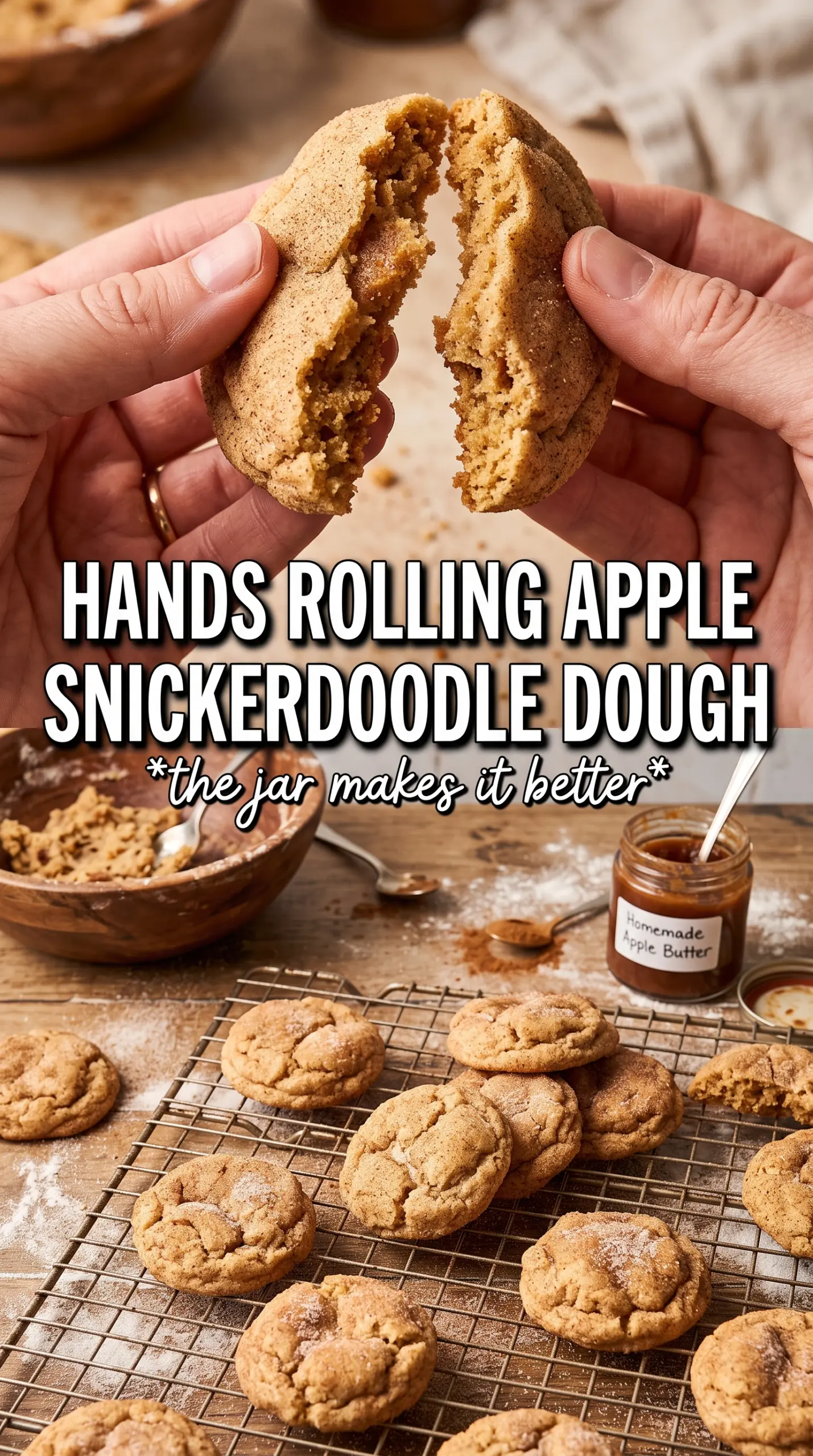
Apple Butter Snickerdoodles bake up with the kind of soft, crinkly tops that crack just enough to show the tender center underneath. The apple butter brings a mellow fruit note that keeps these cookies from tasting like plain cinnamon sugar rounds, and the edges set with a faint chew that makes it hard to stop at one.
The trick is keeping the dough soft but not sloppy. Apple butter adds moisture, so a brief chill helps the cookies hold their shape and lets the cinnamon-sugar coating stay thick instead of melting away in the oven. Cream of tartar gives that classic snickerdoodle tang and keeps the texture light rather than cakey.
Below, I’ve included the one dough texture cue that matters most, plus a few smart swaps if you want to adjust the spice level or make these ahead.
The dough chilled up enough to roll without sticking, and the cookies came out with those perfect wrinkly tops and a soft center that stayed tender the next day.
Like these apple butter snickerdoodles? Save them to Pinterest for soft, cinnamon-sugar cookies with crinkled tops and a tender apple butter center.
The Secret to Soft Snickerdoodles That Don’t Spread Flat
Most snickerdoodles lose their shape for one of two reasons: the dough is too warm, or the butter and sugar weren’t beaten long enough to trap enough air. Apple butter makes that problem a little more likely because it adds moisture, which is why the 30-minute chill matters here even if the dough seems manageable at first.
The cookies should look puffed and slightly crackled when they come out of the oven, with edges that are set but not browned all the way through. If you wait for the centers to look fully baked, they’ll be dry by the time they cool. Pull them when the tops are crinkled and the centers still look soft in the middle.
- Cream of tartar — This is what gives snickerdoodles their signature tang and their soft, tender bite. If you skip it, the cookies taste more like cinnamon sugar cookies than true snickerdoodles.
- Apple butter — Use a thick, smooth apple butter, not a loose applesauce-style spread. A runnier version adds too much water and makes the dough harder to shape.
- Butter and sugar — Beat them until pale and fluffy. That step helps the cookies rise instead of baking up dense.
- Spice coating — The little bit of apple pie spice in the rolling sugar deepens the apple note without overpowering the cinnamon. It’s the difference between good and memorable.
What Each Ingredient Is Actually Doing in These Cookies
- All-purpose flour — The standard flour here gives enough structure to hold the soft center without making the cookies tough. Spoon and level it if you can; packing it into the cup makes the dough dry.
- Apple butter — This is the flavor shift that makes the recipe stand out. It brings concentrated apple flavor and a little extra moisture, so don’t swap in thin applesauce unless you also expect a softer, less defined cookie.
- Unsalted butter — Softened butter creams properly and gives the cookies that classic snickerdoodle texture. Salted butter works in a pinch, but the cookies can taste flatter, so cut the added salt slightly.
- Cream of tartar — This is not interchangeable with baking powder. It’s what gives the cookies their slight tang and helps the texture stay tender and crackly.
- Rolling sugar and spices — Don’t skip the generous coating. It helps form the crinkled surface and gives the outside that sweet, spiced shell that makes these cookies feel complete.
Rolling, Chilling, and Baking the Dough at the Right Moment
Creaming the Base
Beat the butter and sugar until the mixture turns noticeably lighter in color and looks fluffy around the edges of the bowl. That extra air gives the cookies lift and keeps them from baking up heavy. Add the eggs one at a time if you can, then mix in the apple butter and vanilla just until smooth. If the mixture looks slightly curdled, don’t panic; it comes together once the flour goes in.
Keeping the Dough Manageable
Stir in the dry ingredients just until no streaks of flour remain. Overmixing here makes the cookies tough and pushes the dough toward a cakier texture. If the dough feels sticky enough to cling to your hands, chill it for 30 minutes before rolling. A properly chilled dough should still be soft, but it should hold a ball shape when you scoop it.
Coating for the Crinkled Finish
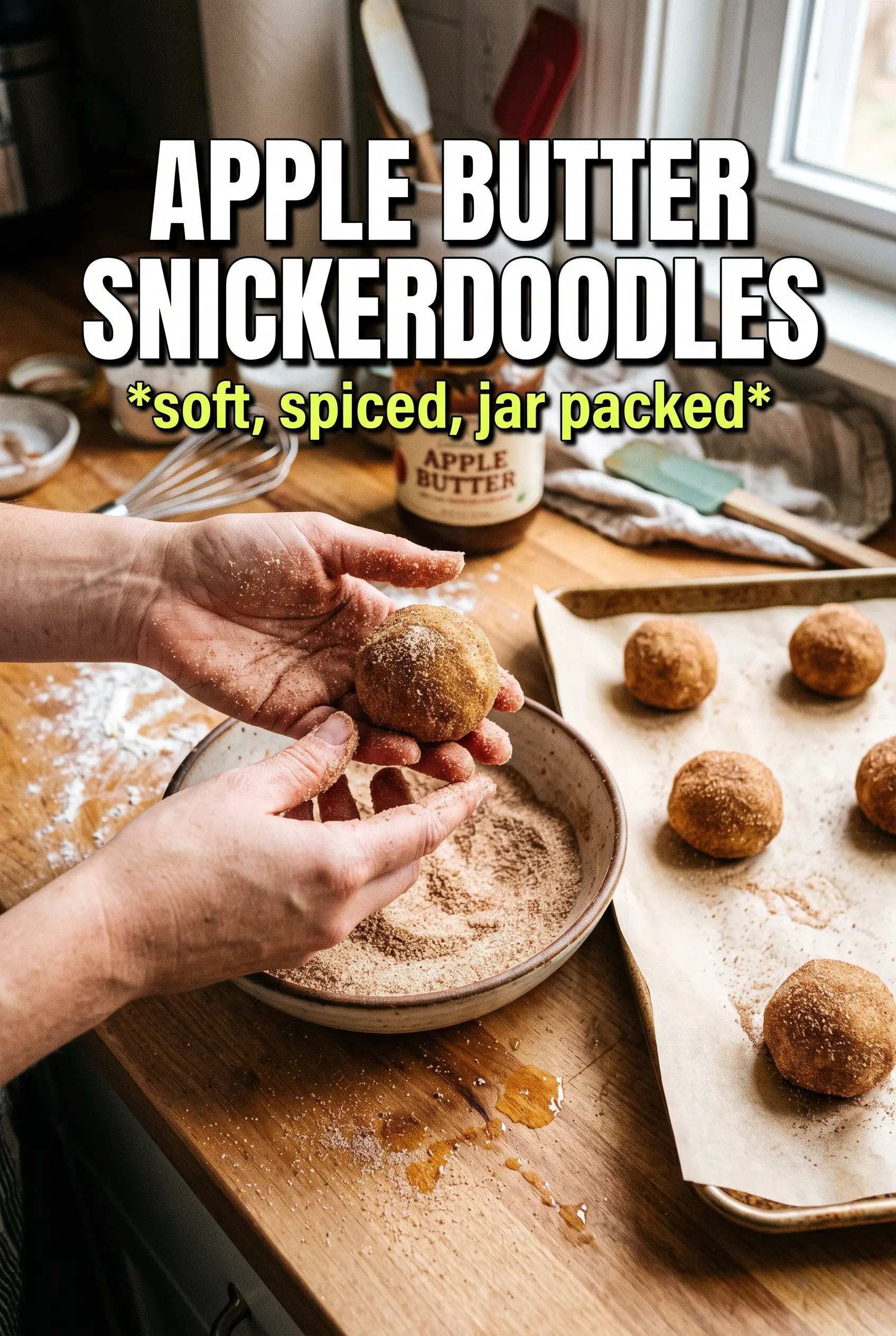
Roll each dough ball generously in the cinnamon-sugar mixture so the surface looks fully dusted, not lightly sprinkled. That coating helps the top split and crack in the oven. Place the balls a couple of inches apart on parchment-lined sheets because they do spread a bit as they bake. If the dough was chilled well, they’ll keep thicker edges and a softer middle.
Pulling Them from the Oven on Time
Bake just until the edges are set and the tops are crinkled, usually 10 to 12 minutes. The centers should still look soft when you remove the pan. Let them sit on the baking sheet for 5 minutes before moving them, because they finish setting as they cool and are too fragile to lift right away.
Three Ways to Adjust These Cookies Without Losing the Point
Gluten-Free Version
Use a good 1:1 gluten-free flour blend that includes xanthan gum. The cookies will still be soft and crinkly, but they may spread a little less and need the full chill time so the dough firms up enough to roll cleanly.
Extra Spice for a Stronger Apple Pie Feel
Add a pinch more apple pie spice to the rolling mixture or a little extra cinnamon to the dough. That gives the cookies a warmer finish, but don’t push the spice so far that it hides the apple butter.
Make-Ahead Dough
Shape the dough into balls, then chill them on a tray or freeze them for later. Bake straight from the fridge, or add a minute or two from frozen. That keeps the texture closer to freshly mixed dough than storing one large bowl of sticky batter.
Storage and Reheating
- Refrigerator: Store baked cookies in an airtight container for up to 5 days. They stay soft, though the cinnamon-sugar coating softens a bit after day one.
- Freezer: Freeze baked cookies for up to 2 months, or freeze the portioned dough balls and roll them in sugar just before baking. Dough freezes better than baked cookies if you want the freshest texture later.
- Reheating: Warm cookies in a 300F oven for 3 to 4 minutes or in the microwave for about 8 seconds. Long reheating dries them out fast, so use just enough heat to take the chill off and soften the center.
Questions I Get Asked About This Recipe
Apple Butter Snickerdoodles
Ingredients
Equipment
Method
- Preheat the oven to 375F, and line baking sheets with parchment for easy release.
- Whisk together all-purpose flour, cream of tartar, baking soda, cinnamon, nutmeg, and salt until evenly combined with no dry streaks.
- Beat softened unsalted butter and granulated sugar until very light and fluffy, with a pale color and thicker texture.
- Add eggs, apple butter, and vanilla extract, then beat just until the mixture looks smooth and combined.
- Fold in the flour mixture until just combined, stopping as soon as no dry flour remains to keep cookies tender.
- Refrigerate the dough for 30 minutes if it feels sticky, until it is easier to scoop and roll.
- Mix sugar, cinnamon, and apple pie spice in a shallow bowl so the coating is ready for rolling.
- Scoop dough into 1-1/2 tablespoon balls, roll generously in the cinnamon sugar so each cookie looks well coated.
- Place the cookies on the prepared baking sheets with space between them for spreading.
- Bake at 375F for 10-12 minutes, until the cookies are crinkled and the edges are just set.
- Cool on the pan for 5 minutes so the centers finish setting while staying soft-looking in the middle.
- Move to a rack or serve once mostly cooled, noting the centers will be soft but firm as they cool.