Apple cider braised pork shoulder turns into the kind of dinner that makes the house smell warm and savory long before it comes out of the oven. The pork cooks low and slow until it’s spoon-tender, then the cider, mustard, and browned onion juices reduce into a glossy sauce that clings to every shred. Soft apples melt just enough to sweeten the pot without turning the whole dish sugary.
The trick here is building flavor in layers instead of trying to force it at the end. A hard sear gives you the browned bits that make the braising liquid taste rich, and the cider vinegar keeps the sauce from falling flat. The apples go in late on purpose, so they hold their shape and bring little bursts of sweetness against the savory pork.
Below, I’ll walk you through the part that matters most: getting the braising liquid balanced before the pork goes back in, plus the small timing detail that keeps the apples soft but not collapsed.
The pork shredded beautifully after the last 45 minutes, and the apples held their shape instead of turning mushy. I reduced the sauce on the stove like you said, and it coated the meat instead of pooling at the bottom of the bowl.
Save this apple cider braised pork shoulder for a tender braise with silky sauce and soft apples.
The Part That Keeps Braised Pork From Tasting Flat
Apple cider braising lives or dies on balance. Pork shoulder gives you plenty of richness, but it needs acidity and seasoning to wake it up, which is why the cider vinegar and Dijon mustard matter just as much as the fruit. If the liquid tastes sweet before the pork goes in, it will stay sweet after three hours in the oven, so the base needs to taste bold and slightly sharp.
The other mistake is rushing the sear. Those deep brown bits on the bottom are what make the sauce taste cooked instead of just stewed. Once you add the cider and broth, scrape the pot thoroughly so nothing stays stuck; that’s where the best flavor is hiding.
What Each Ingredient Is Actually Doing in the Pot

- Pork shoulder — This cut is built for braising because it has enough fat and connective tissue to turn silky instead of dry. Cut it into two large pieces so it browns well and cooks evenly.
- Apple cider — Use real cider, not apple juice, if you can. Cider has deeper apple flavor and more body, which keeps the sauce from tasting thin.
- Dijon mustard — This doesn’t just add tang. It helps the braising liquid taste rounder and keeps the cider from reading like dessert.
- Apples — Firm-tart apples hold up best here. A softer apple will collapse into the sauce before the pork is done.
- Fresh thyme and rosemary — Dried herbs won’t give the same clean, woodsy finish. If you need to swap, use half the amount of dried herbs and expect a quieter result.
- Apple cider vinegar — This is the bright edge that stops the pot from tasting heavy. Don’t skip it.
How to Braise It So the Sauce Stays Rich, Not Watery
Searing the Pork for the Base Flavor
Season the pork all over first, then sear it in hot oil until the surface is deeply browned and releases from the pot without sticking. If the meat tears when you try to turn it, it needs more time. You’re not just coloring the outside; you’re building the flavor that will carry the entire sauce.
Softening the Onions and Building the Liquid
Cook the onion until it turns translucent and picks up a little color around the edges, then add the garlic for just a minute so it smells fragrant but doesn’t scorch. Pour in the cider, broth, vinegar, Dijon, and brown sugar, then scrape the bottom hard with a wooden spoon. The liquid should taste tangy, savory, and slightly sweet before the pork goes back in.
Slow Braising Until the Meat Yields
Cover the pot and braise at 325°F until the pork is tender enough to pull apart with a fork, which usually takes about 2 1/2 hours before the apples go in. If the liquid is bubbling too aggressively, the oven is running hot and the meat can dry at the edges. You want a gentle simmer, not a boil.
Adding the Apples at the End
Stir in the apples for the last 45 minutes so they soften without losing their shape. They should be tender enough to bite through, but still look like wedges, not sauce. When the pork is done, shred it in large pieces and simmer the liquid on the stove until it lightly coats a spoon.
How to Adapt This for Different Kitchens and Different Crowds
Gluten-Free Braise
This recipe is naturally gluten-free as long as your chicken broth and Dijon are certified gluten-free. The sauce gets its body from reduction, not flour, so nothing about the texture has to change.
No Fresh Herbs on Hand
Use 1 teaspoon dried thyme and 1/2 teaspoon dried rosemary instead of the fresh sprigs. The flavor will be a little less bright and a little more muted, but the braise will still taste balanced if you keep the cider vinegar in place.
Make It More Savory
If you want less sweetness, cut the brown sugar to 1 tablespoon and use a tart apple like Granny Smith. You’ll get a sharper, more savory sauce with a cleaner finish.
Storage and Reheating
- Refrigerator: Store in an airtight container for up to 4 days. The flavor deepens overnight, and the sauce thickens as it chills.
- Freezer: Freezes well for up to 3 months. Cool it completely first, then freeze the pork and sauce together so the meat stays moist.
- Reheating: Reheat gently on the stovetop over low heat with a splash of broth or cider. High heat can tighten the pork and make the sauce taste flat.
Answers to the Questions Worth Asking
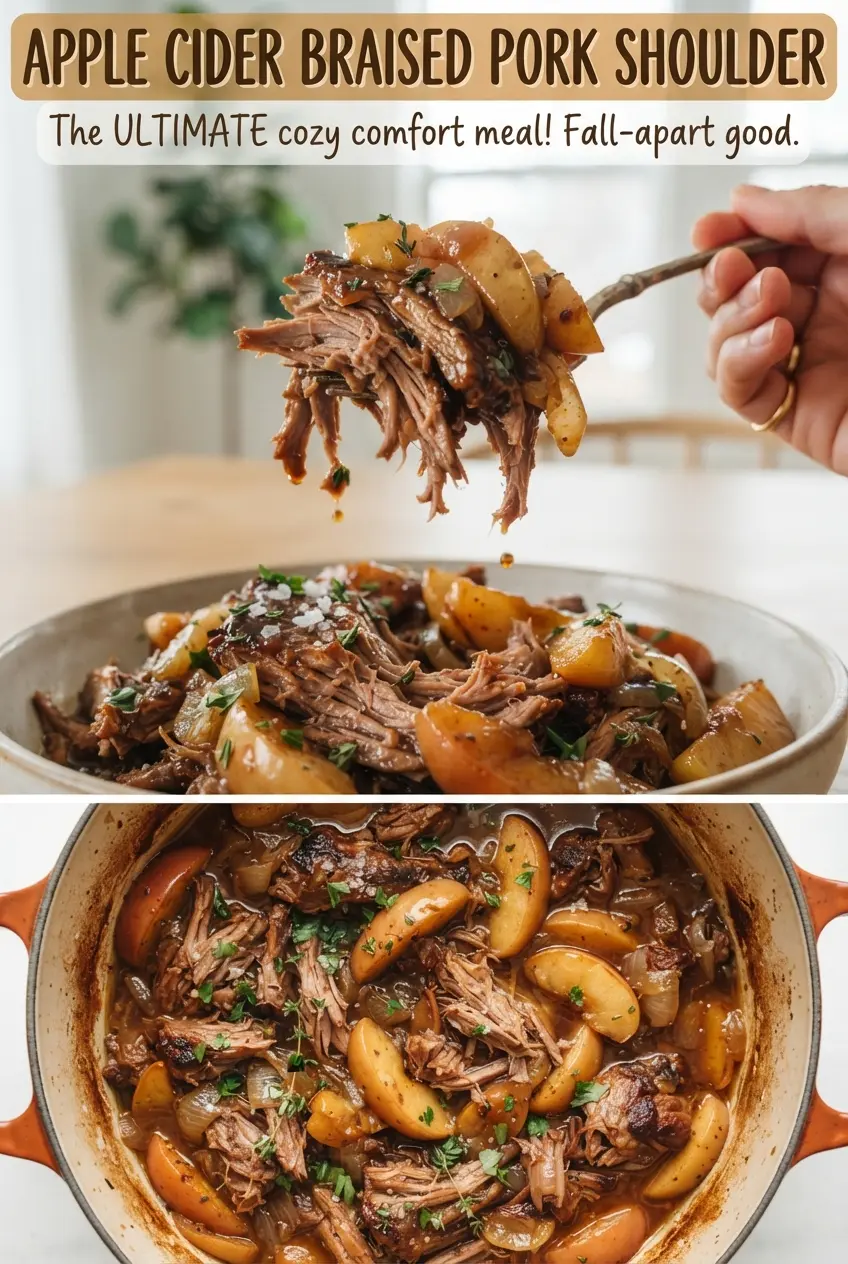
Apple Cider Braised Pork Shoulder
Ingredients
Equipment
Method
- Preheat the oven to 325F, then season the pork shoulder with salt, black pepper, and smoked paprika.
- Heat the olive oil in a Dutch oven over high heat, then sear the pork until well browned, about 4-5 minutes per side, and remove.
- Cook the sliced onion in the Dutch oven until softened, about 5 minutes, then add the smashed garlic and cook for 1 minute while fragrant.
- Stir in the apple cider, chicken broth, apple cider vinegar, Dijon mustard, and brown sugar, scraping up the browned bits from the bottom.
- Return the pork to the pot, add the fresh thyme and rosemary, cover, and braise in the oven for 2 1/2 hours.
- Add the apple wedges and braise covered for 45 minutes more, until the pork is fork-tender.
- Shred the pork into large pieces and keep it in the sauce for serving.
- Simmer the braising liquid on the stove for 10 minutes to reduce, then serve the pork with the sauce and apples.