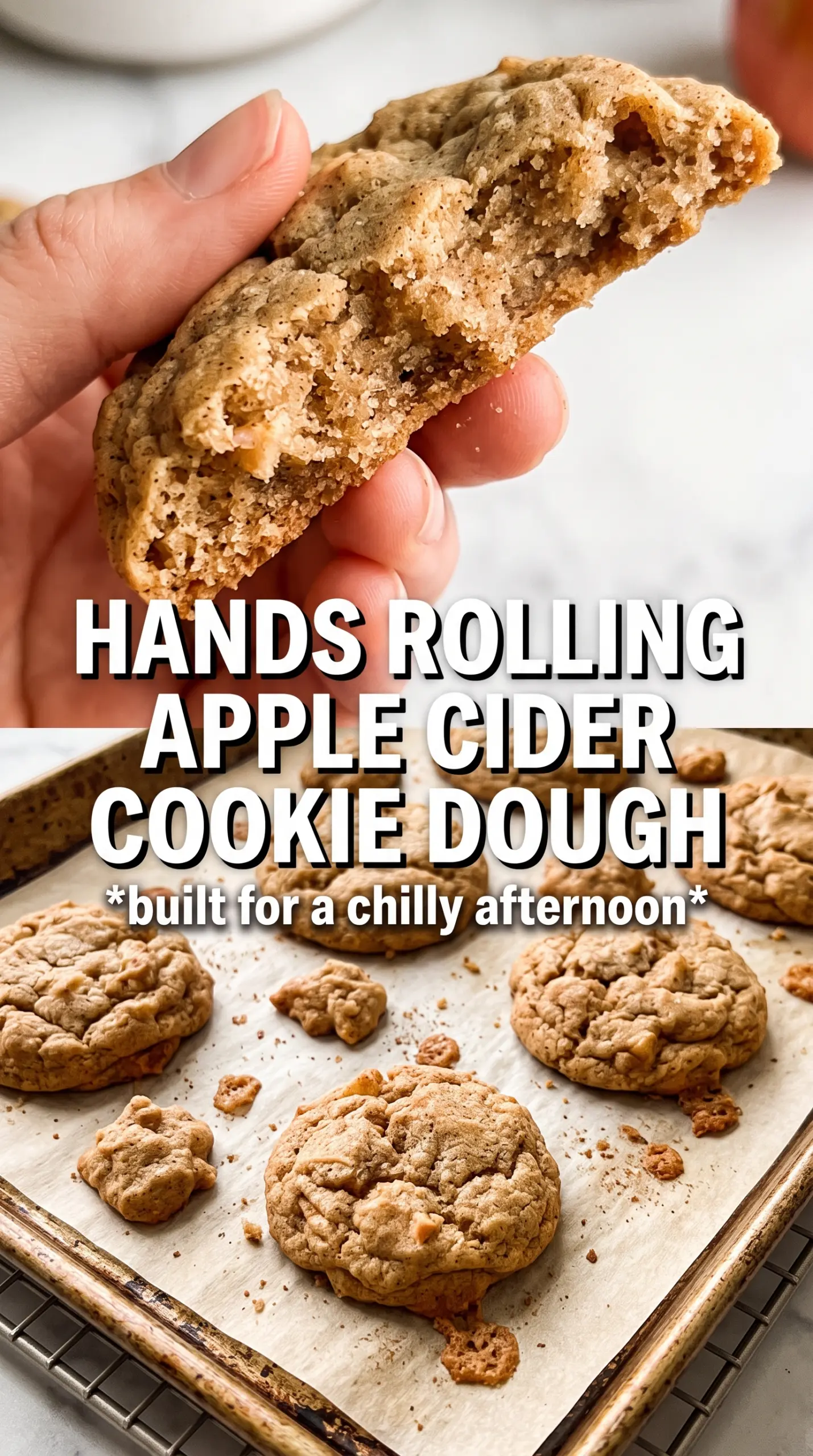
Soft, crinkly apple cider cookies bake up with chewy centers, buttery edges, and a warm cinnamon sugar shell that crackles just enough when you bite in. The apple cider isn’t there for background flavor alone — reducing it first concentrates the tart-sweet apple note so it actually shows up in the finished cookie instead of disappearing into the dough.
That reduction also keeps the dough from getting watery, which is the difference between cookies that spread into flat discs and cookies that hold their shape with a tender middle. Brown sugar brings moisture and depth, while the spice blend leans classic apple pie without turning the cookies heavy. The cinnamon sugar roll on the outside finishes the whole thing with a little sparkle and a lightly crisp edge.
Below, I’ve included the one step that matters most for flavor and texture, plus a few smart ways to adapt these cookies if you want to tweak the spice, make them ahead, or store a batch for later.
The cider reduction made a huge difference — the cookies tasted like apple instead of just cinnamon, and the centers stayed soft for days.
Like these apple cider cookies? Save them to Pinterest for the soft, spiced batch that actually tastes like cider.
The Cider Reduction Is What Keeps These Cookies From Tasting Flat
Most apple cider cookies lean too hard on spice and forget the apple. Reducing the cider first fixes that. It turns a watery ingredient into something concentrated and syrupy, which means the flavor can survive baking instead of fading into the dough.
This step also protects the texture. If you add full-strength cider, the dough picks up extra liquid and the cookies spread more than they should. Reduced cider gives you apple flavor without sacrificing the soft, slightly chewy middle.
- Reduce the cider all the way down. You want 1/4 cup from 1/2 cup, and it should look glossy and a little thickened once it cools.
- Cool it before mixing. Hot cider can melt the butter and ruin the fluffy base, which leads to dense cookies.
- Spices matter most when the apple is concentrated. Cinnamon, ginger, nutmeg, and allspice read as warm and balanced instead of dusty.
What Each Ingredient Is Actually Doing in This Recipe
- Primary ingredient (the star) — Quality matters most. Choose the best you can find.
- Cooking medium (oil, butter, or broth) — This carries flavors and prevents dryness.
- Seasonings (salt, pepper, spices, herbs) — Layer flavors so nothing overpowers. Build depth gradually.
- Aromatics (garlic, onion, herbs) — Cook with fat to bloom flavors. Become the foundation.
- Supporting ingredients — Complement the main ingredient without overpowering it.
- Sauce or liquid (if applicable) — Brings flavors together. Balance richness with acid.
- Acid (lemon, vinegar, wine, or other) — Brightens and prevents flat-tasting results.
- Final finish (garnish, glaze, or sauce) — Prevents one-dimensional taste and adds visual appeal.
What Each Ingredient Is Doing in the Dough
- All-purpose flour — Gives these cookies enough structure to hold the cider and sugar without going cakey. I wouldn’t swap in a low-protein flour here if you want the same chewy bite.
- Brown sugar — Brings moisture, depth, and that soft center. A dark brown sugar will push the molasses note a little harder, which works if you want the cookies warmer and richer.
- Butter — Softened butter creams with the sugars and traps air, which keeps the cookies tender. If the butter is too warm, the dough turns greasy and spreads too much.
- Reduced apple cider — This is the whole point of the recipe. There’s no substitute that gives the same clean apple flavor, but apple juice can work in a pinch if you reduce it the same way; the flavor just comes out sweeter and less sharp.
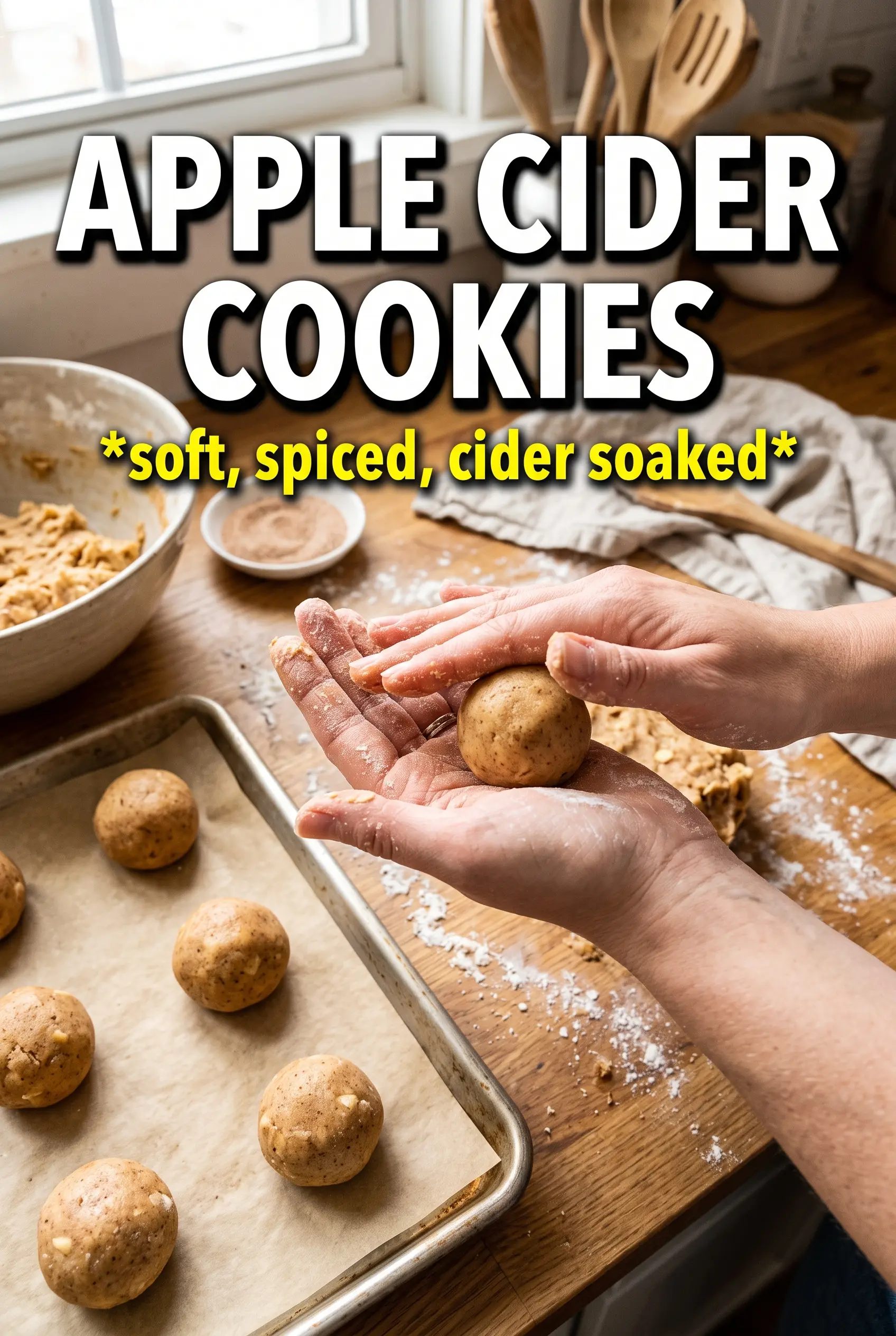
- Cinnamon sugar coating — Adds a light crunch and keeps the outside from tasting plain. Rolling the dough balls generously is what gives you that crinkly, speckled finish.
Building the Dough So the Cookies Stay Soft in the Middle
Start with the cider and let it cool
Reduce the cider over medium heat until it looks syrupy and measures 1/4 cup. Don’t rush it on high heat, because scorched cider tastes bitter and hides the apple flavor you worked to concentrate. Let it cool completely before it goes into the butter mixture so the dough stays smooth and airy.
Cream the butter and sugars until the mixture lightens
Beat the butter with the brown sugar and granulated sugar until it looks paler and a little fluffy, not just blended. That texture tells you air has been worked in, which helps the cookies bake up with soft centers instead of a dense, heavy crumb. Add the egg, vanilla, and cooled cider after that, and mix until the batter looks even and glossy.
Stop mixing as soon as the flour disappears
Stir in the dry ingredients just until no streaks of flour remain. If you keep going, the cookies can turn tough and lose that tender bite. The dough should be soft enough to scoop but not sticky enough to smear all over your hands.
Bake until the edges set and the centers still look a little soft
Scoop 1 1/2 tablespoon portions, roll them in the cinnamon sugar, and give them room on the pan. Pull them from the oven when the edges are set and the centers still look slightly underdone; they finish cooking on the hot pan. If you wait until the middle looks fully dry in the oven, you’ll miss the soft texture that makes these worth baking.
How to Adapt These Apple Cider Cookies Without Losing the Good Part
Make them a little spicier
Add an extra 1/4 teaspoon cinnamon or a pinch more ginger if you want the spice to sit closer to the front. That gives the cookies a warmer finish without changing the structure.
Make them gluten-free
Use a 1:1 gluten-free baking blend that already includes xanthan gum. The texture will be a little more delicate, but the reduced cider and brown sugar still keep the centers soft instead of dry.
Make them dairy-free
Swap the butter for a plant-based stick butter, not a tub spread. The stick version behaves much more like real butter during creaming, so the cookies still spread and set the right way.
Storage and Reheating
- Refrigerator: Store in an airtight container for up to 5 days. The sugar coating softens a little, but the cookies stay chewy.
- Freezer: Freeze baked cookies for up to 2 months, or freeze the portioned dough balls and bake from frozen with 1 to 2 extra minutes.
- Reheating: Warm a cookie in the microwave for 8 to 10 seconds if you want the center soft again. Don’t overheat them or the edges dry out fast.
Questions I Get Asked About This Recipe
Apple Cider Cookies
Ingredients
Equipment
Method
- In a small saucepan over medium heat, reduce apple cider until syrupy, stirring occasionally.
- Pour the reduced cider into a bowl and cool completely before using.
- Preheat the oven to 350F and line baking sheets with parchment.
- Whisk together all-purpose flour, baking soda, cinnamon, ginger, nutmeg, allspice, and salt.
- Beat softened unsalted butter and both sugars until light and fluffy.
- Beat in the egg, then mix in vanilla extract and the cooled reduced cider.
- Stir the flour mixture into the wet ingredients until just combined.
- Scoop dough into 1-1/2 tablespoon balls.
- Roll each dough ball in the cinnamon sugar mixture until coated.
- Place the coated balls on the prepared baking sheets with space between them.
- Bake for 10-12 minutes at 350F, until the edges are set.
- Cool the cookies on the pan for 5 minutes before transferring them to a rack.