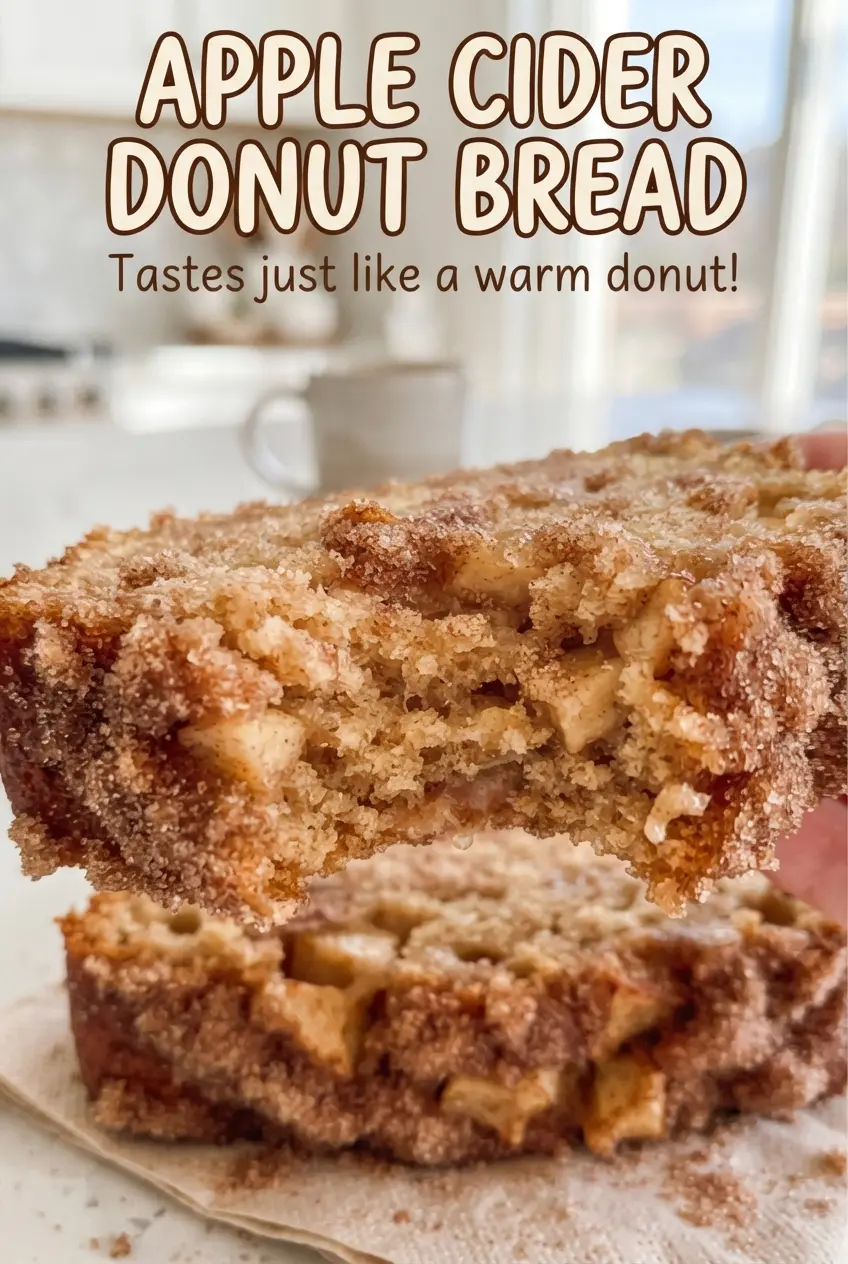
Apple cider donut bread bakes up with a tender, spiced crumb and that crunchy cinnamon-sugar crust that cracks just a little when you cut into it. It tastes like the best part of a cider donut, only in loaf form, with a soft center that stays moist for days and a buttery coating that clings to every slice.
The part that makes this loaf stand out is the reduced cider. Simmering the cider down concentrates the apple flavor before it ever hits the batter, so you get a deeper taste without making the loaf wet or heavy. Sour cream keeps the crumb plush, while brown sugar and warm spices give it that bakery-style richness that reads like a true donut, not just spice bread with sugar on top.
Below, I’ll walk through the cider reduction, the point where the batter should stop mixing, and the best way to get that cinnamon-sugar topping to stick in a thick, even layer.
The cider flavor came through beautifully, and the cinnamon sugar crust stayed crisp even the next day. I also loved that the loaf sliced cleanly after cooling for just a bit.
Love the thick cinnamon-sugar crust and spiced cider crumb? Save this Apple Cider Donut Bread for the next time you want a loaf that tastes like a bakery donut in sliceable form.
The Cider Reduction Is What Keeps This Loaf From Tasting Flat
Most apple cider breads lean one-note because the liquid goes straight into the batter. That gives you moisture, but not much apple punch. Reducing the cider first changes the whole loaf: the flavor gets deeper, the texture stays tight and tender, and you don’t have to overload the batter with extra liquid.
The other place people run into trouble is overmixing once the dry ingredients go in. This batter should look just combined, with no streaks of flour left, but it shouldn’t be beaten smooth for long. Overworking it makes the loaf dense instead of soft and donut-like. If your crumb has ever baked up tough or tunneled, that’s usually the reason.
What Each Ingredient Is Actually Doing In This Loaf
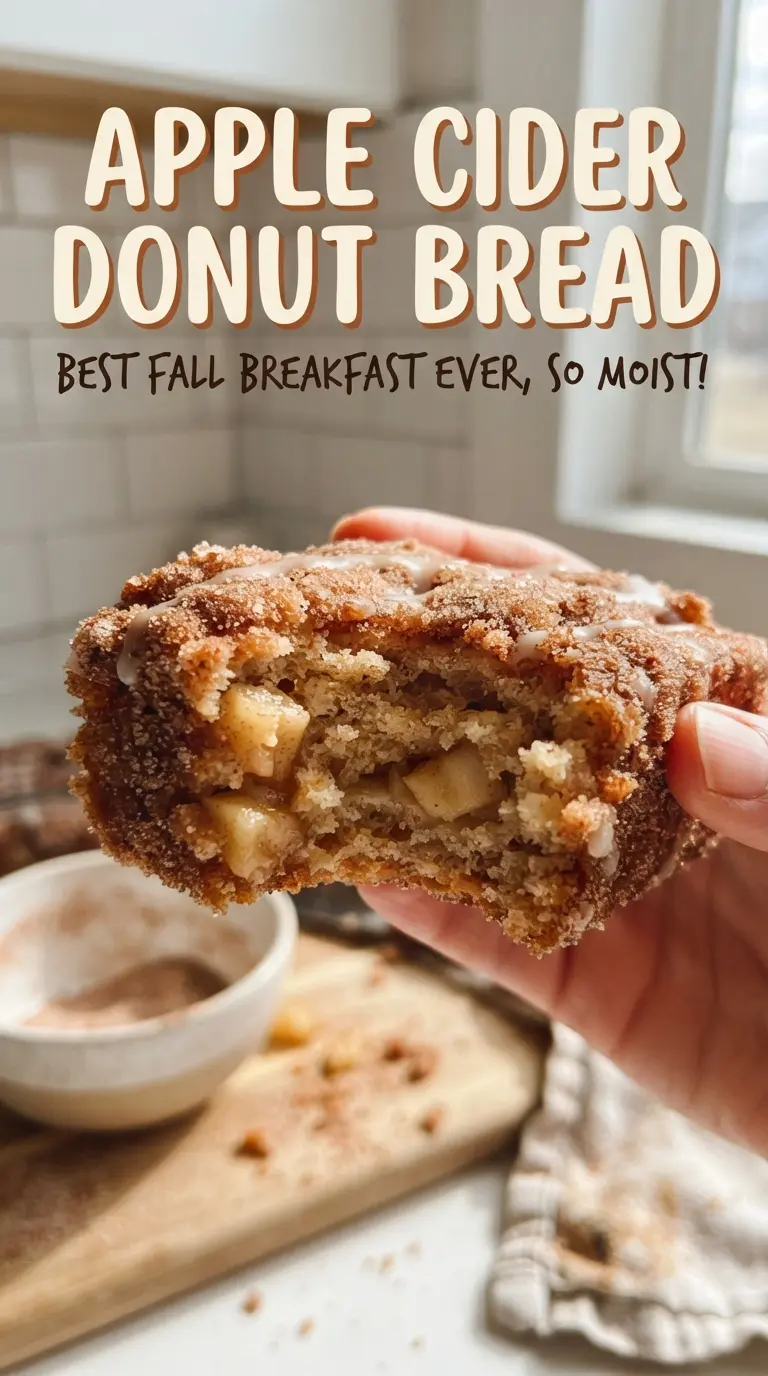
- Apple cider — Reducing it concentrates the apple flavor and keeps the loaf from tasting like plain spice bread. Don’t skip the simmer; there isn’t a substitute that gives the same depth.
- Sour cream — This is what keeps the crumb moist and soft without making it heavy. Plain Greek yogurt works in a pinch, but the loaf will be a little tangier and slightly tighter.
- Brown sugar — It brings a deeper caramel note that works with the cider and spices. White sugar will sweeten the loaf, but it won’t give the same warmth.
- Butter — Butter gives the loaf its rich, bakery-style flavor and helps the crust brown properly. Use real butter here; margarine won’t give the same taste or finish.
- Cinnamon and nutmeg — These are the spice backbone. The nutmeg matters more than people think, because it’s what pushes the loaf toward donut flavor instead of just apple bread.
Building the Batter and Getting the Crust to Stick
Reducing the Cider Without Burning It
Pour the cider into a small saucepan and simmer until it drops to about 1/2 cup. Keep it at a gentle simmer, not a hard boil, so the sugars don’t scorch on the bottom of the pan. It should look slightly syrupy and smell concentrated and fruity. Let it cool before adding it to the batter, or it can soften the butter and throw off the texture.
Whipping the Butter and Sugar Until It Turns Light
Beat the softened butter and brown sugar until the mixture looks paler and a little fluffy. That step traps air, which gives the loaf lift. Add the eggs one at a time, then mix in the sour cream, vanilla, and cooled cider. If the mixture looks a little curdled at that stage, don’t panic; it will smooth out once the flour goes in.
Stopping the Mix at the Right Moment
Fold in the dry ingredients just until the flour disappears. The batter should be thick and spoonable, not silky. Scrape it into the pan and level the top so it bakes evenly. If you keep mixing after the flour is already incorporated, the loaf gets tighter and less tender.
Coating the Warm Loaf in Cinnamon Sugar
Bake until a toothpick comes out clean from the center, then let the loaf sit in the pan for about 10 minutes. Brush the warm surface with melted butter, then press on the cinnamon sugar so it forms a thick crust. The loaf needs to be warm for the topping to grab, but not so hot that the sugar melts off. If you rush this part, you end up with a thin dusting instead of that donut-style crunch.
Three Ways to Make This Bread Work for Your Kitchen
Dairy-Free Version
Use a plant-based butter and swap the sour cream for a thick dairy-free yogurt. The loaf will still be moist and spiced, but the crumb won’t be quite as rich, and the crust may be a little less buttery on the finish.
Gluten-Free Adaptation
Use a 1:1 gluten-free baking blend that includes xanthan gum. The structure will be slightly more delicate, so let the loaf cool fully before slicing or it can crumble at the edges.
Extra Donut-Style Crust
Double the cinnamon-sugar topping if you want a thicker, more bakery-style coating. Brush on the butter while the loaf is still warm, then press the sugar on in two light layers so it clings without sliding off.
Storage and Reheating
- Refrigerator: Store in an airtight container for 4 days. The crust softens a little in the fridge, but the loaf stays moist.
- Freezer: Freeze slices or the whole loaf tightly wrapped for up to 2 months. The cinnamon sugar won’t stay crunchy after freezing, but the flavor holds up well.
- Reheating: Warm slices in a 300F oven for 8 to 10 minutes, or toast individual slices lightly. Skip the microwave if you want to keep the crumb from turning gummy and the topping from melting into the bread.
Answers to the Questions Worth Asking
Apple Cider Donut Bread
Ingredients
Equipment
Method
- Simmer the apple cider for 15-20 minutes until reduced to 1/2 cup, then cool.
- (Cooking step cue) You should see the cider thicken slightly and reduce in volume to about half before cooling.
- Preheat the oven to 350F, then grease and line a 9x5-inch loaf pan.
- (Visual cue) The loaf pan should be ready so the batter can go in right after mixing.
- Whisk together the all-purpose flour, baking powder, baking soda, salt, ground cinnamon, and nutmeg.
- Beat the butter and brown sugar until fluffy, then beat in the eggs, sour cream, vanilla extract, and the reduced cider.
- (Visual cue) The mixture should look smooth and slightly lighter in color after mixing.
- Fold the dry ingredients into the wet ingredients just until combined, then spread the batter into the loaf pan.
- Bake for 50-55 minutes at 350F until a toothpick comes out clean.
- Cool the loaf for 10 minutes after baking.
- Brush the warm loaf all over with the melted butter.
- Press the cinnamon sugar topping onto the buttered loaf so it forms a thick crunchy crust.