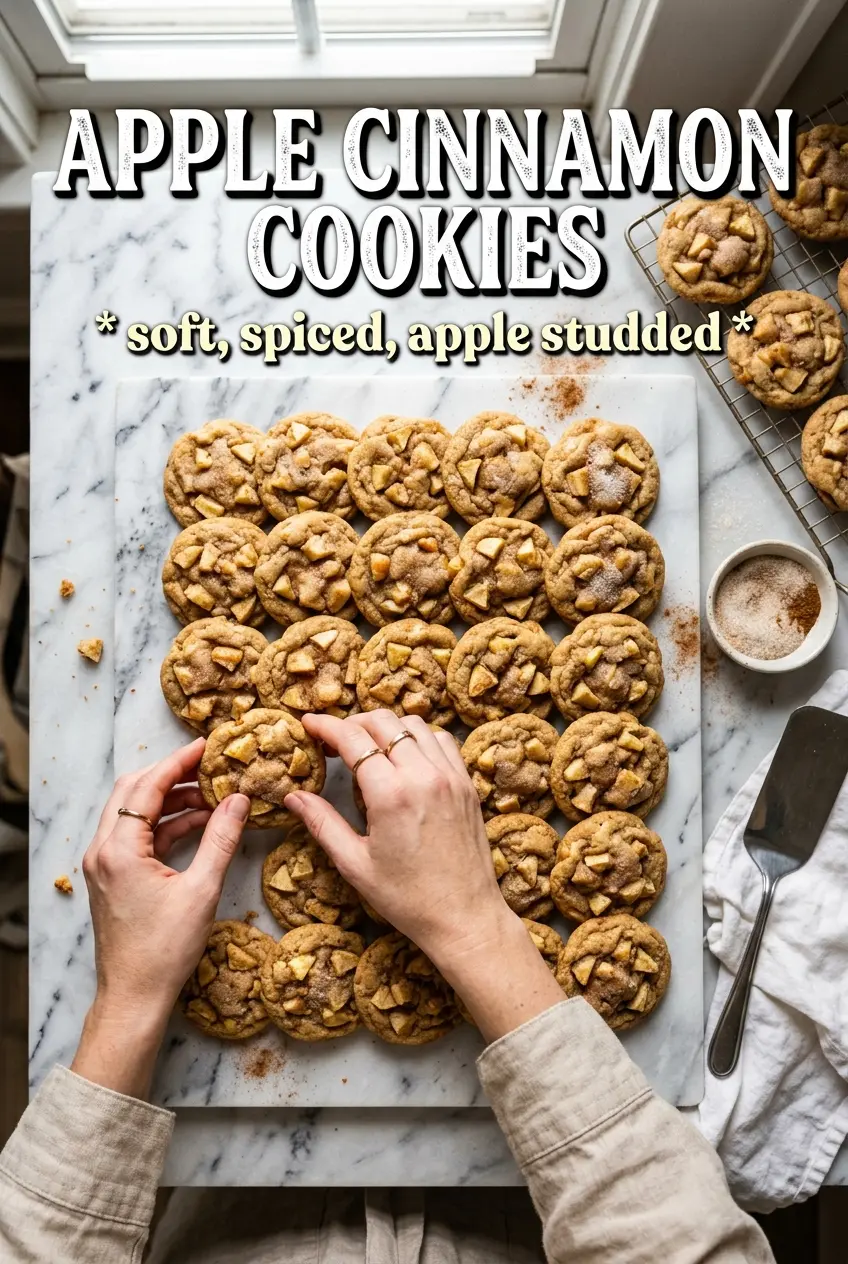
Soft, cake-like apple cinnamon cookies have a way of disappearing fast, especially when the edges pick up a little sparkle from cinnamon sugar and the centers stay tender with tiny bits of apple throughout. The glaze on top isn’t there just for looks. It gives each cookie that bakery-style finish that makes the whole batch feel a little more special without adding much work.
This version leans on applesauce for moisture and finely diced apple for texture, which gives you both flavor and little pockets of fruit without making the dough watery. The dough does need a chill, and that’s not optional here. It firms up the sticky batter just enough so the cookies spread in a controlled way instead of baking into thin, uneven rounds.
Below you’ll find the small details that matter most: how to handle the sticky dough, when the cookies are actually done, and what to change if you want to skip the glaze or make them a little more spiced.
The dough was sticky, but after chilling it scooped beautifully and baked up soft with those little apple bits throughout. The cinnamon sugar on the tops gave them a great edge, and the glaze set enough that they weren’t messy to stack later.
Like these apple cinnamon cookies? Save them to Pinterest for soft, glazed cookies with cinnamon sugar edges and tender apple bits.
The Sticky Dough Problem Most Apple Cookies Run Into
Apple cookies often fail for one simple reason: too much moisture, not enough structure. Applesauce keeps the crumb soft, but fresh diced apple adds another layer of liquid as it bakes, and that can turn the dough loose if you skip the chill. The hour in the fridge gives the flour time to hydrate and helps the butter re-firm, which keeps the cookies thick enough to stay tender instead of spreading flat.
The other thing that matters here is size. These bake best as small scoops, about 1 1/2 tablespoons each. Bigger mounds take longer to set in the center, and by the time they’re done, the edges can overbake. You want edges that look set and dry while the middle still looks just a touch soft when the pan comes out.
- Applesauce — This is the moisture source that makes the cookies soft and cake-like. Unsweetened works best because you already have plenty of sugar in the dough. Sweetened applesauce works in a pinch, but the cookies will bake a little sweeter and browner.
- Fresh apples — Peel them and dice them small so they soften during baking without turning the dough chunky or wet. A firm apple like Honeycrisp, Pink Lady, or Granny Smith holds its shape better than a mealy one.
- Brown sugar — This gives the cookies a deeper, warmer sweetness and helps with chew. All granulated sugar will make them lighter, but you’ll lose some of that soft, almost muffin-like texture.
- Cinnamon sugar topping — Don’t skip it. The rolled tops bake into a lightly crisp, fragrant edge that makes the cookies taste more finished, even before the glaze goes on.
Building Soft Centers Without Letting Them Spread
Mix the butter and sugars until the texture changes
Beat the butter, granulated sugar, and brown sugar until the mixture looks lighter and a little fluffy, not just combined. That step gives the cookies a bit of lift before the flour goes in. If the butter is too cold, the mixture stays grainy; if it’s melted, the cookies will spread more than you want. Softened butter should give slightly when pressed but still hold its shape.
Fold in the apples at the very end
Once the flour mixture is almost fully incorporated, add the diced apples and fold just until they’re evenly distributed. Overmixing at this stage can make the dough tighter and start breaking the apple pieces apart. The dough will be sticky and thick, almost scoopable like a soft drop batter, and that’s exactly what you want before chilling.
Watch the bake, not the color
These cookies are done when the edges look set and the centers still look a little puffed and soft. They finish setting on the hot pan as they cool. If you wait until the tops look fully dry in the oven, they’ll end up overbaked and lose that tender middle. Let them cool all the way on the baking sheet before glazing so the icing stays on top instead of sliding off.
How to Adjust These Cookies Without Losing the Soft Crumb
Skip the glaze for a less sweet cookie
Leave off the vanilla glaze and you’ll get a softer, more snackable cookie with a stronger cinnamon-apple flavor. The cinnamon sugar topping still gives you plenty of sweetness and texture, so nothing feels missing.
Make them dairy-free with a plant butter swap
Use a solid dairy-free butter stick in place of the unsalted butter. The texture stays close to the original as long as you use a block-style substitute, not a tub spread, which can make the dough looser.
Swap in pears for a softer fall-back fruit
Finely diced ripe pears can replace the apples for a gentler, slightly floral version of the cookie. Use pears that still feel firm so they don’t collapse into the dough while baking.
Storage and Reheating
- Refrigerator: Store in an airtight container for up to 4 days. The cookies stay soft, though the glaze will set a little firmer in the fridge.
- Freezer: Freeze unglazed cookies for up to 2 months. Layer with parchment so they don’t stick together, then thaw at room temperature and glaze after thawing for the best look.
- Reheating: Warm one or two cookies in the microwave for 8 to 10 seconds if you want them soft again. Don’t overheat them or the apple pieces can turn rubbery and the glaze can melt off.
Questions I Get Asked About This Recipe
Apple Cinnamon Cookies
Ingredients
Equipment
Method
- Preheat the oven to 350F and line baking sheets with parchment to prevent sticking.
- Whisk together all-purpose flour, baking soda, baking powder, cinnamon, nutmeg, and salt until evenly combined.
- Beat softened unsalted butter with granulated sugar and brown sugar until fluffy, about 1–2 minutes.
- Add eggs one at a time, then mix in vanilla extract and applesauce until the mixture looks smooth.
- Fold the flour mixture into the wet ingredients just until no dry streaks remain.
- Fold in the finely diced apples so they’re distributed throughout the dough.
- Refrigerate the dough for 1 hour so it becomes easier to scoop and roll (it will be sticky).
- Scoop 1-1/2 tablespoon portions, then roll the tops in the cinnamon sugar mixture.
- Bake at 350F for 10-12 minutes, until the edges just set and the centers still look slightly soft.
- Cool the cookies completely on the pan to help the crumb set before glazing.
- Stir powdered sugar, milk, and vanilla until smooth, then drizzle over the cooled cookies.