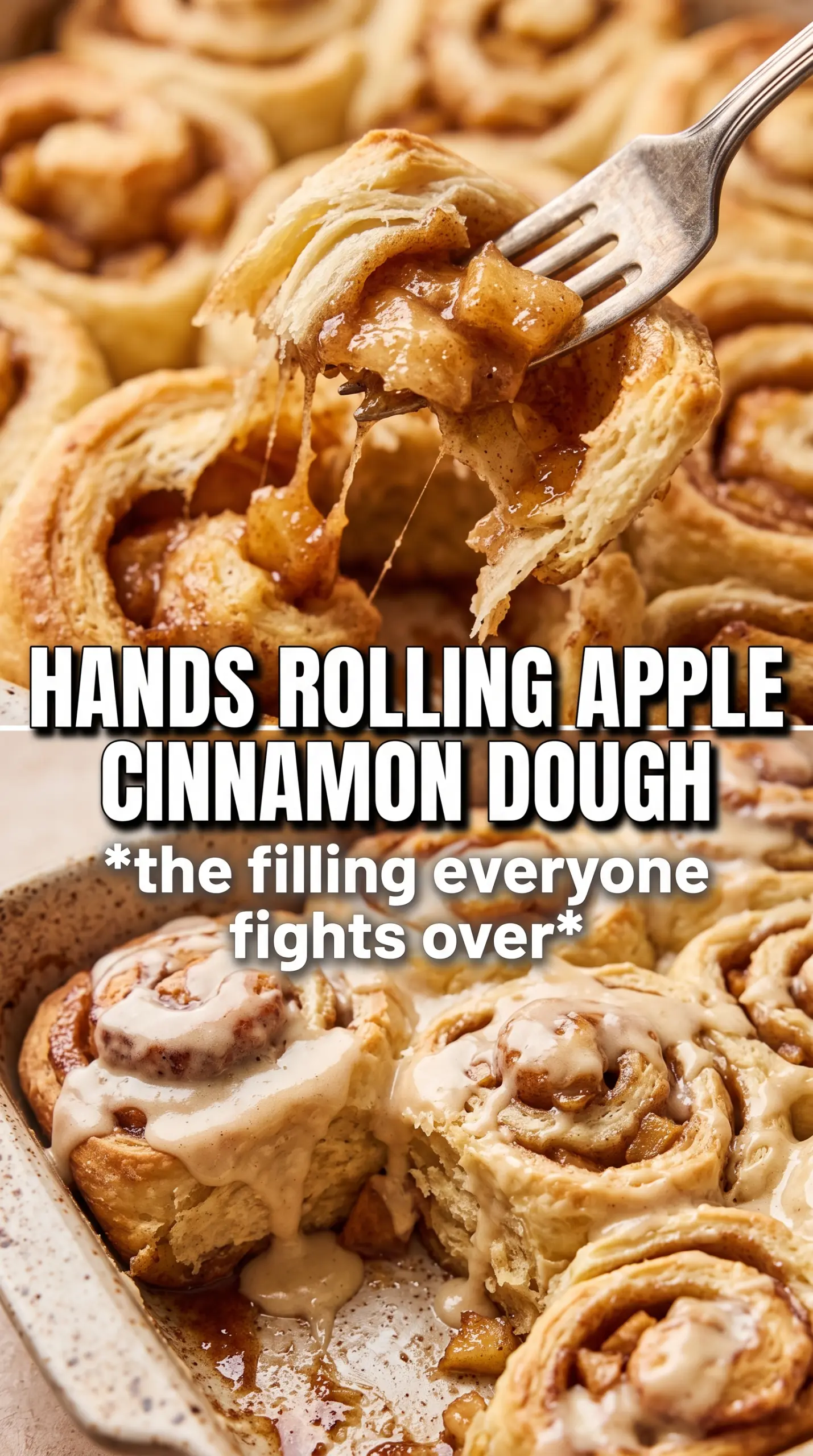
Soft, pillowy apple cinnamon rolls are the kind of breakfast that disappears while the glaze is still warm. The dough bakes up tender and enriched, the apples melt into a sticky-caramel filling, and every swirl gives you a little hit of cinnamon, brown sugar, and fruit in the same bite. The best ones are golden on top, plush in the center, and glossy enough to make the whole pan look irresistible.
What makes this version work is the way the apples are cooked before they go into the rolls. That extra few minutes in the skillet pulls out some moisture, concentrates the flavor, and keeps the filling from turning the dough soggy. The dough itself stays straightforward: warm milk for active dry yeast, enough butter and eggs for richness, and a full rise so the rolls bake up light instead of dense.
Below you’ll find the timing that keeps the filling manageable, the texture cues that tell you when the dough is ready, and the little details that keep the glaze creamy instead of clumpy. If you’ve ever had apple rolls leak all over the pan, this method fixes that.
The apples stayed tucked into the spirals instead of sliding out, and the glaze melted into the warm rolls just enough to soak into the top. I baked them for 24 minutes and the centers were perfectly soft.
Save these apple cinnamon rolls for the morning when you want soft spirals, caramelized apple filling, and a thick cream cheese glaze in one pan.
The Part Most Apple Rolls Get Wrong: Keeping the Filling Inside the Swirls
The filling is where most apple cinnamon rolls fail. If the apples go in raw, they release juice as the dough rises and bakes, and that turns the bottom layer slick instead of sticky. Cooking the apples first changes the whole outcome. You end up with fruit that holds its shape, brown sugar that clings to each piece, and a filling that stays where you spread it.
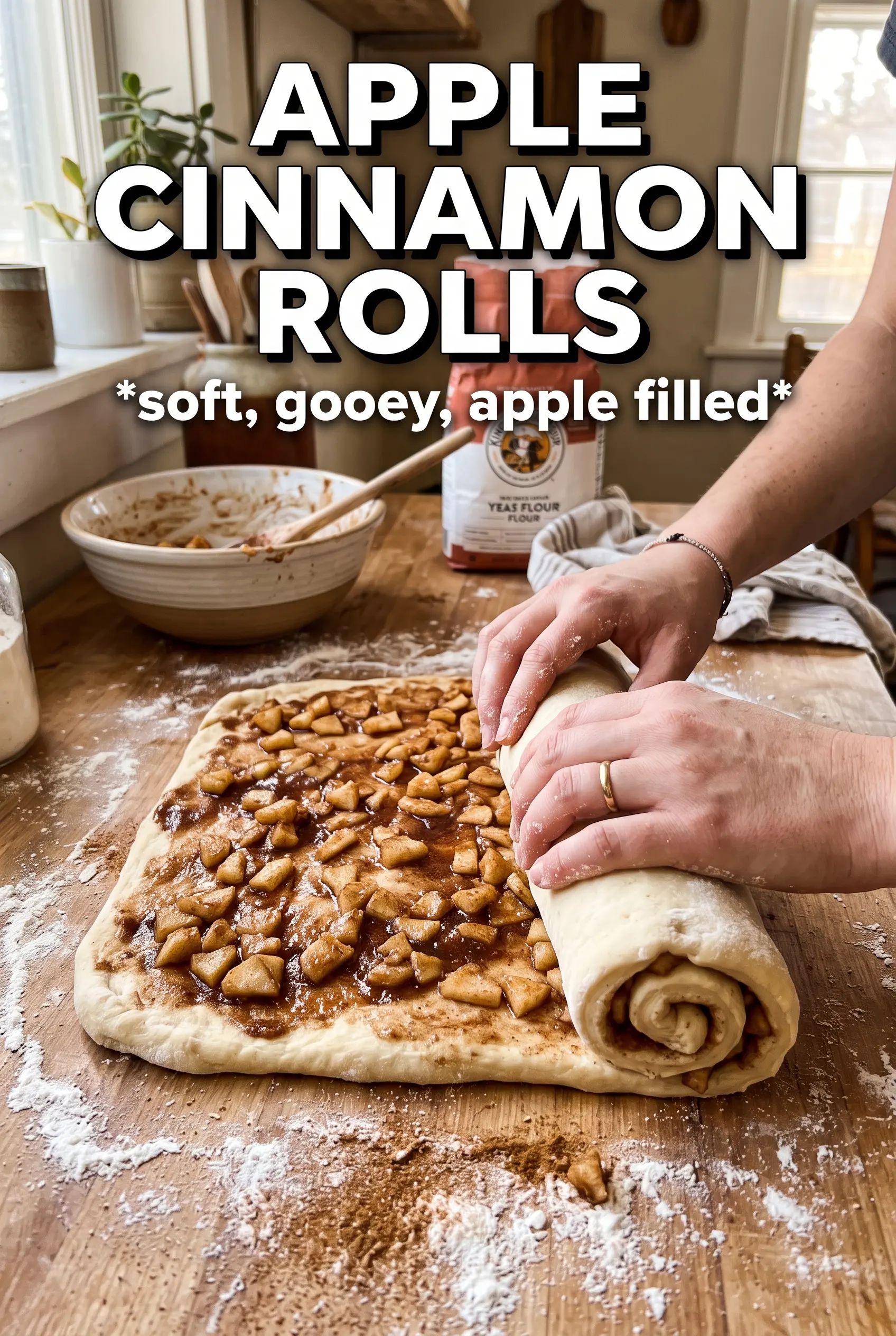
The second thing that matters is rolling the dough tightly enough to seal the spiral without crushing the apples. A loose roll leaks filling. A too-tight roll squeezes everything out the ends. Aim for a firm roll with even pressure, then cut cleanly so the spirals stay stacked and the centers rise evenly.
- Cooked apples: They bring concentrated flavor and a drier filling. Raw apples will soften in the oven, but they’ll also throw off too much moisture.
- Brown sugar: It melts into the cinnamon and butter for that sticky layer between the dough. Light or dark brown sugar both work; dark brown sugar gives a deeper caramel note.
- Nutmeg: Just a little sharpens the apple flavor. Skip it if you want a cleaner cinnamon roll taste, but don’t add much more or it starts to read as pie spice instead of breakfast rolls.
- Softened cream cheese for the glaze: Cold cream cheese leaves lumps. Let it come all the way to room temperature so the glaze whips smooth in seconds.
What Each Ingredient Is Doing in These Apple Cinnamon Rolls
- Warm milk: It wakes up the yeast without shocking it. If the milk feels hot to the touch, it can kill the yeast, so keep it around 110F.
- Active dry yeast: This gives the dough its lift. If it doesn’t foam after 5 minutes, the yeast is likely dead and the dough won’t rise properly.
- All-purpose flour: It gives you a soft, workable dough without the chewiness of bread flour. Bread flour works in a pinch, but the rolls will be slightly sturdier.
- Butter and eggs: These enrich the dough so it bakes tender and plush. That’s what keeps the rolls from feeling like plain bread with filling on top.
- Apples: Use firm apples that hold up when cooked, like Honeycrisp, Granny Smith, or Fuji. Very soft apples can collapse into mush and make the filling pasty.
Rolling, Rising, and Baking Them So the Centers Stay Tender
Building the Dough
Start by letting the yeast bloom in warm milk until the top looks foamy and creamy. That step tells you the yeast is active. Once you add the sugar, butter, eggs, vanilla, flour, and salt, mix until the dough comes together in a soft, slightly tacky mass. If it seems too dry, the flour was likely packed too tightly; add a teaspoon of milk at a time rather than dumping in more liquid.
Kneading Until the Dough Turns Smooth
Knead for about 8 minutes until the dough feels elastic and springs back slowly when pressed. You want it smooth, not sticky and shaggy, because under-kneaded dough bakes up tight and uneven. After the first rise, it should double in size and look puffy, with a little give when you press it gently with a fingertip.
Cooking the Apples Down First
Cook the diced apples with butter, brown sugar, cinnamon, and nutmeg until the pieces soften and the skillet looks glossy and syrupy. The apples shouldn’t fall apart. Let the filling cool completely before spreading it over the dough, or it will start melting the butter in the dough and make the roll hard to seal.
Cutting and Baking the Spirals
Roll the dough into a rectangle and spread the apple filling all the way to the edges in an even layer. Roll from the long side so you get more spirals per roll, then cut into 12 pieces with a sharp knife or unflavored dental floss for cleaner edges. Arrange them snugly in the baking dish, let them rise again until pillowy, and bake until the tops are golden and the centers register as set rather than doughy. If the top browns too fast, tent loosely with foil for the last few minutes.
Finishing With the Glaze
Beat the glaze until completely smooth, then drizzle it over the rolls while they’re still warm. Warm rolls help the glaze melt into the swirls instead of sitting on top in a thick layer. If you want a thicker topping, wait 10 minutes before glazing so the rolls hold more of the icing on the surface.
How to Adapt These Rolls for Different Kitchens and Different Mornings
Dairy-Free Version
Use unsweetened non-dairy milk, vegan butter, and a dairy-free cream cheese for the glaze. The rolls will still rise and bake well, but the glaze will be a little softer and less tangy than the original.
Granny Smith for a Sharper Apple Bite
Granny Smith apples stay firmer and give the filling more contrast against the sweet dough and glaze. They also hold onto their shape better, which keeps the spirals clean when you slice the rolls.
Make-Ahead Overnight Rolls
Assemble the rolls in the pan, cover tightly, and refrigerate overnight after shaping. In the morning, let them sit at room temperature until visibly puffy before baking. Cold rolls need extra time in the oven, and baking them straight from the fridge usually leaves the centers underdone.
Storage and Reheating
- Refrigerator: Store covered for up to 4 days. The rolls will firm up a little, but the glaze keeps them from drying out.
- Freezer: Freeze baked rolls without glaze, wrapped well, for up to 2 months. Thaw overnight in the fridge before reheating and glazing.
- Reheating: Warm individual rolls in the microwave for 20 to 30 seconds or cover the pan with foil and heat in a 300F oven until just warmed through. Don't blast them on high heat or the dough turns tough before the center warms.
Answers to the Questions Worth Asking
Apple Cinnamon Rolls
Ingredients
Equipment
Method
- Combine warm milk and yeast in a mixing bowl, then let sit 5 minutes until foamy with a slightly bubbly surface.
- Add granulated sugar, melted butter, eggs, and vanilla, then mix until smooth and glossy.
- Add all-purpose flour and salt, then mix until a soft dough forms that pulls away from the sides.
- Knead the dough for 8 minutes until smooth and elastic, then place it in a greased bowl.
- Cover and let rise for 1 hour until doubled in size, with the dough visibly puffed and springy.
- In a skillet, cook diced apples with unsalted butter, brown sugar, cinnamon, and nutmeg for 5-7 minutes until softened and caramelized.
- Transfer the cooked apples to a plate and cool completely so the filling doesn’t melt the dough.
- Roll the dough into a 12x18 inch rectangle, pressing out large air bubbles and keeping an even thickness.
- Spread the apple filling evenly over the surface so every roll gets apple pieces.
- Roll tightly from the long side into a log, keeping the seam on the bottom for clean slices.
- Cut into 12 equal rolls using a straight, even slicing motion for uniform baking.
- Arrange the rolls in a greased 9x13 baking dish, cover, and let rise 45 minutes until puffy.
- Bake at 375F for 22-25 minutes until golden, with the tops set and the edges looking slightly sticky.
- Beat cream cheese, powdered sugar, milk, and vanilla extract until smooth, then drizzle over warm rolls so the glaze melts into the creases.