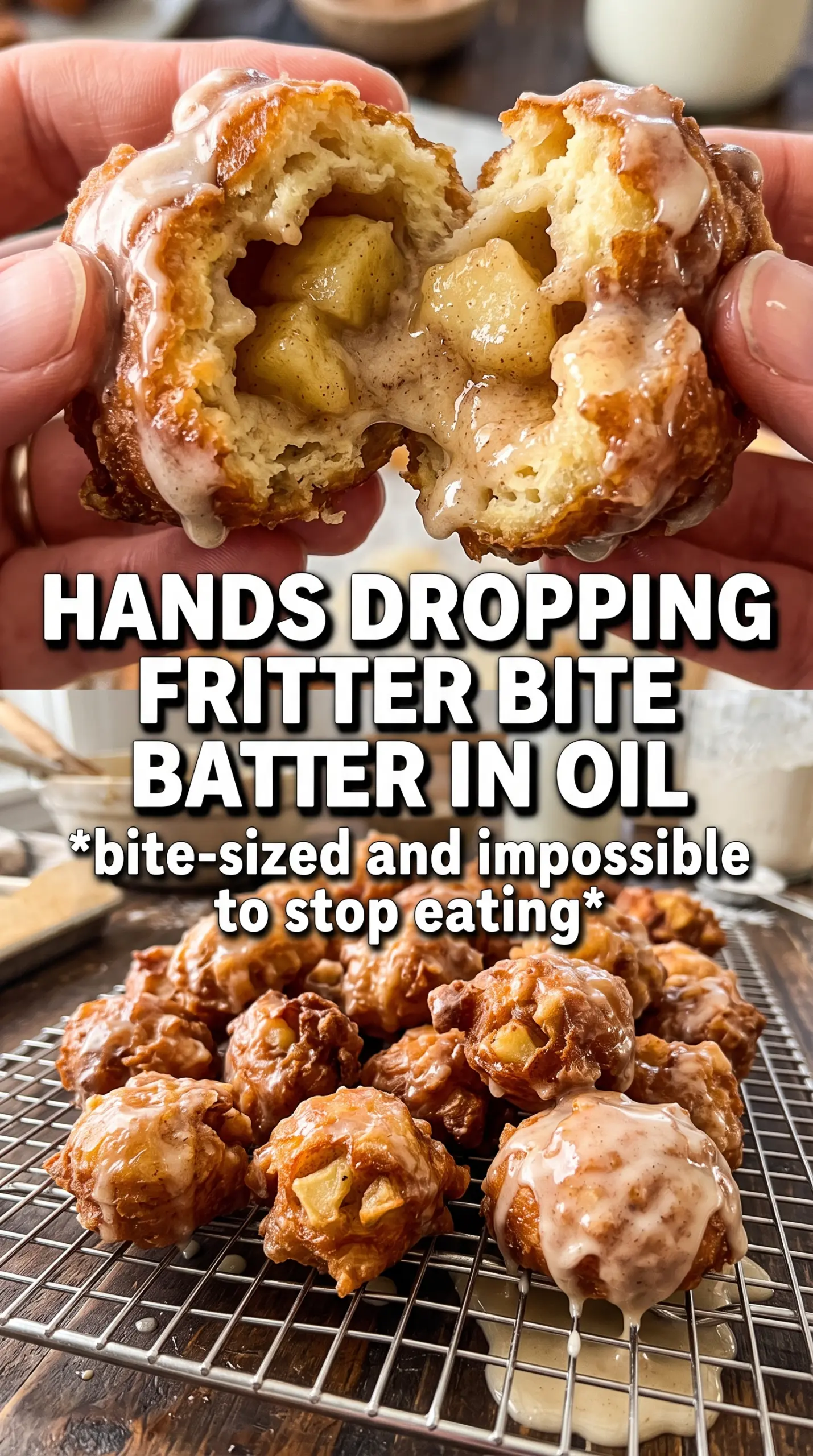
Apple fritter bites land with that same hot-from-the-shop appeal as a full-sized fritter, only faster to fry and easier to eat by the handful. The outside goes deep golden and crisp, the inside stays tender and speckled with tiny apple pieces, and the vanilla glaze settles into the craggy surface instead of sliding right off. That contrast is the whole reason they disappear so fast.
The trick is keeping the apple pieces very small so the batter holds together and cooks through in the short frying time. A batter that’s just mixed, not beaten smooth, gives you a lighter crumb and those rough edges that catch the glaze. The oil temperature matters just as much as the batter: too cool and the bites soak up grease, too hot and the outside darkens before the center has a chance to set.
Below you’ll find the exact fry timing, the glaze texture I use, and the little adjustment that helps these stay crisp for as long as possible after they hit the rack.
The bites stayed light instead of doughy, and the glaze set up just enough that they weren’t sticky messes. I made a double batch and the last few were still crisp after breakfast.
Save these Apple Fritter Bites for the mornings when you want a crisp glaze, cinnamon-kissed batter, and tender apple centers in every bite.
The Part That Keeps Apple Fritter Bites Light Instead of Greasy
Mini fritters can go wrong in one of two ways: they fry up dense, or they drink oil. Both problems usually come from batter that’s too wet or oil that never gets back to temperature after the first batch. These bites need a batter that drops from the spoon in rough mounds, not a pourable dough, so the outside can set before the apple juices have time to loosen everything.
The other thing that matters is the apple cut. Very fine dice gives you little pops of fruit without weighing the batter down. Larger chunks sound nice, but they create weak spots and uneven cooking, especially when the batter is only in the oil for a couple of minutes.
- Hot oil, not smoking oil — 360°F is the sweet spot here. Below that, the fritters absorb oil. Above that, the outside browns before the centers finish.
- Fresh apples — a crisp baking apple works best because it holds its shape. Soft apples turn mushy and disappear into the batter.
- Short fry time — these cook fast, so work in small batches and give the oil a minute to recover between scoops.
What Each Ingredient Is Actually Doing in the Batter
- All-purpose flour — gives the fritters enough structure to hold the apples without turning bread-like. Bread flour makes them tougher, so stick with all-purpose here.
- Baking powder — this is what gives the bites lift in the fryer. If it’s old, the fritters stay flat and heavy, so use fresh powder.
- Cinnamon and nutmeg — these don’t just season the batter; they make the apple flavor taste warmer and fuller. Nutmeg should stay in the background, not take over.
- Whole milk and eggs — the milk loosens the batter and the eggs help it set quickly around the fruit. Lower-fat milk works in a pinch, but the batter won’t taste as rich.
- Melted butter — adds just enough richness to keep the crumb from tasting dry. Don’t use hot butter; let it cool slightly so it doesn’t start cooking the eggs.
- Apples — dice them very finely so they soften in the short fry time. If the pieces are too big, the centers stay raw while the outsides brown.
- Powdered sugar glaze — the glaze should be thin enough to drizzle but thick enough to cling. If it’s too loose, add a spoonful more sugar; if it’s too thick, whisk in a few drops of milk.
Frying Them So the Centers Cook Before the Outside Goes Too Dark
Mixing the Batter Without Overworking It
Whisk the dry ingredients first so the baking powder and spices are evenly distributed, then add the wet ingredients and stir just until the flour disappears. A few small streaks are fine; a smooth, beaten batter makes the bites tight instead of tender. Fold in the apples at the end so they stay evenly scattered without being crushed. If the batter looks more like thick muffin batter than spoonable dough, it’s on track.
Testing the Oil Before the First Batch
Heat the oil to 360°F and hold it there. The easiest way to see if it’s ready is to drop in a tiny bit of batter: it should sizzle immediately, rise within a second or two, and turn golden in about two minutes. If it sinks and sits there, the oil is too cool. If it darkens almost at once, turn the heat down and give it time to settle before you start frying.
Turning and Draining for a Crisp Finish
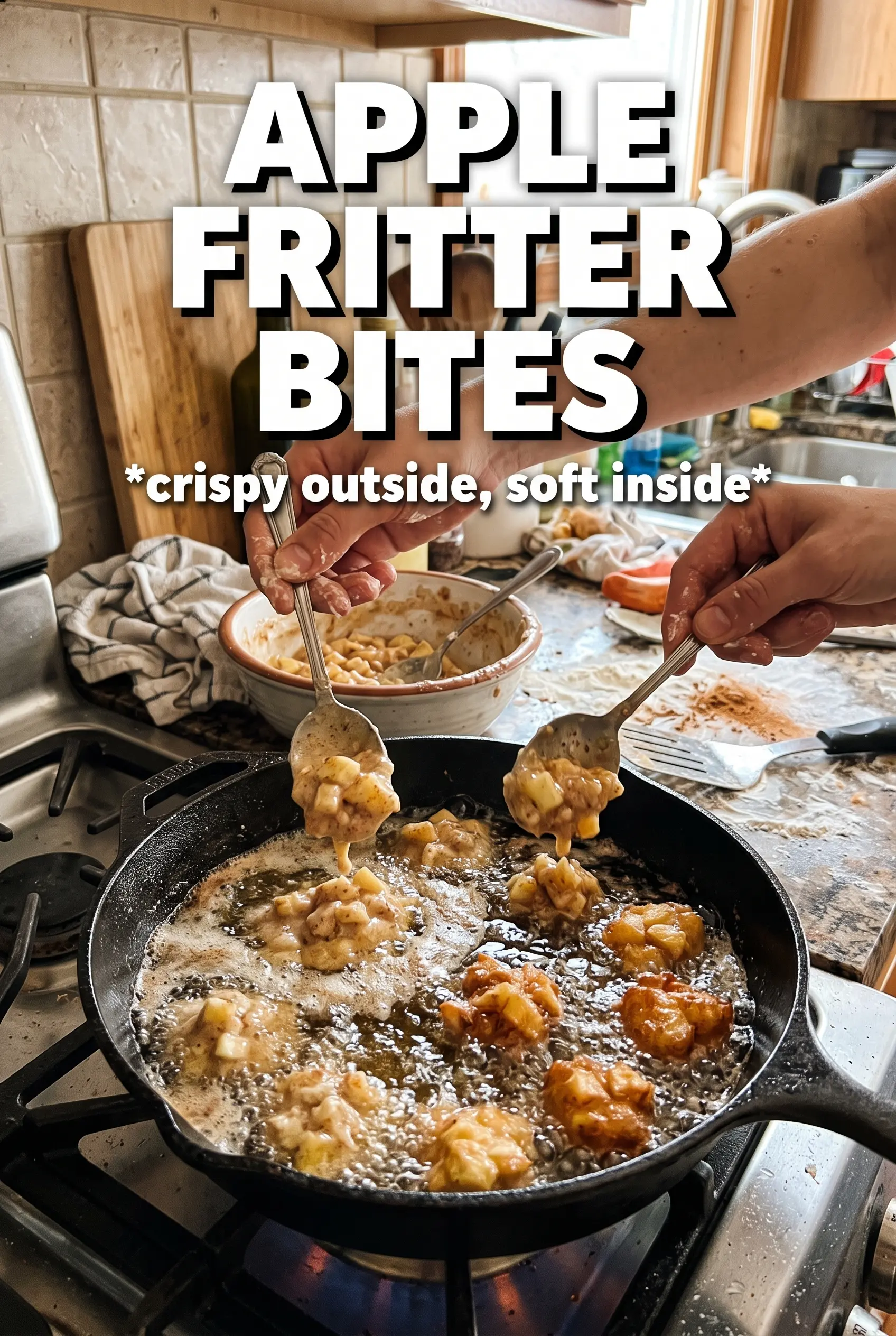
Drop rounded teaspoon-sized portions into the oil and leave room between them so the temperature doesn’t crash. Turn them as they brown so all sides cook evenly, and pull them when they’re a deep golden color all over. Drain them on paper towels or, even better, a rack set over paper towels so steam doesn’t soften the bottoms. Glaze them while they’re still warm so the sugar melts into the ridges instead of sitting on top like icing.
Make Them Dairy-Free
Swap the whole milk for an unsweetened non-dairy milk with some body, like oat milk. The fritters still fry up well, but the batter will taste a little less rich, so the cinnamon and vanilla matter even more.
Use a Cinnamon-Sugar Finish Instead of Glaze
Toss the warm fritters in a mix of granulated sugar and cinnamon right after draining. You’ll lose the shiny glaze, but you gain a drier, crisp exterior that stays snappier longer.
Bake Them Instead of Frying
Drop the batter onto a parchment-lined sheet and bake at 400°F until set and browned, about 12 to 15 minutes. They won’t have the same crackly fried edges, but this version is lighter and still gives you the apple-cinnamon center.
Storage and Reheating
- Refrigerator: Store in an airtight container for up to 2 days. The glaze softens the crust, so they’re best the day they’re made.
- Freezer: Freeze the unglazed fritters in a single layer, then transfer to a bag for up to 1 month. Glaze after reheating so the finish stays clean instead of sticky.
- Reheating: Warm in a 325°F oven or air fryer until hot through and the edges crisp back up. The common mistake is microwaving them, which makes the coating soggy and the centers gummy.
Answers to the Questions Worth Asking
Apple Fritter Bites
Ingredients
Equipment
Method
- In a bowl, whisk all-purpose flour, granulated sugar, baking powder, cinnamon, nutmeg, and salt until evenly combined. The mixture should look uniform in color with no visible clumps.
- In a separate bowl, whisk eggs, whole milk, melted butter, and vanilla extract until smooth. The mixture should be glossy and fully combined.
- Pour the wet ingredients into the dry ingredients and fold just until combined. Stop mixing when you no longer see dry flour for a tender bite.
- Fold in the very finely diced apples until the fruit is evenly distributed throughout the batter. The batter should look speckled with small apple pieces.
- In a bowl, whisk powdered sugar, milk, and vanilla until smooth and pourable. Adjust with a tiny splash more milk if needed so it drizzles easily.
- Heat vegetable oil in a heavy pot to 360F (about 2 inches deep). Keep the temperature steady so the bites cook through without darkening too fast.
- Drop rounded teaspoon-sized portions of batter into the oil, spacing them so they don’t stick together. Fry in small batches to maintain the oil temperature.
- Fry for 2-3 minutes, turning as needed, until deeply golden on all sides. The bites should look crisp and browned with a lifted, set surface.
- Drain the fritter bites on paper towels. Blot briefly so excess oil doesn’t thin the glaze.
- Drizzle with vanilla glaze while still warm. The glaze should lightly set and cling to the golden surfaces.