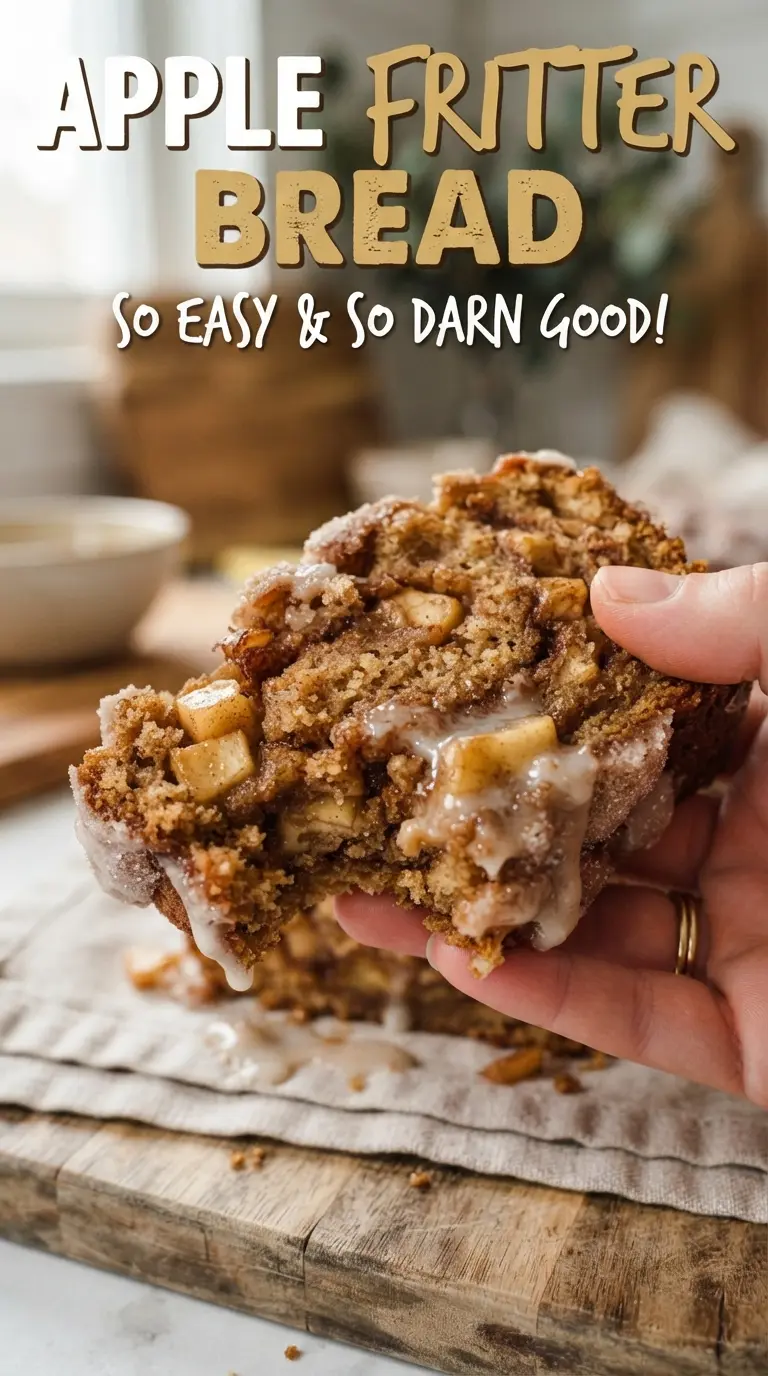
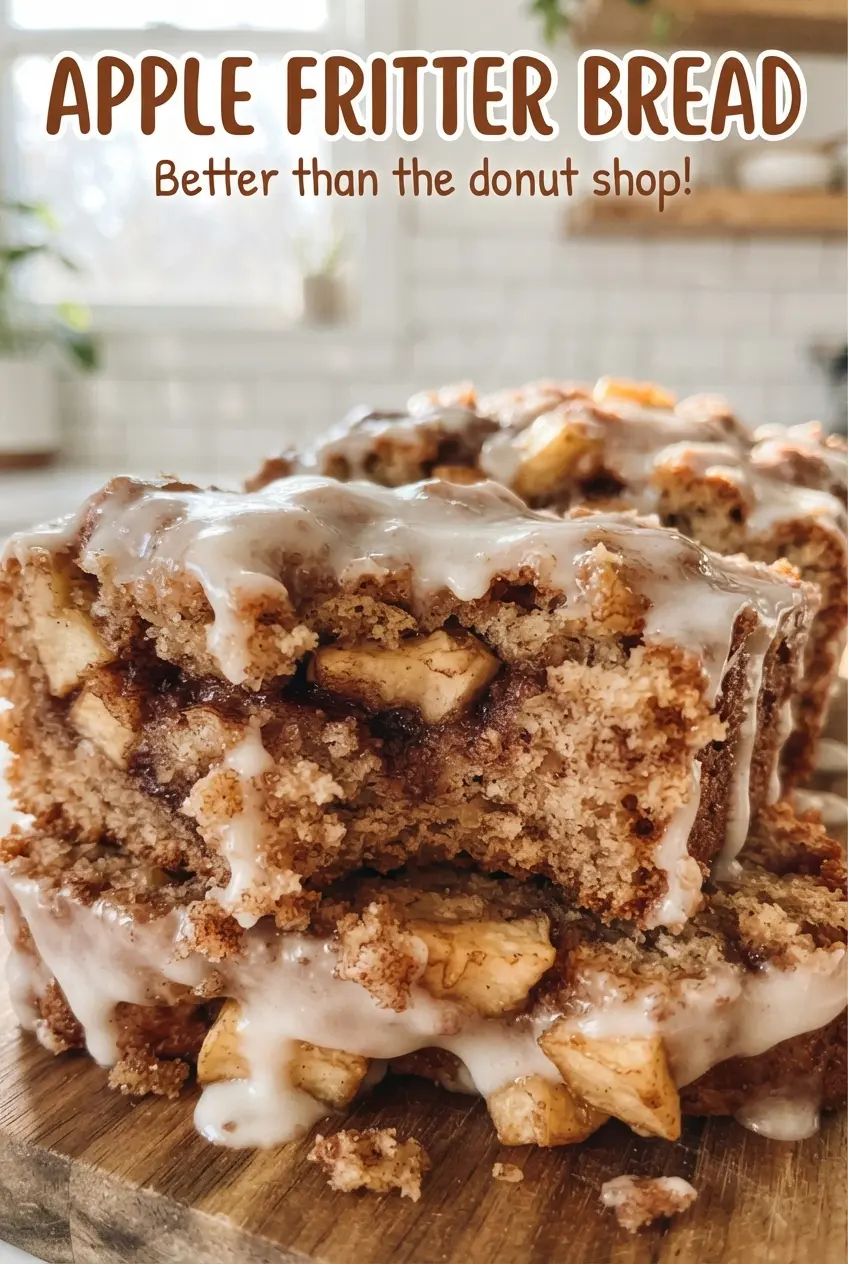
Apple fritter bread bakes up with a soft, tender crumb, pockets of cinnamon sugar, and juicy apple pieces that keep every slice interesting. The top turns golden and just a little crackly under a thick vanilla glaze, so it eats like a bakery treat without any fuss. It’s the kind of loaf people slice once and then keep circling back to all afternoon.
What makes this version work is the layering. The apples get tossed in cinnamon sugar first, which pulls a little moisture out and gives you those sticky pockets of flavor instead of bland fruit scattered through the batter. The batter itself stays simple and sturdy, so it can hold the fruit without sinking, and the gentle swirl at the end keeps the cinnamon sugar marbled through the loaf instead of disappearing into it.
Below, you’ll find a couple of small details that matter here: how to keep the apples from clumping, when to stop swirling, and how to glaze the loaf so it looks glossy instead of soaking in.
The apples stayed in little pockets instead of disappearing into the batter, and the cinnamon sugar made every slice taste like a bakery apple fritter. Mine needed the full 55 minutes, and the glaze set up beautifully once the loaf cooled.
Save this apple fritter bread for the days when you want cinnamon-swirled loaf cake with a thick vanilla glaze.
The Trick to Keeping the Apples in Distinct Layers Instead of Melting into the Batter
The biggest mistake with apple quick breads is adding too much fruit too soon, then wondering why the center turns dense or soggy. This loaf avoids that by splitting the cinnamon sugar and apples into two layers, so the fruit stays visible and the spice tastes concentrated instead of muddled. The batter is thick enough to support those layers, but it still needs to be spread carefully so the fruit doesn’t sink to the bottom before baking sets the crumb.
The other thing that matters is the swirl. You want movement, not mixing. A few figure-eight passes with a knife is enough to pull the sugar through the batter and give you that fritter-like ribboning. Overdoing it knocks out the layering and gives you a monotone loaf instead of those pockets of cinnamon sugar.
What Each Ingredient Is Actually Doing in This Loaf
- Apples — Use firm baking apples if you can. They keep their shape and give you little bursts of fruit instead of turning jammy. If your apples are on the sweet side, that’s fine; the cinnamon sugar handles the rest.
- Brown sugar — This is what gives the loaf that fritter-like depth. It adds moisture and a caramel note that white sugar alone can’t match. Packing it firmly gives you the right amount for the cinnamon swirl.
- Butter — Softened butter traps air when you beat it with the sugar, which helps the loaf rise with a tender crumb. Don’t melt it. Melted butter changes the texture and makes the loaf feel heavier.
- Milk — The milk loosens the batter just enough to spread cleanly in the pan. Whole milk gives the richest crumb, but any milk you keep on hand will work here.
- Powdered sugar — This makes the glaze set quickly and gives it that bakery finish. If you want a thinner drizzle, add the milk slowly until it falls in ribbons off the spoon.
Building the Swirl Without Overmixing the Batter
Mix the Cinnamon Sugar First
Stir the brown sugar and cinnamon together before you touch the apples. Tossing some of that mixture with the chopped fruit coats each piece and keeps the flavor from disappearing into the loaf. If you skip this step, the cinnamon tends to streak unevenly through the batter and the apples taste flatter.
Cream the Butter Until It Looks Pale
Beat the softened butter and granulated sugar until the mixture looks fluffy and lighter in color. That step adds air, which helps the loaf rise instead of baking up tight and heavy. Scrape down the bowl once or twice so the butter at the bottom doesn’t stay dense and leave streaks in the batter.
Fold in the Dry Ingredients Alternately With Milk
Add the flour mixture and milk in turns, starting and ending with the dry ingredients. That keeps the batter smooth without overworking it, which matters because a quick bread gets tough fast when the flour is stirred too long. Stop mixing as soon as the flour disappears; a few streaks vanish in the oven.
Layer, Swirl, and Bake Until Set
Spread half the batter in the pan, add half the apples and cinnamon sugar, then repeat. Use a knife for just a few gentle swirls through the top layer. Bake until the top is deep golden and a tester comes out clean or with only a few moist crumbs; if the center still looks wet, give it another 5 minutes and check again rather than pulling it early.
How to Adapt This Apple Fritter Bread for Different Pans and Preferences
Make It Dairy-Free
Swap the butter for a plant-based stick butter and use an unsweetened non-dairy milk in both the batter and glaze. The crumb will still stay tender, but you may lose a little of the rich buttery aroma that makes this loaf taste bakery-style.
Use a Sweeter or Tarter Apple
Sweet apples give a softer, dessert-like loaf, while tart apples keep the flavor brighter and more apple-forward. Granny Smith holds its shape especially well; Honeycrisp or Fuji gives you a softer bite and a little extra juice.
Gluten-Free Version
Use a good 1:1 gluten-free baking blend that already includes xanthan gum. The loaf will still slice well, but the crumb may be a little more delicate, so let it cool completely before cutting or it can crumble at the glaze line.
Storage and Reheating
- Refrigerator: Store covered for up to 4 days. The glaze will soften and the crumb gets a little denser, but the flavor holds well.
- Freezer: Freeze slices tightly wrapped for up to 2 months. Skip the glaze until after thawing for the cleanest finish.
- Reheating: Warm individual slices in the microwave for 10 to 15 seconds or in a low oven. If you heat it too long, the glaze melts off and the bread dries out at the edges.
Answers to the Questions Worth Asking
Apple Fritter Bread
Ingredients
Equipment
Method
- Preheat the oven to 350F, then grease and line a 9x5-inch loaf pan with parchment if desired.
- Mix brown sugar and ground cinnamon, then toss the chopped apples with 2 tablespoons of the mixture so the pieces coat evenly.
- Beat the softened butter and granulated sugar until fluffy, then beat in the eggs and vanilla extract until smooth.
- Whisk the all-purpose flour, baking powder, and salt together, then add to the batter alternately with the milk, mixing just until incorporated.
- Spread half the batter in the loaf pan, top with half the apples and half the remaining cinnamon sugar mixture, then repeat the layers.
- Swirl gently with a knife to create cinnamon streaks through the layers, keeping the swirl light so the loaf stays cohesive.
- Bake at 350F for 50-55 minutes, until a toothpick inserted in the center comes out clean.
- Cool the loaf for 15 minutes before glazing to help the drizzle set without running off.
- Whisk powdered sugar with enough milk to make a thick glaze, then drizzle over the warm loaf.