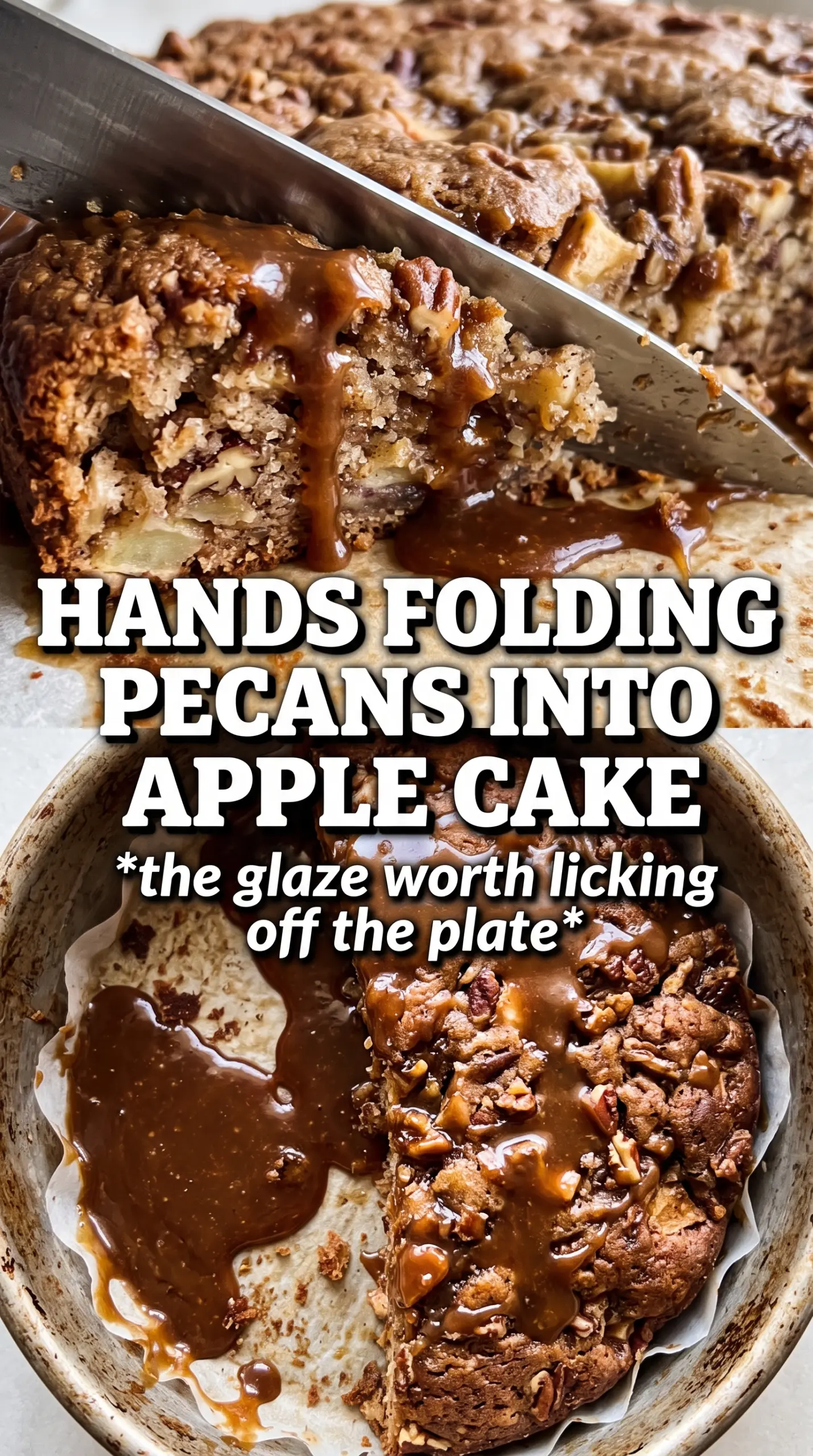
Apple pecan cake earns its place when the crumb stays tender, the apples bake into soft pockets, and the caramel glaze sinks into every ridge of the bundt instead of sliding off in one thin sheet. This version gives you that old-fashioned cake-shop look with a texture that stays moist for days, thanks to oil in the batter and plenty of diced apples tucked throughout. The pecans add crunch and a little bitterness that keeps the sweetness in check.
The trick is keeping the batter just barely mixed once the flour goes in. Overworking it turns a cake like this tight and bready instead of plush. The apples go in raw, not cooked, so they soften inside the oven and release just enough moisture to keep each slice from feeling dry. The caramel glaze is cooked just long enough to thicken slightly, which means it clings to the cake instead of running straight to the plate.
Below you’ll find the little details that matter most: how to keep the bundt from sticking, when the cake is done in the center, and the easiest way to get a smooth glaze that sets up with a shiny finish.
The cake came out unbelievably moist, and the caramel glaze soaked into the ridges just enough without making it sticky. I used a mix of sweet apples and the pecans stayed crunchy even the next day.
Love a moist bundt cake with apples, pecans, and thick caramel glaze? Save this one for the next time you want a dessert that slices cleanly and still tastes even better the next day.
The Part That Keeps the Crumb Tender Instead of Heavy
Bundt cakes can go dense fast when the batter gets overmixed or the pan is underprepared. This recipe avoids both problems by using oil instead of butter in the cake itself, which keeps the crumb soft even after it cools, and by folding the dry ingredients in only until the flour streaks disappear. That small pause matters. Once you add the apples and pecans, the batter should still look thick and a little rough, not glossy and overworked.
The other thing that makes this cake behave is the ratio of fruit to batter. Three cups of diced apples sounds like a lot, but that’s the point. They melt into the cake as it bakes and keep the center from drying out before the edges are done. If your apples are cut too large, the cake can bake unevenly and the middle may stay gummy around the fruit, so aim for small, even dice.
- Bundt pan prep — Grease every ridge, then flour the pan well. A plain sprayed coating can miss the deep grooves, and that’s where cakes tear when you unmold them.
- Oil — This gives the cake its plush, moist texture. Butter would add flavor, but it also firms up more when cool, which can make a fruit cake feel tighter.
- Apples — Use a firm baking apple if you can. Softer apples break down too much and can make the crumb wet in a patchy way.
- Pecans — Rough chop them so you get texture in every slice. Too-fine pieces disappear into the batter.
What Each Ingredient Is Actually Doing in This Cake
- All-purpose flour — Gives the cake enough structure to hold the apples and pecans without collapsing. Cake flour would make it softer, but it can’t carry this much mix-in as confidently.
- Baking soda — Works with the brown sugar and apples to help the cake rise and brown. If yours is old, the cake will bake up flat and taste dull.
- Cinnamon — This isn’t just background spice; it bridges the apples, pecans, and caramel so the cake tastes complete instead of scattered.
- Brown sugar — Adds moisture and a deeper molasses note that plain white sugar can’t mimic. That’s what gives both the cake and glaze their warm, almost toffee-like edge.
- Heavy cream in the glaze — It smooths the caramel and keeps it pourable. Milk can work in a pinch, but the glaze will be thinner and less rich.
- Vanilla — Stir it into both the batter and glaze after the heat is off or low. High heat can flatten its aroma before it reaches the cake.
Building the Batter and Glaze So They Stay Smooth
Mix the Base Without Beating in Too Much Air
Start by whisking the dry ingredients together so the baking soda and cinnamon are evenly distributed. Then beat the sugars, eggs, and oil only until they look fully combined and a little thickened; you are not trying to whip volume into this batter. If the mixture turns pale and fluffy, you’ve gone farther than you need, and the cake can bake up with a more fragile, uneven crumb. Add the vanilla next so it blends evenly before the flour goes in.
Fold in the Apples and Pecans Last
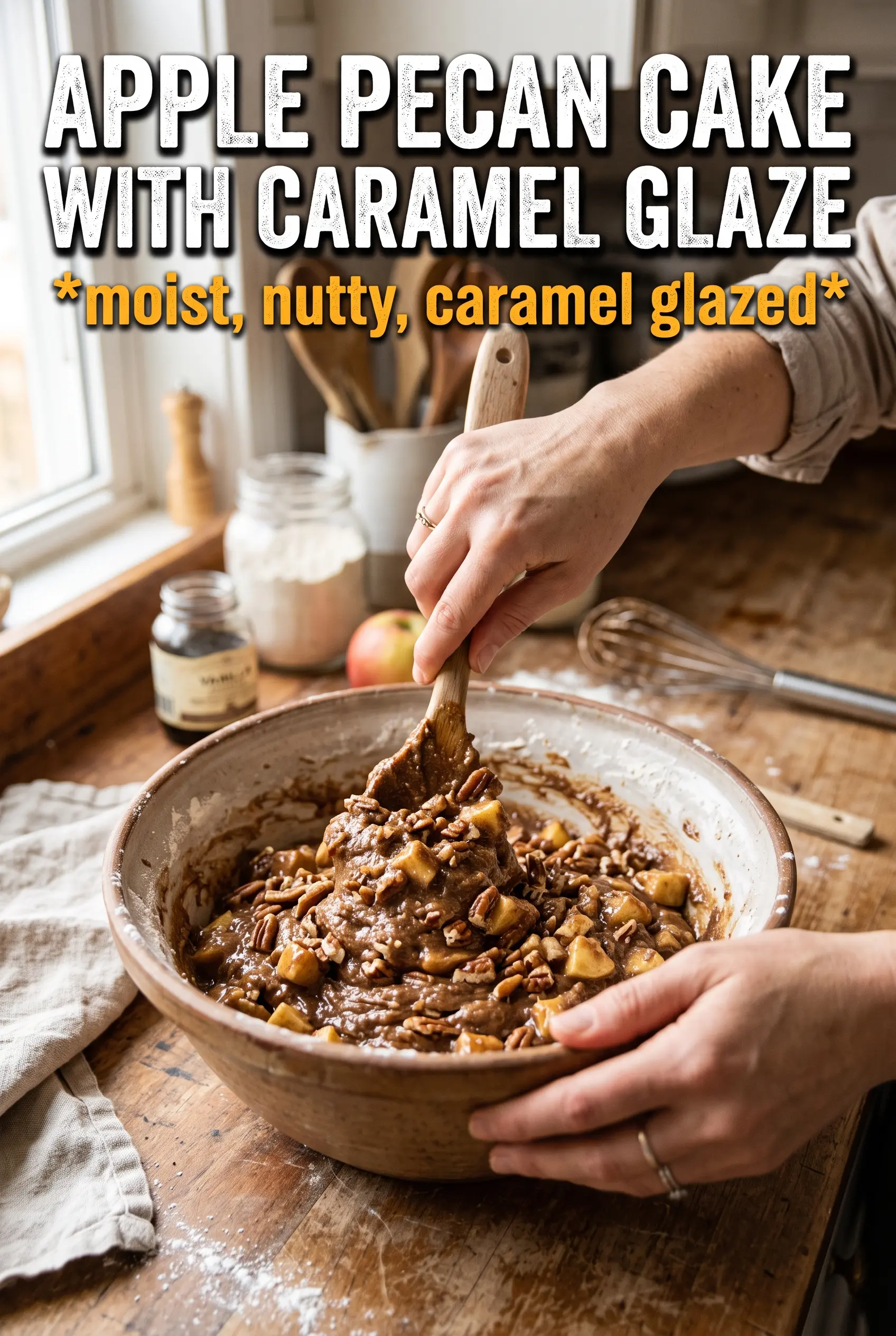
Once the flour mixture is just barely incorporated, switch to a spatula and fold in the apples and pecans. Stop when you no longer see dry flour. If you keep stirring at this stage, the batter tightens and the apples start releasing juice too early, which can make the cake bake up gummy around the center. The finished batter should be thick enough to mound in the pan.
Bake Until the Center Springs Back
Spoon the batter into the prepared bundt pan and level it lightly. Bake until a toothpick comes out clean from the thickest part and the top feels set when gently pressed. If the edges are deeply browned but the center still looks wet, cover loosely with foil and keep baking in short bursts. Bundt cakes like this need patience in the middle, and pulling it too early is what causes a raw tunnel under a done-looking crust.
Cook the Glaze Until It Naps the Spoon
Melt the butter and brown sugar together over medium heat, then stir in the cream and let it simmer for about two minutes. You’re looking for a glaze that thickens slightly and coats the back of a spoon, not a hard candy stage. Pull it off the heat before adding the vanilla and salt so the flavor stays bright. If it boils too long, it will thicken into a sticky sauce that sets before you can pour it cleanly.
How to Adapt This Apple Pecan Bundt for Different Needs
Dairy-Free Glaze Swap
Replace the butter with a plant-based butter and use full-fat coconut cream instead of heavy cream. The glaze will still thicken and pour well, though it will taste a little less caramel-like and a touch more coconut-forward if your substitute has a strong flavor.
Nut-Free Version
Leave out the pecans and add an extra cup of diced apples if you want to keep the same volume of mix-ins. You’ll lose the crunchy contrast, but the cake stays moist and the apple flavor comes forward more strongly.
Gluten-Free Adjustment
Use a 1:1 gluten-free baking flour with xanthan gum already included. The cake will still slice well, but it may be a little more delicate when warm, so let it cool fully before unmolding.
Storage and Reheating
- Refrigerator: Store covered for up to 5 days. The crumb stays moist, though the glaze will firm up a bit in the fridge.
- Freezer: Freeze unfrosted slices tightly wrapped for up to 2 months. Add fresh glaze after thawing for the best texture.
- Reheating: Warm individual slices briefly in the microwave or a low oven. Long reheating dries the edges before the center has a chance to soften.
Questions I Get Asked About This Recipe
Apple Pecan Cake With Caramel Glaze
Ingredients
Equipment
Method
- Preheat the oven to 325F, then grease and flour a 10-inch bundt pan.
- Whisk together all-purpose flour, baking soda, cinnamon, and salt until evenly combined.
- Beat granulated sugar, brown sugar, eggs, and vegetable oil until combined, then beat in vanilla extract.
- Fold the flour mixture into the wet ingredients just until no dry streaks remain.
- Fold in the apples and pecans so they’re evenly distributed throughout the batter.
- Pour the batter into the prepared bundt pan, smoothing the top.
- Bake for 65-75 minutes, until a toothpick comes out clean.
- Cool the cake in the pan for 20 minutes.
- Invert the cake onto a rack to finish cooling.
- Make caramel glaze by melting unsalted butter and brown sugar together over medium heat.
- Stir in heavy cream, vanilla extract, and salt, then simmer for 2 minutes.
- Pour the warm caramel glaze over the cooled cake, letting it cascade down the ridges.