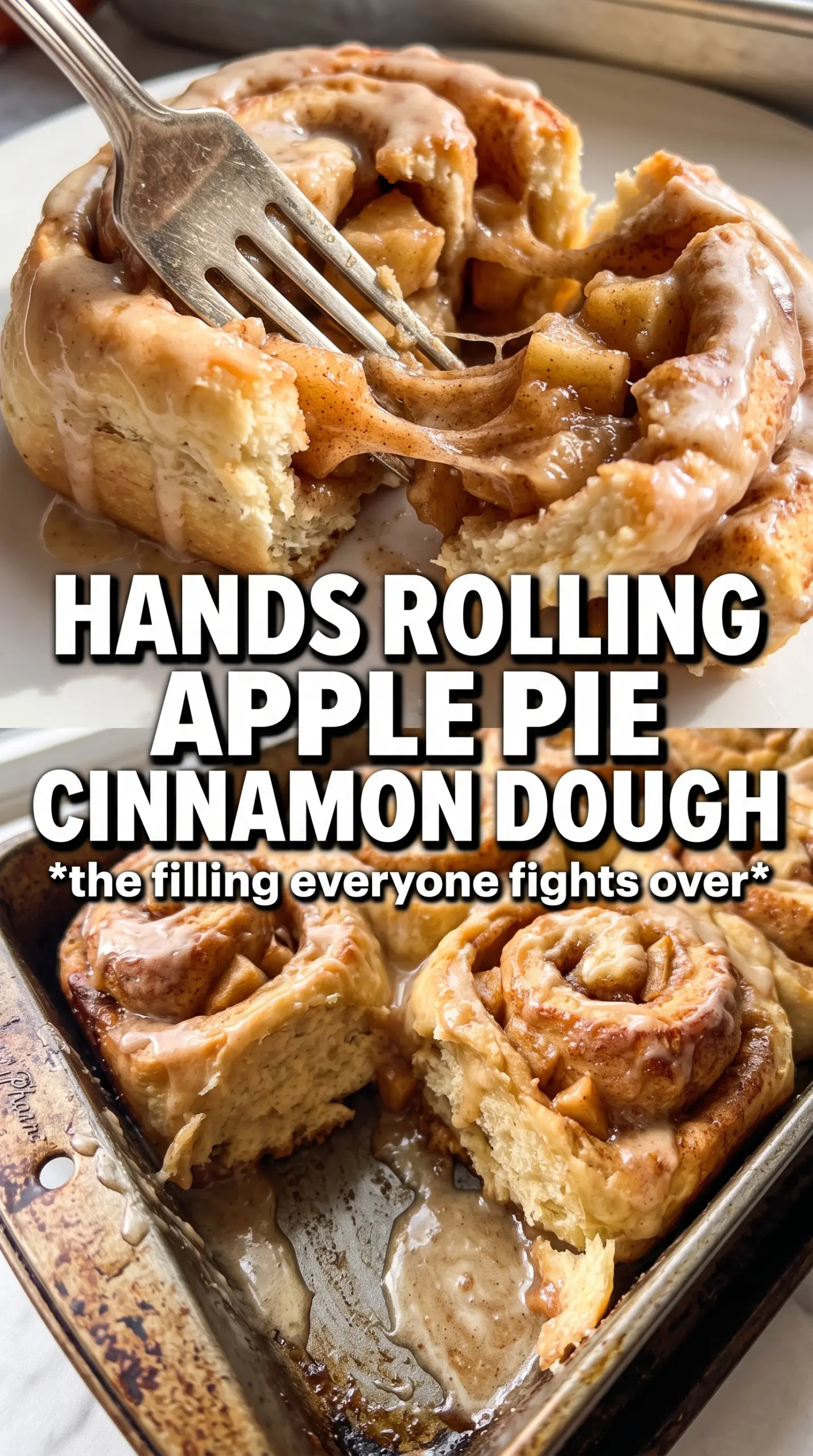
Soft, spiraled apple pie cinnamon rolls bake up with tender dough, saucy spiced apples, and just enough caramel to make the whole pan feel special. The rolls pull apart in fluffy layers, and the filling stays tucked into the swirls instead of leaking out across the pan. That balance is what keeps this version on repeat.
The trick is cooking the apple filling before it ever meets the dough. Raw apples release too much juice in the oven, which can leave the center wet and the spirals muddy. Pre-cooking the fruit with cornstarch gives you a thick, spoonable filling that sets inside the roll and keeps every bite neat and rich. The cream cheese glaze adds tang so the sweetness never tips over.
Below, I’ve included the little details that matter most: how thick the apple filling should be, what to look for when the dough has risen enough, and the easiest way to cut clean rolls without squashing the spiral.
The apple filling thickened up right in the skillet and stayed in the spirals instead of running all over the pan. I loved that the rolls still tasted like apple pie the next day after a quick reheat.
Like this recipe? Save these apple pie cinnamon rolls for a brunch pan that bakes up fluffy, gooey, and filled with real spiced apples.
The Fillings That Leak Are the Ones That Skip the Skillet
Apple pie cinnamon rolls can go wrong in one obvious way: the filling turns watery and slips out before the rolls finish baking. That happens when the apples go in raw or when the thickener never gets the chance to do its job. Cooking the apples first changes the whole outcome. The sugar pulls out the juice, the cornstarch catches it, and the mixture turns glossy and thick enough to spread without puddling.
The dough matters too, but not because it needs to be fussy. A soft enriched dough gives you tender layers that stay pillowy after baking, yet it still needs enough flour to roll cleanly. If the dough feels sticky after kneading, that’s normal; it should be smooth and supple, not dry and stiff. Dry dough bakes up dense, and dense dough fights the filling instead of supporting it.
- Apples — Use apples that hold their shape, like Honeycrisp, Granny Smith, or a mix. Soft apples break down too fast and turn the filling into applesauce.
- Cornstarch — This is what thickens the filling into a spoonable paste. Flour won’t give you the same clean, glossy finish.
- Brown sugar — It brings the caramel note that makes the filling taste like pie, not just cinnamon fruit. Dark brown sugar gives a deeper molasses edge if that’s what you like.
- Butter in the filling — It helps the spices bloom and keeps the mixture rich. Don’t skip it; dry filling tastes flat and sticks in clumps.
What Each Ingredient Is Actually Doing in This Recipe
- Primary ingredient (the star) — Quality matters most. Choose the best you can find.
- Cooking medium (oil, butter, or broth) — This carries flavors and prevents dryness.
- Seasonings (salt, pepper, spices, herbs) — Layer flavors so nothing overpowers. Build depth gradually.
- Aromatics (garlic, onion, herbs) — Cook with fat to bloom flavors. Become the foundation.
- Supporting ingredients — Complement the main ingredient without overpowering it.
- Sauce or liquid (if applicable) — Brings flavors together. Balance richness with acid.
- Acid (lemon, vinegar, wine, or other) — Brightens and prevents flat-tasting results.
- Final finish (garnish, glaze, or sauce) — Prevents one-dimensional taste and adds visual appeal.
Building the Spiral So Every Roll Bakes Up Evenly
Waking Up the Yeast
Warm the milk until it feels like a comfortable bath, not hot. Stir in the sugar and yeast, then leave it alone until the surface looks foamy and a little domed. If nothing happens after five to ten minutes, the milk was likely too hot or the yeast is tired, and the dough won’t rise well. Start over before you waste the rest of the ingredients.
Making the Dough Soft, Not Dense
Mix in the butter, eggs, vanilla, flour, and salt until a shaggy dough forms, then knead until it turns smooth and elastic. It should feel soft and slightly tacky, not dry. If you add too much flour here, the rolls bake up tight and bready instead of fluffy. Let the dough rise until doubled in size and puffy across the top; it should look alive, not just a little bigger.
Cooking the Apple Filling Until It Holds Together
Cook the apples with brown sugar, cinnamon, nutmeg, allspice, cornstarch, and butter over medium heat until the fruit softens and the mixture thickens. You want it glossy and jammy, with no watery syrup left in the pan. Cool it completely before spreading it on the dough, because warm filling softens the dough and makes rolling harder. If it’s even a little hot, the spiral will smear and the rolls won’t cut cleanly.
Rolling, Cutting, and Second Rise
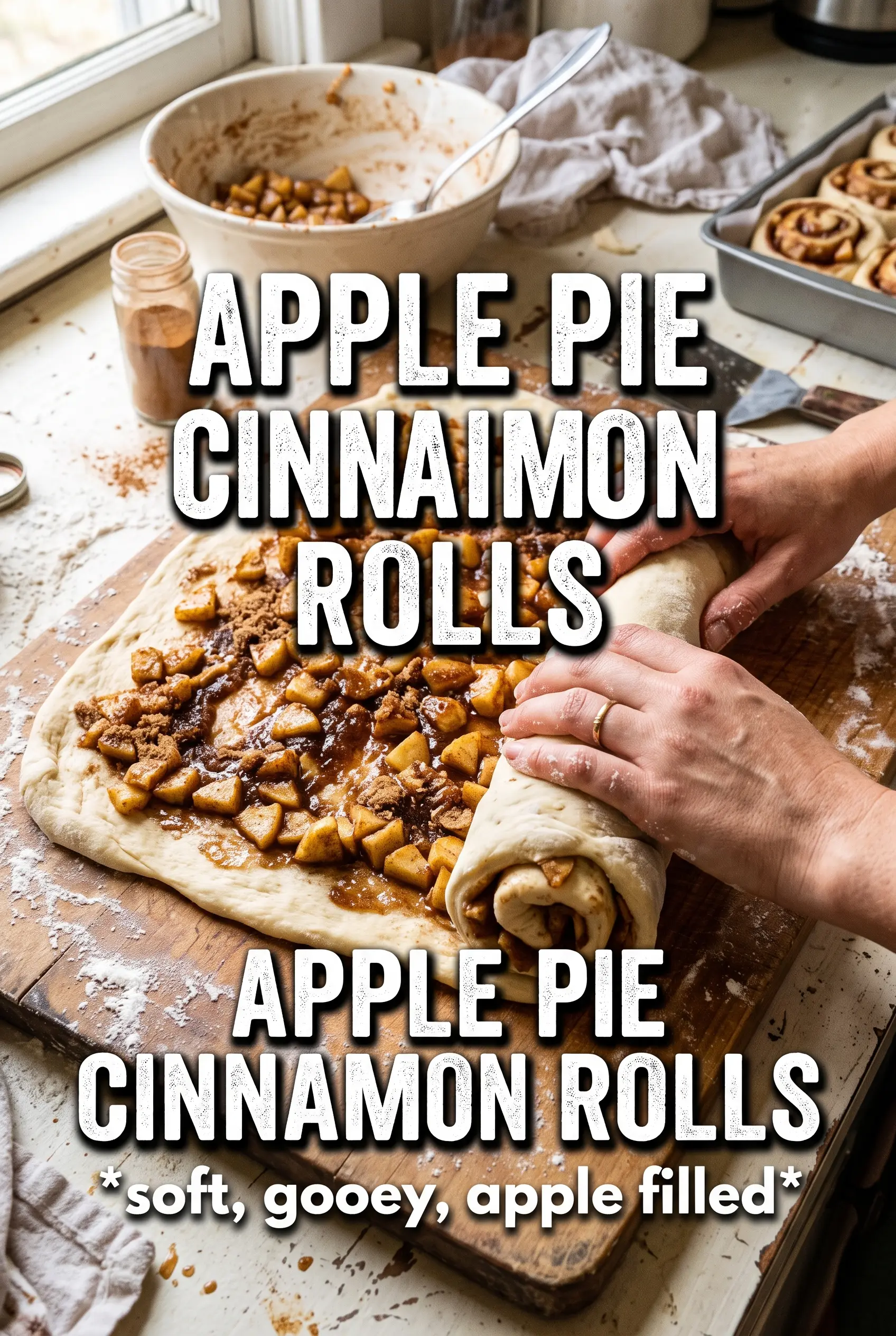
Roll the dough into a neat rectangle and spread the cooled filling all the way to the edges, leaving just a narrow strip along one long side to help seal the roll. Roll it tightly so the swirl stays defined, then use a sharp knife or unflavored dental floss to cut 12 even pieces. Place them cut-side up in the dish with a little space between each one, then let them rise until they look pillowy and touch at the edges. If they go into the oven underproofed, they’ll split unevenly instead of lifting into soft spirals.
Baking and Finishing
Bake until the tops are deeply golden and the centers are set but still soft when pressed lightly. The rolls should smell like toasted butter, baked apples, and cinnamon all at once. Add the cream cheese glaze while they’re still warm so it melts into the crevices, then finish with caramel drizzle. If you wait until they’re fully cool, the glaze sits on top instead of sinking into the swirls.
How to Adapt These Apple Pie Cinnamon Rolls Without Losing the Good Part
Use pears instead of apples
Firm pears can work here, but they soften faster than apples, so cook them just until the juices thicken and stop there. The filling will be a little silkier and less tart, which pairs nicely with the cream cheese glaze.
Make them dairy-free
Swap the milk for a plain unsweetened plant milk, the butter for a good dairy-free baking stick, and the cream cheese for a dairy-free version. The texture stays close, though the glaze may be a little softer and less tangy depending on the brand you use.
Cut the sweetness back
Use a lighter hand with the brown sugar in the filling and drizzle less caramel over the top. The rolls will taste more like baked apples and warm spice, with the glaze carrying the sweetness instead of the filling.
Make-ahead storage
These rolls keep well and reheat beautifully, which makes them a smart brunch option. Bake them the day before, then warm individual rolls gently before glazing if you want the freshest texture.
Storage and Reheating
- Refrigerator: Store covered for up to 4 days. The rolls soften a bit as they sit, but the filling stays pleasantly gooey.
- Freezer: Freeze baked rolls without glaze for up to 2 months. Wrap them well and thaw overnight in the refrigerator before reheating.
- Reheating: Warm in a 300°F oven, covered loosely with foil, until heated through. The biggest mistake is blasting them in the microwave too long, which turns the dough rubbery and makes the filling separate.
Questions I Get Asked About This Recipe
Apple Pie Cinnamon Rolls
Ingredients
Equipment
Method
- Stir warm milk with sugar and active dry yeast, then let stand 5 minutes until foamy and active.
- Mix melted unsalted butter, eggs, and vanilla into the yeast mixture, then add all-purpose flour and salt until a soft dough forms.
- Knead the dough for 8 minutes until smooth, then cover and let rise for 1 hour until doubled in size.
- Combine apples, brown sugar, cinnamon, nutmeg, allspice, cornstarch, and butter in a skillet and cook over medium heat for 8-10 minutes until thickened and saucy.
- Cool the apple filling completely before assembling the rolls.
- Roll the dough into a 12x18 rectangle and spread the apple pie filling evenly over the surface.
- Roll the dough tightly into a log and cut into 12 rolls, then arrange them in a greased 9x13 dish.
- Cover and let the rolls rise for 45 minutes until puffy.
- Bake at 375F for 22-25 minutes until golden on top.
- Warm and stir cream cheese glaze ingredients until smooth, then drizzle over the hot rolls.
- Drizzle caramel sauce over the top while the glaze is still set so it weaves through the rolls.