Apple snickerdoodles bake up with the kind of soft, crinkled centers and cinnamon-sugar edges that disappear fast from a cookie plate. The dried apple pieces keep every bite interesting, giving the familiar snickerdoodle chew a little burst of fruit and a gentle tart-sweet finish that keeps you reaching for another one.
What makes this version work is the balance. Cream of tartar gives the dough that classic snickerdoodle tang and helps the cookies stay tender, while the chopped dried apples add flavor without watering down the dough. The apple pie spice in the coating is subtle, but it rounds out the cinnamon and makes the whole cookie taste a little warmer and more complete.
Below, I’ve included the little details that matter most: how to keep the centers soft instead of dry, what kind of dried apple works best, and the one small adjustment that keeps the coating crisp after baking.
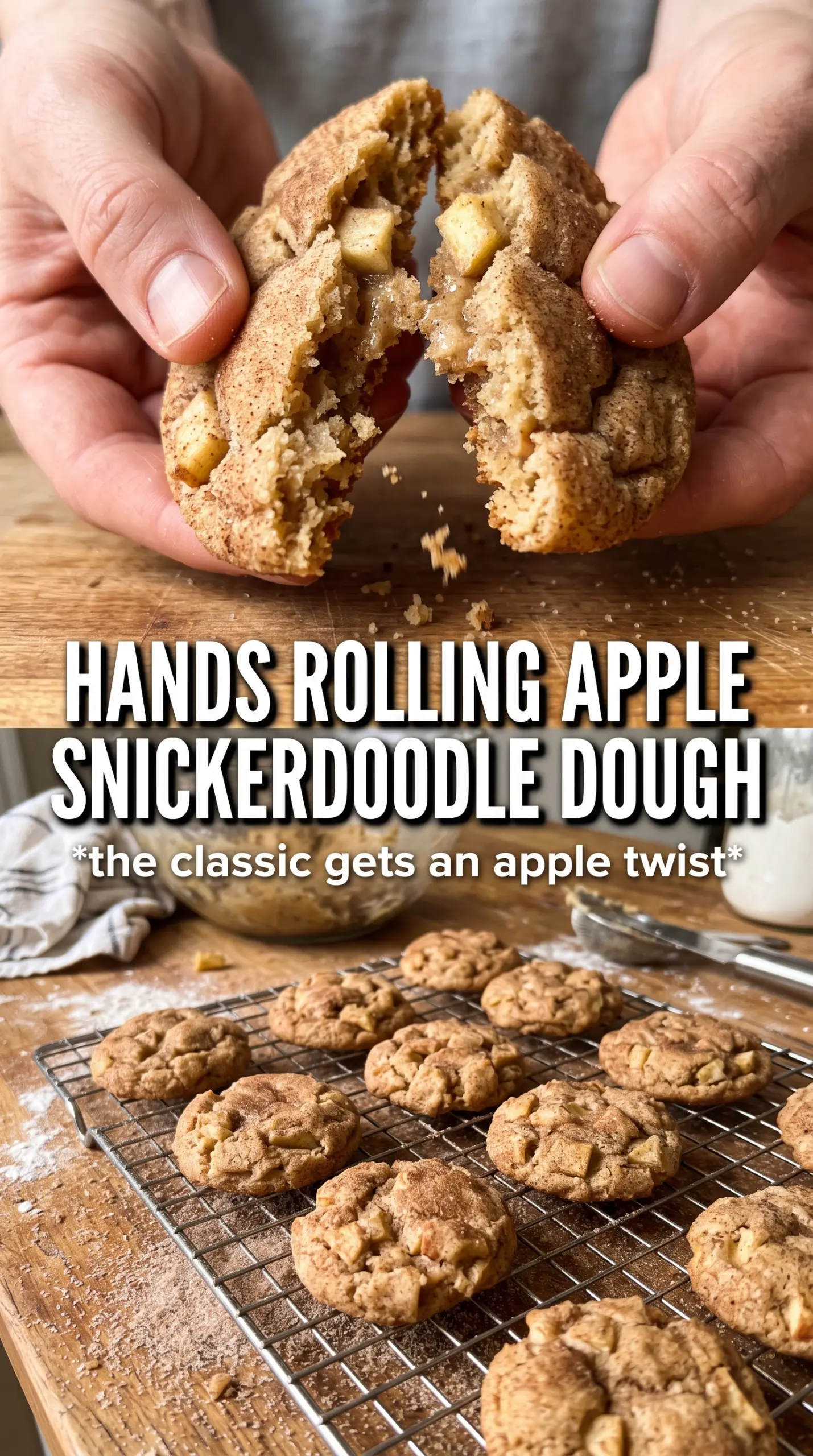
The cookies stayed soft for days, and the chopped dried apples gave them this little chewy bite that made the cinnamon sugar coating taste even better.
Save these apple snickerdoodles for the days when you want soft, cinnamon-sugar cookies with a little extra chew from dried apples.
The Trick to Keeping Snickerdoodles Soft After the Apples Go In
Dry fruit can work against a cookie if it’s added carelessly. The apples in this dough need to be chopped fine enough to distribute through the cookie without creating soggy pockets or tearing the dough apart. Large pieces make the cookie uneven; tiny, even pieces fold in cleanly and keep each cookie tender all the way through.
Cream of tartar matters here too. It gives snickerdoodles their classic tang, but it also keeps the texture from turning into a plain sugar cookie. If you skip it, you’ll still get a sweet cinnamon cookie, but you’ll lose the soft, slightly chewy crumb that makes a snickerdoodle taste like a snickerdoodle in the first place.
- Chopped dried apple pieces — These bring the apple flavor without adding excess moisture. Chop them small enough that they disappear into the dough, but not so fine that they turn into dust.
- Cream of tartar — This is what gives the cookies their signature tang and helps create that puffy, crinkled texture. Baking powder won’t give the same result.
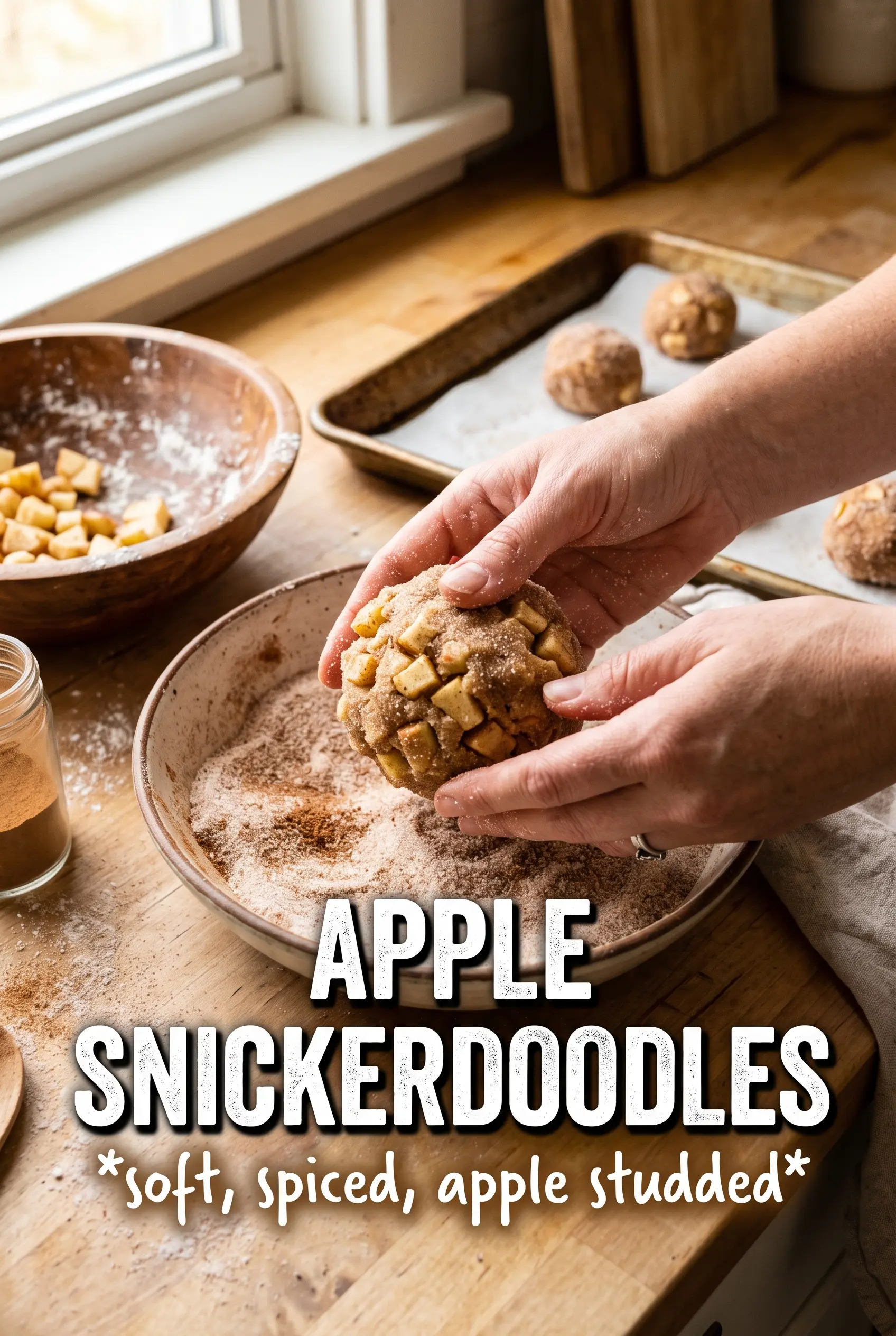
- Cinnamon-sugar coating — Rolling the dough generously gives you the classic crackled look and a crisp outer layer that contrasts with the soft center.
- Butter at the right softness — Softened, not melted, butter traps air when you beat it with the sugar. That step is what keeps the cookies light instead of dense.
What Each Ingredient Is Actually Doing in These Cookies
The flour gives the cookies their structure, but the ratio here is still tender enough for a soft bite. If your cookies spread too much, the flour was probably under-measured or the butter was too warm. A light hand with the flour mixture keeps the cookies from turning cakey.
Vanilla smooths out the tang from the cream of tartar, and nutmeg quietly boosts the apple note without pushing the cookies into pie territory. The rolling mixture matters more than it looks like it should; that pinch of apple pie spice adds a layered finish that makes the cinnamon taste warmer and more rounded.
- All-purpose flour — Reliable and exactly right here. Bread flour would make the cookies tougher, while cake flour would make them too fragile.
- Butter and sugar — Beating them until fluffy is what traps air for a soft cookie. Stop when the mixture looks pale and whipped, not greasy.
- Eggs — They bind the dough and help the cookies hold their shape while still baking up soft in the center.
- Dried apple pieces — Use soft dried apples if you can find them. Very dry, leathery pieces need a longer chop and can make the dough harder to mix.
Getting the Crinkle Without Overbaking the Centers
Building the Dough Base
Start by whisking the dry ingredients together so the cinnamon, nutmeg, baking soda, and cream of tartar are evenly distributed. That keeps one cookie from tasting spicier than the next. Beat the butter and sugar until the mixture turns noticeably lighter in color and looks fluffy around the edges of the bowl. If it still looks dense, the cookies will bake up heavier than they should.
Folding in the Apples
Add the flour mixture in just until the last streaks disappear, then fold in the chopped apples. Overmixing at this stage makes the dough stiff and can crush the apple pieces into the batter. The dough should be soft and scoopable, not sticky enough to smear across the bowl.
Rolling and Baking for the Signature Crackle
Scoop the dough into 1 1/2-tablespoon balls and roll them thoroughly in the cinnamon-sugar mixture. Bake on parchment-lined sheets until the edges are set and the centers still look slightly soft and puffed. That underdone center is the whole point; the cookies finish setting on the pan, and that’s when the crinkles appear. Pull them too late and they lose that soft, snickerdoodle texture.
The Cooling Window That Matters
Let the cookies sit on the baking sheet for 3 minutes before moving them. They’re fragile at first, and that short rest lets the structure set without drying out. Once they move to a rack, the tops settle into those classic cracks while the centers stay soft.
Three Ways to Adjust the Apples, Spice, and Texture
Make them gluten-free
Use a 1:1 gluten-free baking blend that includes xanthan gum. The texture will be a little more delicate and less chewy than the original, but the cookies still hold their crinkle and cinnamon-sugar coating well.
Add a stronger apple flavor
Use dried tart apple pieces instead of sweet ones, and add another 1/4 teaspoon of apple pie spice to the coating. That sharper apple flavor gives the cookies a more pronounced fruit note without changing the structure of the dough.
Make them dairy-free
Swap in a plant-based butter stick with a similar fat content. Softened vegan spreads in tubs often contain too much water, which changes the spread and can make the cookies flatter.
Storage and Reheating
- Refrigerator: Store in an airtight container for up to 5 days. The cookies stay soft, though the coating softens a little after the first day.
- Freezer: Freeze baked cookies for up to 2 months, or freeze the rolled dough balls and bake from frozen with 1 to 2 extra minutes. Keep them sealed well so the cinnamon sugar doesn’t pick up freezer odors.
- Reheating: Warm baked cookies in a 300F oven for 3 to 5 minutes. Don’t microwave them unless you want a softer, slightly sticky cookie, because the sugar coating loses its texture fast in the microwave.
Questions I Get Asked About This Recipe
Apple Snickerdoodles
Ingredients
Equipment
Method
- Preheat the oven to 375F and line baking sheets with parchment for easy release and even browning.
- Whisk all-purpose flour, cream of tartar, baking soda, cinnamon, nutmeg, and salt together until evenly combined.
- Beat the softened unsalted butter and granulated sugar until very light and fluffy, about 2–3 minutes.
- Beat in the eggs one at a time, then mix in the vanilla extract until smooth.
- Stir in the flour mixture until just combined, then fold in the finely chopped dried apple pieces.
- In a shallow bowl, mix the sugar, cinnamon, and apple pie spice for rolling.
- Scoop 1-1/2 tablespoon balls, roll each in the cinnamon-sugar mixture, and place on the prepared baking sheets with space between.
- Bake at 375F for 10–12 minutes until the edges are set and the centers are still slightly soft.
- Cool on the pan for 3 minutes; the cookies will crinkle as they cool.