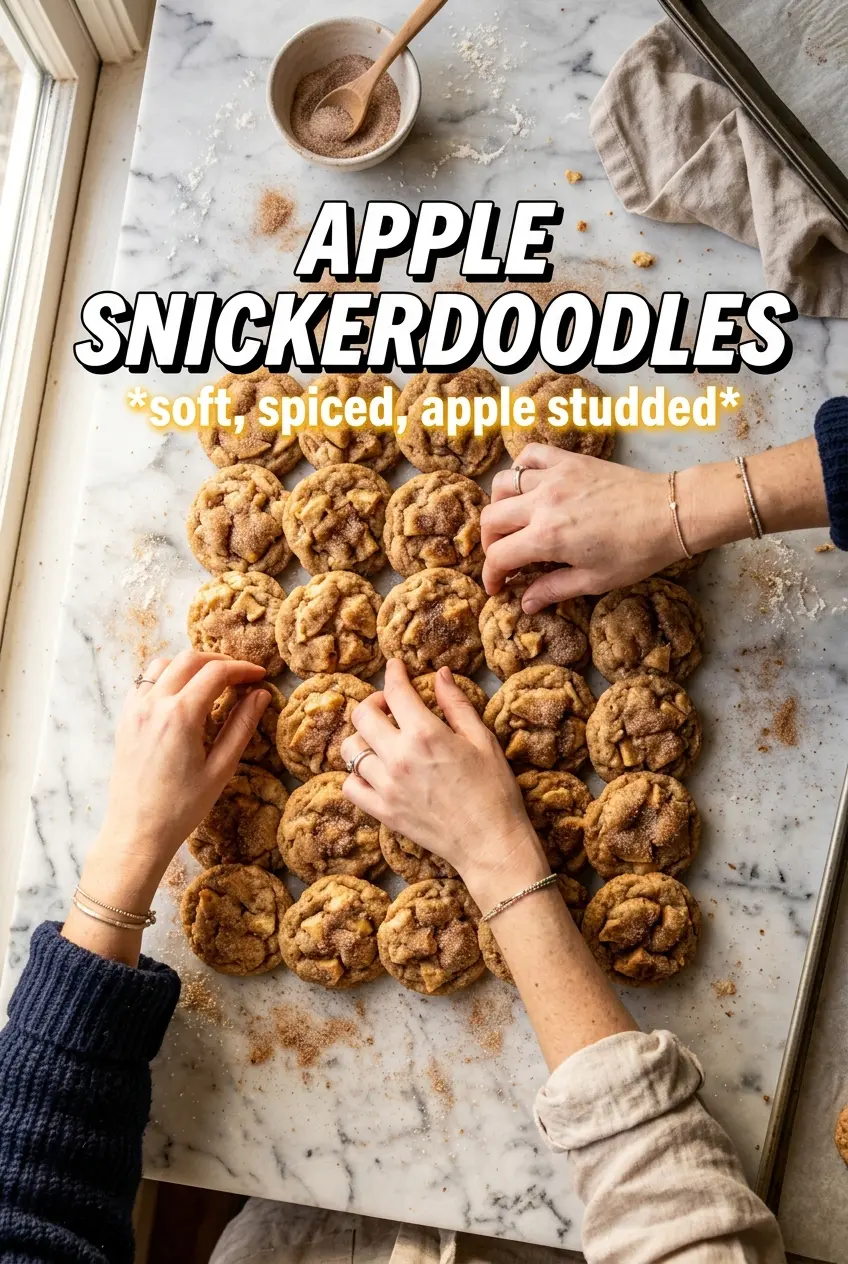
Apple snickerdoodles bake up with crisp, cinnamon-sugar edges and soft centers that stay tender for days. The dried apple pieces give each bite a little chew and a concentrated apple flavor that reads more clearly than fresh fruit ever could in this kind of cookie. They taste familiar at first, then the apple pie spice and warm spice blend sneak in and make them stand out from a standard snickerdoodle tray.
The trick is keeping the dough on the soft side without letting it spread too much. Creaming the butter and sugar until truly light helps the cookies rise with those signature cracks on top, and the dried apples need to be chopped finely so they distribute evenly instead of tearing the dough apart. The cinnamon-sugar coating matters too. It gives the cookies that classic snickerdoodle crust while the apple butter-like warmth comes through inside.
Below you’ll find the little details that keep these cookies plush instead of dry, plus the best way to store them so they stay chewy after the first day.
The centers stayed soft and chewy, and the cinnamon-sugar coating baked into those crackly tops just like I hoped. I chopped the dried apples small and they were perfect in every bite.
Save these apple snickerdoodles for the kind of cookie tray that needs a soft center, crackly cinnamon tops, and a little apple in every bite.
The Small Mistake That Makes Snickerdoodles Spread Too Much
Most snickerdoodle problems start before the cookies ever hit the oven. If the butter is too warm, the dough loosens and the cookies flatten before the centers set. If the flour is packed, the dough gets dense and the apple pieces can sink instead of staying suspended through the crumb. The goal here is a dough that scoops cleanly, holds its shape in the oven, and still bakes up tender.
The dried apple pieces are part of the structure, not just the flavor. Fresh apple adds extra moisture and turns these into a different cookie, but finely chopped dried apple gives you concentrated fruit flavor without throwing off the bake. Cream of tartar is the other non-negotiable piece. It gives snickerdoodles their slight tang and helps create that soft, chewy texture people expect from the classic version.
- Cream of tartar — This is what gives snickerdoodles their signature tang and helps the texture stay soft. Baking powder won’t give the same result here.
- Dried apple pieces — Chop them finely so they blend into the dough instead of making rough pockets. Bigger chunks can cause uneven baking and cracked dough balls.
- Butter — Use softened butter, not melted. Softened butter traps air during creaming, which helps the cookies puff and crinkle instead of puddling.
- Spice blend — Cinnamon, nutmeg, allspice, and the apple pie spice in the coating give the cookies depth. If you reduce anything, cut back the nutmeg and allspice before you cut the cinnamon.
What Each Ingredient Is Actually Doing in These Cookies
- All-purpose flour — This gives the cookies enough structure to hold the dried apples and the sugar coating. Spoon and level it instead of packing it down if you want the right texture.
- Granulated sugar — Sugar sweetens the dough and helps create those crisp, sparkly edges. The rolling sugar also gives the outside that classic snickerdoodle finish.
- Eggs — Eggs bind the dough and add moisture so the centers stay soft after baking. Add them one at a time if the butter mixture looks delicate, then mix just until combined.
- Vanilla extract — Vanilla rounds out the spice and apple flavors. It won’t stand out on its own, but you’d miss the depth if you left it out.
- Finely chopped dried apple pieces — These bring concentrated apple flavor without watering down the dough. If your dried apples are tough, chop them with a sharp knife instead of trying to break them up in the mixer.
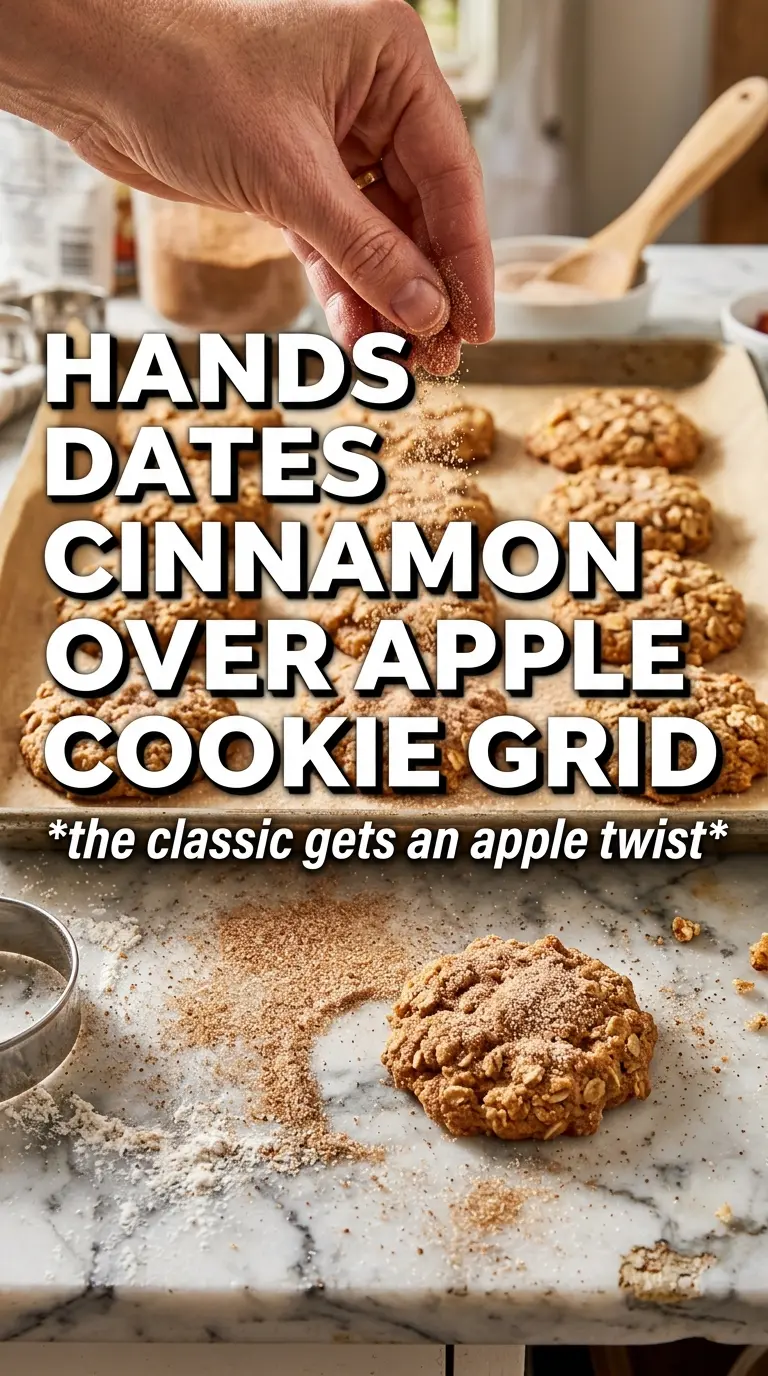
- Cinnamon-sugar coating — The rolling mixture gives the cookies their crackly shell and keeps the outside from tasting flat. The apple pie spice in the coating makes the apple flavor show up right away.
The Bake That Keeps the Centers Soft
Creaming the Butter and Sugar
Beat the butter and sugar until the mixture turns pale and fluffy. That takes longer than most people think, but it matters because the air you whip in here gives the cookies lift and helps them crack on top. If the mixture still looks dense and greasy, keep going for another minute or two.
Bringing the Dough Together
Add the eggs and vanilla, then fold in the dry ingredients just until no streaks of flour remain. Overmixing at this stage makes the cookies tougher and can make the dried apples look shredded instead of nicely dispersed. The dough should be soft but scoopable, not wet enough to slump immediately.
Rolling and Baking
Scoop the dough into small balls and roll each one in the cinnamon sugar so the outside is fully coated. Bake until the edges look set and the tops are crinkled, but the centers still look a little soft and underbaked. That carryover heat is what finishes them on the pan, so pulling them at the right moment is the difference between chewy cookies and dry ones.
Cooling for the Right Texture
Let the cookies sit on the baking sheet for a few minutes before moving them. If you try to lift them too soon, they can tear because the centers are still fragile. Once they firm up slightly, transfer them to a rack so the bottoms don’t overbake from the hot pan.
Make Them Sweeter and More Apple-Forward
Add another 2 to 3 tablespoons of finely chopped dried apple if you want a stronger fruit note. The cookies will still bake up well as long as the pieces stay small, but the texture becomes a little more studded and chewy.
Gluten-Free Version
Use a 1:1 gluten-free baking blend that includes xanthan gum. The cookies may spread a touch less and the crumb will be a little more delicate, but the cinnamon coating and apple flavor carry the swap well.
Dairy-Free Option
Replace the butter with a dairy-free stick-style baking substitute. The cookies will still be soft, though they may brown a little differently and the flavor will be slightly less rich.
Storage and Reheating
- Refrigerator: Store in an airtight container for up to 5 days. The cookies stay chewy, though the cinnamon coating softens a bit.
- Freezer: Freeze baked cookies for up to 2 months, or freeze the dough balls after rolling in spice sugar. Bake from frozen, adding 1 to 2 minutes.
- Reheating: Warm cookies in a 300F oven for 3 to 5 minutes if you want the centers soft again. Don’t use high heat or the sugar coating can overharden before the middle warms through.
Answers to the Questions Worth Asking
Apple Snickerdoodles
Ingredients
Equipment
Method
- Preheat the oven to 375F and line sheet pans with parchment. Set up your baking sheets so the cookies can go in right after scooping.
- Whisk together all-purpose flour, cream of tartar, baking soda, cinnamon, nutmeg, allspice, and salt. Mix until the spices and leaveners look evenly distributed.
- Beat the softened unsalted butter and granulated sugar until very light and fluffy. The mixture should look paler and hold some air.
- Add the eggs and vanilla extract and beat just until combined. Stop as soon as the batter looks uniform.
- Fold in the flour mixture, then fold in the finely chopped dried apple pieces. Fold gently so the dough stays thick and doesn’t overmix.
- Mix the rolling spices—3 tablespoons sugar, 2 teaspoons cinnamon, and apple pie spice—in a shallow bowl. Use this as your coating station.
- Scoop the dough into 1-1/2 tablespoon balls and roll each one in the cinnamon-spice sugar. Coat thoroughly so the tops and sides look dusted.
- Bake at 375F for 10-12 minutes until edges are set and tops are crinkled. Keep an eye on them so the centers remain soft when you remove the pan.
- Cool the cookies on the pan for 3 minutes before transferring. They should finish setting slightly while still warm.