Apple sour cream cake bakes up tender, plush, and stacked with cinnamon-spiced apples in every bite. The top turns into a crackly brown sugar crumble, while the crumb underneath stays moist from the sour cream and never tips into heavy or dry territory. It’s the kind of cake that works just as well for an afternoon coffee break as it does for dessert after dinner.
What makes this version stand out is the balance. Sour cream brings tang and richness, but it also keeps the cake soft for days. The apples are folded in raw, which means they steam gently in the oven and leave little pockets of fruit instead of disappearing into the batter. The cinnamon topping is mixed separately so it stays sandy and crisp instead of melting into the surface.
Below, I’ve included the small details that matter most here: how to keep the crumb topping from sinking, which apples hold their shape best, and the one mixing rule that keeps the cake light instead of dense.
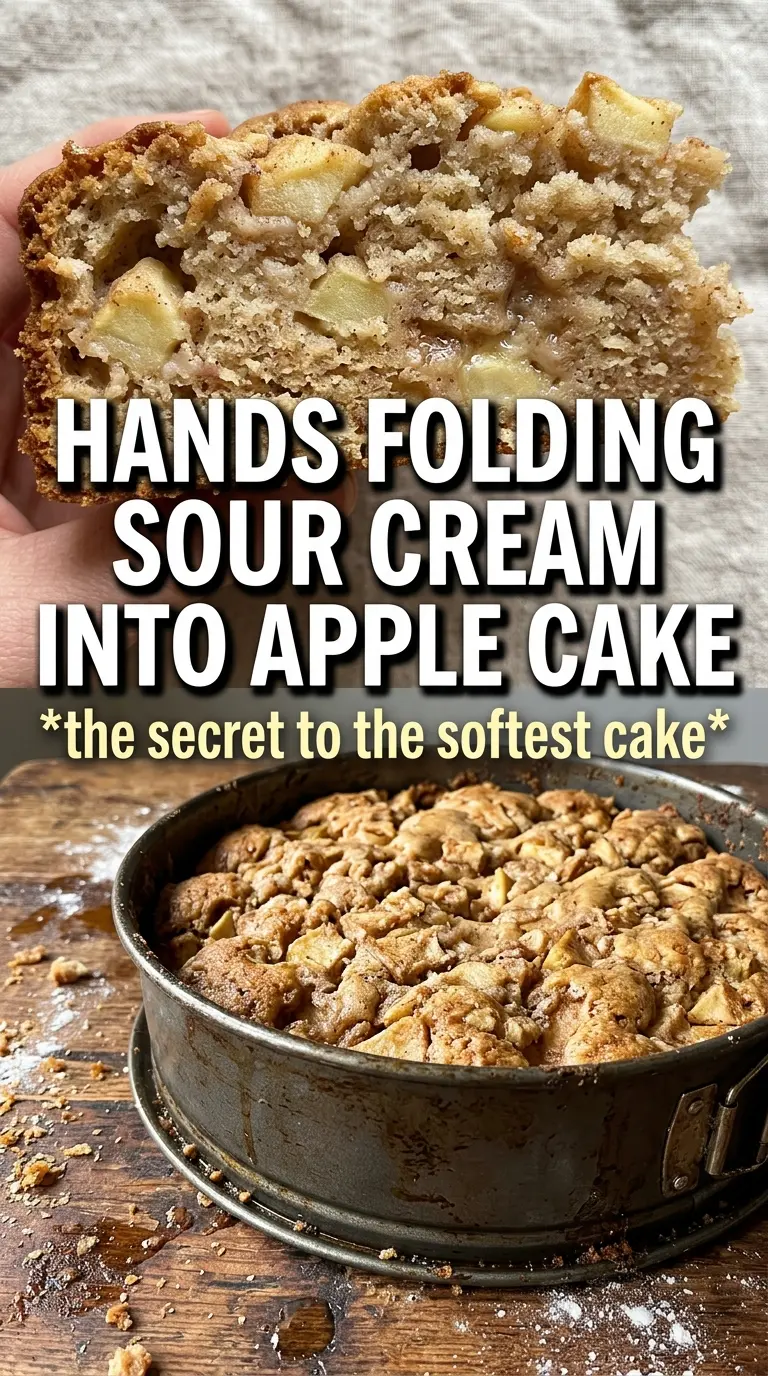
The cinnamon topping stayed crisp and the cake baked up so moist around the apples. I used Honeycrisp and it held its shape beautifully without turning mushy.
Love a moist crumb and a crunchy cinnamon top? Save this apple sour cream cake for the next time you want an easy dessert that slices cleanly and tastes even better the next day.
The Topping Has to Stay Separate Until the Oven Takes Over
The biggest mistake with a cake like this is stirring the cinnamon topping into the batter. That looks tidy, but it steals the whole effect. You want those cold butter bits to hit the oven in distinct clumps so they bake into a crumbly lid instead of dissolving into the cake.
The batter itself is thick enough to hold the apples in place, which matters more than people think. If the batter is too loose, the fruit sinks and the top turns patchy. If it’s overmixed, the cake gets tight. Stop as soon as the flour disappears, then fold in the apples with a light hand.
- Cold butter for the topping — This is what gives you a crisp, sandy crumble. If the butter softens too much, the topping turns pasty and melts away.
- Sour cream — Full-fat sour cream gives the best texture and the most tenderness. Greek yogurt works in a pinch, but the cake will taste a little tangier and can bake up slightly less rich.
- Diced apples — Cut them small and even so they soften at the same rate. Bigger chunks can leave wet pockets in the crumb and make slicing messy.
What Each Ingredient Is Doing in the Batter
- All-purpose flour — Gives the cake enough structure to hold the apples without turning dense. Don’t swap in cake flour here; it can make the crumb too fragile once the fruit goes in.
- Baking powder and baking soda — The combination gives lift and also helps the sour cream react properly. Leave either one out and the cake won’t rise as evenly.
- Butter and sugar — Creaming them until fluffy builds air into the batter before the dry ingredients go in. That step matters more than people realize; it’s what keeps the cake from feeling heavy.
- Apples — Use a firm baking apple like Honeycrisp, Pink Lady, or Granny Smith. Soft apples break down too fast and disappear into the crumb.
How to Keep the Cake Tender Instead of Heavy
Cream the Butter Until It Looks Pale
Beat the butter and sugar until the mixture looks lighter in color and a little fluffy around the edges. That takes a few minutes, not just a quick stir. If you rush this stage, the cake loses lift and bakes up more like a dense snack cake than a tender sour cream cake.
Fold in the Flour Just Until It Disappears
Add the dry ingredients in one or two additions and stop mixing the moment you no longer see streaks of flour. Overmixing develops gluten and makes the cake chewy in the wrong way. The batter should look thick and smooth, not stretchy.
Bake Until the Center Springs Back
The top should be deep golden with the crumble set and the center should spring back lightly when touched. A toothpick inserted in the middle should come out clean or with a few moist crumbs, not wet batter. If the top browns too fast before the center is done, lay a loose piece of foil over it for the last 10 to 15 minutes.
How to Adapt This for Different Pans and Different Apples
Use Greek Yogurt Instead of Sour Cream
Plain full-fat Greek yogurt works if that’s what you have. The cake will be a touch less rich and a little tangier, but the texture stays moist as long as you don’t use nonfat yogurt.
Make It Gluten-Free
A good 1:1 gluten-free baking blend can replace the flour in both the cake and the topping. The crumb will be a little more delicate, so let the cake cool fully before slicing.
Bake It in a 9×13 Pan
A 9×13 pan gives you a thinner cake with more topping in every square. Start checking a few minutes early, since the batter bakes faster in a wider pan than in a springform.
Storage and Reheating
- Refrigerator: Store covered for up to 4 days. The topping softens a bit, but the cake stays moist.
- Freezer: It freezes well. Wrap slices tightly and freeze for up to 2 months, then thaw overnight in the fridge.
- Reheating: Warm individual slices in the microwave for 15 to 20 seconds or in a low oven. Don’t overheat it or the crumb dries out and the apples lose their soft texture.
Answers to the Questions Worth Asking
Apple Sour Cream Cake
Ingredients
Equipment
Method
- Preheat the oven to 350F, then grease a 9-inch springform pan or a 9x13 pan.
- Combine brown sugar, cinnamon, and all-purpose flour, then cut in cold cubed butter until crumbly. Set the topping aside.
- Whisk all-purpose flour, baking powder, baking soda, cinnamon, and salt until evenly combined.
- Beat softened unsalted butter and granulated sugar until fluffy, then beat in eggs and vanilla extract.
- Beat in sour cream until the batter looks smooth and cohesive.
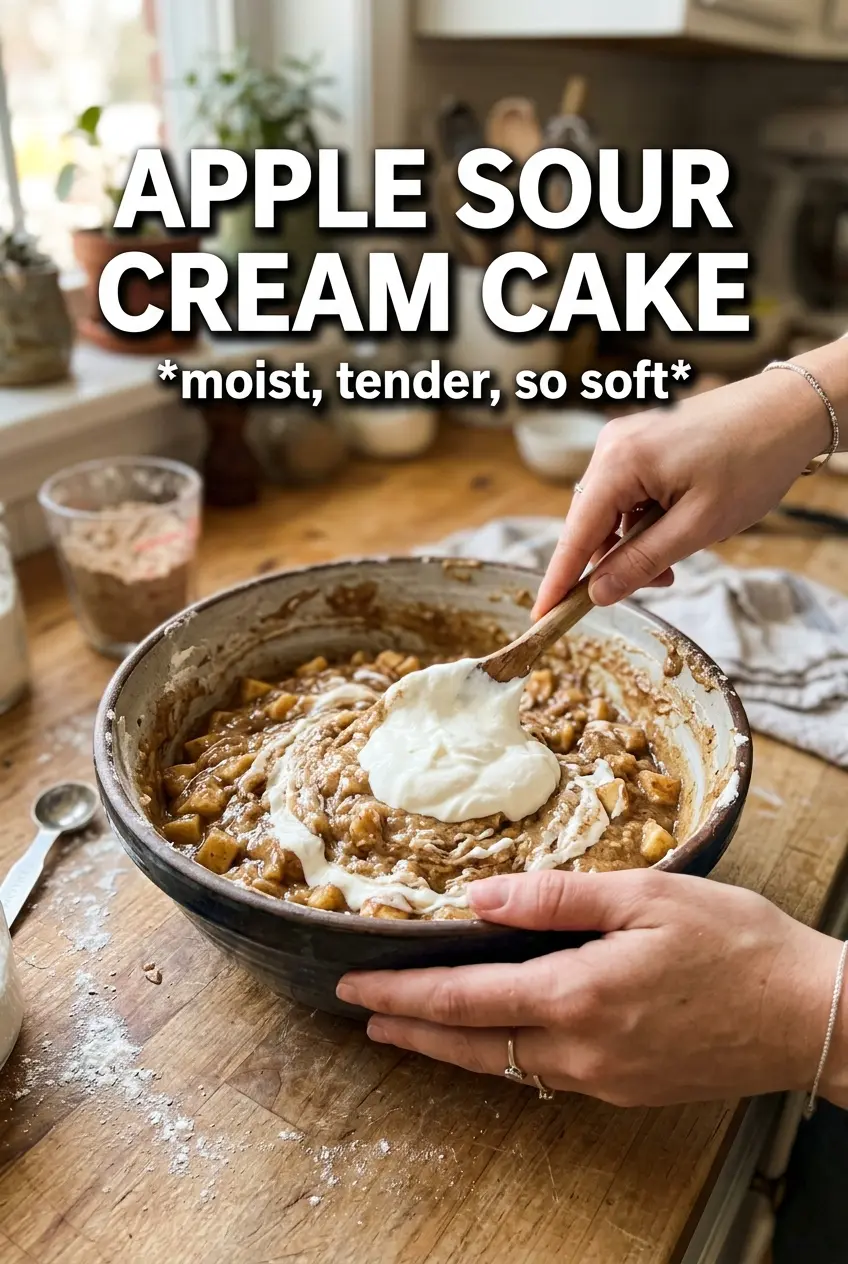
- Fold in the flour mixture until just combined, then fold in the diced apples.
- Spread the batter into the prepared pan, then scatter the cinnamon topping evenly over the surface.
- Bake at 350F for 50-55 minutes, until a toothpick inserted in the center comes out clean.
- Cool the cake before slicing so the crumb sets and the apple pieces don’t slide.