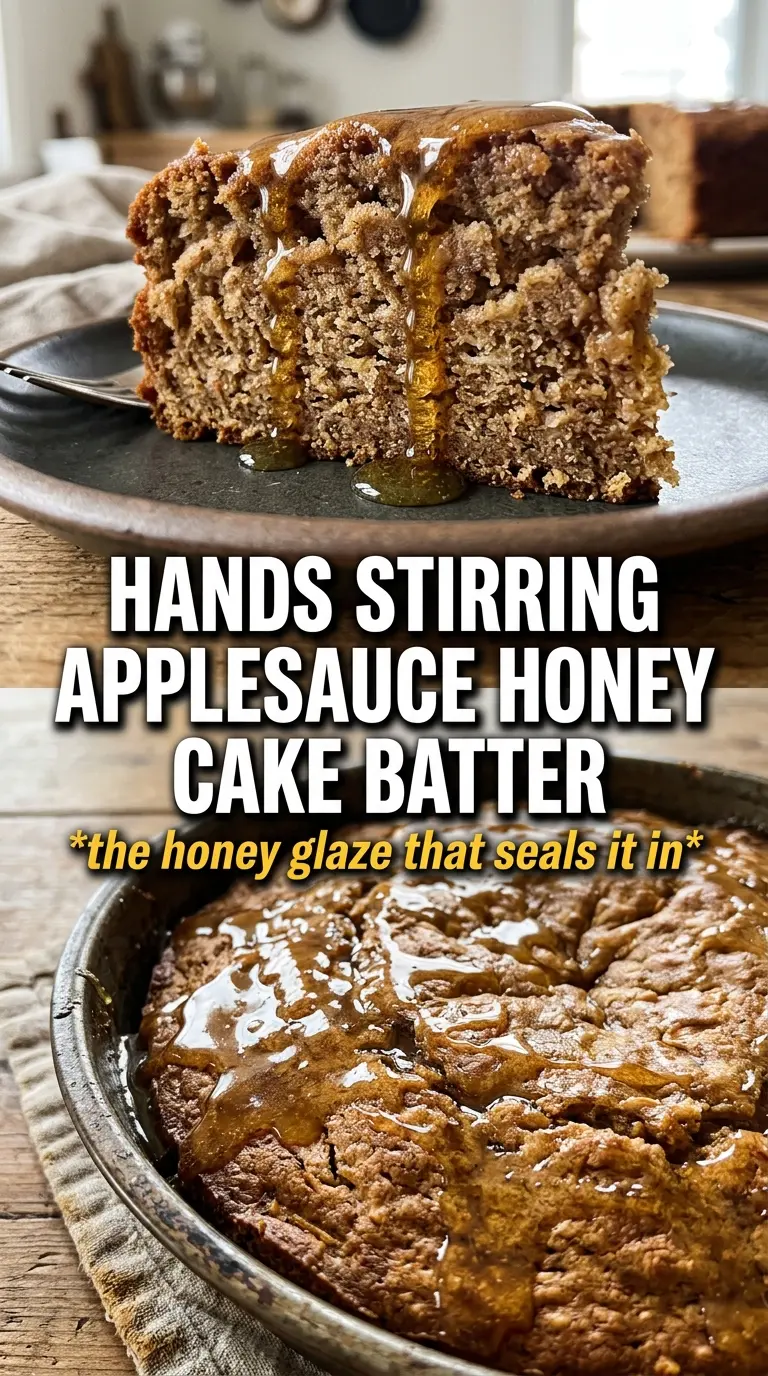
Applesauce honey cake bakes up with a tender crumb, a warm spice finish, and a glossy honey glaze that sinks just enough into the surface to keep every bite soft. It tastes homey in the best way: sweet without being heavy, fragrant without being fussy, and moist enough that it stays good for days. The honey brings a round, floral sweetness that regular sugar alone can’t give this cake, and the applesauce keeps the crumb supple without making it dense.
The trick here is balance. Honey and brown sugar already bring plenty of moisture, so the batter needs just enough flour structure to hold together without turning rubbery. Sour cream does important work too — it adds a little tang and keeps the cake from tasting flat. I tested this with warm glaze brushed on right after baking, and that’s what gives the top its soft shine instead of a sticky shell.
Below, I’ll walk through the detail that matters most: how to keep the cake tender, how to know when it’s truly done, and what swaps still give you a cake worth baking.
The crumb stayed incredibly moist for three days, and the honey glaze soaked in just enough to make the top taste like the best part of a coffee cake.
Save this applesauce honey cake for the kind of dessert that stays moist, slices cleanly, and tastes even better the next day.
The Reason This Cake Stays Tender Instead of Heavy
Applesauce cakes can go dense fast when the batter gets overmixed or when the wet ingredients are pushed too far with extra flour. This one avoids that by keeping the batter loose enough to spread in the pan while still giving it structure from the eggs, flour, and a little butter. The applesauce adds moisture, but it also softens the crumb, which means the cake needs just enough baking time to set without drying out the edges.
The other thing that matters here is the honey. It doesn’t just sweeten the cake; it also helps it bake up with a softer, more supple texture than one made with all granulated sugar. If your cake has ever turned gummy in the middle, it usually means it went into the oven before the butter-sugar mixture was properly combined or it was pulled before the center finished setting.
What Each Ingredient Is Actually Doing in the Pan
- Applesauce — Use unsweetened applesauce so the cake doesn’t tip cloying. It brings moisture and a subtle fruit note without making the spice blend muddy. Smooth applesauce works best because chunky versions can leave little wet pockets in the crumb.
- Honey — This is the flavor that makes the cake taste round and warm instead of just sweet. Use a honey you like eating by the spoonful; a strongly flavored wildflower honey will show up more than a mild clover honey. Warm it slightly if it’s thick so it blends cleanly into the batter.
- Sour cream — This keeps the crumb soft and gives the cake a little lift in flavor. Plain Greek yogurt can stand in, but the cake will taste a touch tangier and a little less plush. Use full-fat if you have it.
- Brown sugar — It deepens the sweetness and helps the cake stay moist. Packed light brown sugar is fine, but dark brown sugar will give the cake a deeper molasses note that plays well with the ginger and allspice.
- Spices — Cinnamon leads, but the ginger and allspice are what keep the cake from tasting one-note. Don’t skip them unless you want a much flatter result. Fresh spices matter here because the cake is gentle, not aggressively spiced.
How to Keep the Batter Smooth and the Crumb Soft
Start by blending the sweeteners until they turn creamy
Beat the butter, honey, and brown sugar together until the mixture looks smooth and a little lighter in color. This step helps dissolve the sugar and distributes the honey evenly, which keeps the cake from baking with gritty patches. If the butter is too cold, the mixture will look clumpy and won’t aerate properly, so let it soften before you begin.
Fold in the flour only until the streaks disappear
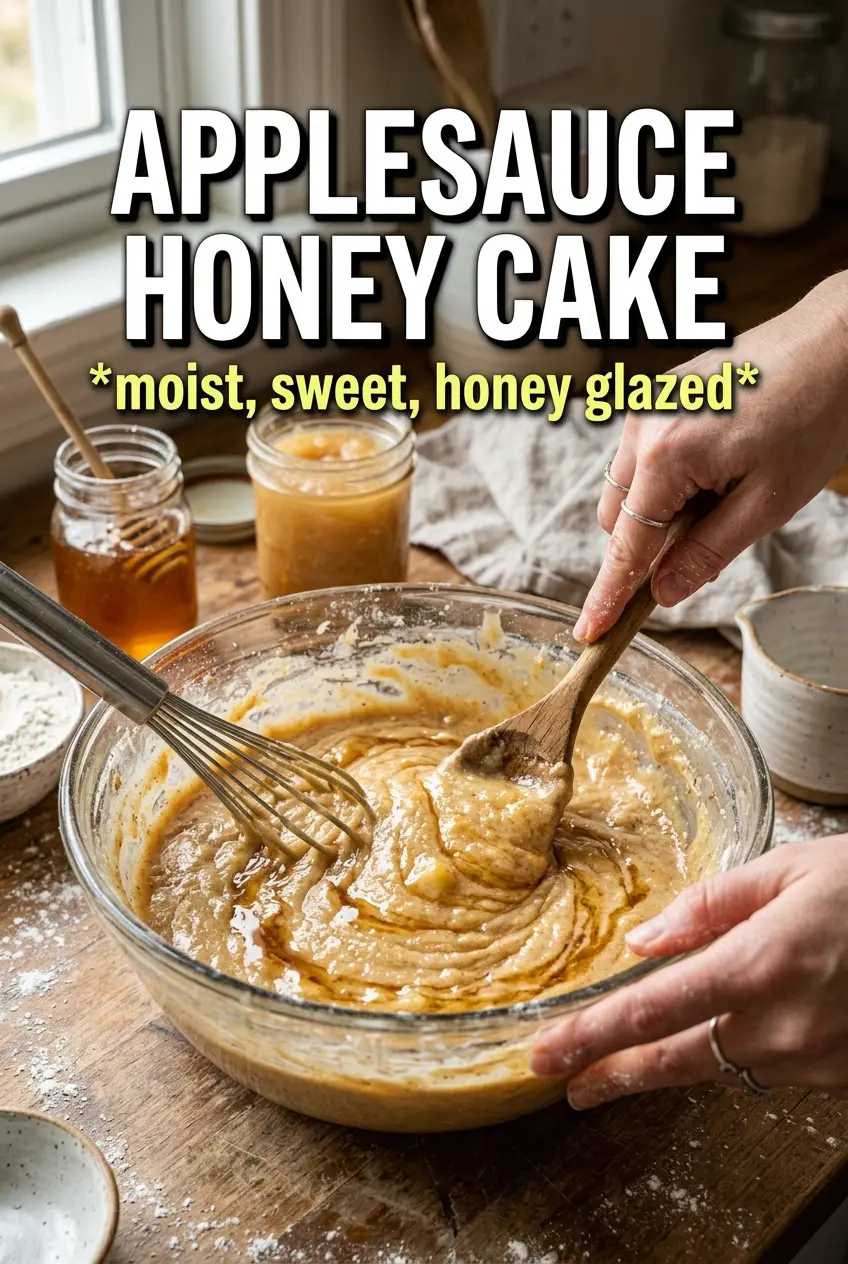
Once the applesauce and sour cream go in, the batter will look loose and that’s correct. Add the dry ingredients and stir just until you stop seeing flour, then quit. Overmixing wakes up the gluten in the flour and turns a tender cake into something chewy at the edges and tight in the middle.
Watch the center, not the timer
At 35 minutes, start checking for a clean toothpick in the center and gently press the top. It should spring back and feel set, but not hard. If the toothpick comes out with wet batter, give it more time in short bursts; if it comes out with a few moist crumbs, the cake is ready and will finish setting as it cools.
Brush the glaze on while the cake is still warm
The honey glaze belongs on a warm cake, not a hot one. Warm cake absorbs the glaze and gets that glossy finish without turning soggy. If you wait until the cake is cool, the glaze sits on top instead of sinking in, and you lose the best part of the texture.
How to Adapt This Applesauce Cake Without Losing the Texture
Dairy-free version
Swap the butter for a good plant-based butter and use plain dairy-free yogurt in place of the sour cream. The cake stays moist, but the flavor gets a little less rich, so use a vanilla-forward dairy-free butter if you can.
Gluten-free version
Use a 1:1 gluten-free baking blend that includes xanthan gum. The cake will still be soft and sliceable, but it may be a little more delicate when warm, so let it cool fully before cutting.
Make it more dessert-like
Add a handful of chopped toasted walnuts or pecans to the batter for crunch. That gives the cake more contrast against the soft crumb and makes it feel a little more like a proper tea cake.
Storage and Reheating
- Refrigerator: Store covered for up to 4 days. The crumb stays moist, though the glaze will soak in more by day two.
- Freezer: This freezes well. Cut into portions, wrap tightly, and freeze for up to 2 months. Thaw at room temperature while still wrapped so the cake doesn’t dry out.
- Reheating: Warm slices briefly in the microwave or a low oven. Heat just until the cake loses its chill; too much heat dries the edges and makes the glaze sticky instead of soft.
Answers to the Questions Worth Asking
Applesauce Honey Cake
Ingredients
Equipment
Method
- Preheat oven to 350°F, then grease a 9x13 baking pan to prevent sticking.
- Whisk all-purpose flour, baking soda, cinnamon, ginger, allspice, and salt together until evenly combined.
- Beat butter, honey, and brown sugar until smooth.
- Add eggs and vanilla extract, then beat until the mixture is combined and glossy.
- Stir in unsweetened applesauce and sour cream.
- Fold in the flour mixture until just combined, stopping as soon as no dry streaks remain.
- Pour batter into the prepared pan and bake for 35-40 minutes at 350°F until a toothpick comes out clean.
- Whisk honey glaze ingredients together, then brush over the warm cake so it glistens on top.
- Serve warm or at room temperature after glazing sets slightly.