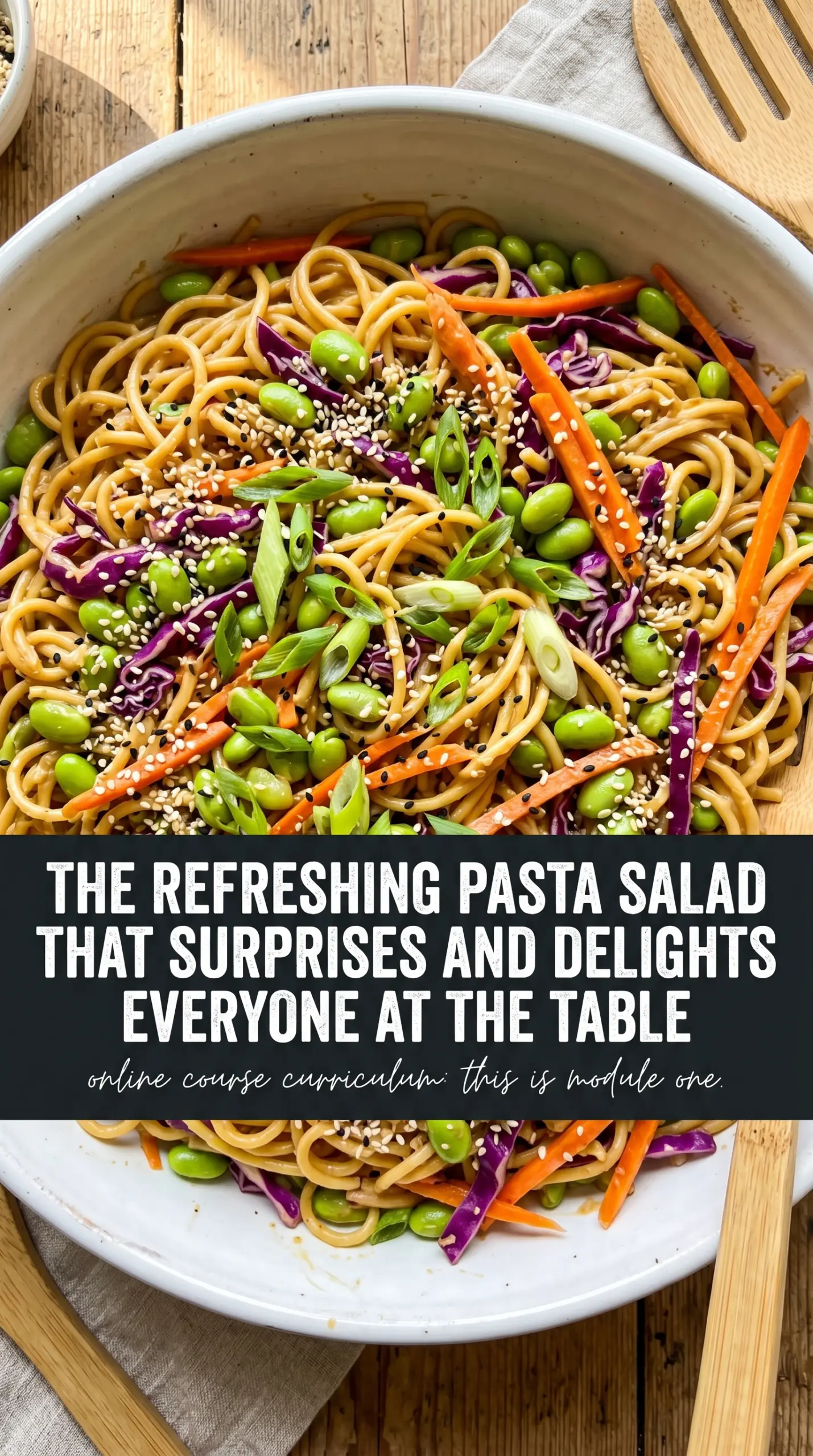
Cold pasta gets a lot more interesting when it’s tossed with crunchy vegetables and a sesame-ginger dressing that clings to every strand. This Asian pasta salad hits that sweet spot between refreshing and filling: the noodles stay tender, the cabbage keeps its snap, and the dressing brings salt, tang, and a little sweetness without turning heavy.
What makes this version work is the balance. Rinsing the pasta stops the cooking fast and keeps the salad from going gummy, while the combination of soy sauce, rice vinegar, sesame oil, ginger, and honey gives you a dressing with enough punch to season the pasta and the vegetables at the same time. The edamame adds substance, so this doesn’t eat like a side dish that disappears in two bites.
Below you’ll find the small details that matter most here: why chilling changes the texture for the better, how to keep the vegetables crisp, and the easiest swaps if you want to make it a little lighter, spicier, or gluten-free.
The dressing soaked into the pasta after an hour in the fridge, and the cabbage stayed crunchy instead of getting soggy. My husband went back for a second bowl before dinner was even over.
Love the crunch in this sesame-ginger Asian Pasta Salad? Save it to Pinterest for a make-ahead side that stays bright and crisp after chilling.
The Chill Time Is What Makes the Dressing Taste Finished
Freshly tossed pasta salad can taste a little sharp and separated at first. The hour in the fridge isn’t just waiting around; it gives the noodles time to absorb the soy, vinegar, and sesame oil so the whole bowl tastes seasoned all the way through instead of like dressing sitting on top of cold pasta. That’s the difference between a decent pasta salad and one people keep spooning back into their bowls.
The other thing that changes in the fridge is the texture. The cabbage softens just enough to lose its raw edge while the carrots and bell pepper stay crisp. If you skip the chill, the dressing can taste loud and one-note, and the salad won’t have that cohesive, coated finish that makes it work.
- Rinsed pasta — This stops the cooking and cools the noodles fast. It also washes off the surface starch that can make the salad cling together in a heavy, sticky way.
- Sesame oil — This is the backbone of the dressing’s flavor, so use a good one. A little goes a long way; too much and the salad turns greasy instead of nutty.
- Rice vinegar — This keeps the dressing bright enough to balance the honey and soy sauce. Regular vinegar works in a pinch, but it tastes sharper and less rounded.
- Edamame — This adds protein and a soft bite that makes the salad feel complete. Frozen shelled edamame is the easiest route and works perfectly here.
What Each Ingredient Is Actually Doing as the Dressing Finishes
- Mayonnaise base — As the salad chills, the mayo firms up slightly and distributes more evenly. The richness becomes less apparent and more integrated into the whole bowl.
- Acid (vinegar, lemon juice, mustard) — These penetrate deeper as the salad sits cold. By the end of chilling, the acid has become part of the flavor profile instead of tasting sharp on top.
- Fresh herbs — Hardy herbs like dill release their oils into the dressing as it chills. They become more mellow and integrated, less assertive than when freshly added.
- Seasonings (salt, pepper, garlic) — These dissolve into the dressing gradually. After full chilling time, the seasonings are distributed evenly instead of concentrated in spots.
- Vegetables — As they sit, vegetables release subtle flavors into the dressing. The dressing becomes flavored by them, not just coating them.
- Cheese or protein — These flavor the whole dish as they sit. The salt from cheese dissolves gradually, seasoning the dressing throughout.
- Oil component — This helps carry all the flavors and distribute them evenly as the salad chills. It also prevents the dressing from separating.
- Cold temperature — Cold mutes flavor perception, so bold seasoning added before chilling will taste balanced when served cold, not harsh.
Building the Bowl So the Vegetables Stay Crisp
Cooking and Cooling the Pasta
Cook the spaghetti or linguine until just tender, then drain it and rinse under cold water until it feels cool to the touch. That rinse stops the cooking and keeps the noodles from soaking up too much dressing too soon. If the pasta is still warm when you mix everything together, the cabbage will wilt faster and the salad can turn limp before it ever reaches the table.
Whisking the Sesame-Ginger Dressing
Mix the soy sauce, rice vinegar, sesame oil, honey, ginger, garlic, salt, and pepper until the honey disappears and the dressing looks smooth. The ginger and garlic should taste fresh and sharp, not buried. If the honey settles at the bottom, the salad will taste uneven, so whisk again right before you pour it over the bowl.
Tossing and Chilling the Salad
Combine the cooled pasta, edamame, cabbage, carrots, and bell pepper in a large bowl, then pour the dressing over the top and toss until every strand is coated. Use a bowl bigger than you think you need so the vegetables don’t crush while you stir. Once it’s chilled, give it one more toss before serving; the dressing settles at the bottom, and that final mix brings everything back together.
Finishing With the Best Texture
Add the green onions and sesame seeds right before serving so they stay bright and crisp. If you mix them in too early, the onions lose their edge and the sesame seeds soften. A final sprinkle on top makes the salad look fresh and keeps the nutty finish from disappearing into the dressing.
How to Adapt This Asian Pasta Salad Without Losing the Crunch
Make it gluten-free with rice noodles or GF pasta
Swap in gluten-free spaghetti or rice noodles and use tamari instead of soy sauce. Rice noodles give you a softer, more slippery texture, while gluten-free pasta keeps the familiar chew. Either one works, but don’t overcook it or the salad loses the springy bite that makes it good.
Make it vegetarian with a little extra staying power
This recipe is already vegetarian, but if you want it to eat more like a main dish, add extra edamame or toss in cubed baked tofu. Tofu drinks up the dressing and makes the salad heartier, while edamame keeps the texture clean and snappy.
Turn up the heat without changing the structure
Add a spoonful of chili crisp, a pinch of red pepper flakes, or a drizzle of sriracha to the dressing. The goal is heat, not dilution, so keep the addition small enough that the sesame-ginger base still leads. This is the easiest way to make the salad feel bolder without messing with the texture.
Storage and Reheating
- Refrigerator: Store in an airtight container for up to 4 days. The noodles soften a little as it sits, but the flavor deepens.
- Freezer: Don’t freeze this salad. The vegetables lose their crunch and the pasta turns mushy once thawed.
- Reheating: Serve it cold straight from the fridge. If it tastes tight after chilling, let it sit at room temperature for 10 to 15 minutes and toss with a small splash of rice vinegar or sesame oil instead of heating it.
Questions I Get Asked About This Recipe
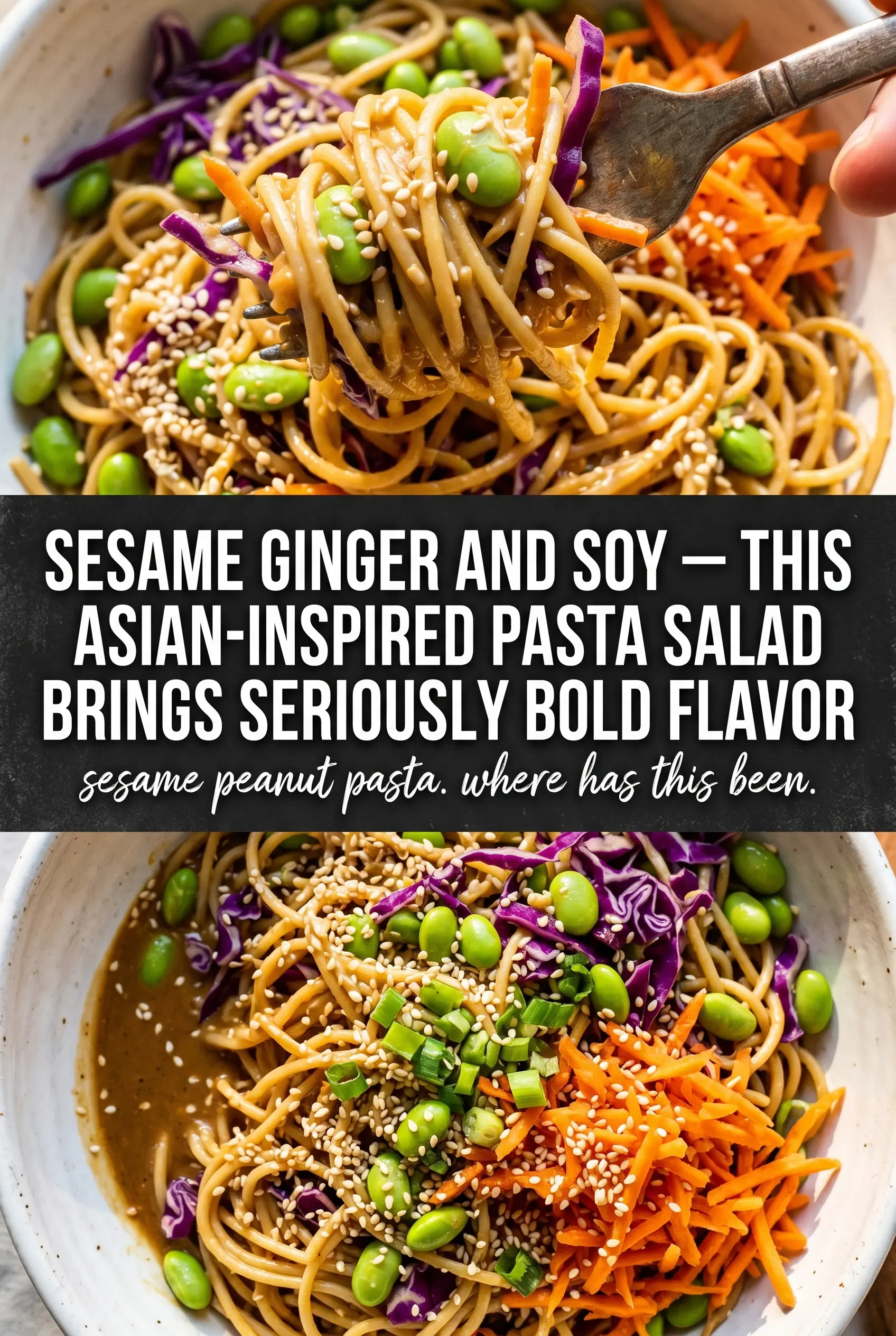
Asian Pasta Salad with Sesame-Ginger Dressing
Ingredients
Method
- Cook the spaghetti or linguine according to package directions until tender, then drain and rinse with cold water to stop the cooking process.
- Whisk together soy sauce, rice vinegar, sesame oil, honey, ginger, garlic, salt, and pepper until smooth and combined.
- Combine pasta, edamame, red cabbage, carrots, and red bell pepper in a large bowl.
- Pour the dressing over the salad and toss to coat every ingredient so the vegetables look lightly glossy.
- Refrigerate for at least 1 hour so the flavors meld and the pasta becomes fully chilled.
- Top with green onions and sesame seeds before serving for a fresh, crunchy finish visible on top.