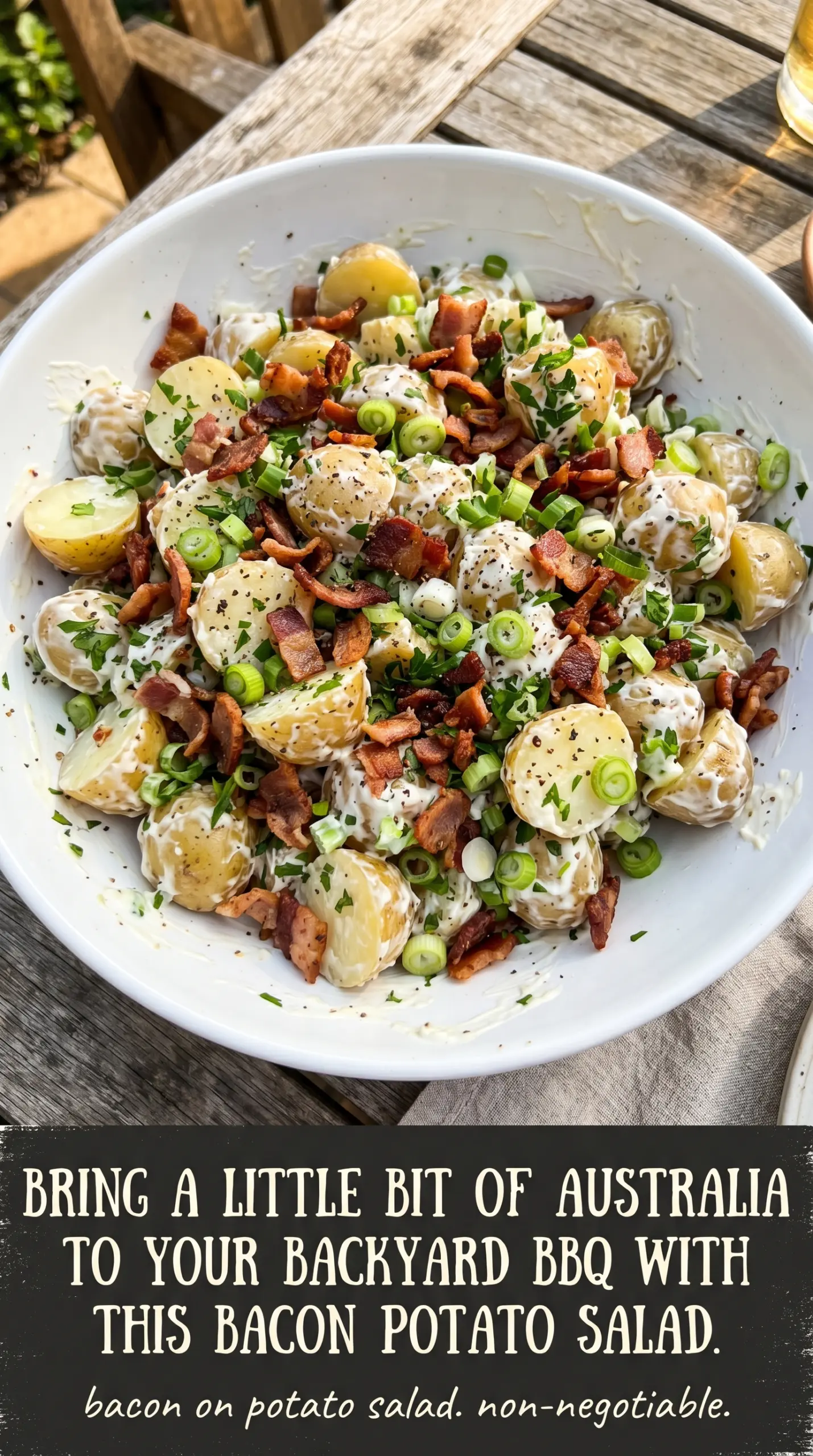
Creamy Australian-style potato salad with bacon hits the table with the kind of balance that keeps people going back for another spoonful: tender potatoes, smoky bacon, a tangy-sweet dressing, and just enough crunch from celery and green onion to keep every bite lively. It tastes like the side dish that belongs next to grilled sausages, burgers, or anything coming off a hot barbecue.
What makes this version work is the dressing. The mayonnaise gives it body, the sour cream keeps it from tasting heavy, and the vinegar plus sugar push it into that classic sweet-tangy territory Australians love in a picnic salad. The potatoes need to be cooked until just tender, then cooled enough to hold their shape so the dressing clings instead of turning soupy.
Below, you’ll find the small details that matter most: when to dress the potatoes, how long it needs to chill, and the easiest way to keep the bacon crisp enough to stand out in the mix. Those little choices are what turn a basic potato salad into one people actually remember.
The dressing soaked in perfectly after chilling, and the bacon stayed smoky instead of disappearing into the potatoes. I served it with grilled sausages and everyone asked for the recipe.
Save this Australian-style potato salad with bacon for your next barbecue when you want a creamy, tangy side that tastes even better after chilling.
The Trick Is Getting the Potatoes Tender Without Letting Them Fall Apart
The biggest mistake with potato salad is overcooking the potatoes until they turn fluffy and brittle on the edges. You want them tender all the way through, but still firm enough to hold a cube shape when tossed with the dressing. Waxy or all-purpose potatoes do the best job here because they stay intact instead of collapsing into mash.
The chilling time matters just as much as the mixing. The potatoes absorb the dressing as they sit, and that resting period softens the vinegar’s sharpness while letting the bacon, celery, and green onion settle into the bowl. If it tastes flat right after mixing, that’s normal; the flavor wakes up after two hours in the fridge.
- Potatoes — Use peeled Yukon Gold or another all-purpose potato if you can. They hold their shape better than russets, which tend to break down and make the salad heavy.
- Bacon — Cook it until crisp before crumbling. Soft bacon disappears into the salad, while crisp bacon keeps its smoky bite and gives the whole dish better texture.
- Mayonnaise and sour cream — This combo gives the dressing richness without making it greasy. If you swap in all mayo, the salad gets denser; if you use all sour cream, it turns too sharp and loose.
- White vinegar and sugar — These are what give the salad that sweet-tangy Australian picnic flavor. Don’t skip both at once, or the dressing tastes one-note and heavy.
What Each Ingredient Is Actually Doing to Keep Potatoes Tender
- Potatoes started in cold water — This ensures the outsides and insides cook at the same rate. Starting in hot water makes the outside mushy before the inside is done.
- Gentle heat throughout — A rolling boil (not a hard boil) cooks the potatoes evenly. Hard boiling batters them and makes the exteriors fall apart before the centers are done.
- Salt in the cooking water — This seasons the potatoes from the inside and helps them hold their shape. Unsalted water lets potatoes absorb too much liquid and become waterlogged.
- Immediate ice bath after cooking — Stopping the cooking fast preserves the texture. Warm potatoes continue to soften even after draining, so cold water is essential.
- Fork test (not knife test) — A fork should slide in with light pressure, leaving the cubes intact. Using a knife test often overcooks them because you go too deep.
- Drain well before cooling — Extra water clinging to the potatoes makes them waterlogged. Let them drain completely so they’re dry on the outside.
- Cool completely before dressing — Warm potatoes absorb dressing too fast and can become mushy. Cooling lets you add dressing evenly without oversaturation.
- Fold gently instead of stirring — Aggressive stirring breaks down the potato cubes. A gentle fold keeps them distinct and whole.
Building the Creamy Dressing Before It Hits the Potatoes
Whisk the mayonnaise, sour cream, vinegar, sugar, salt, and pepper together first so the sugar dissolves evenly and the vinegar gets distributed through the whole bowl. If you dump everything over the potatoes separately, you end up with pockets of sharpness in one bite and bland dressing in the next. A smooth dressing coats the potatoes more cleanly and clings better after chilling.
Cooking the Potatoes to the Right Texture
Start the potatoes in cold salted water and bring them up to a gentle boil. That helps them cook evenly from the outside in instead of bursting before the centers are done. Drain them as soon as a fork slips in with little resistance; if they’re falling apart in the colander, they’ve gone too far. Let them cool before dressing them so they absorb flavor without turning mushy.
Mixing the Salad Without Crushing It
Add the potatoes, bacon, celery, and green onions to a large bowl, then pour the dressing over the top. Toss with a light hand so the cubes stay mostly intact. If you stir hard, the edges break down and the salad turns pasty instead of creamy. A few gentle folds are enough.
Chilling for the Flavor to Settle In
Cover the bowl and refrigerate it for at least 2 hours before serving. That rest time gives the vinegar and sugar a chance to round out, and the dressing thickens slightly as it settles into the potatoes. If you serve it too soon, it tastes thinner and the bacon reads as a topping instead of part of the whole salad.
How to Adjust This Potato Salad for a Different Crowd
Make It Gluten-Free Without Changing the Texture
This recipe is naturally gluten-free as written, so the main job is checking your bacon and mayonnaise labels if you’re cooking for someone sensitive. The texture stays creamy and sturdy, and you don’t need any special flour-based replacement to make it work.
Skip the Bacon for a Vegetarian Version
Leave out the bacon and add a little extra celery or a handful of chopped pickles if you want more bite. You’ll lose the smoky depth, so the salad tastes brighter and cleaner; a pinch of smoked paprika can help bring some of that back without changing the structure.
Use Greek Yogurt for a Lighter Dressing
You can replace part of the sour cream with plain Greek yogurt for a tangier, lighter salad. Don’t swap all of it unless you want a sharper finish, because yogurt is less rich and the dressing won’t coat the potatoes quite as softly.
Make It the Day Before for Better Flavor
This salad holds up well overnight, and the flavor actually improves after the potatoes sit in the dressing. If it looks a little dry on day two, stir in a spoonful of mayo or sour cream before serving to bring back the creamy finish.
Storage and Reheating
- Refrigerator: Store covered for up to 4 days. The potatoes will soften a little more as it sits, but the salad still tastes great cold.
- Freezer: Don’t freeze it. The mayonnaise and sour cream separate after thawing, and the potatoes turn watery and grainy.
- Reheating: This salad is meant to be served cold or slightly cool, not heated. If it’s been in the fridge a long time, let it sit out for 15 to 20 minutes before serving so the dressing loosens and the flavors come forward.
Answers to the Questions Worth Asking

Australian-Style Potato Salad with Bacon
Ingredients
Equipment
Method
- Bring a pot of water to a boil at 100°C/212°F, then boil the peeled and cubed potatoes until tender, about 15–20 minutes. Visual cue: a knife should slide in easily with little resistance.
- Drain the potatoes and cool them to room temperature, about 10–15 minutes. Visual cue: the cubes look dry on the surface and are no longer steaming.
- In a bowl, mix mayonnaise, sour cream, white vinegar, sugar, salt, and pepper until smooth and creamy, 1–2 minutes. Visual cue: the dressing looks uniformly pale and glossy.
- Combine the cooled potatoes with crumbled bacon, diced celery, and sliced green onions. Visual cue: everything is evenly distributed across the bowl.
- Pour the dressing over the potato mixture and toss well until every potato cube is coated. Visual cue: the mixture looks creamy with no dry patches.
- Refrigerate the salad for 2 hours before serving. Visual cue: it thickens slightly and holds its creamy texture when stirred.