Deep red consomé, tender shredded beef, and a chile broth that clings to every bite make birria the kind of dish people ask for again before the bowls are even cleared. The meat turns silky enough to pile into tacos, but the broth has enough body and spice to stand on its own as a stew. That balance is what makes this version worth keeping around.
The flavor starts with dried guajillo, ancho, and a little chipotle for heat, then gets rounded out with garlic, cumin, oregano, tomato paste, and a small hit of vinegar. Toasting the chiles first wakes up their oils, and straining the blended sauce keeps the consomé smooth instead of grainy. The beef simmers low and uncovered long enough to shed into strands without drying out.
Below, I’ve included the parts that matter most: how to keep the chile sauce from tasting flat, which ingredient swaps work without wrecking the broth, and what to do if you want to serve it as tacos one night and stew the next.
The broth had that deep red color I was hoping for, and straining the chile sauce made it taste silky instead of gritty. My tortillas crisped up perfectly after dipping them in the consomé.
Save this birria recipe for rich consomé, shredded beef tacos, and a stew that tastes even better the next day.
The Broth Fails When the Chiles Taste Flat
The difference between an average birria and one worth repeating is how the chile base is handled before it ever hits the pot. Toasting the dried chiles for just a minute or two brings out their sweetness and depth; if they darken too much, they go bitter fast, and that bitterness carries straight into the consomé. Soak them until they’re pliable, then blend with the onion, garlic, cumin, oregano, and vinegar until the mixture looks smooth and glossy.
Straining is the step people skip, and it matters here. Guajillo and ancho skins can leave little papery bits behind, and those bits make the broth feel rough instead of rich. A fine-mesh sieve gives you that deep, restaurant-style texture without needing extra fat.
- Guajillo chiles — These bring the clean red color and gentle heat that define the broth. If you can’t find them, use more ancho and a smaller amount of chipotle, but the final consomé will be smokier and less bright.
- Ancho chiles — They add dried fruit sweetness and body. They’re what keep the sauce from tasting sharp or one-dimensional.
- Chipotle chiles — This is where the heat comes from. One of the fastest ways to throw birria off balance is using too much chipotle, because smoke can take over the whole pot.
- Apple cider vinegar — The acid doesn’t make the broth sour; it wakes up the spices and keeps the meat flavor from tasting heavy.
What Each Ingredient Is Actually Doing in This Birria
Beef chuck roast is the right cut because it has enough fat and connective tissue to turn tender during a long simmer. Leaner beef dries out before the broth develops enough body. Cut it into large chunks so it keeps some structure while it cooks, then shred it after it softens.
Tomato paste gives the consomé a little thickness and a deeper red color, while the cinnamon stick adds warmth in the background. Don’t overdo the cinnamon. Birria should taste spiced, not like dessert. The broth does most of the work here, so even the olive oil is there mainly to help the strained chile sauce bloom before the liquid goes in.
- Beef chuck roast — Best choice for shreddable meat and a broth with body. If you swap in a lean cut, the texture will be drier and the pot won’t taste as rich.
- Tomato paste — Adds concentrated sweetness and helps the sauce look full and glossy. A little goes a long way.
- Cinnamon stick — Use the stick, not ground cinnamon, so the flavor stays subtle and woven into the broth instead of dusty.
- Corn tortillas — These hold up better than flour tortillas when dipped in consomé. They also crisp more cleanly if you want tacos with those browned edges.
Building the Consomé Without Breaking the Meat
Blooming the Chile Sauce
Heat the olive oil and cook the strained chile sauce for about five minutes until it darkens slightly and starts to smell rounded instead of sharp. That short cook removes the raw edge from the puree and helps the fat carry the chile flavor through the pot. If the sauce spits or sticks, the heat is too high; lower it before you add the broth.
Simmering the Beef Until It Shreds
Add the broth, tomato paste, bay leaves, cinnamon, and beef chunks, then bring everything to a boil before reducing it to a bare simmer. You want small bubbles, not a hard boil, because aggressive heat tightens the meat and can make the broth greasy. After about 90 minutes, start checking the beef; it should pull apart with almost no resistance.
Shredding and Serving the Two Ways That Matter
Once the beef is tender, lift it out and shred it while the broth keeps steaming in the pot. For tacos, dip each tortilla in the consomé before it hits the pan, then fill and crisp it until the outside turns spotted and dark. For stew, ladle the meat and broth straight into bowls and finish with onion, cilantro, and lime so the richness stays balanced.
How to Adapt Birria for Tacos, Stew, or a Lighter Pot
For crispy birria tacos
Shred the beef and spoon a little of the top fat from the consomé into your skillet before frying the tortillas. That extra fat gives you those crisp, reddish edges and helps the cheese, if you use it, melt into the tortilla instead of leaking out.
For a gluten-free meal
This recipe is already naturally gluten-free as written, as long as your broth and spices are certified gluten-free. Corn tortillas keep the tacos in the same lane and avoid the soft, gummy texture flour tortillas can get after dipping.
For a spicier pot
Keep the chipotle chiles in the blend and add one more if you want a stronger smoky finish. The heat builds slowly in the broth, so taste after simmering rather than judging the sauce raw.
For make-ahead birria
Cook the birria a day ahead and chill it in the broth. The fat will rise and solidify on top, which makes it easy to lift off if you want a lighter broth, or stir back in if you want the fullest flavor for tacos the next day.
Storage and Reheating
- Refrigerator: Store the meat and consomé together for up to 4 days. The flavor deepens as it sits, and the broth usually tastes even better the next day.
- Freezer: Freezes well for up to 3 months. Cool it completely first, then portion the meat and broth into airtight containers so you can thaw only what you need.
- Reheating: Warm it gently on the stovetop over low heat until steaming. Don’t boil hard, or the beef can dry out and the broth can turn oily instead of smooth.
Questions I Get Asked About This Recipe
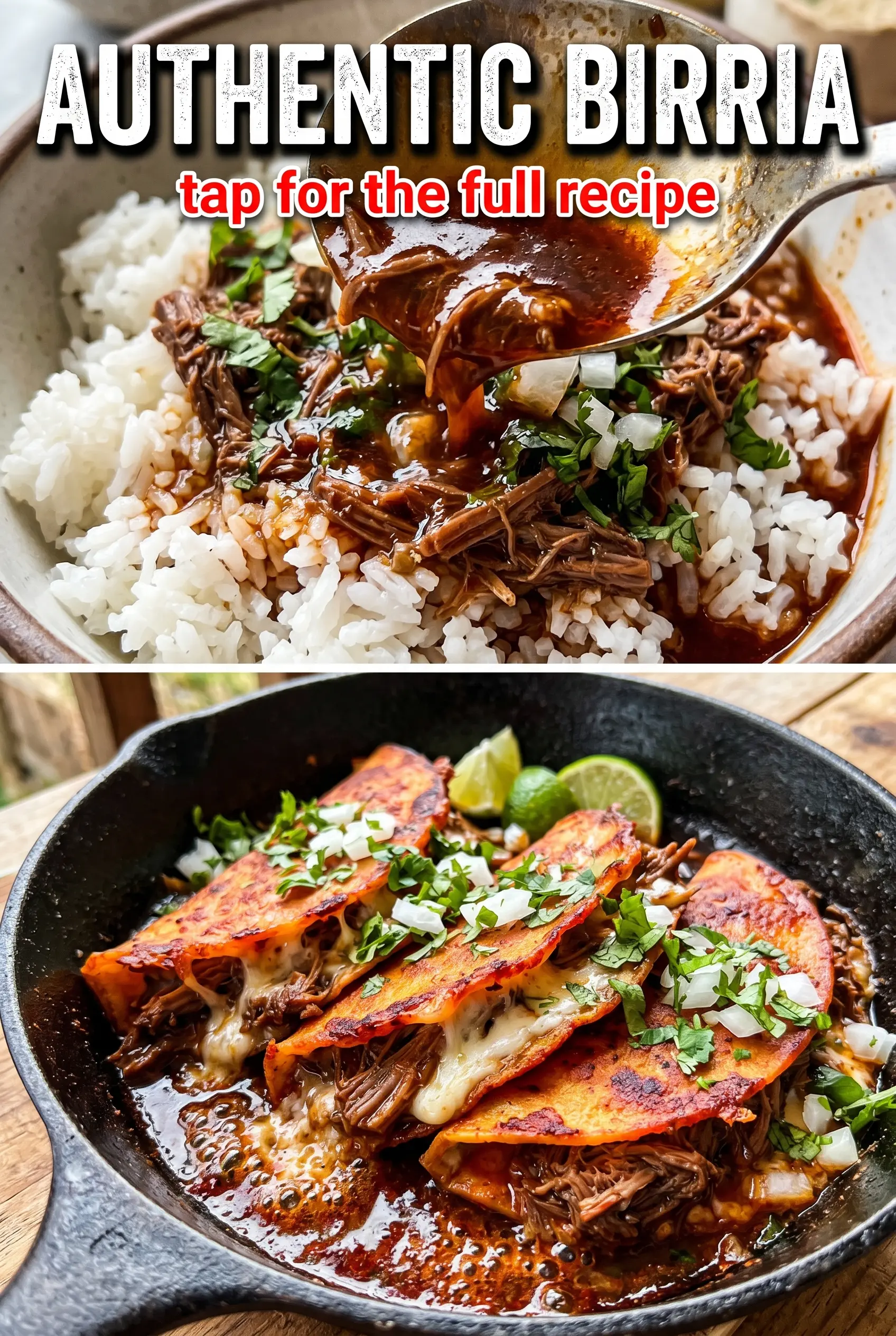
Authentic Birria Recipe for Tacos or Stew
Ingredients
Equipment
Method
- Toast the dried guajillo chiles, dried ancho chiles, and dried chipotle chiles in a dry skillet over medium heat until fragrant, about 2 minutes, and keep them moving so they don’t burn.
- Soak the toasted chiles in hot water for 10 minutes to soften, then drain well.
- Blend the drained chiles with the halved onion, crushed garlic, cumin, oregano, and apple cider vinegar until smooth, then strain the sauce through a fine mesh sieve.
- Heat olive oil in a large pot or Dutch oven over medium heat, then add the strained chile sauce and cook for 5 minutes.
- Add beef broth, tomato paste, bay leaves, and cinnamon stick, then bring the mixture to a boil.
- Add the beef chuck roast chunks and return to a boil, making sure the liquid is actively bubbling around the meat.
- Reduce heat to low and simmer uncovered for 90–120 minutes, until the beef is fall-apart tender, with a gentle bubbling throughout.
- Season with salt and pepper to taste and taste the consomé for balance, aiming for a deep red, richly spiced broth.
- For tacos: shred the tender meat, dip corn tortillas in the hot consomé, then fill with meat and serve with diced onion and cilantro.
- For stew: ladle meat and consomé into bowls, then serve with lime wedges.