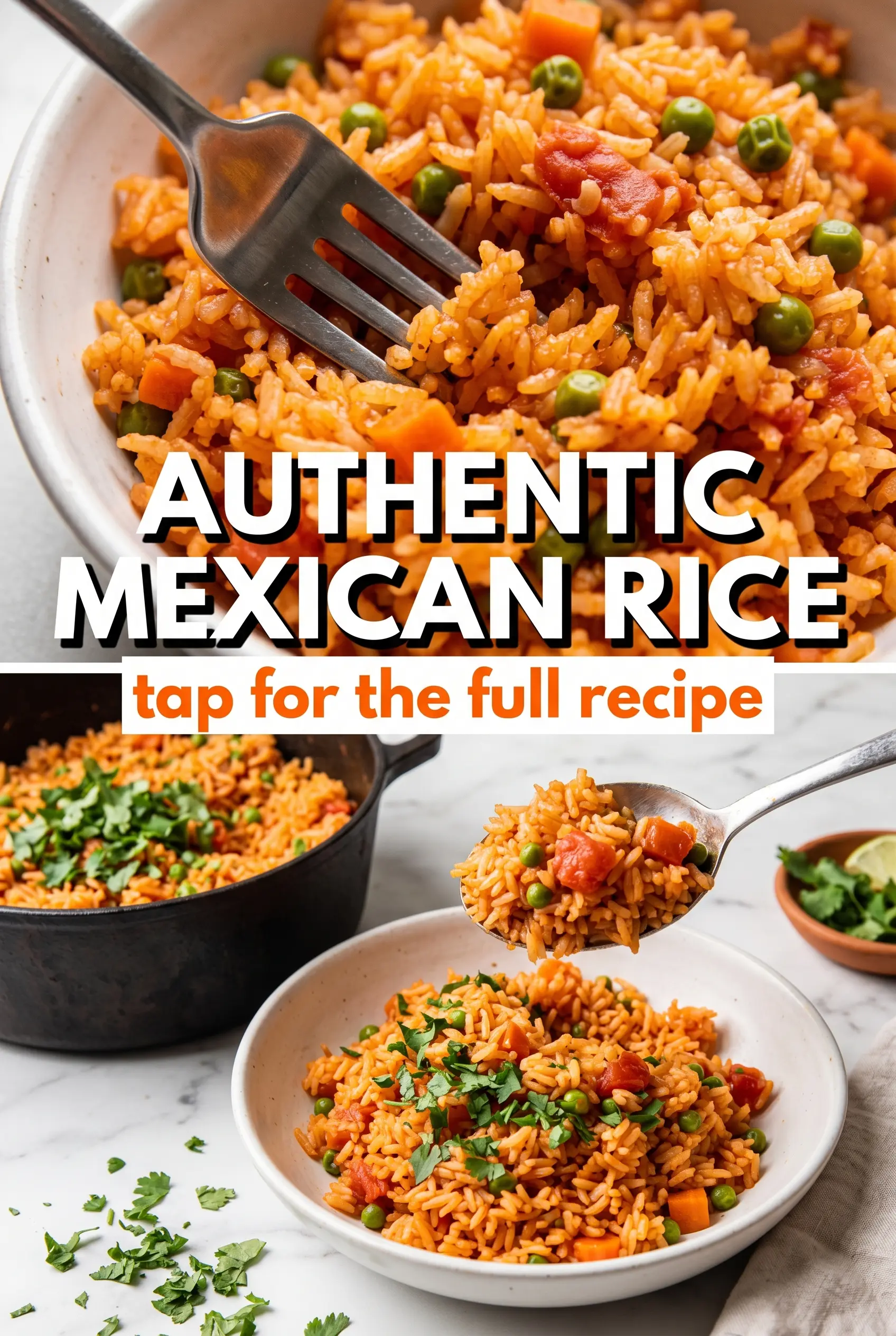
Authentic Mexican rice should be fluffy, savory, and stained a deep red with tomato, not heavy or gummy. The grains stay separate, the carrots keep a little bite, and the peas pop through the pot so every spoonful looks as good as it tastes. When it’s done right, it lands on the plate with enough flavor to hold its own next to beans, tacos, enchiladas, or anything saucy that needs a proper side.
The key is to toast the rice before any liquid goes in. That step gives the grains structure, so they don’t collapse and turn soft while they simmer. A short cook in oil with onion, garlic, and tomato sauce builds the base quickly, and the broth carries the seasoning all the way through the rice instead of leaving the flavor sitting on the surface. The result is a pot of rice that tastes layered, not one-note.
Below, you’ll find the timing that keeps the rice from going mushy, plus the small rest at the end that makes a big difference. If your Mexican rice has ever come out wet on the bottom or underseasoned in the center, this version fixes both.
The rice stayed fluffy, and the tomato sauce coated every grain without making it mushy. I loved that the carrots still had a little texture after simmering.
Save this authentic Mexican rice for taco night, when you want fluffy red rice with tomato, peas, and carrots that tastes like it came straight from the stove, not a boxed mix.
The Reason the Rice Gets Fluffy Instead of Sticky
Most soggy Mexican rice problems start before the broth even hits the pan. If the rice goes in without a proper toast, the starches release too quickly and the grains swell unevenly, which is how you end up with a soft center and a wet bottom. Toasting the rice in oil first coats the grains and gives the outside a little resistance, so they hold their shape while they absorb the tomato broth.
The other mistake is stirring once the lid goes on. That breaks the grains and pushes steam around unevenly, which can turn the bottom layer dense while the top stays underdone. Once the rice is covered, leave it alone until the timer is up, then rest it off the heat for a few minutes so the steam finishes the job gently.
What Each Ingredient Is Actually Doing in the Pot
- Long-grain white rice — This is the right rice for a fluffy, separate-grain result. Short-grain rice turns softer and clumpier here, and brown rice needs a different liquid ratio and a longer cook.
- Tomato sauce — It gives the rice its color and steady tomato flavor without making the pot too acidic or watery. Canned tomato sauce works better than chopped tomatoes because it coats the grains evenly.
- Chicken broth — This seasons the rice from the inside out. Use a broth you’d actually drink; if yours is salty, hold back on extra salt until the end.
- Carrots and peas — The carrots soften just enough to sweeten the rice, while the peas add color and a little freshness. Frozen peas go straight in; no need to thaw them first.
- Cumin and bay leaf — Cumin adds that warm, unmistakable background note, and the bay leaf gives the rice a deeper savory edge. Don’t skip both and expect the same depth from tomato alone.
- Oil — It’s not just for sautéing. It helps the rice toast evenly and keeps the grains from sticking together during the simmer.
Building the Color, Then Letting Steam Finish the Job
Toast the rice until it smells nutty
Warm the oil in a large saucepan over medium heat, then stir in the rice and keep it moving for 3 to 4 minutes. You’re looking for grains that turn slightly translucent at the edges and pick up a light golden tint, not deep browning. If the heat is too high, the outside will scorch before the center tightens up, and that toasted flavor turns bitter fast.
Cook the onion, garlic, and tomato together
Add the onion and garlic and cook just until fragrant, then stir in the tomato sauce and let it bubble for a minute or two. This step matters because the tomato sauce needs a little time in the pan to lose its raw edge and cling to the rice. If the mixture looks dry, the rice is probably too hot; lower the heat and keep stirring so the tomato doesn’t catch on the bottom.
Simmer without stirring
Pour in the broth, carrots, peas, bay leaf, cumin, salt, and pepper, then bring everything to a boil before reducing the heat to low. Cover the pan and let it simmer for 15 minutes without lifting the lid. If you peek too early, you release the steam that the rice needs to cook through, and that usually shows up later as hard grains in the center.
Rest, fluff, and finish with cilantro
Take the pan off the heat and leave it covered for 5 minutes. That rest lets the moisture distribute evenly so the rice doesn’t collapse when you fluff it. Pull out the bay leaf, fluff with a fork, and add cilantro right at the end so it stays bright instead of sinking into the steam.
How to Adapt This Rice Without Losing the Texture
Make it vegetarian
Swap the chicken broth for a good vegetable broth and keep everything else the same. The rice will still turn out fluffy, but the flavor will be a little lighter, so choose a broth with enough body to stand up to the tomato sauce.
Make it dairy-free and gluten-free
This recipe already fits both without any changes as long as your broth is gluten-free. That’s one reason it’s such a dependable side dish for a mixed table of eaters.
Use fresh tomatoes instead of tomato sauce
You can blend peeled tomatoes into a smooth puree, but the rice will be a little looser and less concentrated in color. If you go this route, cook the puree down longer before adding the broth so the final pot doesn’t taste watery.
Turn it into a fuller side
Stir in a handful of corn or a few diced bell peppers with the carrots if you want more vegetables in the pot. Add them with the broth so they soften without burning, but keep the total mix-ins modest or the rice can lose its clean, fluffy texture.
Storage and Reheating
- Refrigerator: Store in an airtight container for up to 4 days. The grains will firm up a little as they chill, which is normal.
- Freezer: It freezes well for up to 2 months. Cool it completely first, then pack it flat in freezer bags so it thaws evenly.
- Reheating: Reheat covered in the microwave with a splash of water or broth, or warm it in a skillet over low heat. The most common mistake is blasting it uncovered, which dries the top while the center stays cold.
Answers to the Questions Worth Asking
Authentic Mexican Rice
Ingredients
Equipment
Method
- Heat the vegetable oil in a large saucepan over medium heat, then add the long-grain white rice and stir constantly for 3-4 minutes, until translucent and lightly toasted.
- Add the diced white onion and minced garlic, then cook for 1-2 minutes, stirring, until fragrant.
- Stir in the tomato sauce and cook for 1-2 minutes, just to warm through.
- Stir in the chicken broth, diced carrots, frozen peas, bay leaf, cumin, and salt and pepper to taste until evenly combined.
- Bring the mixture to a boil, then reduce heat to low, cover, and simmer for 15 minutes.
- Remove the saucepan from the heat and let the rice rest covered for 5 minutes.
- Fluff the rice with a fork and remove the bay leaf.
- Garnish with fresh cilantro before serving.