Autumn chopped salad hits that sweet spot between crisp and substantial: every forkful brings tender kale, crunchy Brussels sprouts, juicy fruit, salty feta, and just enough maple-Dijon dressing to tie it together without weighing it down. The trick is chopping everything small and evenly enough that the bowl eats like a composed salad, not a pile of separate ingredients.
This version works because the kale gets a quick massage before anything else goes in. That one minute softens the leaves and takes the edge off their bitterness, which matters when you’re pairing them with apples, pears, and dried cranberries. The dressing leans on apple cider vinegar and Dijon for sharpness, then maple syrup rounds it out so the fruit doesn’t taste random or overly sweet.
Below, I’ve included the part most people skip: how to keep the apples and pears from turning the whole bowl soggy, plus a few smart swaps if you need to work with what’s already in the pantry.
The kale softened beautifully after the quick massage, and the maple vinaigrette was just sharp enough to balance the pear and cranberries. I had mine for lunch the next day and the apples were still crisp.
Save this autumn chopped salad for a crisp, sweet-savory lunch with maple Dijon dressing and plenty of crunch.
The Kale Massage That Keeps This Salad Tender, Not Tough
Kale is the backbone of this salad, so it has to eat well on its own before the dressing even shows up. A quick massage with a spoonful of the vinaigrette softens the leaves, darkens them slightly, and takes away that dry, rough bite that makes chopped salads feel like work. Skip that step and the salad can seem woody, even if everything else is perfect.
The Brussels sprouts bring extra crunch and a mild cabbage note that plays nicely with the fruit. They should be shredded fine enough to blend into the bowl instead of sitting there like a second vegetable tray. The goal is a salad where every bite gets a little bit of everything.
What Each Ingredient Is Doing in the Bowl
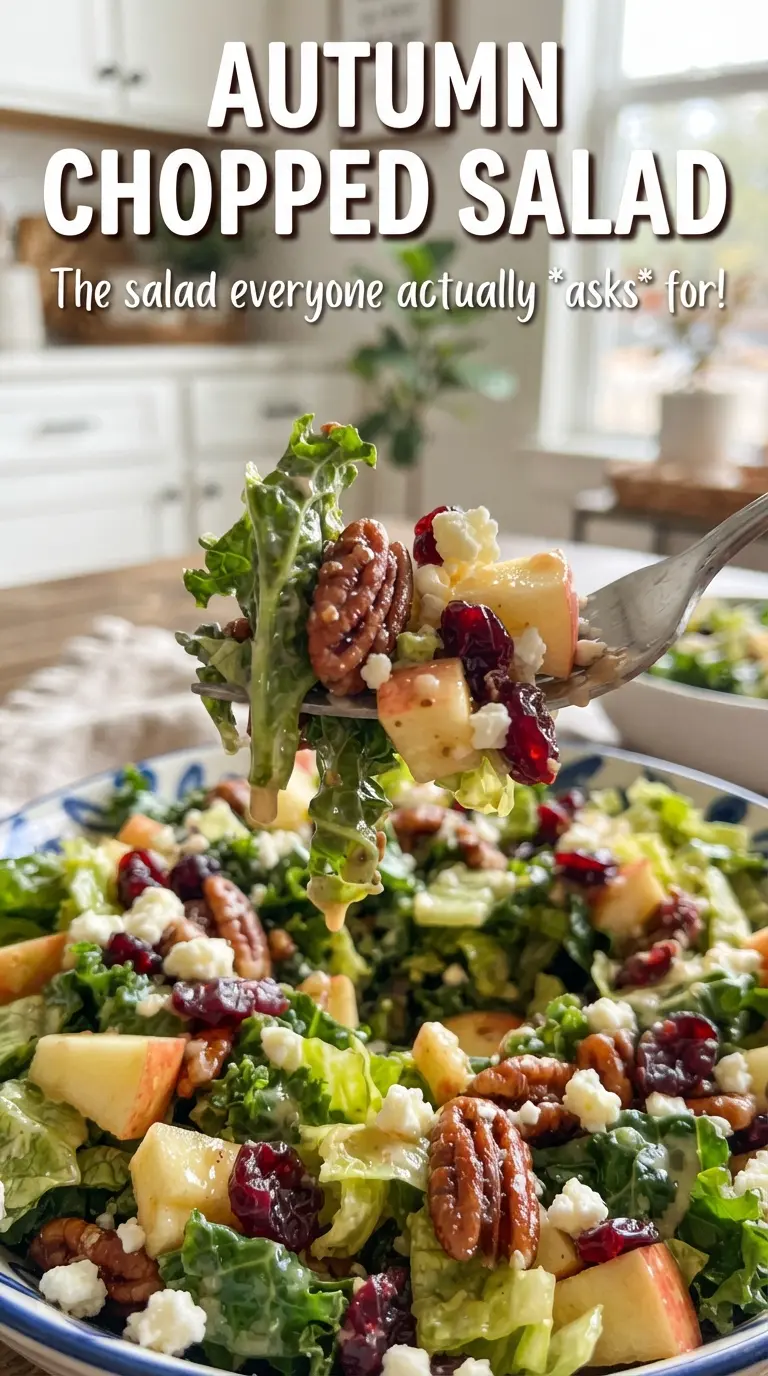
- Kale — Finely chopped kale holds up better than most greens and won’t collapse under the dressing. Lacinato or curly both work; just strip out the tough stems and chop it small so it doesn’t feel stringy.
- Brussels sprouts — These add crunch and a slightly savory edge. Shred them as finely as you can; thick shreds make the salad harder to toss and chew.
- Apple and pear — This is where the sweet, juicy contrast comes from. Use a firm apple and a pear that’s ripe but still gives a little when pressed, or the salad turns mushy fast.
- Maple syrup, apple cider vinegar, and Dijon — Together they build a dressing that’s sweet, sharp, and emulsified enough to cling to the greens. Honey can stand in for maple syrup, but the flavor will be a little less warm and round.
- Candied pecans, feta, and pepitas — These are the texture anchors. The pecans bring sweetness, the feta brings salt, and the pepitas keep the salad from feeling soft all the way through.
Building the Salad So the Fruit Stays Crisp
Whisk the Dressing First
Start with the dressing in a large bowl so the kale can go in right away after. Whisk until the Dijon disappears and the oil looks fully combined with the vinegar, not streaky or separated. If the dressing tastes flat, it usually needs more salt, not more maple syrup; sweetness without enough salt will make the whole bowl taste muddy.
Soften the Kale Before the Rest Goes In
Add just one tablespoon of dressing to the kale and massage it for about a minute. You’re looking for the leaves to darken, wilt slightly, and lose their rigid, crinkly look. If you skip this or overdo it with the dressing, the kale either stays tough or turns limp before the rest of the ingredients even land in the bowl.
Finish With the Crunchy Ingredients
Add the Brussels sprouts, fruit, cranberries, pecans, feta, and pepitas after the kale is ready. Toss gently enough to coat everything without bruising the fruit, then add the remaining dressing a little at a time. The salad should look glossy, not wet, and the ingredients should still keep their shape.
How to Adapt This Salad for What You’ve Got
Make It Dairy-Free
Leave out the feta and add a few extra pepitas or even sunflower seeds for more salt-free crunch. You’ll lose the creamy, salty bite the cheese brings, so taste the dressing and bump up the salt a little to keep the salad balanced.
Swap the Fruit Based on Ripeness
Use all apple, all pear, or a mix of both depending on what looks best. Apples stay firmer longer, while ripe pears add more perfume and softness; if your pears are very soft, slice them just before serving so they don’t disappear into the dressing.
Make It Vegan
Skip the feta and use maple syrup as written. If you want extra richness, add sliced avocado right before serving, but only if you plan to eat it right away since it softens quickly and doesn’t hold like the rest of the salad.
Storage and Reheating
- Refrigerator: Store the dressed salad up to 2 days, though the apples and pears will soften and the kale will get more tender. For the best texture, keep the dressing separate and toss just before serving.
- Freezer: Don’t freeze this salad. The greens and fruit turn watery and lose all their texture once thawed.
- Reheating: No reheating needed. If you’ve chilled the salad, let it sit at room temperature for 10 to 15 minutes so the dressing loosens and the flavors open up again.
Questions I Get Asked About This Salad
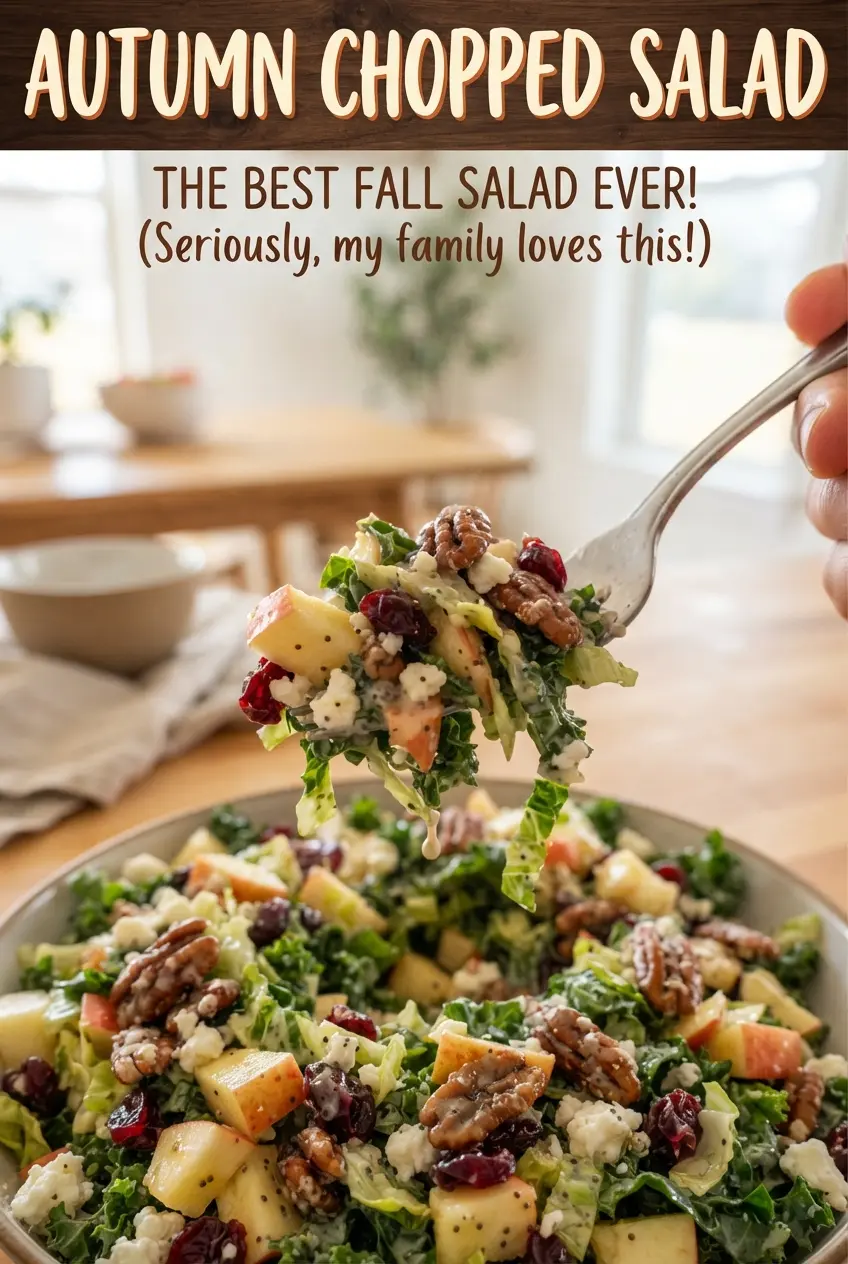
Autumn Chopped Salad
Ingredients
Method
- Whisk olive oil, apple cider vinegar, maple syrup, Dijon mustard, salt, and pepper until smooth.
- Massage kale with 1 tablespoon of the dressing for 1 minute until tender.
- Add Brussels sprouts, apple, pear, dried cranberries, candied pecans, feta, and roasted pepitas to the bowl.
- Pour the remaining dressing over the salad.
- Toss well, then serve right away or chill for up to 2 hours before serving.