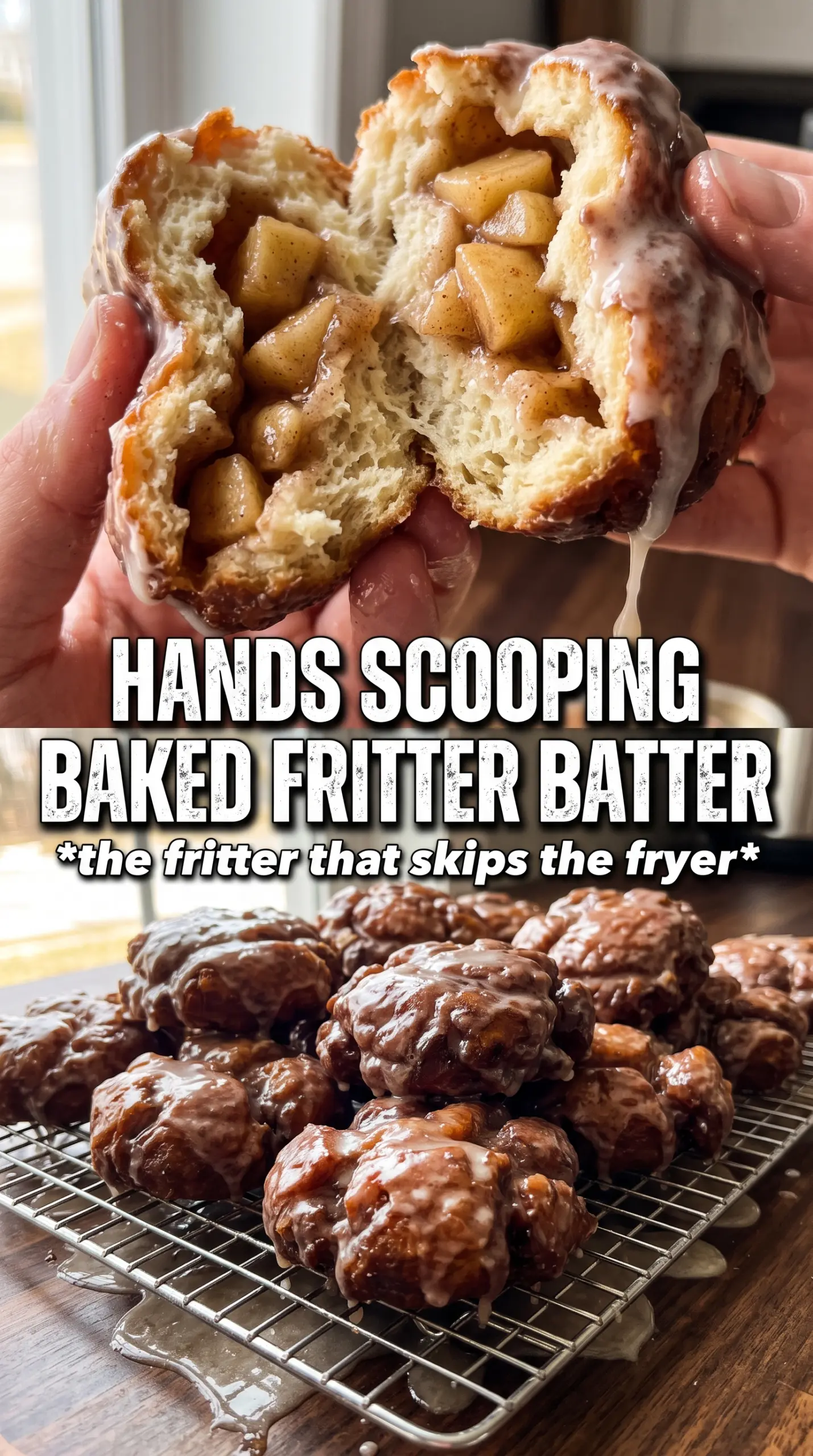
Warm baked apple fritters land with the same cozy pull as the fried kind, but without the heavy, greasy finish. The edges bake up golden and set while the centers stay soft and cake-like, with little pockets of tender apple in every bite. A cinnamon vanilla glaze melts over the top and settles into the ridges just enough to give each fritter that bakery-style finish.
What makes this version work is the balance: enough baking powder for lift, enough milk and butter for tenderness, and apples diced small enough to soften during the short bake without turning watery. The batter is thick on purpose. That thickness helps the fritters hold their shape on the pan instead of spreading into flat rounds. Spraying the tops before baking also matters more than people think — it helps the outside brown and keeps the texture from tasting dry.
Below, I’ll show you why the apple size matters, how to keep the fritters from baking up dense, and the best way to glaze them so they stay soft instead of soggy.
The fritters baked up with crisp edges and a soft middle, and the glaze set just enough that they didn’t get sticky all over the plate. I used Honeycrisp apples and they held their shape beautifully.
Love these baked apple fritters? Save them to Pinterest for a lighter breakfast with crisp edges, tender apples, and cinnamon glaze.
The Trick to Keeping Baked Fritters Tender, Not Dense
The biggest mistake with baked fritters is overworking the batter. Once the wet ingredients go in, stir only until the flour disappears and then stop. A lumpy batter is normal here, and that rough texture helps the fritters stay light instead of turning bready.
Apple moisture is the other thing that can throw the texture off. Finely diced apples soften fast in the oven, but if the pieces are too large, they’ll leave the fritters uneven and underbaked in the middle. Small dice gives you soft apple in every bite without making the batter wet enough to spread.
- Flour — All-purpose flour gives the fritters enough structure to hold their shape. A softer flour can work, but they won’t have the same sturdy, cakey bite.
- Baking powder — This is what lifts the batter in the oven. If it’s old, the fritters bake up flat, so use fresh baking powder for the best rise.
- Apples — Peel them and dice them finely. Firmer apples like Honeycrisp, Fuji, or Granny Smith keep their texture better than soft apples that collapse into the batter.
- Cooking spray — Don’t skip it. The sprayed surface helps the bottoms brown and releases the fritters cleanly from the parchment.
What Each Ingredient Is Actually Doing in These Fritters
- Cinnamon and nutmeg — Cinnamon carries the main flavor, and nutmeg adds that bakery-style warmth in the background. You can lean harder on cinnamon if you want, but leave a little nutmeg in place because it rounds out the glaze and the batter.
- Eggs and milk — The eggs bind the batter and give the fritters a little structure, while the milk keeps the crumb soft. Whole milk gives the best texture here, but 2% works if that’s what you have.
- Melted butter — This adds richness without making the batter heavy. Oil works in a pinch, but butter gives the fritters a more classic baked-cake flavor.
- Powdered sugar glaze — The glaze should be thin enough to drizzle, not pour. If it looks too thick, add milk a teaspoon at a time until it ribbons off the whisk.
How to Bake the Batter So It Rises and Browns at the Same Time
Mix the dry base first
Whisk the flour, sugar, baking powder, cinnamon, nutmeg, and salt together until everything looks evenly combined. That step keeps the baking powder from clumping in one spot, which would leave you with uneven rise and a bitter pocket in one fritter. Don’t rush through it. A quick, thorough whisk does more than most people realize.
Bring the wet ingredients together gently
Whisk the eggs, milk, melted butter, and vanilla in a separate bowl until smooth, then pour them into the dry mixture. Stir just until the flour streaks disappear. If you beat the batter smooth, the fritters turn dense and tight instead of soft and cakey.
Fold in the apples and portion with space
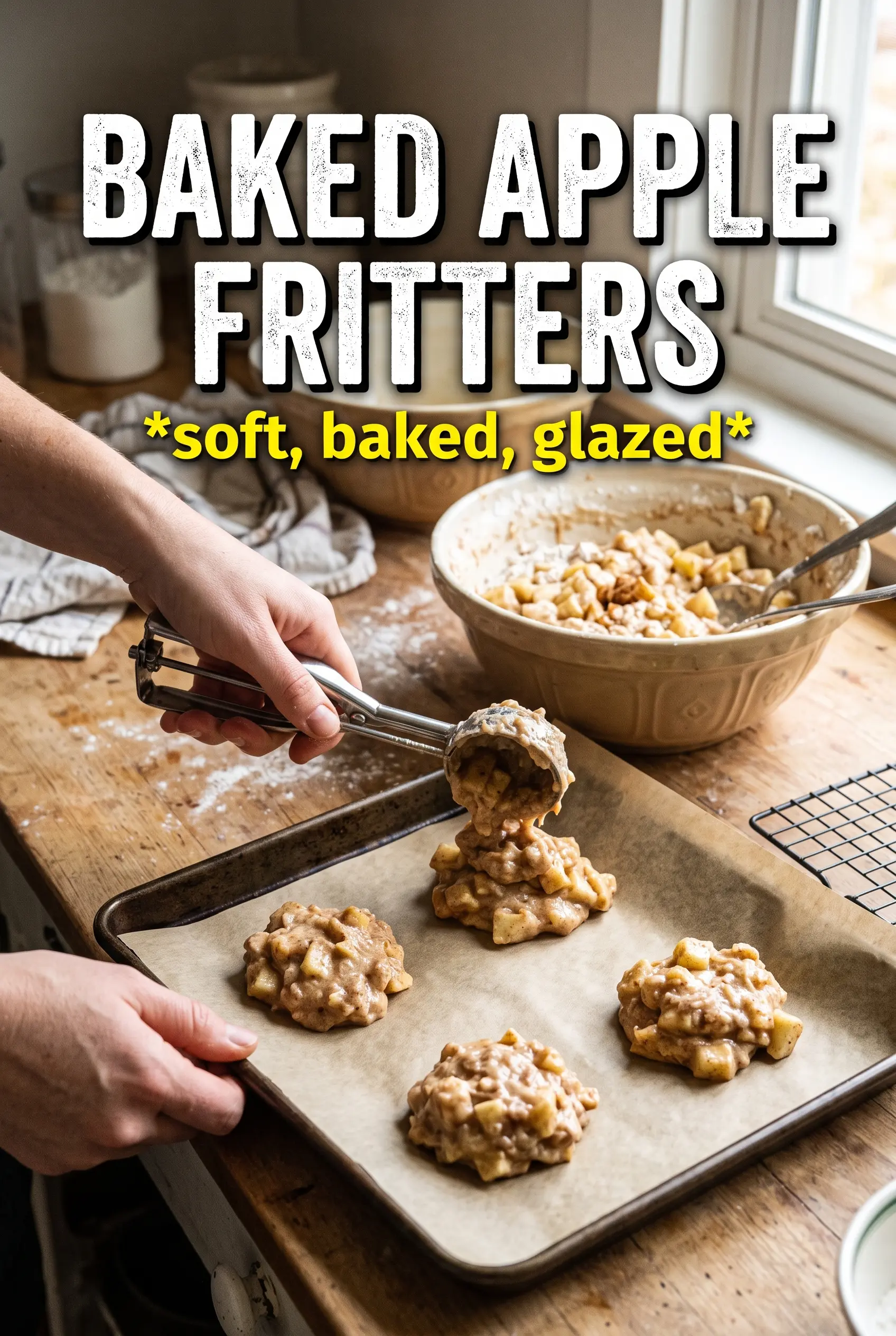
Use a spatula to fold in the diced apples so they stay evenly distributed. Drop the batter in 1/4-cup mounds onto the prepared sheet, leaving room between them so the sides can brown instead of steaming together. A generous spray on top helps the surface color and keeps the fritters from looking pale after baking.
Flip once for even browning
Bake at 400°F until the bottoms set and the tops start to puff, then flip them at about the 10-minute mark. That flip is what gives you a fritter that feels baked on both sides instead of just a muffin scoop left on a tray. If they stick, give them another minute; pulling too early tears the tender crust.
Glaze while warm, not blazing hot
Whisk the glaze until smooth and drizzle it over the fritters while they’re still warm. Warm fritters soak up just enough glaze to set with a shiny finish, but if they’re piping hot, the glaze slides right off and disappears into the parchment. Let them cool for a few minutes first, then spoon or drizzle it over the top.
Three Ways to Make These Baked Apple Fritters Fit Your Kitchen
Dairy-Free Version
Swap the milk for an unsweetened non-dairy milk and use melted coconut oil or a neutral oil in place of the butter. The fritters will still bake up soft, but you’ll lose a little of the buttery flavor, so keep the vanilla in the glaze and don’t skimp on the cinnamon.
Gluten-Free Option
Use a 1:1 gluten-free baking blend that includes xanthan gum. The texture will be a little more delicate and the fritters may spread slightly less, but the flavor stays the same. Don’t use almond flour alone here; it won’t give the batter the structure it needs.
Extra Apple and Spice
Add a handful more diced apple and bump the cinnamon slightly if you want a fruit-forward fritter. Keep the total add-ins modest, though, or the batter gets too heavy to rise properly. More apple sounds tempting, but too much turns these from tender fritters into soft apple clumps.
Storage and Reheating
- Refrigerator: Store in an airtight container for up to 3 days. They soften a little after the first day, especially once glazed.
- Freezer: Freeze unglazed fritters on a tray, then move them to a freezer bag for up to 2 months. Glaze after reheating for the best texture.
- Reheating: Warm in a 325°F oven for 8 to 10 minutes or until heated through. The mistake to avoid is microwaving them too long, which makes the crumb rubbery and the glaze disappear into the surface.
Answers to the Questions Worth Asking
Baked Apple Fritters
Ingredients
Equipment
Method
- Preheat oven to 400F, then line a baking sheet with parchment and spray generously with cooking spray.
- Whisk all-purpose flour, granulated sugar, baking powder, cinnamon, nutmeg, and salt until evenly combined.
- Whisk eggs, whole milk, melted butter, and vanilla extract until smooth, then pour into dry ingredients.
- Fold just until combined, stopping as soon as no dry streaks remain.
- Fold in the diced apples so they are evenly distributed through the batter.
- Drop 1/4 cup portions onto the prepared baking sheet, spacing them apart.
- Spray the tops of each fritter portion with cooking spray.
- Bake 16-18 minutes total, flipping once at 10 minutes, until golden on both sides.
- Whisk powdered sugar, milk, vanilla extract, and cinnamon until smooth.
- Drizzle the glaze over the warm fritters.