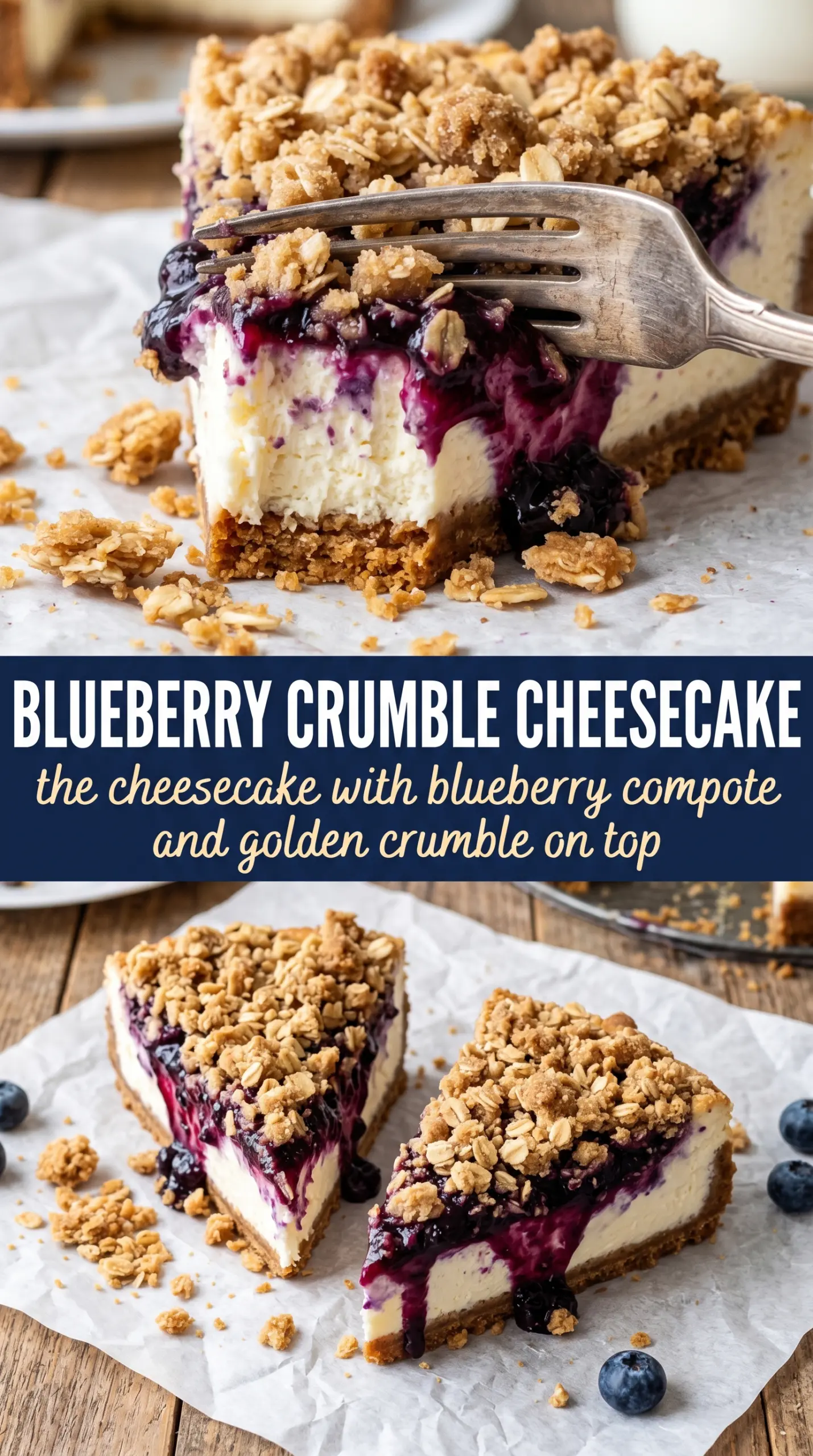
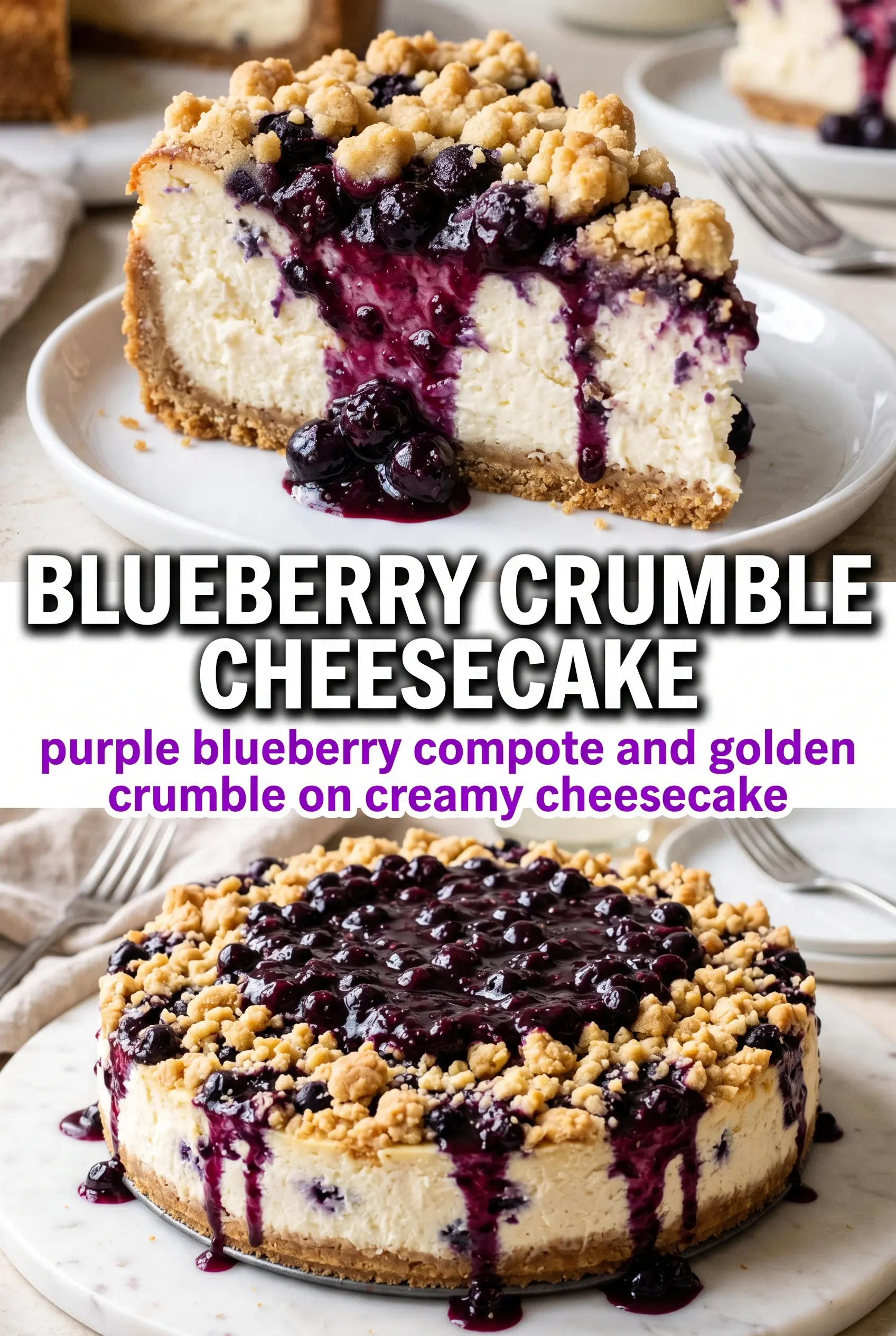
Blueberry crumble cheesecake lands in that sweet spot between creamy, tart, and buttery-crisp, with every slice giving you a clean cheesecake layer, a burst of jammy berries, and a golden oat topping that breaks apart under the fork. The contrast is what makes it memorable. You get the richness of a classic baked cheesecake, but the crumble keeps it from feeling heavy.
What makes this version work is balance. The filling stays smooth because the cream cheese is softened first and mixed only until the batter is cohesive, not whipped full of air. The blueberry layer is thickened just enough with cornstarch so it stays on top instead of bleeding into the cheesecake, and the crumble bakes into little buttery clumps instead of turning sandy.
Below, I’ll show you how to keep the cheesecake from cracking, how to layer the blueberry topping so it stays distinct, and the one chilling step you don’t want to rush if you want neat slices.
The blueberry layer stayed right where it belonged and the crumble came out crisp even after chilling. I cut it after overnight in the fridge and the slices were clean enough for a party plate.
Like this blueberry crumble cheesecake? Save it for the kind of dessert that needs a creamy center, jammy berries, and a buttery oat crumble on top.
The Part Most Cheesecakes Get Wrong: The Topping Stays Separate on Purpose
The biggest mistake with a fruit-topped cheesecake is treating the fruit like a sauce and letting it sink into the filling. Here, the blueberry mixture gets a little cornstarch and sugar before it goes on top, which helps it thicken in the oven instead of leaking purple streaks through the cheesecake. That keeps the slices defined and the blueberry flavor bright right where you want it.
The crumble needs a different kind of attention. Cold butter rubbed into the oats and flour creates small clumps that brown instead of melting flat. If the butter gets too soft, the topping turns dusty and disappears into the fruit layer. You want pieces that look uneven and pebble-like going into the oven.
- Blueberries — Fresh berries hold their shape better than frozen ones here. Frozen berries release more liquid, which can thin the topping and make the cheesecake surface slippery. If frozen is what you have, don’t thaw them first; toss them with the sugar and cornstarch while still frozen so the extra moisture stays controlled.
- Cream cheese — This is the backbone of the filling, and it needs to be fully softened so the batter turns silky. Cold cream cheese leaves little lumps that never fully disappear. Full-fat blocks give you the best texture; tub-style cream cheese is too soft and often contains extra moisture.
- Sour cream — This adds tang and keeps the filling from tasting flat. It also loosens the batter just enough for a smoother bake. Plain full-fat Greek yogurt can work in a pinch, but the cheesecake will be a little less rich and slightly firmer.
- Rolled oats — Old-fashioned oats give the crumble its chewy, rustic texture. Quick oats will work, but the topping comes out denser and less distinct. If you want the crumble to stay crisp on top of the fruit, keep the oat pieces intact.
What Each Ingredient Is Actually Doing in This Dessert
- Sugar (the sweetness and structure) — Sugar tenderizes baked goods and creams with butter to create air. Don’t reduce too much.
- Butter (the richness and crumb) — Proper creaming adds air and creates tender texture. Use room temperature butter.
- Eggs (the binder and lift) — These create structure and help baked goods rise. Beat in gradually for volume.
- Flour (the structure base) — Don’t overmix or the dessert becomes tough and dense. Mix just until combined.
- Leavening (baking powder or soda) — This creates rise and light crumb. Too much makes it taste bitter.
- Liquid (milk, yogurt, or other) — This hydrates the flour and carries flavors. Balance is key.
- Flavorings (vanilla, spices, extract) — These define personality. Use quality flavorings.
- Mix-ins or layers (fruit, chocolate, filling) — These add texture and prevent one-dimensional taste.
Building the Layers Without Beating Air Into the Filling
Press and Bake the Crust First
Mix the graham cracker crumbs, sugar, and melted butter until the mixture looks like damp sand, then press it firmly into the springform pan. A tight crust holds together when you slice the cheesecake, while a loose one crumbles into the first serving. Bake it for 8 minutes, just until it smells toasty and the edges darken slightly. Let it cool before the filling goes in so the butter doesn’t soften the batter from underneath.
Mix the Filling Slowly and Stop Early
Beat the cream cheese and sugar until the mixture looks smooth and spreadable, then add the eggs one at a time. The moment the batter turns glossy and uniform, stop mixing. Too much air is what causes cheesecake to puff in the oven and crack as it cools. Stir in the sour cream, vanilla, and lemon zest at the end so the filling stays dense but not heavy.
Layer the Blueberries and Crumble on Top
Spoon the blueberry mixture over the filling in an even layer, then scatter the crumble over the berries instead of packing it down. That loose top layer lets heat move through the fruit and gives the crumble room to brown. If you press it into the batter, it sinks and loses its texture. The top should look generously covered, with some blueberries still peeking through.
Bake Low, Then Cool Slowly
The water bath is what keeps the edges from overbaking before the center sets. Bake until the middle barely jiggles when you nudge the pan, not until it looks firm all the way across. If it’s baked solid in the oven, it will overcook by the time it cools. Crack the oven door and let the cheesecake sit for an hour so the temperature drops gradually and the surface stays smooth.
Make It With Frozen Blueberries
Frozen berries work, but the topping will be a little softer and more dramatic-looking once baked. Keep them frozen when you mix them with the sugar, cornstarch, and lemon juice so they don’t dump out extra liquid before they hit the oven. The color gets deeper, and the filling still stays separate if you don’t thaw them first.
Gluten-Free Version
Use gluten-free graham crackers for the crust and certified gluten-free oats in the crumble. The texture stays the same, and nobody will miss the flour once the topping bakes into those buttery clusters. Check that your cornstarch is gluten-free as well if you need the dessert fully safe.
Lemon-Forward Cheesecake
Add an extra teaspoon of lemon zest to the filling if you want the blueberry layer to taste brighter and sharper. That extra citrus doesn’t make the cheesecake sour; it just wakes up the berries and cuts through the richness. I wouldn’t add more juice, though, because too much liquid can loosen the batter.
Storage and Reheating
- Refrigerator: Store covered for up to 5 days. The crumble softens a little in the fridge, but the flavor stays excellent.
- Freezer: Cheesecake freezes well. Chill it fully first, then wrap slices tightly and freeze for up to 2 months. Thaw overnight in the refrigerator for the cleanest texture.
- Reheating: This dessert is best served cold or cool from the fridge. If you want a softer slice, let it sit at room temperature for 15 to 20 minutes. Don’t microwave it, or the filling can turn greasy and the topping loses its crunch completely.
Answers to the Questions Worth Asking
Blueberry Crumble Cheesecake
Ingredients
Equipment
Method
- Preheat the oven to 325°F. Press graham cracker crumbs into a 9-inch springform pan and bake for 8 minutes, then cool.
- Beat cream cheese and granulated sugar until smooth. Add eggs one at a time, mixing well after each, then mix in sour cream, vanilla extract, and lemon zest.
- Pour the cheesecake batter over the cooled crust. Bake-ready filling should be smooth and level before topping.
- Combine fresh blueberries, sugar, cornstarch, and lemon juice. Spoon this blueberry mixture over the cheesecake batter in an even layer.
- Mix rolled oats, all-purpose flour, and brown sugar together. Add cold butter and pinch with fingertips until clumpy and sandy-looking.
- Scatter the oat crumble generously over the blueberry layer. Leave some clumps visible so they can turn golden as the cheesecake bakes.
- Bake in a water bath at 325°F for 55-65 minutes. Stop when the center barely jiggles, with the edges set.
- Cool the cheesecake in the oven with the door cracked for 1 hour. This gentle cooling helps prevent cracks.
- Refrigerate the cheesecake for at least 4 hours. When chilled, unmold and serve for clean slices and a crisp crumble top.