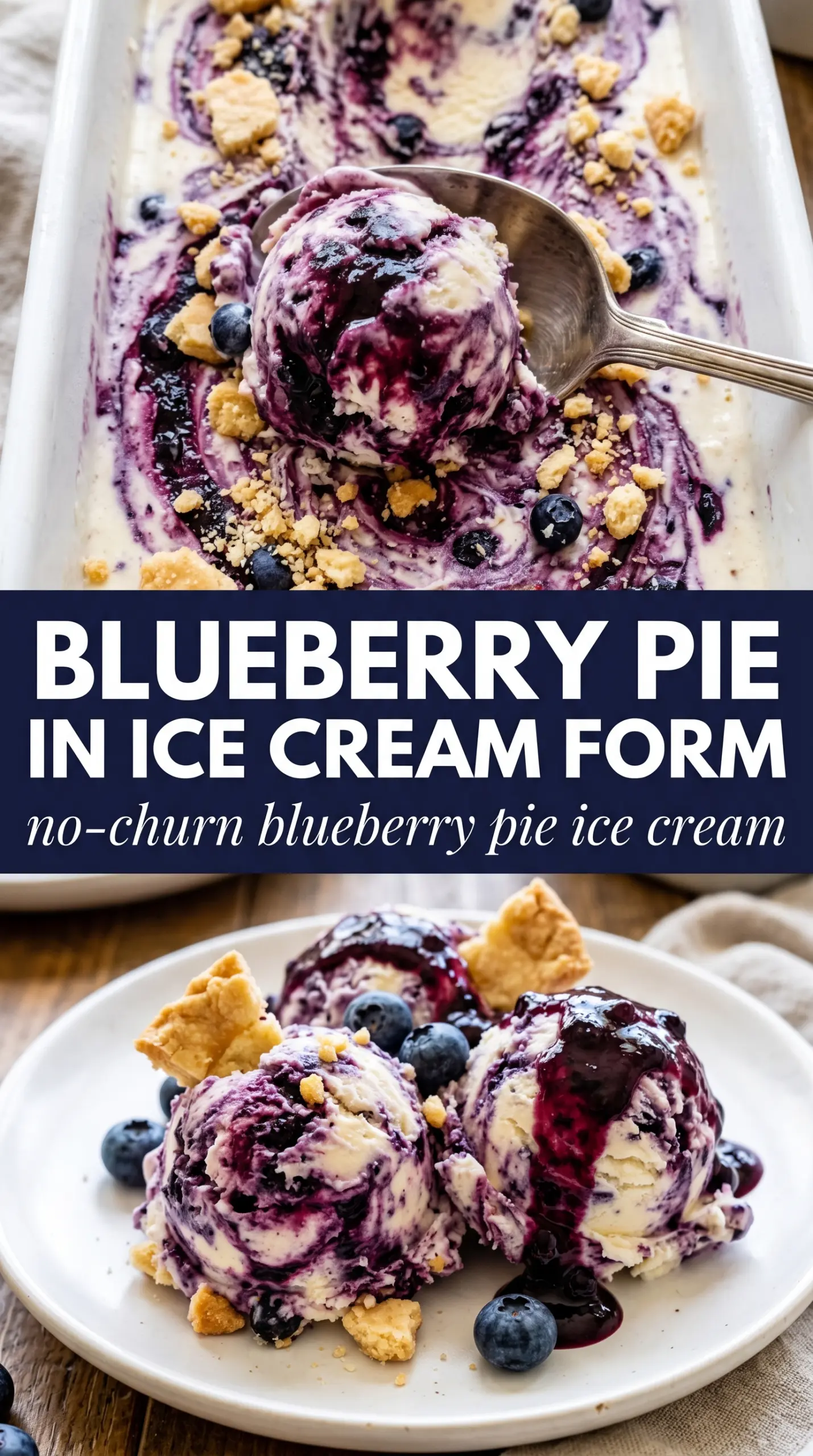
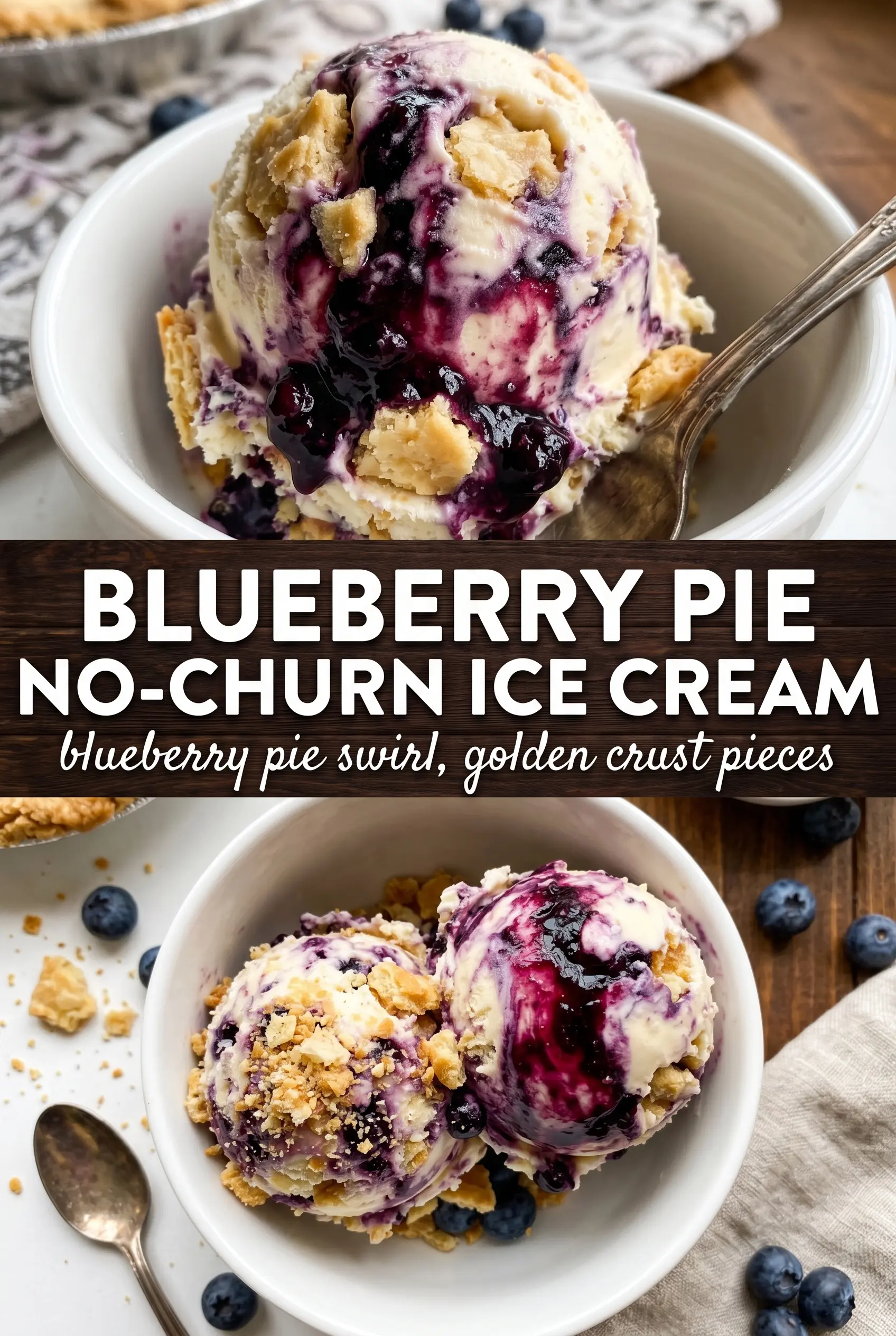
Blueberry pie no-churn ice cream turns a simple loaf pan into something that tastes like the best part of pie night. The base stays plush and creamy, the blueberry swirl goes jammy and bright, and the pie crust pieces keep enough crunch to remind you why pie crust belongs in ice cream in the first place. Every scoop lands somewhere between frozen custard and a slice of blueberry pie with extra filling.
The trick is building three distinct textures and keeping each one in its lane. The blueberries need to cook down until they’re thick enough to ribbon through the cream instead of disappearing into it, and they have to cool all the way before folding in or the whipped base will lose volume. The pie crust pieces also need to be fully baked and cooled so they stay crisp instead of turning soft and sandy in the freezer.
Below, I’ll walk through the part that matters most: how to get a blueberry swirl that stays bold, not muddy, plus the small details that keep the ice cream scoopable instead of icy. If you’ve ever had a no-churn ice cream freeze too hard or taste flat, this version fixes both problems.
The blueberry filling thickened up perfectly, and the pie crust pieces stayed crunchy enough to taste like actual pie. I froze it overnight and it scooped cleanly without turning icy.
Save this blueberry pie no-churn ice cream for the days when you want a jammy swirl, buttery crust pieces, and zero churn time.
Why the blueberry swirl stays bold instead of fading into the cream
The blueberry layer needs to be cooked down past the “saucy” stage and into something that clings to a spoon. If it’s thin, it will streak through the base and disappear; if it’s thick and glossy, you get clean ribbons of fruit in every scoop. The cornstarch slurry is what gets you there without overcooking the berries into jam.
Cooling matters just as much as cooking. Warm compote will deflate the whipped cream base, and that’s when no-churn ice cream turns dense instead of airy. I spread the compote in a shallow bowl so it drops to room temperature faster, then fold only after it’s fully cool.
- Blueberries — Fresh or frozen both work. Frozen berries break down a little faster, which is helpful if you want a thicker compote, and there’s no need to thaw them first.
- Sweetened condensed milk — This is what keeps the base soft and scoopable straight from the freezer. There isn’t a real substitute here if you want the same texture.
- Pie crust pieces — Bake them until deeply golden before crumbling. Underbaked crust turns doughy in the freezer instead of staying crisp.
- Lemon juice — It brightens the berries and keeps the filling tasting like pie, not flat blueberry candy. Bottled works in a pinch, but fresh gives a cleaner finish.
What Each Ingredient Is Actually Doing in This Ice Cream
- Base ingredient (cream, milk, or custard) — This provides the foundation and richness. Quality matters.
- Sweetener (sugar, honey, or condensed milk) — This sweetens and prevents ice crystals. The ratio is critical.
- Flavor element (vanilla, fruit, chocolate, or other) — This defines the ice cream personality. Use quality ingredients.
- Egg yolks (if making custard base) — These create richness and silky texture. Optional but elevates ice cream.
- Churning (if using ice cream maker) — This incorporates air and prevents ice crystals. Critical for smooth texture.
- Freezing temperature and time — Proper freezing prevents rock-hard texture. Store at 0°F or below.
- Mix-ins (chocolate, cookies, fruit, or swirls) — These add texture and prevent one-dimensional flavor. Add near end of churning.
- Serving temperature (slightly soft, not rock hard) — This provides creamy mouthfeel. Remove from freezer 5 minutes before serving.
Building the layers so the pie crust stays crisp enough to notice
Whip the cream to stiff peaks first. You want the cream to hold its shape when you lift the whisk, with peaks that stand upright instead of slumping. If you stop at soft peaks, the final ice cream freezes softer but it also loses the structure needed to carry the swirls.
When you fold in the condensed milk mixture, keep the strokes broad and gentle. The goal is to protect the air you just whipped in, not fully smooth every streak out of the mixture. A few visible ribbons are fine because they disappear during the layering step.
For assembly, alternate base, compote, and pie crust pieces in the loaf pan. Drag a knife through the top in slow figure-eights, but don’t overmix. Too much swirling turns the whole pan purple and the crust pieces sink into the bottom instead of staying scattered through the scoop.
Three ways to make this blueberry pie ice cream fit your kitchen
Gluten-free version with the same pie vibe
Use a gluten-free pie crust or gluten-free graham-style crumble and bake it until crisp before adding it to the ice cream. You still get that buttery bakery note, but the pieces may soften a little faster in the freezer, so add a few extra on top just before serving.
Dairy-free ice cream with a different texture
Swap in full-fat coconut cream for the heavy cream and use a dairy-free sweetened condensed milk alternative. The result is still creamy, but you’ll taste a light coconut note and the base will freeze a touch firmer, so let it sit on the counter for 10 minutes before scooping.
Extra blueberry, less crust
If you want a fruit-forward scoop, keep the blueberry compote amount the same but reduce the pie crust pieces by about a third. The ice cream will taste brighter and softer, with less crunch in each bite and a cleaner frozen-berry finish.
Storage and Reheating
- Refrigerator: Not recommended. This is a frozen dessert and the base will melt into a loose cream mixture quickly.
- Freezer: Keeps well for up to 2 weeks in a tightly covered loaf pan or freezer container. After that, the crust pieces start to lose their texture and ice crystals can build on the surface.
- Reheating: No reheating needed. For the best scoop, let it sit at room temperature for 5 to 10 minutes before serving so the center softens without turning slushy.
Answers to the questions worth asking
Blueberry Pie No-Churn Ice Cream
Ingredients
Equipment
Method
- Simmer blueberries with granulated sugar and lemon juice over medium heat for 5 minutes, stirring until the berries burst and look glossy. Keep the mixture at a steady simmer so it thickens evenly.
- Stir cornstarch slurry (cornstarch mixed with water) into the simmering blueberries, then cook 2 more minutes until the compote is visibly thick. The spoon should leave a short trail through the jam when you drag it across the pot.
- Cool the blueberry compote completely at room temperature, then chill if needed until fully cold. Use a surface that shows room-temperature cooling, with the mixture turning more jam-like as it sets.
- Whip heavy cream to stiff peaks until the cream holds sharp ridges when you lift the whisk. Stop once it’s firm and glossy, not grainy.
- Whisk sweetened condensed milk, vanilla extract, and salt together until smooth, then fold into the whipped cream. Fold gently with steady motions so the base stays airy and thick.
- Layer the ice cream base and cooled blueberry compote into a 9x5 loaf pan, alternating so you get visible purple swirls. Swirl with a knife by dragging it through the layers in short strokes.
- Scatter pie crust pieces between layers as you fill, then press lightly so some pieces adhere to the base. Keep a few visible throughout for that pie-crust bite in every scoop.
- Freeze at least 6 hours until firm, then cover and keep frozen until serving. The ice cream is ready when a spoon sinks in with resistance and the surface looks set, not soft.