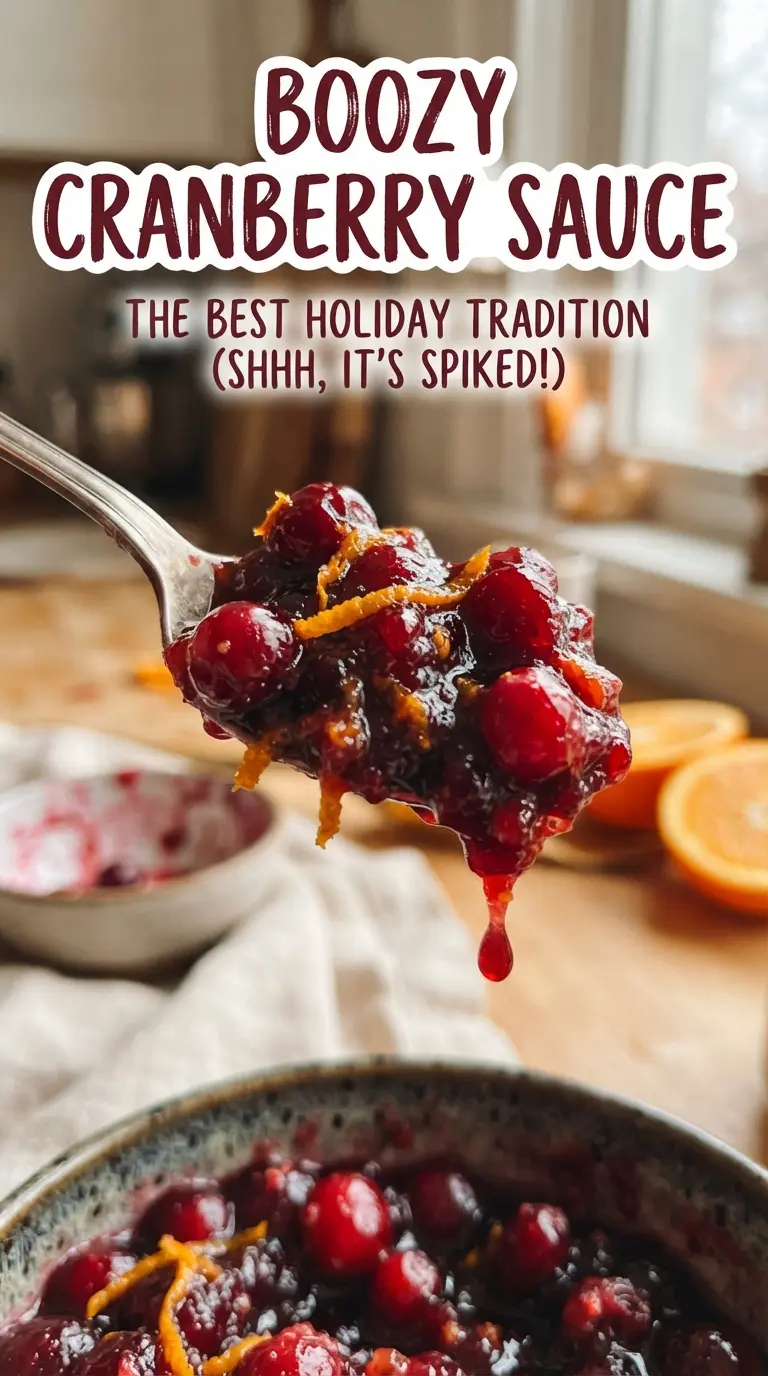
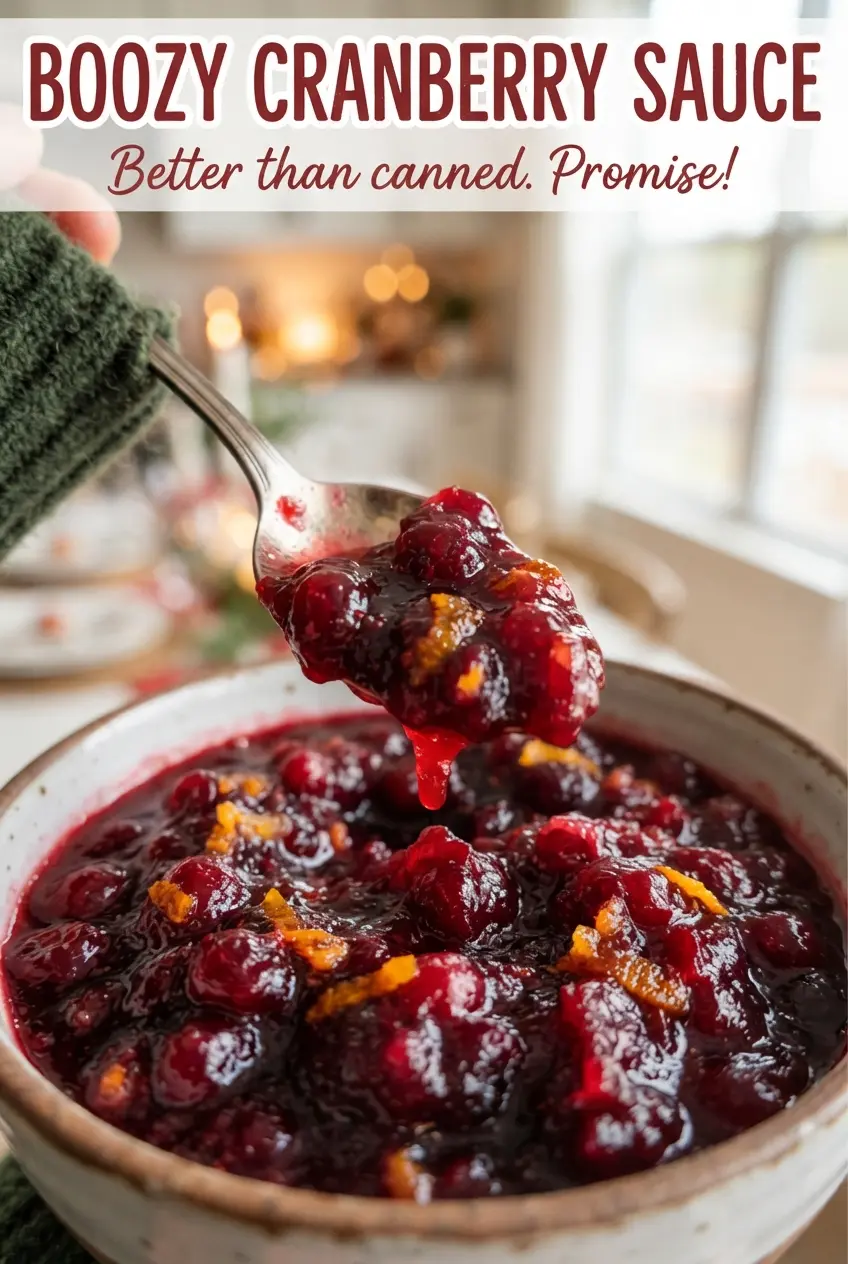
Deep ruby cranberry sauce with port and orange liqueur has a brighter, rounder flavor than the plain version most people know. It lands on the table glossy and spoonable, with tart berries softened just enough to hold their shape before they burst into a jammy sauce. The wine and orange liqueur don’t make it taste boozy in a sharp way; they deepen the fruit and give the sauce a polished finish that feels a little more special without turning it fussy.
This version works because the sugar, port, and orange juice go into the pan first, which gives the sweetener time to dissolve and the wine a chance to cook down before the cranberries hit the heat. That keeps the sauce from tasting thin or overly wine-forward. The Grand Marnier goes in at the end so its orange aroma stays fresh instead of boiling off.
Below, I’ve included the little details that matter most: when the sauce looks thick enough, why chilling changes the texture, and a few ways to tweak the liquor and citrus without losing the balance.
The sauce thickened beautifully as it cooled, and the port gave it this deep, glossy finish that made it taste much fancier than the effort involved.
Save this boozy cranberry sauce for a glossy, port-kissed holiday side that sets up beautifully as it chills.
The Secret to Cranberry Sauce That Sets Up Glossy Instead of Watery
The biggest mistake with cranberry sauce is stopping the simmer as soon as the berries burst. At that point, the liquid still looks loose, and if you serve it right away it can slide around the plate instead of holding a clean spoonful. The sauce needs a few extra minutes on the heat after the cranberries split so the pectin can do its job and the liquid can reduce enough to coat the back of a spoon.
Another thing that matters here is when you add the liqueur. Grand Marnier has a bright orange aroma that can disappear if it boils too long, so it goes in off the heat at the end. That keeps the citrus lift intact and prevents the alcohol from turning harsh.
- Boiling the base first — Sugar, port, orange juice, cinnamon, and salt need that head start so the sugar dissolves fully and the wine cooks down before the berries go in.
- Letting the berries burst naturally — Stir enough to keep the bottom from scorching, but don’t mash everything. A few intact berries give the sauce a better texture.
- Cooling before judging thickness — Cranberry sauce thickens a lot as it cools, so it should still look a little looser than you want when it leaves the stove.
What Each Ingredient Is Actually Doing in This Recipe
- Primary ingredient (the star) — Quality matters most. Choose the best you can find.
- Cooking medium (oil, butter, or broth) — This carries flavors and prevents dryness.
- Seasonings (salt, pepper, spices, herbs) — Layer flavors so nothing overpowers. Build depth gradually.
- Aromatics (garlic, onion, herbs) — Cook with fat to bloom flavors. Become the foundation.
- Supporting ingredients — Complement the main ingredient without overpowering it.
- Sauce or liquid (if applicable) — Brings flavors together. Balance richness with acid.
- Acid (lemon, vinegar, wine, or other) — Brightens and prevents flat-tasting results.
- Final finish (garnish, glaze, or sauce) — Prevents one-dimensional taste and adds visual appeal.
What the Port, Orange, and Grand Marnier Each Bring to the Bowl
- Fresh cranberries — These bring the tart backbone and the natural pectin that helps the sauce thicken. Frozen cranberries work too; use them straight from the freezer and add an extra minute or two of simmering time.
- Ruby port or red wine — Port gives a deeper, sweeter finish, while red wine makes the sauce a little drier and more wine-like. Either works, but a fruit-forward bottle tastes better here than anything overly tannic.
- Orange juice and orange zest — The juice helps the sauce simmer with a round citrus note, and the zest adds the brightest orange flavor at the end. Bottled juice can work in a pinch, but fresh orange juice tastes cleaner.
- Grand Marnier or orange liqueur — This is what gives the sauce its final perfume. Stir it in after cooking so the aroma stays vivid instead of fading into the pot.
- Cinnamon stick — A stick gives a gentler background spice than ground cinnamon, which can muddy the sauce and make it look dull. If all you have is ground cinnamon, use just a pinch.
Cooking the Sauce Until It Coats the Spoon
Starting the Syrup Base
Put the sugar, port, orange juice, cinnamon stick, and salt in a saucepan and bring it to a full boil. You want the sugar completely dissolved before the cranberries go in, or the sauce can taste grainy at the end. The liquid should smell like warmed citrus and wine, not sharp alcohol.
Cooking the Cranberries Through
Stir in the cranberries and let the pot bubble steadily for 10 to 12 minutes. The berries will begin to pop open, and the liquid will turn from thin and shiny to slightly syrupy. If it foams up hard, lower the heat a touch; a gentle boil gives you better texture and less chance of scorching the sugars on the bottom.
Finishing With Fresh Aroma
Take the pan off the heat before stirring in the Grand Marnier and orange zest. That last off-heat addition keeps the orange scent alive and prevents the liqueur from losing its edge. Pull out the cinnamon stick, then let the sauce cool before covering it so condensation doesn’t thin the top layer.
Chilling for the Right Texture
The sauce will look loose while it’s hot, and that’s normal. As it chills, the pectin settles in and the whole thing firms into a glossy, spoonable consistency. If it seems thin after cooling, it usually needed a minute or two more on the stove, not more sugar.
How to Tweak the Alcohol and Citrus Without Losing the Balance
Make it with red wine instead of port
Red wine gives a drier, lighter finish and lets the cranberry tartness stand out more. Choose a fruity wine, not a heavily tannic one, or the sauce can taste a little bitter after reducing.
Skip the liqueur for a booze-free version
Leave out the Grand Marnier and add an extra teaspoon of orange zest. You’ll lose the rounded, liqueur-like finish, but the sauce still tastes bright and balanced.
Use frozen cranberries when that’s what you have
Frozen cranberries go straight into the pot without thawing. They take a little longer to burst, but they make the same sauce and are a completely fine substitute when fresh berries aren’t available.
Storage and Reheating
- Refrigerator: Store in a covered container for up to 1 week. It thickens as it sits, so don’t judge the final texture while it’s still warm.
- Freezer: It freezes well for up to 2 months. Chill it first, then freeze in a sealed container with a little headspace because the sauce expands slightly as it freezes.
- Reheating: Warm it gently on the stove over low heat or microwave in short bursts, stirring between each one. Don’t boil it hard again or the sauce can loosen and the orange aroma will fade.
Questions I Get Asked About This Recipe
Boozy Cranberry Sauce
Ingredients
Equipment
Method
- In a saucepan, combine sugar, ruby port or red wine, orange juice, cinnamon stick, and salt, then bring to a boil.
- Add the cranberries and simmer for 10-12 minutes, stirring occasionally, until the berries burst and the sauce thickens.
- Remove from the heat and stir in Grand Marnier or orange liqueur and orange zest.
- Discard the cinnamon stick.
- Cool to room temperature, then chill before serving so the sauce thickens further.