Brown butter pumpkin oatmeal latte cookies bake up thick at the edges, soft in the middle, and packed with the kind of warm spice-and-coffee flavor that makes a kitchen smell like you’ve been baking all afternoon. The oats give them chew, the toffee bits melt into little pockets of caramel, and the flaky salt on top keeps every bite from leaning too sweet. They’re the kind of cookie people reach for twice before the tray even cools.
What makes these work is the balance of moisture and structure. Pumpkin brings flavor and tenderness, but it also brings water, so it has to be blotted dry before it goes into the dough. Brown butter adds a toasted, nutty depth that plain softened butter can’t match, and the espresso powder doesn’t make these taste like coffee so much as it deepens the pumpkin spice and brown sugar notes.
Below I’ll walk through the part that matters most: how to get the pumpkin dry enough, how to tell when the butter is browned but not burned, and why these cookies stay chewy instead of cakey.
The brown butter and espresso powder made these taste like a cozy bakery cookie, and the texture was perfect — chewy in the middle with crisp edges. I blotted the pumpkin like you said and they didn’t spread into puddles.
Save these brown butter pumpkin oatmeal latte cookies for the days when you want chewy oatmeal cookies with a toasted pumpkin-coffee finish.
The Trick to Keeping Pumpkin Cookies Chewy Instead of Puffy
Most pumpkin cookies turn cakey because pumpkin puree adds a lot of extra moisture and a soft, custardy texture that behaves more like cake batter than cookie dough. The fix here is twofold: brown the butter for deeper flavor and let it solidify again, then blot the pumpkin until it’s noticeably dry before mixing it in. That keeps the dough rich without making it loose.
The oats help with structure, but they can’t save a wet dough. If the butter is still soft and the pumpkin is watery, the cookies spread too much and lose that thick, bakery-style center. You want a dough that scoops cleanly and holds its shape in a mound before it hits the oven.
- Brown butter — This is the flavor backbone. It needs to cool and firm back up before you cream it with the sugars, or the dough will turn greasy and the cookies will spread.
- Pumpkin puree — Use pure pumpkin, not pie filling. Blotting it dry is the difference between chewy cookies and soft, bready ones.
- Espresso powder — It won’t make the cookies taste like a latte in the obvious way; it sharpens the brown sugar and spice so the pumpkin reads deeper and warmer.
What Each Ingredient Is Actually Doing in These Cookies

- All-purpose flour — Gives the cookies enough backbone to hold the oats and pumpkin without turning dense. Don’t swap in a heavy whole-grain flour unless you’re ready for a thicker, drier cookie.
- Baking soda — Helps the cookies spread just enough and browns the edges. If you use baking powder instead, they’ll puff more and lose that chewy edge.
- Pumpkin pie spice and cinnamon — These are the warm spice notes that make the coffee flavor make sense. The pumpkin pie spice carries the blend, while the extra cinnamon keeps the flavor from fading after baking.
- Old-fashioned rolled oats — Quick oats don’t give the same chew or look. Rolled oats stay distinct in the dough and keep the cookie from feeling cakey.
- Toffee bits — They melt into buttery pockets and add little bursts of caramel crunch. If you skip them, the cookies are still good, but they lose some of that sweet-salty contrast.
- Flaky salt — Use it at the end, not in the dough. A few flakes on top wake up the butter and coffee notes and keep the sweetness in check.
Building the Dough So It Bakes Thick and Chewy
Brown the butter until it smells nutty
Cook the butter over medium heat until the milk solids sink, foam, and then turn golden brown with little toasted bits at the bottom of the pan. The smell changes fast from creamy to nutty and caramel-like, and that’s your signal to pull it off the heat. If it goes past that point, the butter turns bitter and the cookies taste burned instead of toasted.
Cool the butter back to a solid
This part matters more than people think. Once the butter is browned, refrigerate it until it firms up again, about an hour, then beat it with the sugars until creamy. If you use it while it’s still melted, the dough won’t hold air properly and the cookies will spread thin.
Mix the wet ingredients without overworking them
Beat in the blotted pumpkin, eggs, and vanilla just until the mixture looks smooth and combined. The dough may look a little curdled for a moment because the pumpkin is dense and the butter is firm, but it comes together once the flour goes in. Stop mixing as soon as the wet ingredients are evenly distributed; extra beating makes the cookies tougher.
Fold in the oats and bake while the dough is still cool
Once the flour mixture is in, fold in the oats and toffee bits until no dry streaks remain. Scoop the dough into 2-tablespoon rounds and bake while it’s still cool from mixing, because warm dough spreads faster and loses height. Pull them when the edges are golden and the centers still look a little soft; they finish setting on the pan.
How to Adapt These for Different Kitchens and Diets
Gluten-Free Version
Use a 1:1 gluten-free baking flour in place of the all-purpose flour. The oats already bring chew, so the texture still works well, but the cookies may be a touch more delicate when warm. Let them cool on the pan for the full 5 minutes before moving them.
Dairy-Free Version
Swap the butter for a dairy-free butter that browns well, or use a solid plant-based baking stick if your brand doesn’t brown cleanly. You’ll lose a little of the nutty depth from true brown butter, but the pumpkin, spice, and toffee still carry the cookie.
No-Toffee Swap
If you don’t have toffee bits, use chopped dark chocolate or chopped pecans. Chocolate gives you a softer, richer cookie, while pecans keep the nutty note going and lean more toasted than sweet.
Storage and Reheating
- Refrigerator: Store in an airtight container for up to 5 days. The oats will soften a bit, but the cookies stay chewy.
- Freezer: Freeze baked cookies for up to 2 months, or freeze scooped dough balls and bake from frozen with 1 to 2 extra minutes.
- Reheating: Warm a cookie in the microwave for 8 to 10 seconds or in a low oven for a few minutes. Don’t overheat them or the toffee bits can turn hard and the edges dry out.
Questions I Get Asked About This Recipe
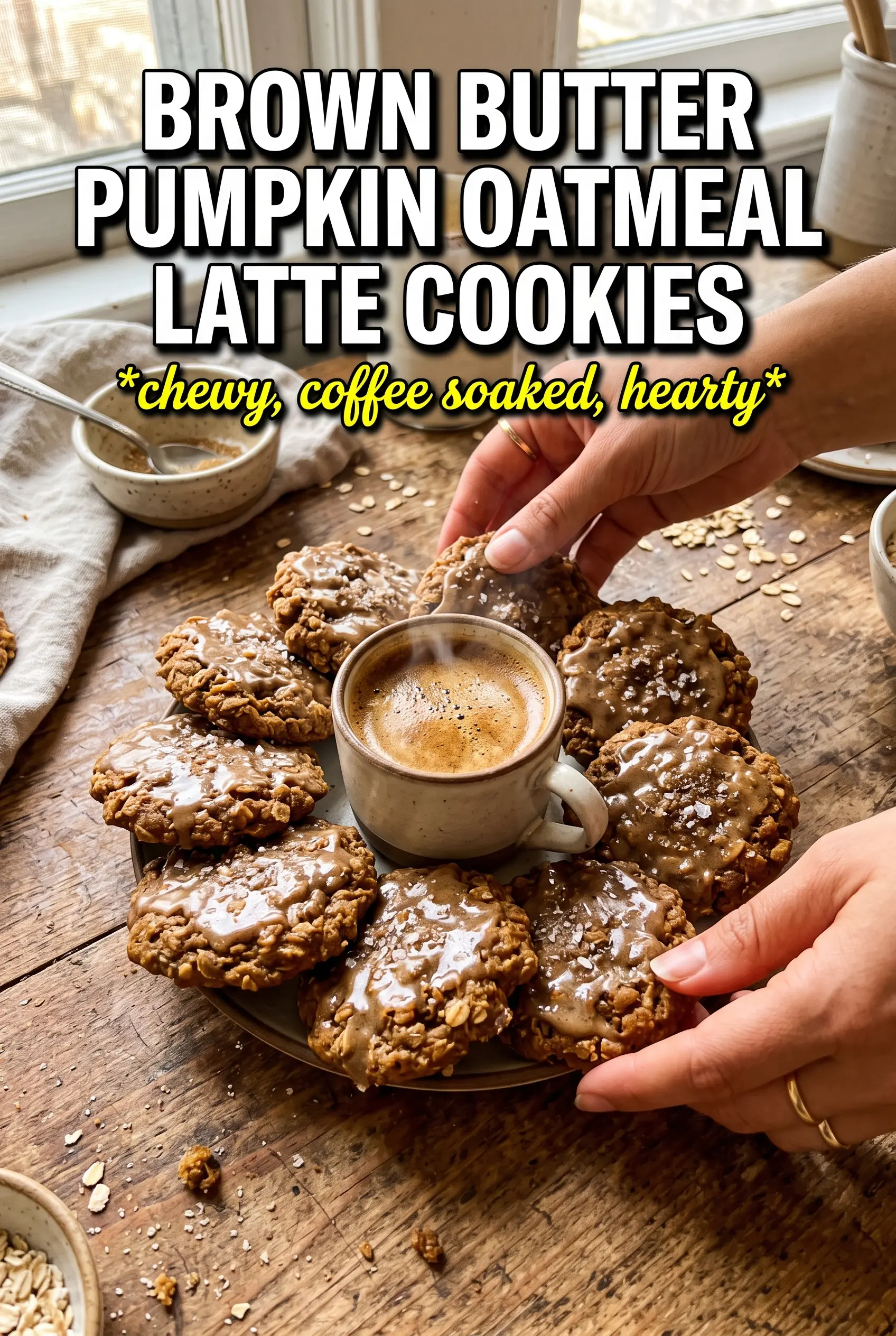
Brown Butter Pumpkin Oatmeal Latte Cookies
Ingredients
Equipment
Method
- Brown the unsalted butter until golden and nutty, then refrigerate until solid, about 1 hour.
- Preheat the oven to 375F and line baking sheets with parchment.
- Whisk together the all-purpose flour, baking soda, pumpkin pie spice, espresso powder, cinnamon, and salt.
- Beat the solidified brown butter with both sugars until creamy.
- Beat in the pumpkin puree (blotted very dry), eggs, and vanilla extract until well combined.
- Fold the flour mixture into the wet ingredients until just combined.
- Fold in the old-fashioned rolled oats and toffee bits.
- Scoop the dough into 2-tablespoon rounds and place on the prepared baking sheets.
- Bake at 375F for 10-12 minutes, until the edges are golden.
- Sprinkle with flaky salt, then cool on the pan for 5 minutes.