Brown butter snickerdoodles bake up with crisp, cinnamon-sugar edges, chewy centers, and a deep nutty note that makes the whole cookie taste warmer and more complete than the usual version. The familiar tang from cream of tartar is still there, but the browned butter pushes the flavor into caramel territory without turning these into a fussy cookie.
The key is letting the butter brown properly and then letting it firm back up before you cream it with the sugar. If you use it while it’s still soft or warm, the dough spreads too fast and the cookies lose that thick, crinkled look. I also like a generous roll in the cinnamon sugar mixture, because that coating turns crackly in the oven and gives each bite a little spark of spice.
Below, I’ll walk you through the browning step, the texture cues to watch for in the dough, and the small details that keep these cookies from going flat. There’s also a note on storing the dough if you want to bake a few now and save the rest for later.
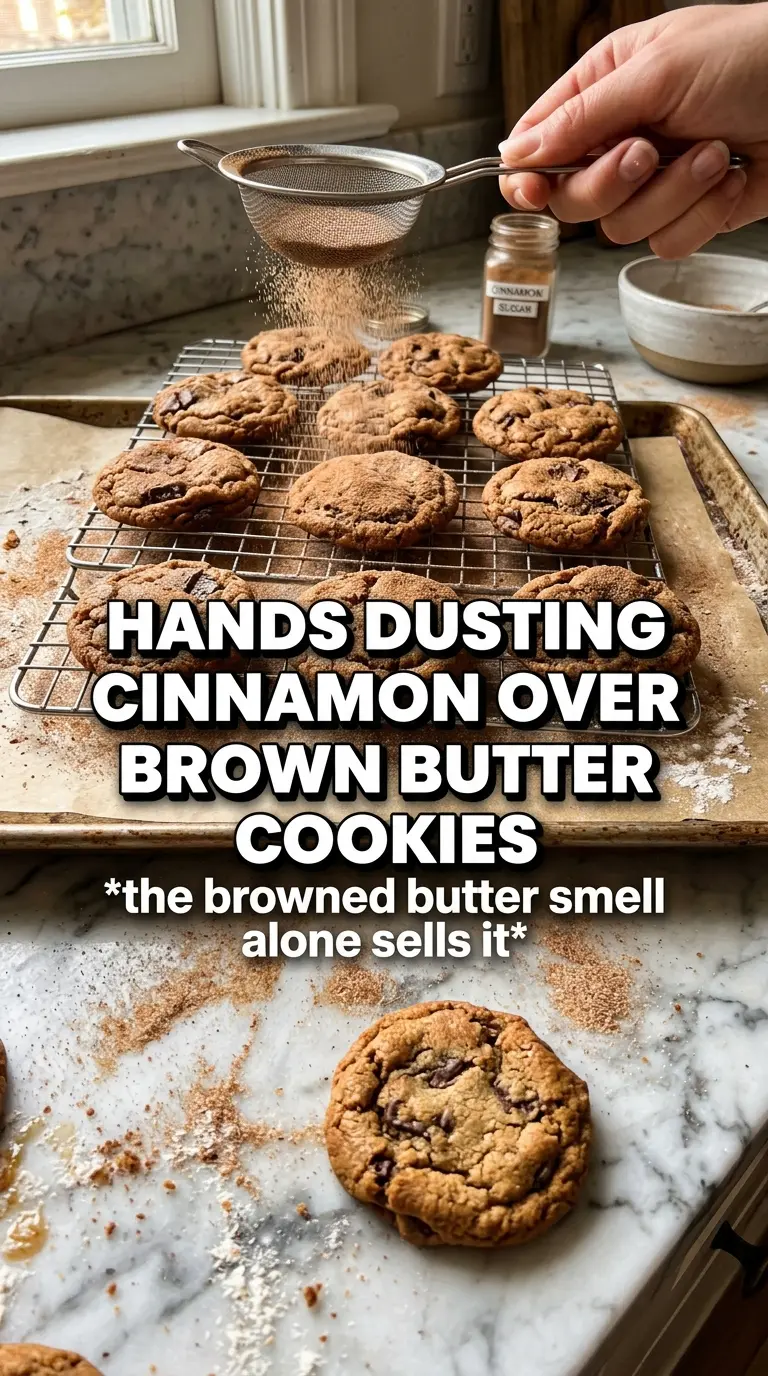
The browned butter made these taste almost caramel-like, and the centers stayed soft while the cinnamon sugar got that little crackly shell I was hoping for.
Brown butter snickerdoodles with that crinkled cinnamon-sugar finish belong in your saved recipes for the days when you want a classic cookie with deeper, nuttier flavor.
The Brown Butter Needs to Be Fully Set Before You Mix the Dough
Brown butter changes the whole structure of a snickerdoodle. It adds flavor, but it also starts as a liquid, and liquid butter behaves differently from creamed butter if you rush it. If the butter is still soft or warm when you beat it with the sugar, the dough gets loose, the cookies spread too much, and you lose that thick center that makes these worth baking.
The fix is simple: brown the butter until you smell hazelnut and see the milk solids turn amber, then chill it until it is firm enough to hold its shape. Once it’s solid again, it creams with the sugar almost like softened butter, which gives you a dough that bakes up with clean edges and a tender middle. That one wait is the difference between a puddled cookie and a proper snickerdoodle.
- Cream of tartar — This is what gives snickerdoodles their classic tang and a little extra lift. There isn’t a perfect substitute if you want the true flavor and texture, though a pinch of lemon juice can mimic the acidity in a pinch, not the same rise.
- Brown butter — Unsalted butter works best because you control the salt, and browning it from scratch is what gives the cookies their nutty, almost toffee-like depth. Let it cool completely and solidify before mixing or the dough will be too loose.
- Cinnamon in the dough — A little cinnamon inside the dough keeps the flavor from living only on the outside. It’s subtle, but it makes the cookie taste like more than just sugar and spice.
- Rolling sugar — Use enough to coat the dough balls generously. Thin coating bakes dull; a heavier coating gives you the crinkled, sparkly finish that makes snickerdoodles look and taste right.
What Each Ingredient Is Actually Doing in This Recipe
- Primary ingredient (the star) — Quality matters most. Choose the best you can find.
- Cooking medium (oil, butter, or broth) — This carries flavors and prevents dryness.
- Seasonings (salt, pepper, spices, herbs) — Layer flavors so nothing overpowers. Build depth gradually.
- Aromatics (garlic, onion, herbs) — Cook with fat to bloom flavors. Become the foundation.
- Supporting ingredients — Complement the main ingredient without overpowering it.
- Sauce or liquid (if applicable) — Brings flavors together. Balance richness with acid.
- Acid (lemon, vinegar, wine, or other) — Brightens and prevents flat-tasting results.
- Final finish (garnish, glaze, or sauce) — Prevents one-dimensional taste and adds visual appeal.
Building the Dough So the Cookies Stay Thick and Crinkled
Brown the butter until the foam settles
Cook the butter over medium heat until it foams, then listen for the quiet crackle that tells you the water is cooking off. The moment the milk solids turn deep golden and smell nutty, pull it from the heat and pour it into a bowl right away so it doesn’t go from browned to burnt. If the pan is still scorching hot, the butter can overcook in seconds.
Chill until firm, not just cool
Refrigerate the browned butter until it is solid enough to scoop and beat, usually about an hour. Softened-but-not-solid butter can look fine in the bowl and still make the dough spread too much in the oven. You want it opaque and creamy, not sloshing around.
Cream before the flour goes in
Beat the solidified brown butter and sugar until the mixture looks fluffy and lighter in color, then add the eggs and vanilla. This step traps air and gives the cookies structure, which matters because snickerdoodles don’t have a long ingredient list to lean on. Once the flour goes in, stop as soon as the dough comes together; overmixing makes the cookies tough instead of tender.
Roll generously for the best finish
Mix the cinnamon sugar coating in a shallow bowl and roll each dough ball until it’s fully covered. The coating should look obvious, not patchy. Bake just until the edges are set and the tops are crinkled; if you wait for the centers to look fully done in the oven, they’ll be dry by the time they cool.
Make Them More Cinnamon-Forward
Add an extra 1/2 teaspoon cinnamon to the dough if you want the spice to come through more strongly. The cookie will still taste like brown butter, but the cinnamon will read louder from the first bite instead of mostly in the coating.
Dairy-Free Version
Use a dairy-free butter that browns well and has a decent fat content. You’ll lose a little of the classic nutty depth, but the cookies will still bake up with a good chewy center and the familiar snickerdoodle tang.
Gluten-Free Swap
A 1:1 gluten-free baking flour can work here, especially one with xanthan gum already included. The texture will be a little more delicate and less chewy, but the flavor still lands well because the brown butter does a lot of the heavy lifting.
Storage and Reheating
- Refrigerator: Store baked cookies in an airtight container for up to 5 days. They stay soft in the middle, though the cinnamon coating loses a little of its crispness after day two.
- Freezer: Freeze the shaped dough balls after rolling them in cinnamon sugar. Bake from frozen, adding 1 to 2 minutes to the time; this keeps the texture better than freezing fully baked cookies.
- Reheating: Warm baked cookies in a 300F oven for about 3 minutes or microwave one cookie for 8 to 10 seconds. Don’t overheat them or the centers go dry fast.
Questions I Get Asked About This Recipe
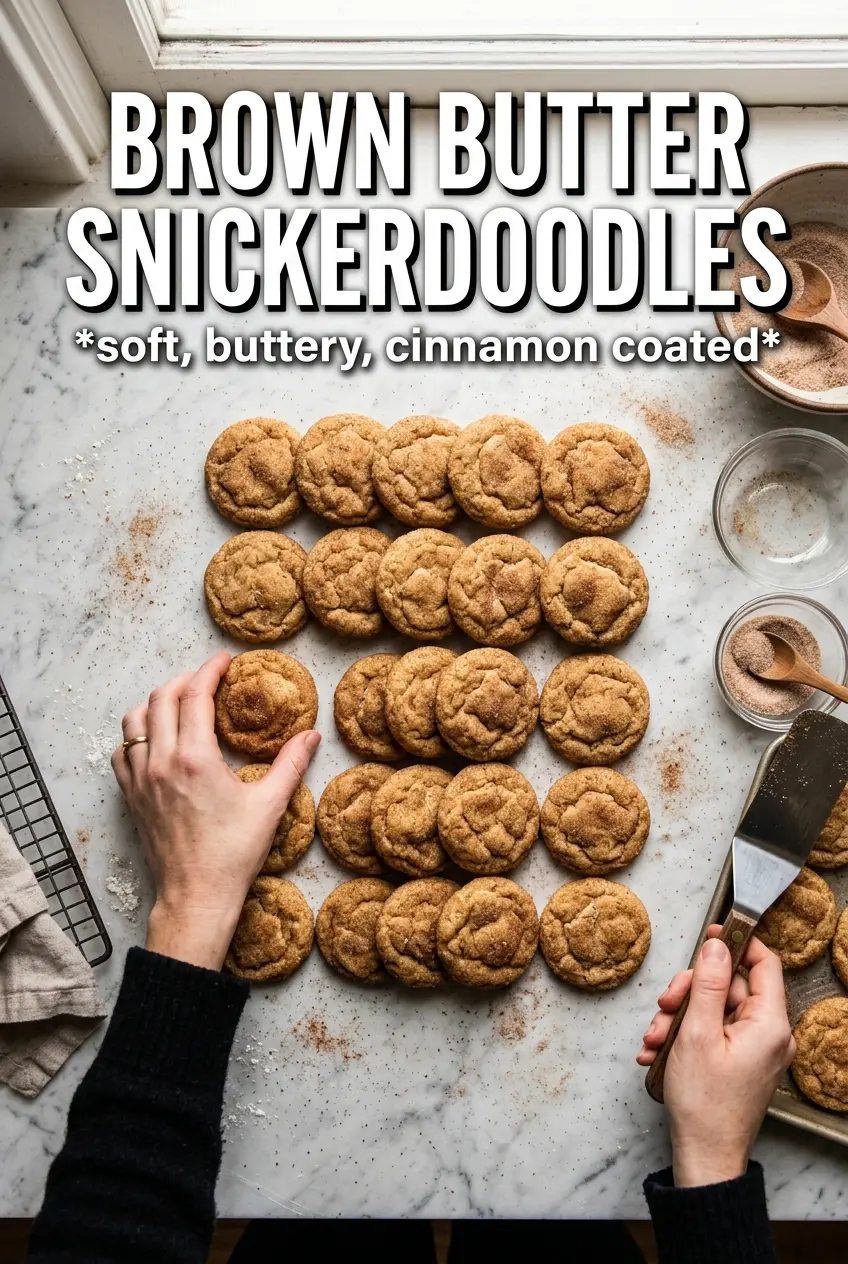
Brown Butter Snickerdoodles
Ingredients
Equipment
Method
- Brown the butter until it turns golden and smells nutty, then set it aside until solidified, about 1 hour in the refrigerator. Visual cue: the milk solids should look deeply golden-brown at the bottom of the pan.
- Preheat the oven to 375F, then line baking sheets with parchment. Visual cue: parchment should lay flat to prevent spreading.
- Whisk together the all-purpose flour, cream of tartar, baking soda, 2 teaspoons cinnamon, and salt in a bowl. Visual cue: the mixture should be evenly speckled.
- Beat the solidified brown butter and granulated sugar until creamy, then add the eggs and vanilla extract and beat again until smooth. Visual cue: the mixture should look lighter in color and hold a thick ribbon.
- Fold in the flour mixture just until no dry streaks remain. Visual cue: stop mixing as soon as the dough comes together.
- Mix the rolling spices in a shallow bowl using granulated sugar, 2-1/2 teaspoons cinnamon, and a pinch of nutmeg. Visual cue: the cinnamon sugar should look uniformly tan and fragrant.
- Scoop dough into 1-1/2 tablespoon balls, then roll generously in the cinnamon sugar mixture. Visual cue: the surface should be well-coated and slightly rough.
- Bake at 375F for 10-12 minutes, until the cookies are crinkled and the edges are set. Visual cue: tops should look dry and deeply golden.
- Cool the cookies on the pan for 5 minutes before transferring to a rack. Visual cue: they should firm up while still warm.