Brown butter vinaigrette turns a plain bowl of greens into something people notice. The butter brings a nutty, toasted depth that balsamic alone can’t give, and the Dijon pulls everything into a silky emulsion instead of letting it separate into greasy streaks and sharp vinegar. It’s the kind of dressing that makes roasted vegetables, bitter lettuces, and even sliced tomatoes taste like they belong on the same plate.
The key is giving the butter enough time to brown without pushing it into burnt territory. Once it smells like toasted hazelnuts and the milk solids have gone golden, you pull it off the heat and whisk in the rest while it’s still warm. That warmth matters because it helps the mustard emulsify the dressing and keeps the shallot and garlic from tasting harsh.
Below, I’ve included the small details that make this dressing behave the way it should, plus a few smart swaps if you want to adjust the balance or use what you already have in the kitchen.
The butter browned in just a few minutes and the dressing turned out silky, not greasy. I poured it over roasted Brussels sprouts and the shallot added the perfect little bite.
Like this brown butter vinaigrette? Save it to Pinterest for roasted vegetables, bitter greens, and any salad that needs a nutty, glossy finish.
The Part Where Brown Butter Turns a Sharp Dressing Into Something Rounder
Most vinaigrettes lean hard on vinegar and oil, which is fine until the salad needs more depth. Brown butter changes the base completely. Those toasted milk solids carry a nutty flavor that makes the dressing taste fuller, and the warm butter helps the mustard hold the emulsion long enough for the shallot and garlic to soften instead of hitting you raw.
The mistake people make here is treating the butter like a fast melt. If you stop at pale yellow, you’ll get a greasy dressing with no extra character. Keep going until the foam subsides and the bottom of the pan shows little amber bits; that’s the flavor. Pull it the second you smell toasted nuts, because the line between browned and burnt is short in a small saucepan.
- Butter — Use unsalted butter so you can control the seasoning. Salted butter works in a pinch, but it makes it harder to judge the balance once the vinegar goes in.
- Dijon mustard — This is the emulsifier, not just a flavoring. It keeps the dressing from separating fast, and there isn’t a substitute that does the same job as cleanly.
- Balsamic vinegar — Its sweetness smooths out the browned butter and sharp garlic. Red wine vinegar will work if that’s what you have, but the result will be brighter and less round.
- Shallot and garlic — Mince them finely so they disperse instead of landing in harsh little bursts. If you want a softer finish, let the dressing sit 5 minutes before serving so the raw edge takes the back seat.
- Honey — This gives the vinaigrette a little gloss and takes the edge off the vinegar. Maple syrup can stand in, though it pushes the flavor slightly darker and more earthy.
Whisking It Together Before the Butter Sets Back Up
Brown the butter to the point of toast, not smoke
Melt the butter in a small saucepan over medium heat and keep it moving occasionally so the milk solids brown evenly instead of sticking in one dark patch. At first it will foam, then it will quiet down and turn golden with a nutty smell that’s impossible to miss. If you smell anything sharp or acrid, it’s gone too far and the dressing will taste bitter. Use a light-colored pan if you have one, because the color change is easier to see before it’s too late.
Whisk in the acidic ingredients while the butter is still warm
Take the pan off the heat and let it cool just long enough that it won’t aggressively cook the garlic, then whisk in the balsamic, Dijon, shallot, garlic, and honey. The warmth helps the mustard bind everything together, but if the butter is scorching hot, the garlic can turn harsh and the dressing can separate more easily. Whisk until it looks glossy and unified, with tiny brown flecks suspended throughout rather than sinking to the bottom.
Season and use it at the right texture
Taste the vinaigrette and add salt and pepper until the sweetness, acid, and browned butter all sit on the same line. Used warm, it pours like a loose sauce and clings beautifully to greens or vegetables. As it cools, the butter firms up a bit, so give it a hard shake in a jar before serving. If it looks broken after chilling, warm the jar in a bowl of hot water and shake again.
How to Adjust This Dressing Without Losing What Makes It Work
Make it dairy-free with olive oil and a toasted note
Use extra-virgin olive oil instead of butter if you need a dairy-free dressing, but know that you’ll lose the nutty brown butter flavor. To bring back some of that depth, whisk in a pinch of toasted sesame oil or a spoonful of finely chopped toasted nuts. The dressing will still be good, just sharper and less rounded.
Swap the balsamic for a brighter salad dressing
Red wine vinegar or champagne vinegar will give you a cleaner, brighter result. That works especially well on delicate greens, but the dressing won’t have the same dark sweetness that makes balsamic and brown butter taste so plush together. If you use a sharper vinegar, add the honey a little more slowly and taste as you go.
Skip the garlic if you want a softer finish
Leaving out the garlic gives you a dressing that tastes smoother and a little more elegant, especially on roasted beets or asparagus. If you still want that savory edge, add an extra half teaspoon of Dijon instead. The dressing will stay more polished and less punchy.
Storage and Reheating
- Refrigerator: Store in a sealed jar for up to 5 days. The butter will firm up, so the dressing will look cloudy and thick.
- Freezer: I don’t recommend freezing it. The emulsion breaks when thawed, and the shallot and garlic lose their fresh bite.
- Reheating: Set the jar in warm water for a few minutes, then shake hard until smooth again. Don’t microwave it until hot, because that can split the dressing and make the garlic taste harsh.
Answers to the Questions Worth Asking
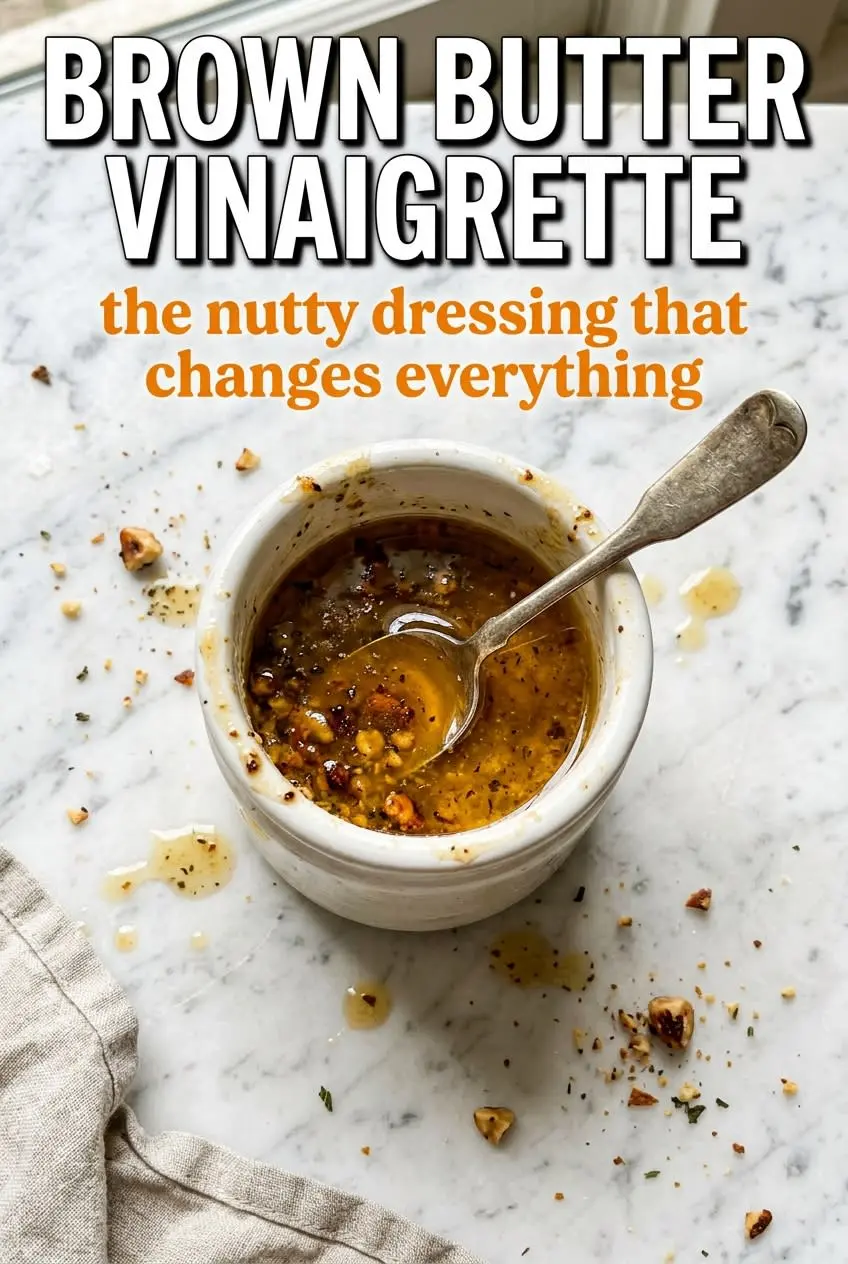
Brown Butter Vinaigrette
Ingredients
Equipment
Method
- Melt the butter in a small saucepan over medium heat, stirring occasionally, until it turns golden brown and smells nutty, about 5-7 minutes. Watch carefully to avoid burning.
- Remove the pan from the heat and let the butter cool slightly. You want it warm enough to stay fluid but not scorching.
- Whisk in the balsamic vinegar, Dijon mustard, minced shallot, minced garlic, and honey until smooth and glossy. Keep whisking to form a silky emulsion.
- Season with salt and pepper to taste, whisking again to combine. Taste and adjust for balance.
- Use immediately while still warm, or let cool and store in a jar. Shake well before each use to bring the emulsion back together.