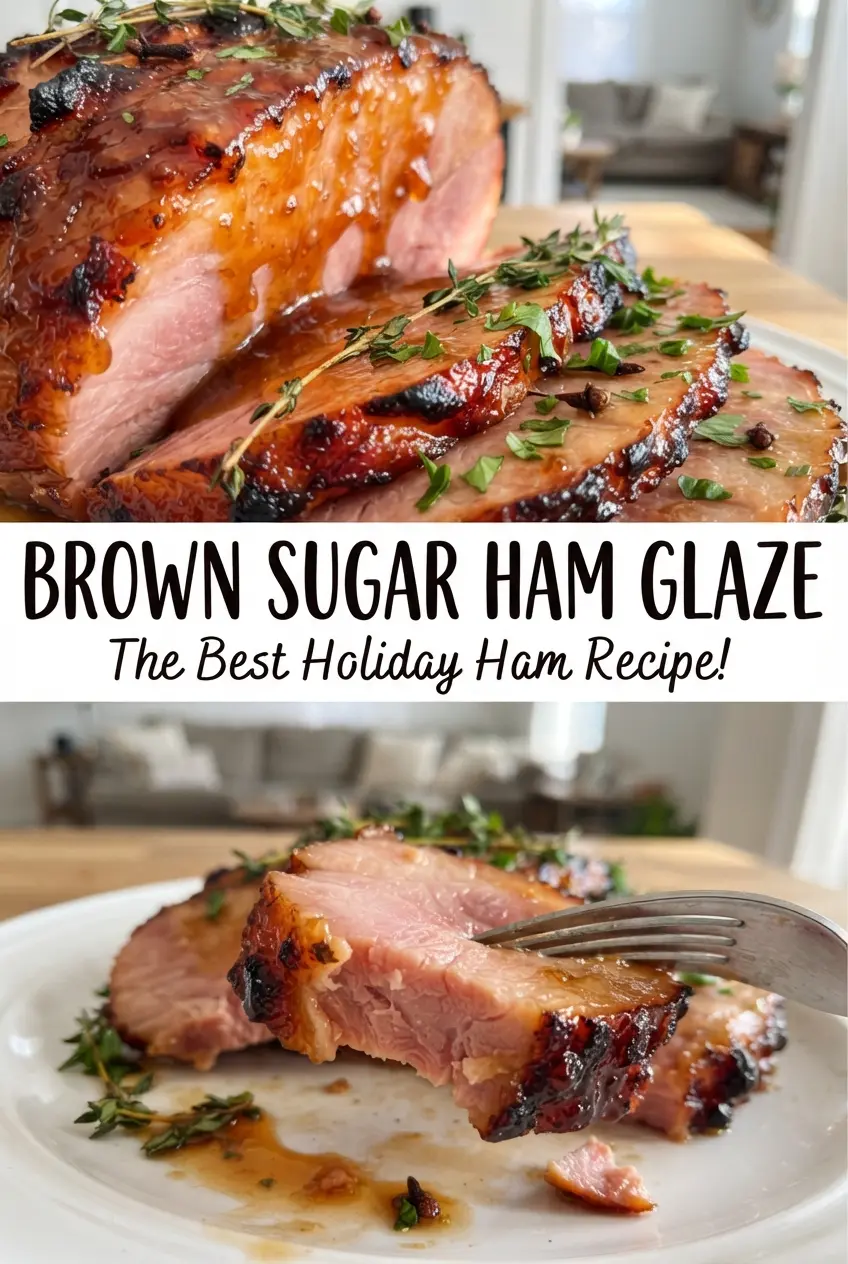
Brown sugar ham glaze is what turns a good holiday ham into the kind people keep leaning back for. It goes on glossy and spoonable, then settles into a sticky lacquer with sweet edges, a little tang from the mustard and vinegar, and just enough spice to keep the glaze from tasting flat. Brushed over a scored ham, it clings to the surface and seeps into the cuts instead of sliding right off.
The trick is keeping the glaze balanced while it cooks. Brown sugar and honey give it body and shine, but the Dijon and apple cider vinegar are what keep it from becoming candy-sweet. A quick simmer is enough here; if you cook it too long, it gets thick in the pan before it ever hits the ham, and that makes brushing messy instead of easy.
Below, I’ll show you how to keep the glaze glossy, when to start brushing it on, and how to use the same base for orange or pineapple versions depending on what you’ve got on hand.
The glaze turned shiny and thick in just a few minutes, and brushing it on every 10 minutes gave the ham a sticky finish without burning the sugar.
Save this brown sugar ham glaze for a glossy, sticky ham finish with honey, Dijon, and warm spice.
The Part That Keeps This Glaze Glossy Instead of Grainy
Brown sugar glazes fail when the sugar never fully dissolves or when the pan gets too hot and the mixture turns pasty before it reaches the ham. The goal here is a smooth, brushable glaze that looks almost like thin caramel in the pan and turns lacquer-like on the meat. That happens because the honey and juice loosen the sugar long enough for it to melt evenly, while the vinegar keeps the whole thing from seizing into a clump.
If you’ve had a glaze crystallize on the stove before, it usually came from cooking it hard or stirring after it started boiling aggressively. Keep the simmer gentle. You want small bubbles around the edge, not a rolling boil, and you want the butter fully melted before the glaze goes on so it stays silky.
What Each Ingredient Is Actually Doing Here

- Brown sugar — This is the body of the glaze and the main source of that sticky finish. Packed brown sugar gives you more molasses flavor and a richer color than white sugar ever could.
- Honey — Honey keeps the glaze shiny and helps it cling to the ham as it bakes. If you swap it out, the glaze loses some of that rounded sweetness and the texture gets a little thinner.
- Pineapple or orange juice — The juice thins the mixture just enough to brush on cleanly and adds brightness so the glaze doesn’t taste heavy. Pineapple reads a little bolder and more tropical; orange is softer and more classic.
- Dijon mustard — Dijon is the quiet ingredient that makes the whole glaze work. It cuts the sweetness and gives the glaze a savory edge, and yellow mustard won’t give you quite the same sharpness.
- Butter — Butter smooths the glaze and helps it spread in a thin, even coat. Use real butter here; it rounds out the texture in a way oil won’t.
- Apple cider vinegar — This keeps the glaze from clinging too sweetly to the ham. It also helps balance the sugars so the final bite tastes polished instead of one-note.
- Cinnamon and cloves — These are background spices, not the main event. They should read warm and subtle, so if you go heavy-handed the glaze starts to taste like pie filling instead of ham glaze.
How to Cook It So It Brushes On Cleanly
Combining the Glaze Base
Put everything in the saucepan before you turn on the heat so the sugar can start dissolving evenly. The butter should melt into the liquid and disappear, and the mixture should look cloudy at first, then smoother as it warms. If you dump the sugar into already-hot liquid, it can clump at the bottom and leave you with a gritty glaze.
Bringing It to the Right Simmer
Heat the glaze over medium, then back it down if the bubbles start breaking hard across the whole surface. You’re looking for a gentle simmer and a little thickening, not a syrup that coats the spoon like candy. After 3 to 4 minutes, it should look glossy and slightly reduced, and that’s the moment to pull it off the heat.
Glazing the Ham in Layers
Brush the glaze over a fully cooked ham during the last 30 minutes of baking, then repeat every 10 minutes. Those layers build shine and flavor without burning the sugars on the surface. If the glaze starts to darken too fast, tent the ham loosely with foil and keep brushing the warmed glaze on in thinner coats.
Serving the Last Spoonfuls
Warm the remaining glaze and spoon it over sliced ham at the table. That final pass matters because the sliced edges pick up glaze differently than the outside crust, and the extra spoonfuls soak into the meat instead of sitting on top. If the glaze thickens while standing, stir in a teaspoon of juice to loosen it again.
How to Adapt This Glaze for Different Hams and Holiday Tables
Orange Glaze Version
Use orange juice instead of pineapple for a brighter, softer finish. The glaze stays just as glossy, but the citrus comes across a little more polished and less tropical, which works well if you want a classic ham flavor with a fresh edge.
Dairy-Free Version
Swap the butter for an equal amount of plant-based butter or leave it out entirely if needed. The glaze will still thicken and shine, but it won’t feel quite as round on the tongue, so the warm spices and Dijon do a little more work.
Less-Sweet, More-Savory Glaze
Cut the brown sugar back by 1/4 cup and add an extra teaspoon of Dijon if you want the glaze to taste less candy-like. You’ll lose a little stickiness, but the ham will come out with a sharper, more savory finish that still browns beautifully.
Storage and Reheating
- Refrigerator: Store leftover glaze in an airtight container for up to 1 week. It will thicken as it chills.
- Freezer: Freeze for up to 2 months in a small freezer-safe container. Thaw in the refrigerator before reheating; the texture may look separated at first, but it comes back together with heat and stirring.
- Reheating: Warm it gently in a small saucepan over low heat or in the microwave in short bursts, stirring often. High heat can scorch the sugar and make the glaze taste bitter.
Answers to the Questions Worth Asking
Brown Sugar Ham Glaze
Ingredients
Equipment
Method
- Combine brown sugar, honey, pineapple or orange juice, Dijon mustard, butter, apple cider vinegar, ground cinnamon, and ground cloves in a saucepan. Stir until the mixture looks evenly combined.
- Bring the mixture to a simmer over medium heat, stirring so the sugar dissolves. Stop when you see steady bubbling and the liquid looks uniform.
- Simmer for 3-4 minutes until slightly thickened and glossy. The glaze should coat the spoon lightly and look shiny.
- Brush the warm glaze over a fully cooked ham during the last 30 minutes of baking. Aim for a glossy layer across the scored surface.
- Brush on additional glaze every 10 minutes during the remaining baking time. Watch for glossy drips settling into the diamond pattern.
- Spoon the remaining warm glaze over sliced ham at the table. Use any extra to keep each slice shiny and well coated.