Butter pecan ice cream earns its place in the freezer because it delivers two things at once: a custardy, brown sugar-kissed base and pecans that taste toasted, buttery, and a little salted in every bite. When it’s done right, the ice cream doesn’t just taste nutty — it tastes layered, with enough richness to stand up to the crunch without feeling heavy.
The difference here comes from treating the pecans like part of the recipe, not a mix-in tossed in at the end. Toasting them in butter pulls out a deeper, almost caramel-like flavor, and that little hit of salt keeps the sweetness from flattening out. The custard base uses egg yolks for body, which gives you a smoother scoop and a cleaner melt than a simple no-churn version ever can.
Below, I’m walking through the part that matters most: how to keep the custard silky, how to avoid scrambled yolks, and when the pecans should go in so they stay crunchy instead of icy.
The pecans turned out perfectly buttery and crisp, and the custard was smooth enough that it scooped like a dream after a full freeze.
Like this rich butter pecan ice cream? Save it to Pinterest for the nights when you want a custard base and buttery toasted pecans in every scoop.
The Custard Can’t Be Rushed If You Want That Scoopable Texture
The biggest mistake with butter pecan ice cream is pushing the custard too hard. If the heat climbs too fast, the yolks tighten and you end up with tiny bits of cooked egg instead of a smooth base. The target here is 175°F, not a rolling boil, and the custard should coat the back of a spoon in a thin, even layer.
That slower cook does two jobs at once. It thickens the base enough to freeze creamy, and it gives the brown sugar time to melt in fully so the finished ice cream tastes round instead of gritty. Once the custard is done, it needs to cool completely before churning, or the ice cream maker has to work too long and the texture turns soft and slushy.
- Egg yolks — These build the custard body and keep the ice cream rich. Whole eggs won’t give you the same velvet texture.
- Brown sugar — This is what gives the base its caramel note. Light brown sugar works fine, but dark brown sugar adds a deeper molasses edge.
- Heavy cream and whole milk — The cream carries the richness while the milk keeps it from tasting heavy. Don’t swap in low-fat milk or the ice cream loses that clean, creamy finish.
- Pecans — Fresh pecan halves matter here. Chopped pecans will work, but halves hold their texture better and give you those satisfying bites throughout the churn.
Building the Buttered Pecans Before They Go Into the Churn
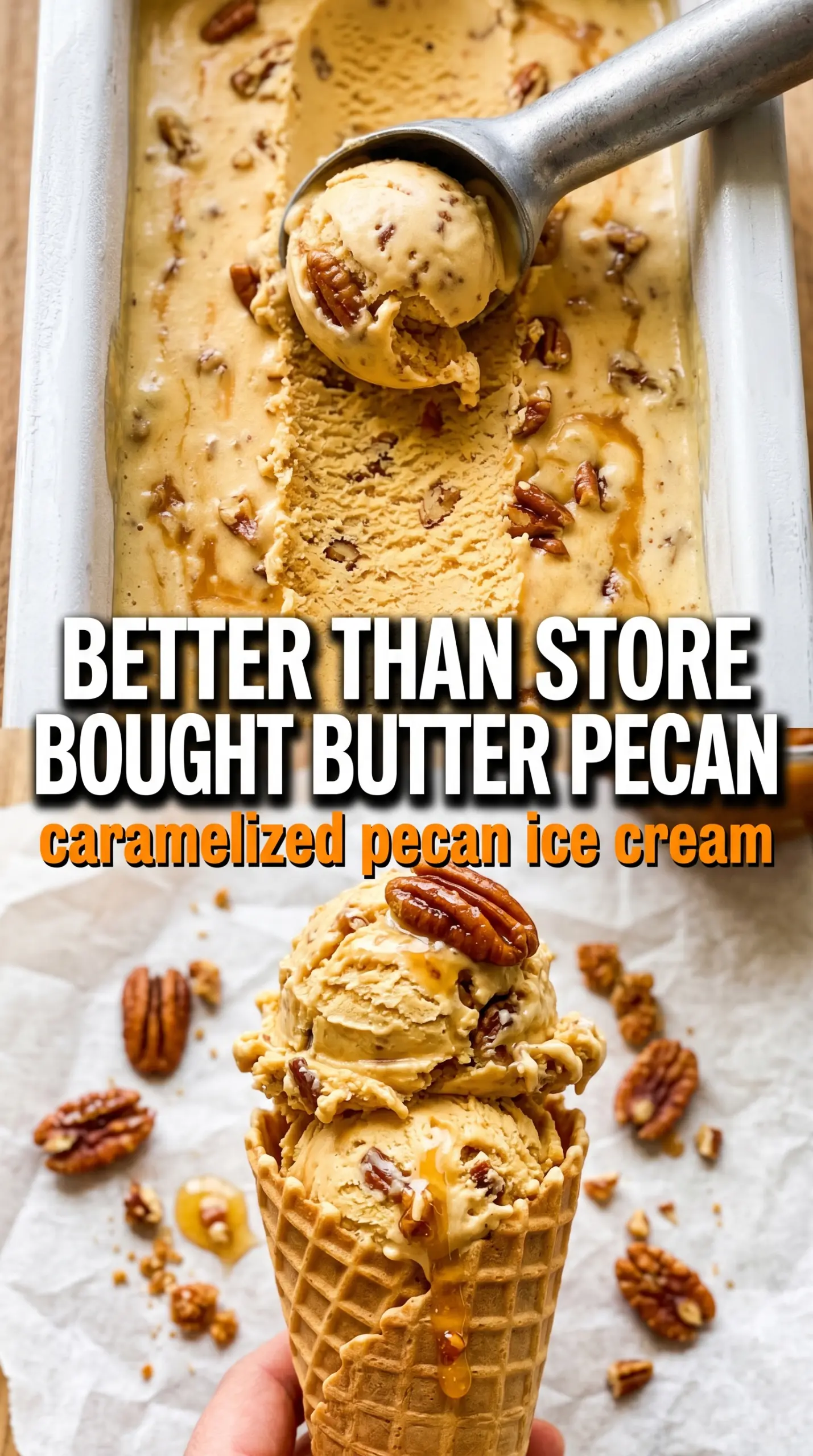
- Pecan halves — Toasting them in butter instead of dry-panning them gives you a richer flavor and a lighter glaze on the nuts. Use good pecans if you can; stale nuts will taste flat no matter how long you cook them.
- Unsalted butter — This coats the pecans and carries the toasted flavor. If you use salted butter, cut back the added salt a little because the pecans should taste balanced, not salty.
- Salt — The small amount in the pecans is doing real work. It sharpens the butter flavor and keeps the ice cream from reading one-note sweet.
- Vanilla extract — Stir it in after the custard comes off the heat so the aroma stays round and clean. Boiling vanilla dulls it.
Cooking the Custard, Churning the Base, and Adding the Pecans at the Right Moment
Toasting the Pecans in Butter
Melt the butter in a skillet over medium heat, add the pecans and salt, and stir often until they look glossy and smell deeply nutty. Four to five minutes is enough; past that, the butter can brown too far and turn bitter. Spread them on parchment to cool completely before they go anywhere near the churn. Warm pecans melt the base and make the finished ice cream softer than it should be.
Tempering the Yolks Without Scrambling Them
Heat the cream, milk, and brown sugar until the sugar dissolves and steam rises from the pot, then whisk a little of that hot mixture into the yolks before adding the rest. That slow stream matters. Dumping everything in at once is how you get sweet scrambled eggs. Once the custard goes back into the pan, stir constantly and watch for that slight thickening at 175°F.
Cooling Before Churning
Strain the custard into a clean bowl to catch any tiny bits of cooked egg, then stir in the vanilla and cool it all the way down before refrigerating. The chill time isn’t optional. A cold base churns faster, freezes finer, and gives you that dense, scoopable texture instead of an icy one. If you churn it while it’s still warm, the machine can’t build enough structure.
Finishing With the Pecans
Add the cooled pecans during the last few minutes of churning, when the ice cream is already thick but still moving easily. That keeps the nuts distributed without breaking them down. Once the ice cream comes out of the machine, freeze it until firm enough to scoop cleanly. If it feels too soft after churning, that’s normal; the freezer is where it finishes setting.
How to Adapt This Ice Cream Without Losing the Texture You Want
Dairy-Free Version
Use full-fat canned coconut milk in place of the cream and whole milk, but expect a faint coconut note and a slightly softer freeze. The custard still needs the egg yolks to thicken properly, so this swap changes the dairy, not the structure.
Extra Nutty and More Crunchy
Toast an extra 1/2 cup pecans and sprinkle them over the top right before serving. Keeping some nuts out of the churn preserves a sharper crunch, since mixed-in pecans soften a little in the freezer.
Salted Caramel Butter Pecan
Swirl in a few spoonfuls of thick salted caramel after churning and before the final freeze. Don’t stir it completely through if you want visible ribbons; a light fold gives you caramel pockets instead of turning the whole batch overly sweet.
No Ice Cream Maker
You can freeze the chilled custard in a shallow pan and stir it every 30 to 40 minutes until firm, but the texture won’t be as smooth as churned ice cream. The pecans should still be folded in near the end so they don’t all sink to the bottom.
Storage and Reheating
- Refrigerator: The churned ice cream won’t hold in the fridge; it should go straight from the freezer to serving. The custard base, before churning, can be refrigerated up to 2 days.
- Freezer: Freeze in an airtight container for up to 2 weeks for the best texture. After that, it can pick up ice crystals and the pecans lose some of their crispness.
- Reheating: Ice cream doesn’t need reheating, but it does need a brief thaw. Let it sit at room temperature for 5 to 10 minutes before scooping so you don’t force a bent spoon through a rock-hard center.
Questions I Get Asked About This Recipe
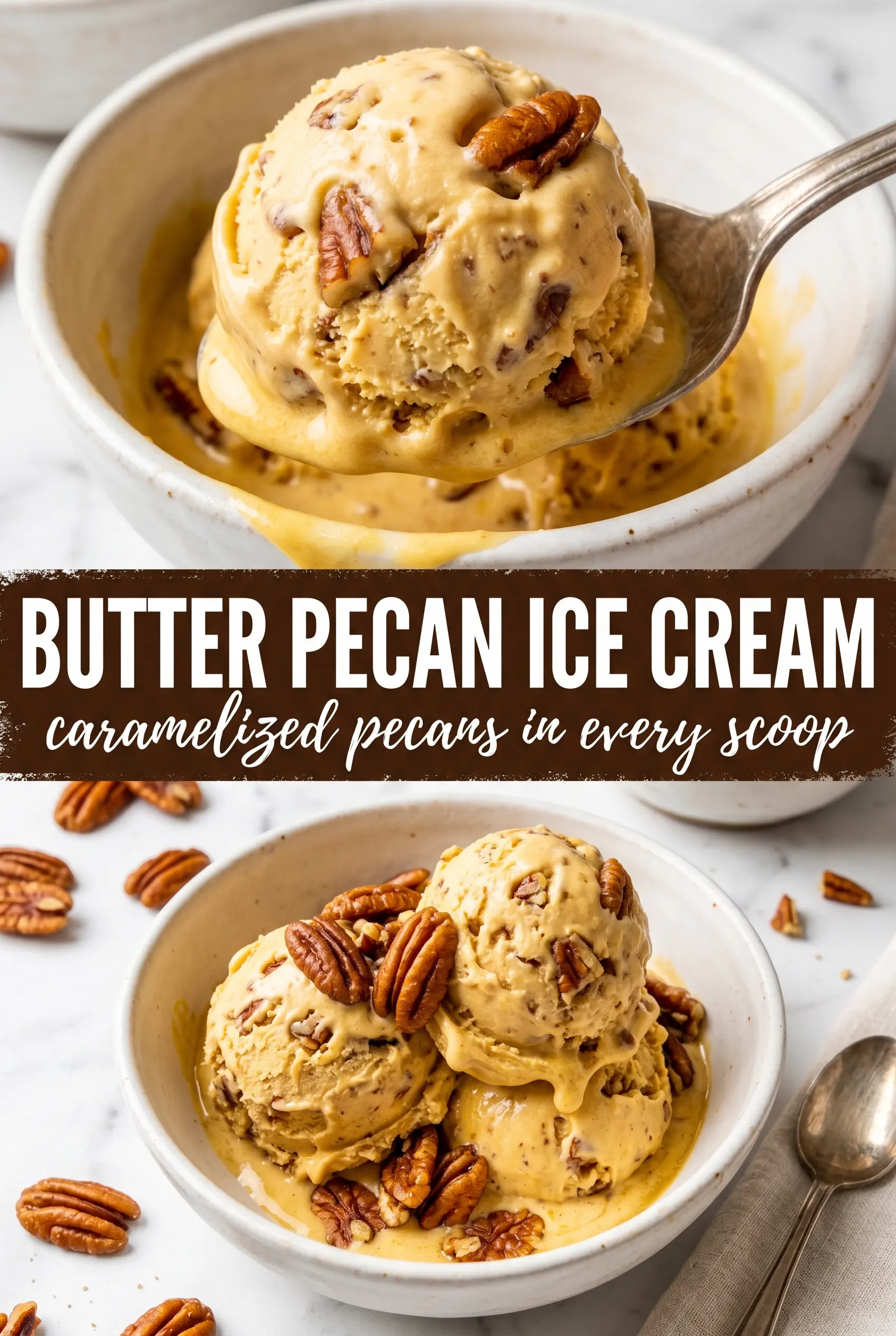
Butter Pecan Ice Cream
Ingredients
Equipment
Method
- Melt the unsalted butter with the salt in a saucepan over medium heat, then add pecan halves and toast for 4-5 minutes until deeply golden and fragrant. Spread on a parchment-lined sheet pan to cool completely.
- Heat the heavy cream, whole milk, and packed brown sugar together until the sugar dissolves and the mixture steams.
- Whisk the egg yolks until smooth, then slowly whisk them into the hot cream mixture to temper. Return everything to the saucepan and cook to 175°F, stirring constantly.
- Strain the custard, then stir in the vanilla extract and remaining salt. Cool completely, then refrigerate at least 4 hours.
- Churn the chilled custard in an ice cream maker according to the manufacturer’s instructions. Add the butter-toasted pecans in the last 5 minutes.
- Transfer to a freezer-safe container and freeze until firm.