Butterbeer cookies hit that sweet spot between chewy sugar cookie and bakery-style frosted treat. The cookies bake up soft in the center with lightly crisp edges, then the butterscotch cream cheese frosting takes them straight into dessert territory. A drizzle of caramel on top finishes the whole thing with just enough drama to make them feel special without turning them fussy.
What makes this version work is the double hit of flavor: butterscotch extract in the dough and butterscotch sauce in the frosting. That gives you a deeper, rounder flavor than relying on chips alone. The dough also stays sturdy enough to hold a thick swirl of frosting, which matters because a cookie like this needs structure under all that sweetness.
Below, I’ve included the small details that keep the cookies soft, the frosting smooth, and the finished batch looking like it came from a good bakery case instead of a rushed kitchen counter.
The cookies stayed soft for days and the butterscotch frosting set up just enough that the drizzle didn’t run everywhere. I added the extra chip on top and they looked like something from a bakery.
Save these butterbeer cookies with butterscotch frosting for the days when you want a soft, caramel-sweet cookie with a thick bakery-style swirl.
The Trick to Keeping These Cookies Soft Under All That Frosting
Butterbeer cookies can turn dry fast if they’re baked like an ordinary frosted cookie. The goal here is a center that stays tender enough to support the frosting without collapsing into a cakey crumb. That starts with the butter and sugar getting whipped until the mixture looks pale and fluffy, because that step traps air and helps the cookies bake up with a softer bite.
The other place people go wrong is overbaking. These should come out when the edges look set and lightly golden, but the centers still look a touch underdone. They finish on the hot pan, and that carryover heat is what keeps them chewy instead of turning them into little hockey pucks.
- Butter extract — This gives the dough that warm, buttery candy-shop note. Vanilla works in a pinch, but the flavor will be less specific.
- Brown sugar — It’s doing most of the work for softness and that caramel-like depth. Pack it firmly when measuring.
- Butterscotch chips — Fold them in at the end so they stay intact instead of melting into the dough. Mini chips are fine if that’s what you have.
- Softened butter and cream cheese — Both need to be soft, not melted. If they’re too warm, the frosting turns loose and won’t pipe cleanly.
What Each Ingredient Is Actually Doing in the Frosting
- Cream cheese — This keeps the frosting from tasting flat and one-note. Full-fat cream cheese gives the best body and tang.
- Butterscotch sauce — It brings both flavor and moisture. A thick sauce works better than a thin ice cream topping because it blends without making the frosting runny.
- Powdered sugar — It sweetens and stiffens the frosting at the same time. Add it gradually so you can stop at a piping consistency instead of guessing.
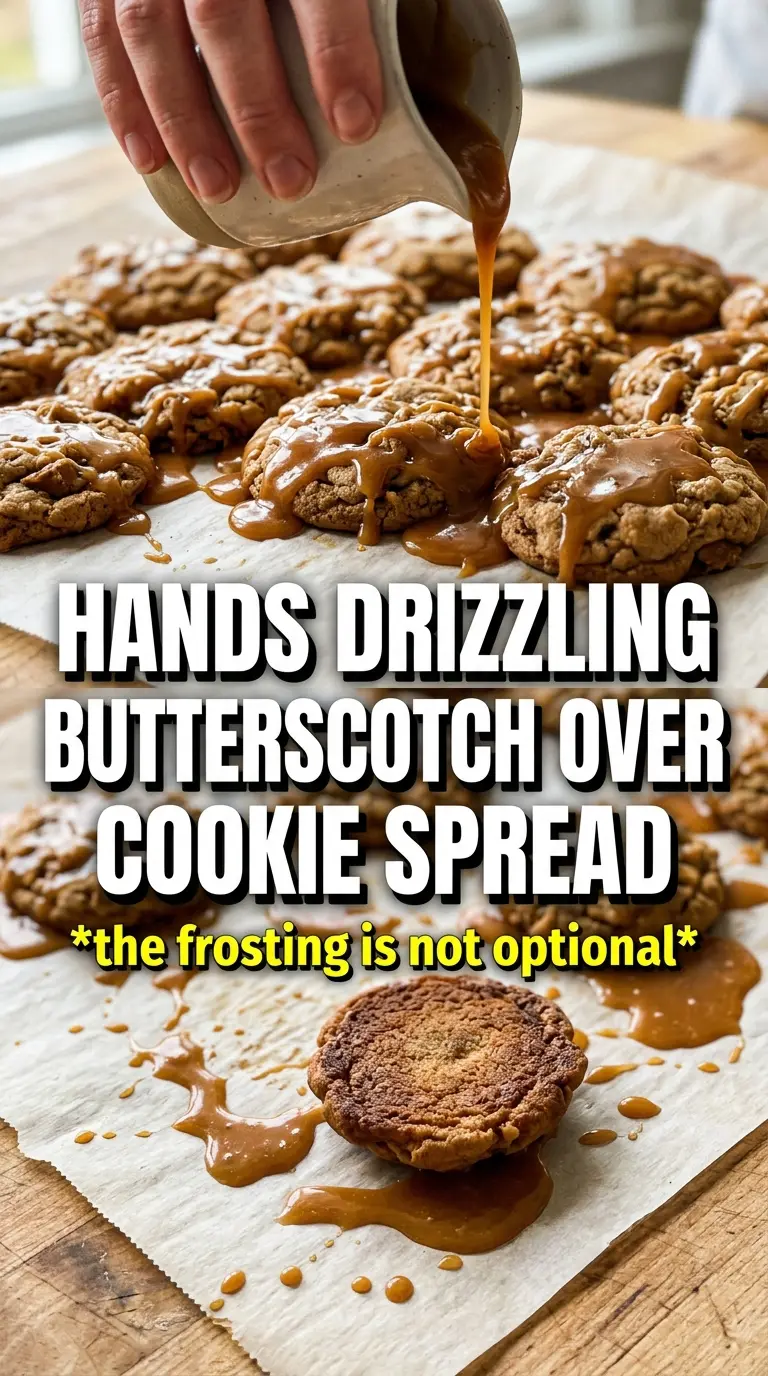
- Caramel drizzle — This is the finishing layer, not the base flavor. Spoon or pipe it over the frosting after the cookies are fully cool so it sits on top instead of melting in.
Mixing, Scooping, and Frosting Without Losing the Texture
Build the dough base first
Start by whisking the flour, baking soda, and salt so the leavening is evenly distributed. In the mixer, beat the butter with both sugars until the mixture turns light and a little fluffy; that usually takes a few minutes, and it should look noticeably paler. Add the eggs and extracts after that, not before, so the fat is ready to hold everything together. If the mixture looks slightly broken when the eggs go in, keep mixing — it usually comes back once the flour is added.
Fold in the chips gently
Once the flour mixture goes in, mix only until no dry streaks remain. Overmixing at this stage makes the cookies tougher, and you don’t need that when frosting is coming later. Fold in the butterscotch chips by hand so they don’t get smashed or overworked. The dough should be soft enough to scoop but not sticky enough to slump flat immediately.
Bake just until the edges set
Scoop the dough into 2-tablespoon rounds and give them enough space on the sheet so they can spread a little. Bake at 375°F for 10 to 12 minutes, watching for golden edges and centers that still look soft. If you wait for the centers to look fully done, they’ll be overbaked by the time they cool. Let them sit on the pan for a few minutes before moving them to a rack so they can finish setting without drying out.
Frost only when the cookies are cool
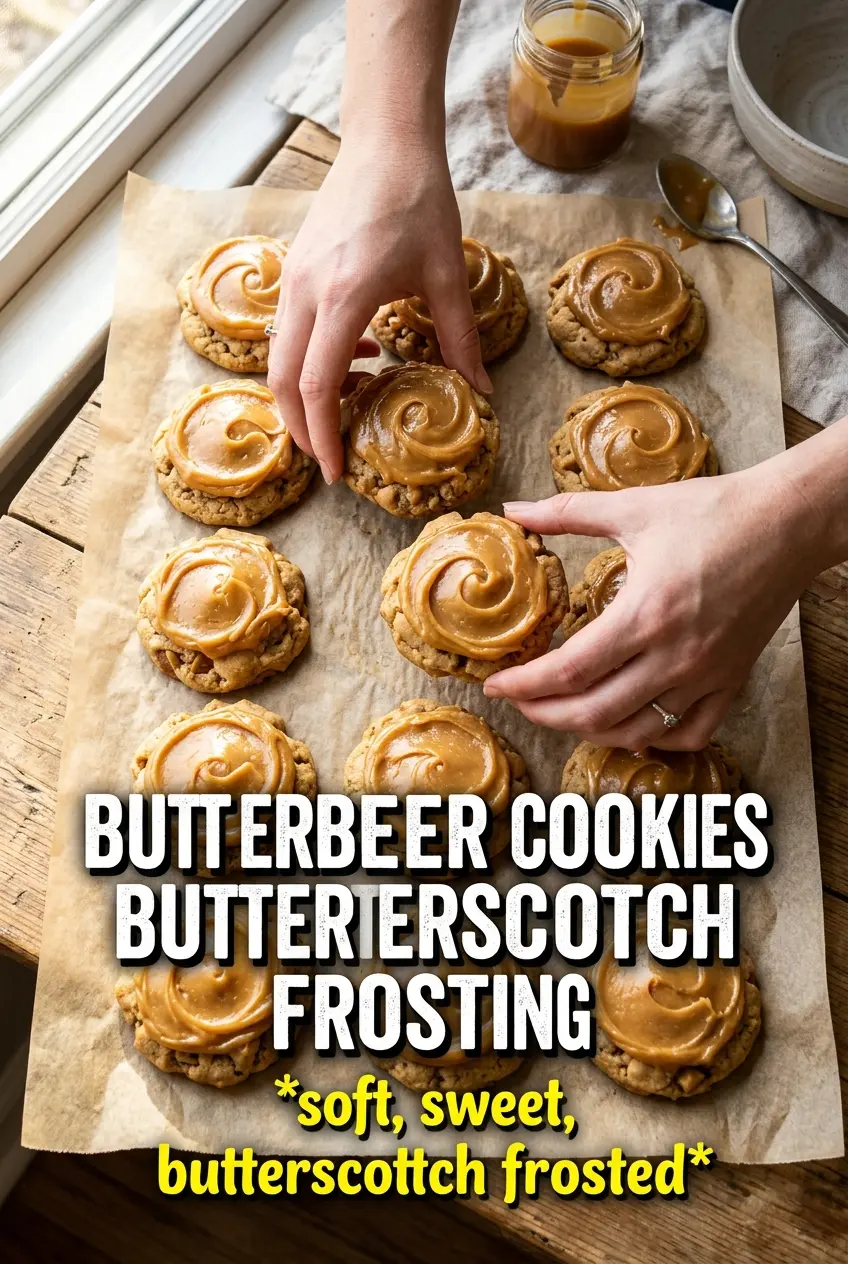
Beat the frosting until it looks smooth and pipeable, then stop. If you keep beating after it’s already fluffy, it can loosen up instead of firming down. Pipe a generous swirl onto each completely cooled cookie, then drizzle with caramel and finish with a butterscotch chip. If the cookies are even slightly warm, the frosting will slide, and the drizzle will disappear into the top instead of sitting in clean lines.
How to Adapt These for Different Kitchens and Different Sweet Teeth
Make them without butterscotch chips
You can leave the chips out and still get a strong butterscotch cookie because the extract and frosting carry the flavor. The cookies will spread a little more and the texture will be a touch less chewy, but they’ll still taste like the same dessert.
Use vanilla if you don’t have butter extract
Vanilla gives you a softer, more familiar cookie base. You’ll lose a little of that butterbeer-style punch, so lean on the butterscotch extract and frosting to keep the flavor from fading into a plain sugar cookie.
Make the frosting dairy-free
Use a plant-based butter and dairy-free cream cheese with the same proportions. The frosting won’t be quite as tangy, and it may need a little extra powdered sugar to hold its shape, but it still pipes well if the dairy-free ingredients are cold but pliable.
Make the cookies ahead
Bake the cookies a day in advance and frost them once they’re fully cool. That keeps the frosting looking clean and gives the cookies time to settle into a nice chewy texture instead of starting out too fresh and crumbly.
Storage and Reheating
- Refrigerator: Store frosted cookies in an airtight container for up to 4 days. The frosting stays best chilled, though the cookies will soften a little more over time.
- Freezer: Freeze the unfrosted cookies for up to 2 months. Layer them with parchment, then thaw at room temperature before frosting.
- Reheating: These are best served at room temperature, not warmed. Heat will soften the frosting too much and blur the drizzle.
Answers to the Questions Worth Asking
Butterbeer Cookies With Butterscotch Frosting
Ingredients
Equipment
Method
- Preheat oven to 375F and line baking sheets with parchment, keeping the sheets ready for scooping.
- Whisk all-purpose flour, baking soda, and salt in a bowl until evenly combined.
- Beat softened unsalted butter with packed brown sugar and granulated sugar until fluffy, then add eggs, butter extract or vanilla extract, and butterscotch extract and mix until smooth.
- Fold in the flour mixture until no dry streaks remain, then fold in butterscotch chips.
- Scoop dough into 2-tablespoon rounds and arrange on the lined baking sheets with space between cookies.
- Bake at 375F for 10-12 minutes until the edges are golden and the centers look set.
- Cool the cookies completely before frosting so the frosting won’t melt.
- Beat cream cheese and unsalted butter until smooth, then mix in butterscotch sauce, powdered sugar, and vanilla until thick and pipeable.
- Pipe a generous swirl of frosting onto each cooled cookie.
- Drizzle each cookie with caramel sauce and top with a butterscotch chip.