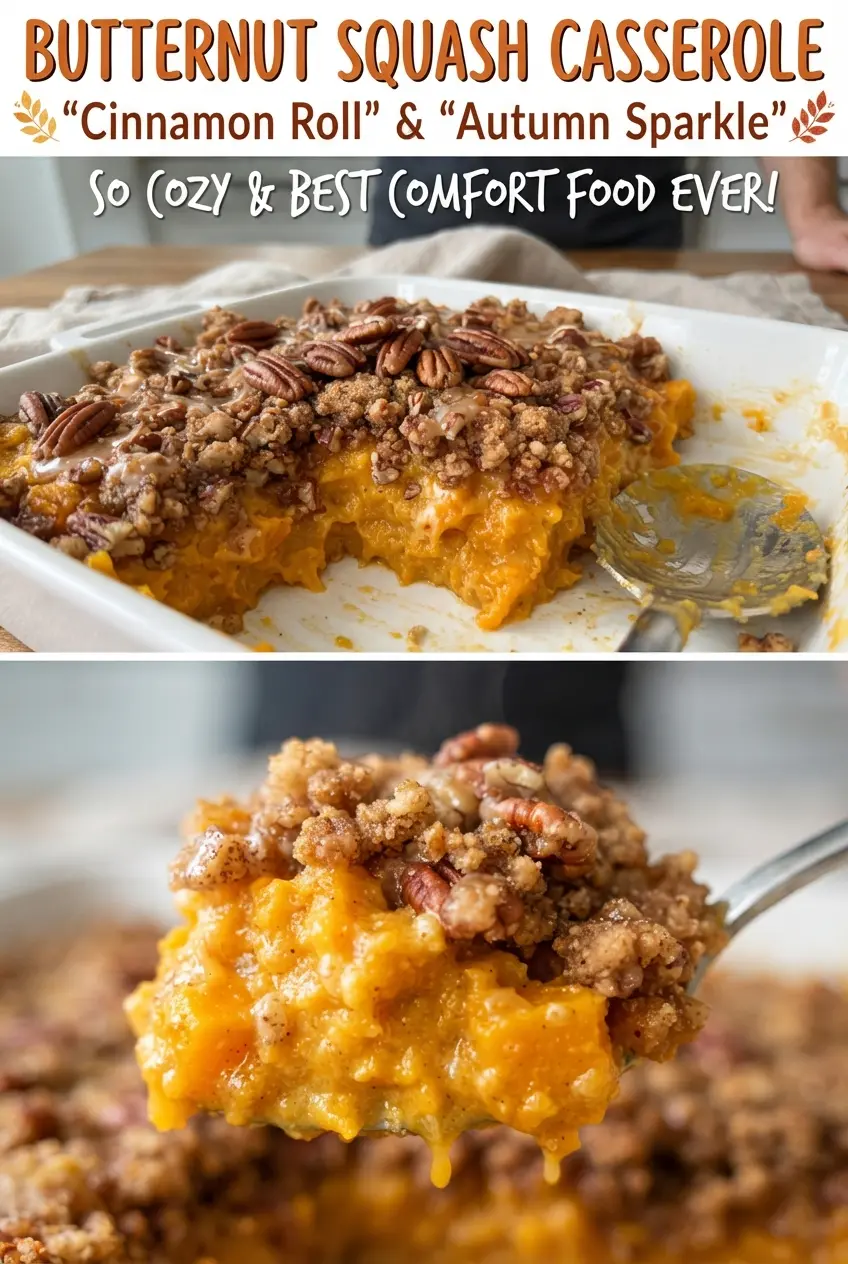
Butternut squash casserole bakes up creamy and spoonable underneath, then finishes with a crunchy pecan topping that gives every bite a little contrast. The squash turns sweet and silky in the oven, and the streusel browns into a crisp cap that keeps the whole dish from feeling heavy. It’s the kind of side that disappears fast because it lands right between comforting and elegant.
The key is draining the squash well after boiling. Extra water is the fastest way to turn the casserole loose and gummy instead of rich and smooth. Mashing the squash while it’s still warm helps the butter melt in evenly, and the eggs set the base just enough so the casserole slices and scoops cleanly once it’s baked.
Below, I’ll show you how to keep the filling creamy without making it watery, plus a few simple swaps if you need to adjust the topping or make it work for different diets.
The squash baked up silky instead of watery, and the pecan topping stayed crisp even after dinner sat on the table for a while. My mom asked for the recipe before she’d finished her first serving.
Save this butternut squash casserole for the nights when you want a creamy southern-style side with a crisp pecan topping.
The Reason This Casserole Stays Creamy Instead of Watery
Butternut squash carries a lot of moisture, and boiling it can push that problem even further if you rush the draining step. Once the squash is tender, let it sit in the colander for a minute or two, then mash it while it’s still hot so steam escapes instead of getting trapped in the casserole. That one pause is what keeps the filling from turning loose in the oven.
The eggs matter here too. They give the casserole enough structure to hold together under the topping without turning it into a firm custard. If you skip them, the filling may taste fine but it won’t set with the same soft, sliceable texture.
- Drain thoroughly — This is the difference between a rich casserole and a soupy one. Press the squash lightly with the back of a spoon to help water escape.
- Mash while warm — Cold squash won’t blend as smoothly, and you’ll chase lumps around the bowl.
- Use the full egg amount — The eggs help the filling bake into a cohesive layer instead of collapsing when served.
What the Butter, Brown Sugar, and Pecans Are Doing Here
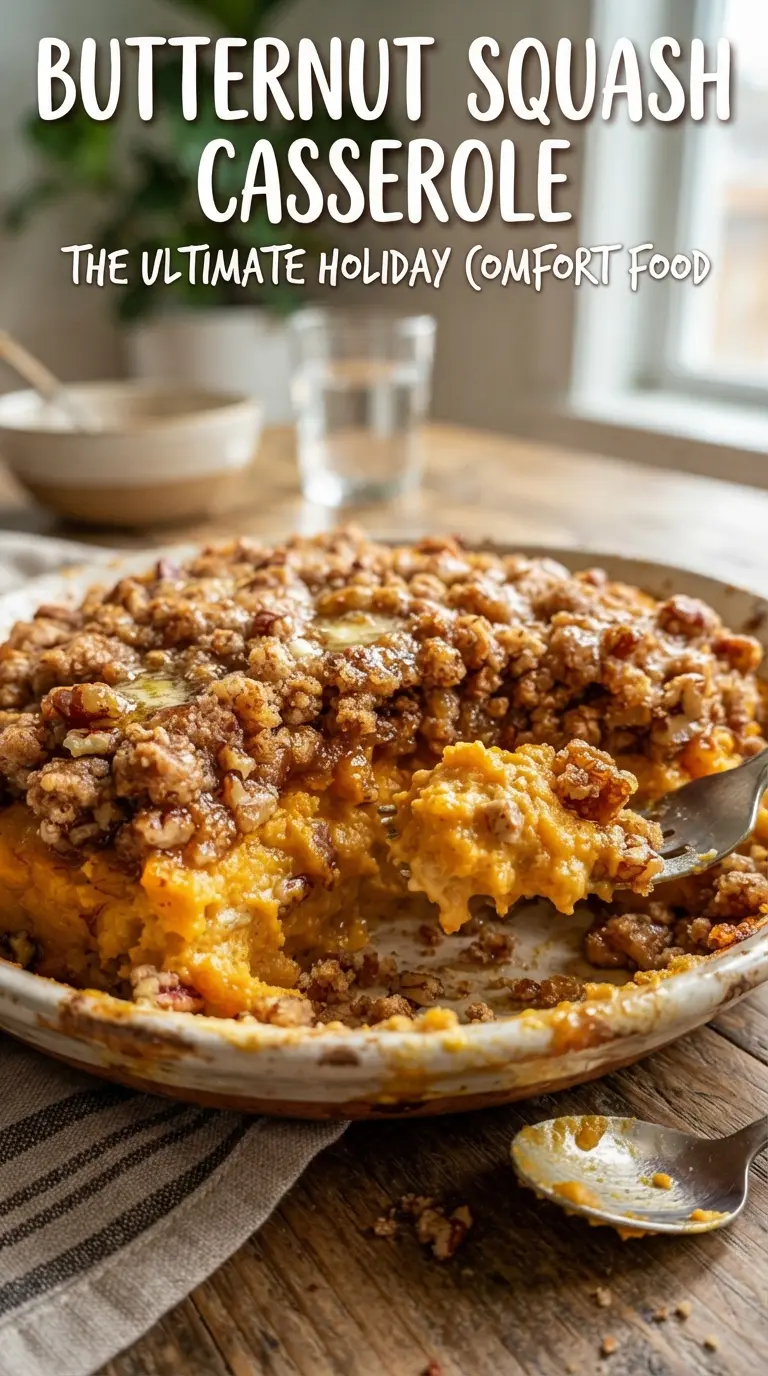
- Butternut squash — Fresh squash gives the cleanest flavor and the best texture. Pre-cut squash works in a pinch, but it should still be cooked until completely soft before mashing.
- Butter — Melted butter carries the brown sugar and cinnamon through the filling and helps the topping crisp. Use real butter here; the flavor is too important to hide.
- Brown sugar — This adds molasses depth that white sugar won’t give you. The split amount lets you sweeten both the filling and the topping without making either one cloying.
- Pecans — Their nuttiness balances the sweetness of the squash. Chop them finely enough that they cling to the streusel, but leave some larger pieces for crunch.
- Milk — It loosens the mash just enough for a smooth casserole. Whole milk gives the most even texture, but 2% works if that’s what you keep on hand.
Building the Filling and Topping in the Right Order
Mashing the Base
Combine the warm squash with butter, brown sugar, eggs, milk, vanilla, cinnamon, and salt until the mixture looks smooth and glossy. Don’t stop while there are streaks of egg or pockets of butter, because those spots bake unevenly and can leave the finished casserole slightly greasy. A potato masher works fine for a rustic texture, but if you want a very smooth filling, use a hand mixer on low.
Spreading It Into the Dish
Press the mixture evenly into a greased 9×13-inch baking dish. You want a level layer so the topping bakes at the same rate across the pan. If the filling is piled high in the middle, the center will stay soft while the edges overbake.
Making the Pecan Streusel
Mix the flour, pecans, remaining butter, and remaining brown sugar until you have damp crumbs that hold together when squeezed. If the topping looks dry and sandy, it won’t brown into a proper crust. Scatter it evenly over the squash and leave some bigger crumbs for a more textured finish.
Baking Until the Edges Bubble
Bake at 350F until the topping is golden and the filling bubbles around the edges, about 35 to 40 minutes. That bubbling is your cue that the casserole has heated all the way through and the center is set enough to serve. If the top browns before the edges start to bubble, cover it loosely with foil for the last few minutes so the pecans don’t scorch.
How to Adapt This Casserole for Different Tables
Make It Gluten-Free Without Losing the Crunch
Swap the all-purpose flour in the topping for a good 1:1 gluten-free baking blend. The topping will still clump and brown, though it may feel a little more delicate when you scoop it. Keep the pecans in place, since they give the streusel most of its structure and crunch.
Cut the Sweetness for a More Savory Side
Reduce the brown sugar in the filling by a couple of tablespoons and keep the topping as written. You’ll still get that classic squash-casserole comfort, but the squash will taste more pronounced and less dessert-like. This version works especially well next to ham, turkey, or roast chicken.
Dairy-Free Version That Still Tastes Rich
Use a plant-based butter and an unsweetened non-dairy milk with a neutral flavor, like oat milk. The casserole will still set because the eggs do the structural work, but the topping may brown a little faster, so watch the last 10 minutes closely. Skip anything strongly flavored like coconut milk unless you want that note in the finished dish.
Storage and Reheating
- Refrigerator: Store covered for up to 4 days. The topping softens a little, but the flavor stays excellent.
- Freezer: Freeze the baked casserole in portions for up to 2 months. Wrap tightly and thaw overnight in the refrigerator before reheating.
- Reheating: Warm in a 325F oven, covered loosely with foil, until heated through. The mistake to avoid is blasting it in the microwave too long, which makes the filling grainy and the topping soggy.