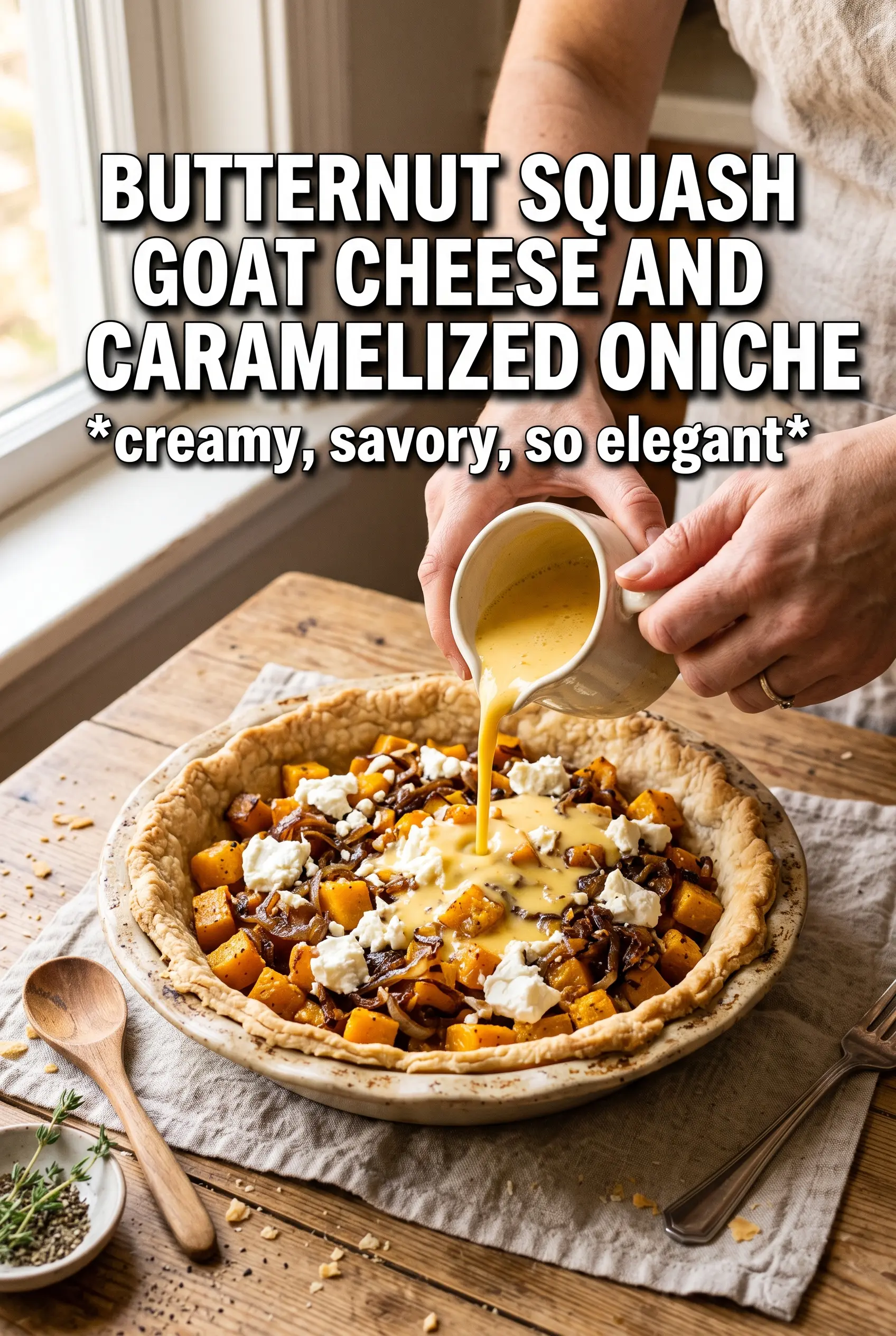
Butternut squash goat cheese and caramelized onion quiche lands on the table with a creamy custard, sweet onion ribbons, and little pockets of tangy cheese that cut through the richness. The crust stays crisp, the filling slices cleanly, and every bite has that mix of savory and slightly sweet that makes a quiche worth making on repeat.
The part that matters most is giving the squash and onions their own separate moment before they go into the crust. Roasted squash brings a dry, concentrated sweetness instead of watery softness, and properly caramelized onions add depth that raw onions can’t fake. The custard stays light enough to set without turning rubbery because the eggs are balanced with both cream and milk.
Below, I’m walking through the one step people tend to rush, the ingredient choices that actually affect texture, and a few variations if you want to change the cheese or make it ahead.
The onions took longer than I expected, but it was worth it. The custard set up silky and the squash stayed in little tender bites instead of turning to mush. My slice held together perfectly.
Save this butternut squash goat cheese and caramelized onion quiche for a brunch-worthy pie with a crisp crust and a silky, savory custard.
The Reason the Filling Stays Silky Instead of Watery
The biggest mistake in a vegetable quiche is letting too much moisture into the custard. Raw onions and undercooked squash both leak water as the quiche bakes, which is how you end up with a soft center that never quite sets. Roasting the squash first and caramelizing the onions until they’re deeply golden changes both ingredients from wet and sharp into concentrated and sweet.
Blind baking the crust matters here too. A cold filling in a raw crust can look done on top while the bottom stays doughy, especially with a custard that needs 40 to 45 minutes in the oven. That short 12-minute head start gives the base enough structure to stay crisp under the filling.
- The squash should be tender and lightly browned at the edges. If it’s still hard, it won’t soften enough during the bake.
- The onions should be golden, glossy, and sweet-smelling. Pale onions taste flat and can make the quiche feel loose.
- The custard should go in fully whisked, with the eggs completely blended into the cream and milk. Streaks of egg white can bake into little rubbery bits.
What Each Ingredient Is Actually Doing in This Quiche

- Butternut squash — Roasting concentrates the sweetness and keeps the cubes intact. Fresh squash is worth using here; frozen tends to give off too much water unless it’s thawed and drained very well.
- Onion — This is where the deep savory flavor comes from. Don’t rush the caramelizing step, because medium-high heat will brown the onions before they soften and turn sweet.
- Goat cheese — It melts into soft tangy pockets instead of disappearing into the custard. A fresh, creamy goat cheese gives the best contrast, but a firmer log still works fine if you crumble it evenly.
- Heavy cream and whole milk — The mix keeps the filling rich without making it heavy. You can use all cream for a richer quiche, but the texture lands firmer and less delicate.
- Fresh thyme and nutmeg — Thyme lifts the sweetness of the squash, and nutmeg gives the custard a warm background note. Dried thyme can work in a pinch, but use half as much because the flavor is more concentrated.
Building the Custard So It Sets Cleanly
Caramelize the onions slowly
Cook the onions in butter over medium-low heat until they turn soft, golden, and sweet, which usually takes about 30 minutes. If the pan gets too hot, the onions will brown at the edges before they soften all the way through, and that bitter edge shows up in the finished quiche. Stir often enough to keep them from sticking, but don’t crowd the pan or they’ll steam instead of caramelize.
Roast the squash before it goes in
Spread the cubed squash on a sheet pan and roast until the pieces are tender enough to pierce with a fork and just starting to color. You want dry, concentrated cubes, not soft little puddles of squash, because extra moisture pushes the custard toward soggy. Let the squash cool for a few minutes before assembling so it doesn’t warm the crust too early.
Pour the custard at the end
Whisk the eggs, cream, milk, thyme, nutmeg, salt, and pepper until smooth, then pour it over the squash, onions, and goat cheese after everything is already in the crust. If you add the custard first, the fillings shift around and the cheese sinks unevenly. Bake until the center still has a slight wobble when you nudge the pan; it should look set at the edges and just a little loose in the middle.
Let it rest before slicing
The 10-minute rest is part of the bake, not an extra step. The custard finishes setting as it cools, which gives you a cleaner slice and keeps the filling from spilling out. If you cut it straight from the oven, the center will run before it has a chance to firm up.
Three Ways to Adjust It Without Losing the Structure
Make it gluten-free
Use a gluten-free pie crust that bakes up sturdy enough to hold custard. The filling itself is naturally gluten-free, so the main thing you’re protecting is the crust from getting soggy or brittle; blind baking helps a lot here.
Make it dairy-free
Swap in a full-fat unsweetened plant cream and use a dairy-free pie crust, then leave out the goat cheese or replace it with a firm plant-based cheese that crumbles well. The result will still slice, but it won’t have quite the same tang or velvet texture as the original.
Use a different cheese
Feta gives you a saltier, firmer bite, while Gruyère melts more completely and makes the filling a little richer. Goat cheese is the sharpest and creamiest option, so if you switch cheeses, adjust the salt with a light hand.
Turn it into mini quiches
Use a muffin tin or tartlet pans and cut the bake time down, watching for set edges and a soft center. Smaller portions brown faster, so keep an eye on the tops before the custard overbakes.
Storage and Reheating
- Refrigerator: Store covered for up to 4 days. The crust softens a little, but the flavor stays excellent.
- Freezer: Freeze baked slices tightly wrapped for up to 2 months. Thaw in the refrigerator overnight before reheating; freezing the whole quiche works too, but the crust is a little more fragile after thawing.
- Reheating: Warm in a 325F oven until heated through. The oven keeps the crust crisp, while the microwave tends to make the filling weep and the crust turn rubbery.
Answers to the Questions Worth Asking
Butternut Squash Goat Cheese and Caramelized Onion Quiche
Ingredients
Equipment
Method
- Preheat the oven to 425°F, roast the cubed butternut squash on a sheet pan until tender, about 25 minutes, then let it cool slightly so it doesn’t sink into the custard. Visual cue: cubes should pierce easily and look lightly browned at the edges.
- Preheat the oven to 375°F, fit the pie crust into a 9-inch tart or pie pan, and blind bake for 12 minutes. Visual cue: crust should look set and lightly golden.
- Caramelize the thinly sliced onion in unsalted butter over medium-low heat for 30 minutes until golden and sweet. Visual cue: onions should turn translucent and develop deep golden strands with reduced liquid.
- Whisk together eggs, heavy cream, whole milk, fresh thyme, nutmeg, salt, and black pepper until smooth. Visual cue: the mixture should be uniform with no thyme clumps.
- Scatter the caramelized onions and roasted butternut squash over the crust. Visual cue: evenly cover the base so the custard bakes through to the edges.
- Crumble the goat cheese evenly over the filling. Visual cue: distribute it in small bits across the surface.
- Pour the custard over everything and bake for 40-45 minutes at 375°F until just set with a slight wobble. Visual cue: the center should jiggle like soft custard, not slosh like liquid.
- Rest the quiche for 10 minutes before slicing to help the custard finish setting. Visual cue: the center should firm up slightly and hold its slice shape.