Caprese pasta salad hits the sweet spot between fresh and filling: cool pasta, juicy tomatoes, soft mozzarella, and basil that stays fragrant instead of turning muddy. The balsamic vinaigrette gives it enough tang to keep each bite bright, and the whole bowl gets better after a short chill in the fridge. It’s the kind of side dish people keep going back to because it tastes clean but still feels substantial.
What makes this version work is the balance. The pasta gets rinsed cold so it stops cooking fast and stays separate, the tomatoes go in halved so their juices mix into the dressing, and the mozzarella balls hold their shape without needing any extra handling. A little garlic in the vinaigrette sharpens the whole dish, and the balsamic glaze at the end adds that glossy, concentrated finish that makes the bowl look as good as it tastes.
Below, I’ll walk through the small details that keep the pasta from clumping and the basil from bruising. I’ve also included a few useful swaps and the one storage tip that keeps leftovers tasting fresh the next day.
I let it chill for an hour like the recipe said, and the dressing soaked into the pasta without making it soggy. The basil stayed fresh, and the balsamic glaze at the end made it taste like something from a good deli.
Save this Caprese pasta salad for a bright, make-ahead side with fresh basil, creamy mozzarella, and balsamic glaze.
The Part That Keeps Caprese Pasta Salad From Turning Soft and Wet
Caprese pasta salad falls apart when the pasta is too hot or the tomatoes sit in the bowl too long before the dressing goes on. Hot pasta keeps absorbing liquid and can make the mozzarella loose and the basil limp. Cold pasta changes everything here. It keeps the dressing on the surface instead of drinking it in too fast, which means the salad still tastes fresh after an hour in the fridge.
The other thing that matters is how you cut and combine the ingredients. Halved cherry tomatoes release enough juice to season the dressing without flooding the bowl, and the mozzarella balls stay intact because they’re added whole. Toss gently at the end so the basil gets coated, not crushed. This is a salad that should look loose and colorful, not mashed together.
What Each Ingredient Is Doing in the Bowl
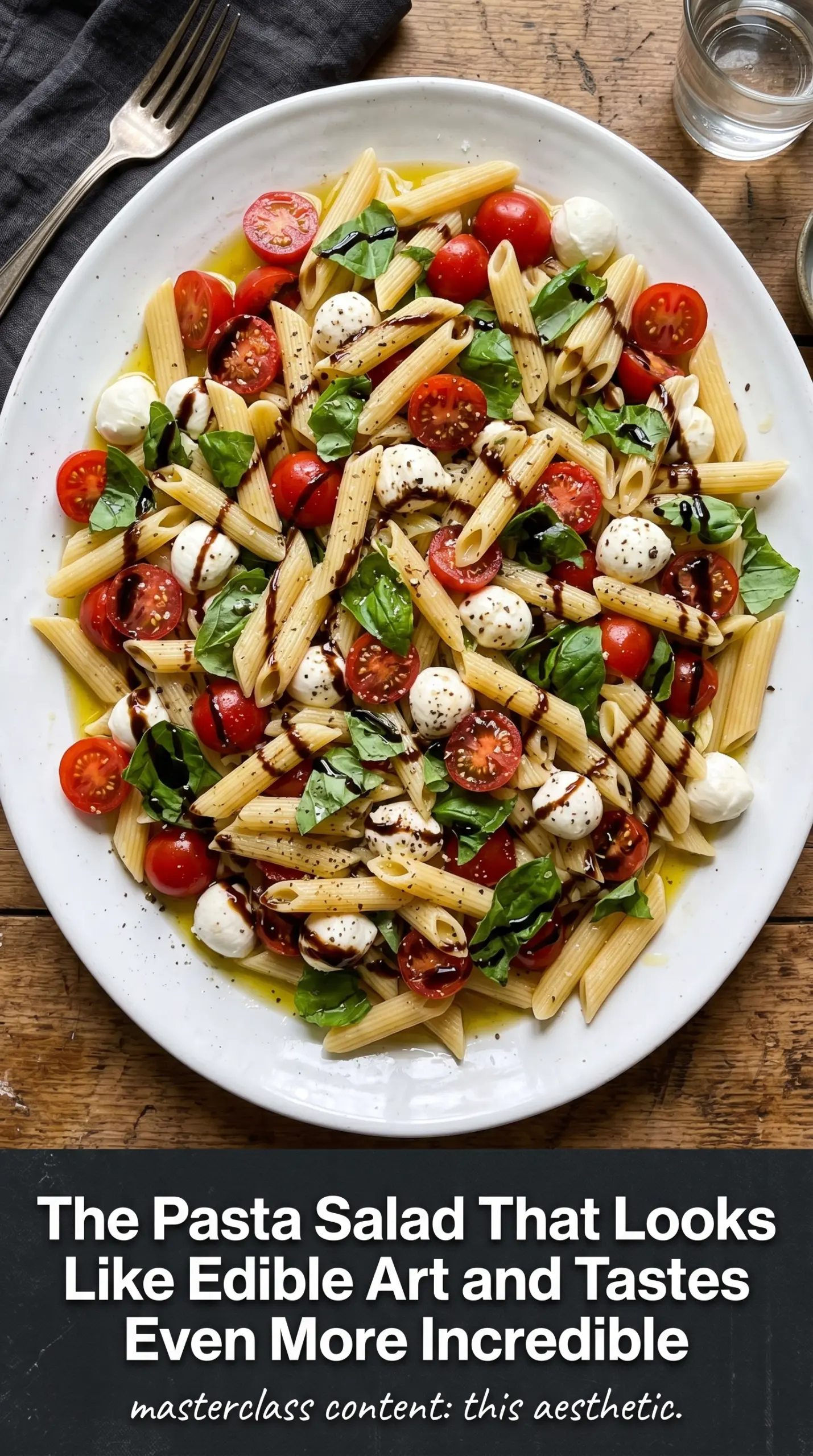
- Rotini or farfalle — Either shape holds the balsamic vinaigrette well, but rotini clings a little better because of the spirals. Use a sturdy pasta with some ridges or folds; smooth pasta doesn’t catch the dressing nearly as well.
- Cherry tomatoes — These give you sweetness and enough juice to loosen the dressing as the salad chills. Bigger tomatoes can work, but they should be seeded first or the salad gets watery fast.
- Fresh mozzarella balls — Ciliegine are ideal because they’re the right size and stay creamy without disappearing into the salad. Block mozzarella will work in a pinch, but cube it evenly so it distributes well.
- Fresh basil — Tear it by hand instead of chopping it. A knife bruises the leaves faster, and bruised basil can turn dark and muted once it sits in the dressing.
- Balsamic vinegar and glaze — The vinegar seasons the salad; the glaze finishes it. If you skip the glaze, the salad still works, but you lose that sweet, glossy top note that makes the dish taste complete.
- Olive oil — This carries the balsamic and coats the pasta so the salad doesn’t taste sharp or dry after chilling. A decent extra-virgin oil matters here because there isn’t much else to hide behind.
How to Build the Salad So the Flavors Meld, Not Muddle
Cooking the Pasta to the Right Point
Cook the pasta until it’s just tender, then drain it right away and rinse it under cold water until it stops steaming. That rinse is what locks in the texture and keeps the noodles from clumping into a warm lump. If the pasta is overcooked at this stage, the salad will go soft after chilling no matter how careful you are with the dressing. Let it drain well before it goes into the bowl so extra water doesn’t dilute the vinaigrette.
Whisking the Dressing Until It Looks Emulsified
Whisk the olive oil, balsamic vinegar, garlic, salt, and pepper until the dressing looks lightly thickened and blended, not streaky. The garlic needs that short rest in the acid and oil to lose its raw edge. If you pour the dressing in with the garlic still clumped, one bite can be sharp while the next tastes flat. Give it a quick whisk again right before dressing the salad if it sits for more than a few minutes.
Combining Everything Without Bruising the Basil
Add the pasta, tomatoes, mozzarella, and basil to a large bowl, then pour the dressing over the top and toss with a light hand. The goal is to coat, not compress. If you stir aggressively, the basil darkens and the mozzarella starts to break apart, which makes the bowl look messy and dulls the fresh flavor. Once it’s mixed, refrigerate it for at least an hour so the pasta can absorb some of the dressing and the whole salad tastes connected.
Finishing With the Glaze
Drizzle the balsamic glaze over the salad just before serving, not before chilling. The glaze is thick and sweet, and it gives you contrast against the cooler, brighter ingredients. If you add it too early, it sinks in and disappears. A light drizzle across the top is enough to make every serving taste finished.
How to Adapt Caprese Pasta Salad for Different Tables
Gluten-Free Version
Use a gluten-free pasta that holds its shape well after chilling, especially one made with corn, rice, or a blend designed for cold salads. Cook it just until tender and rinse thoroughly so it doesn’t get gummy. The flavor stays the same, but the texture can soften faster than wheat pasta, so serve it soon after the chill time.
Dairy-Free Swap
Leave out the mozzarella and add chopped avocado right before serving, or use a dairy-free mozzarella that stays firm when cold. The salad loses some of that classic creamy caprese bite, but the basil, tomato, and balsamic still carry the dish. If you use avocado, don’t stir it in too early or it will brown and mash.
Make It More Substantial
Add grilled chicken, salami, or chickpeas if you want this to serve as a main dish instead of a side. Chickpeas keep it vegetarian and soak up the dressing well; chicken makes it feel more like a meal; salami adds a salty edge that plays well with the mozzarella. Add any protein after the pasta has cooled so the whole bowl stays clean-tasting.
Storage and Reheating
- Refrigerator: Store covered for up to 3 days. The basil softens a little, but the flavor stays good if the salad is chilled promptly.
- Freezer: Don’t freeze this one. The tomatoes and mozzarella lose their texture once thawed, and the pasta turns unpleasantly soft.
- Reheating: This salad is meant to be served cold. If it sits in the fridge and looks dry, stir in a small splash of olive oil and a few drops of balsamic vinegar rather than warming it up.
Answers to the Questions Worth Asking
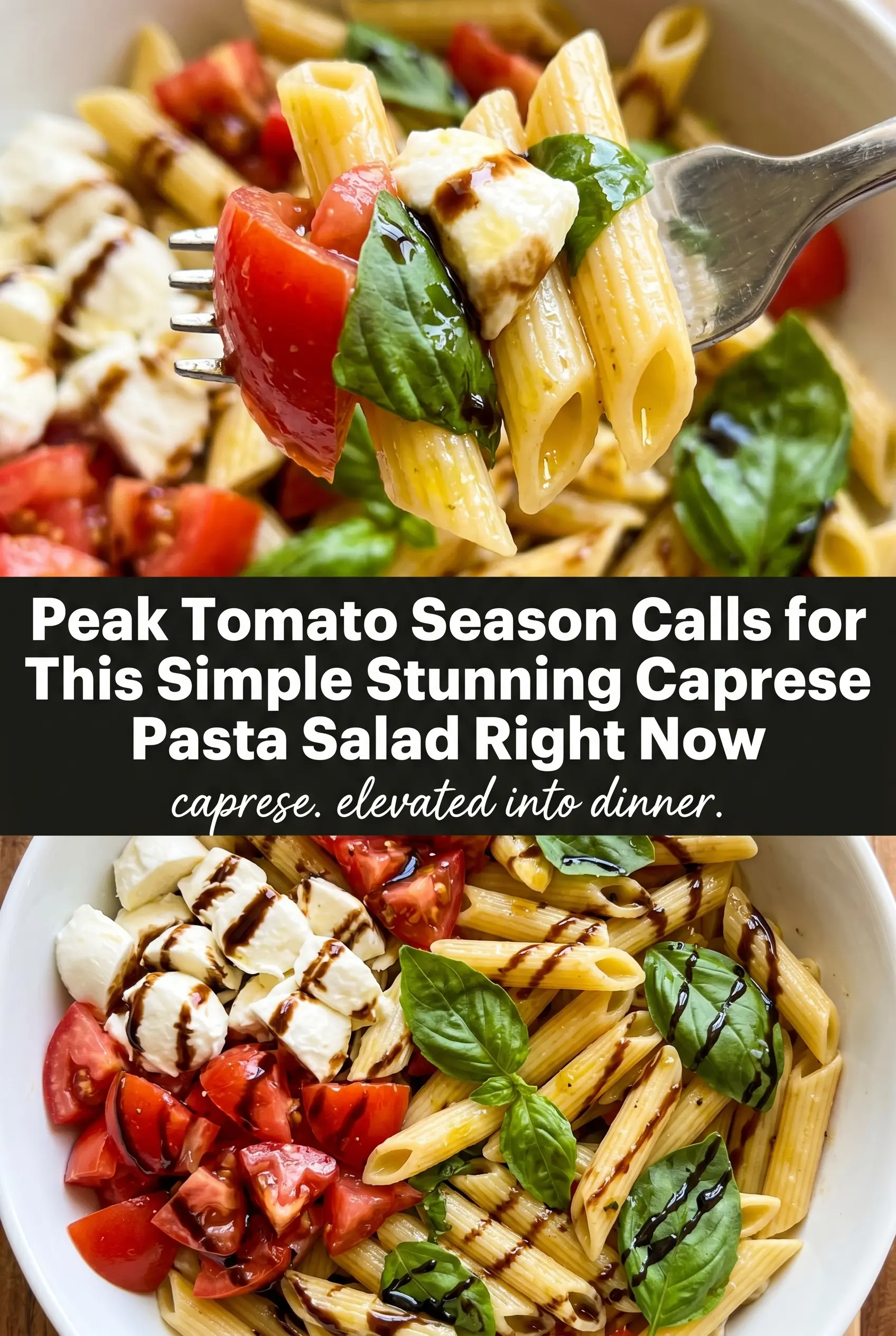
Caprese Pasta Salad
Ingredients
Method
- Cook the pasta according to package directions until al dente, then drain and rinse with cold water to stop cooking.
- Whisk olive oil, balsamic vinegar, garlic, salt, and pepper until the dressing looks evenly combined.
- Combine the pasta, cherry tomatoes, mozzarella balls, and torn basil in a large bowl.
- Pour the balsamic vinaigrette over the salad and toss gently so the pasta is lightly coated and the mozzarella stays intact.
- Refrigerate the salad for at least 1 hour to let the flavors meld, then keep it cold until serving.
- Drizzle with balsamic glaze right before serving for a glossy finish.