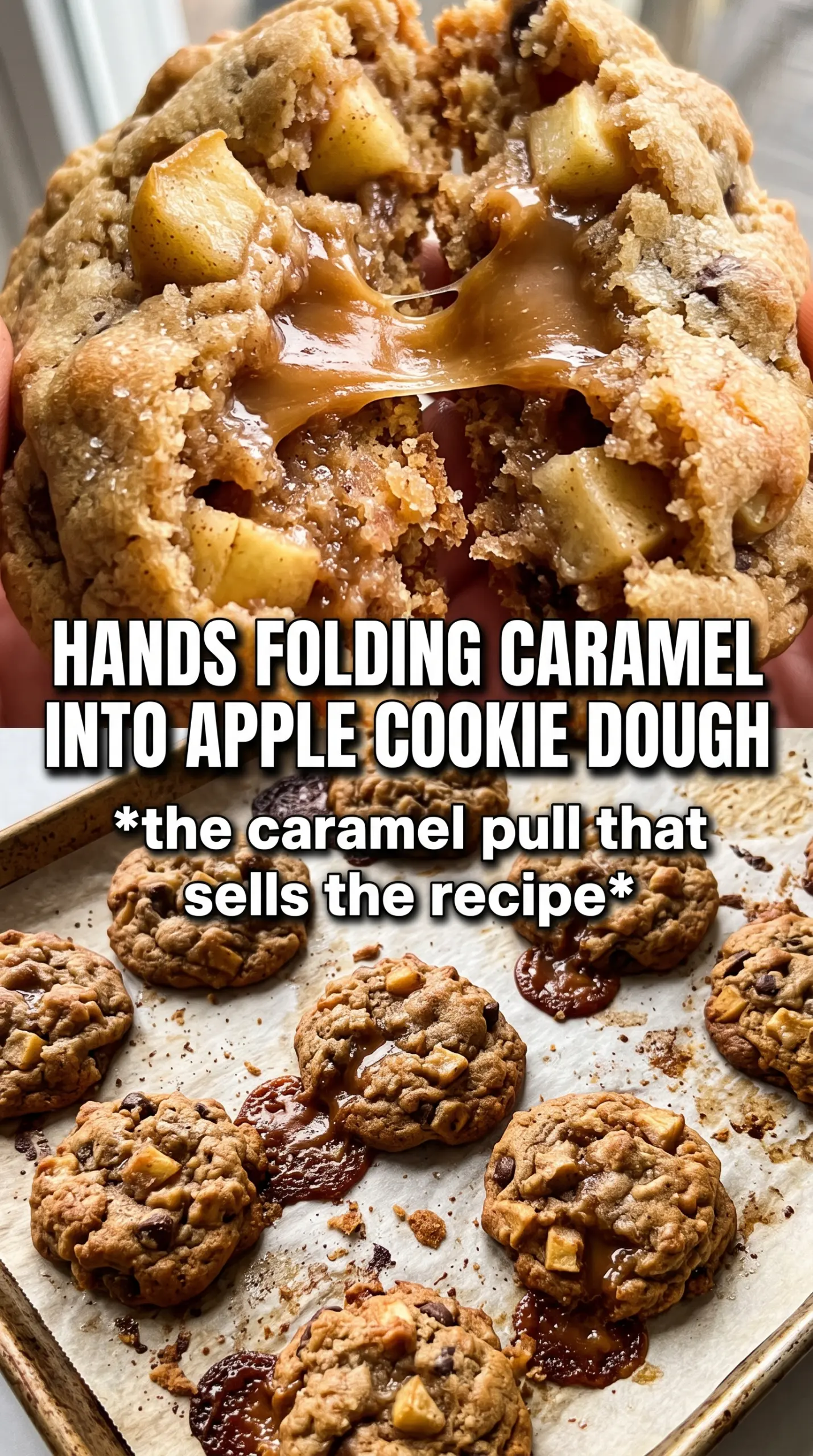
Caramel apple cookies bake up soft in the center with lightly crisp edges, little bursts of tender apple, and those melted pockets of caramel that make every bite taste warm and homemade. The finish matters here: a drizzle of caramel sauce and a pinch of flaky salt turn a good cookie into the kind people reach for before the tray has even cooled.
The trick is keeping the apple pieces tiny and dry so they soften without turning the dough wet. I also like using caramel bits instead of large chunks because they melt into pockets instead of leaking out across the pan. A quick chill isn’t necessary, but the dough does bake more evenly when the apple is finely diced and patted dry first.
Below, I’m breaking down the details that keep these cookies soft, why the caramel behaves the way it does, and the small adjustments that help if you want to make them ahead or adapt them for different ingredients.
The cookies stayed soft for days, and the little apple pieces didn't make the dough soggy at all. I used chopped soft caramels, and they melted into perfect gooey pockets without running everywhere.
Like these caramel apple cookies? Save them for the days when you want soft cookies with gooey caramel pockets and a salted caramel finish.
The Key to Keeping Apple Cookies Soft, Not Wet
The biggest mistake with apple cookies is treating the fruit like a mix-in that behaves the same way as chocolate chips. Apples bring moisture, and if the pieces are too large or too damp, they release steam in the oven and soften the dough around them instead of baking into tender little bites. That’s how you end up with cookies that look done on the outside but feel heavy in the center.
Finely dicing the apple changes everything. Smaller pieces disperse through the dough, so each cookie gets flavor without a soggy pocket. Patted dry apple also matters more than people think; it cuts down on surface moisture before the dough ever hits the oven, which helps the cookies spread the right amount and stay chewy instead of cakey.
- Apples — Use a firm baking apple if you can. Softer apples break down too fast and can make the dough wet. Dice them very fine, then blot them well with paper towels.
- Caramel bits or chopped soft caramels — Caramel bits are the easiest choice because they hold their shape better in the dough. If you use soft caramels, chop them small so they melt into pockets instead of pooling.
- Brown sugar — This adds moisture and that deeper caramel note that belongs in this cookie. You can’t fully replace that with all white sugar and get the same chew.
- Cinnamon, nutmeg, and allspice — This blend makes the cookies taste like baked apples without overwhelming the caramel. The spices are stronger than they look in the bowl, so don’t overdo them.
What Each Ingredient Is Actually Doing in This Recipe
- Primary ingredient (the star) — Quality matters most. Choose the best you can find.
- Cooking medium (oil, butter, or broth) — This carries flavors and prevents dryness.
- Seasonings (salt, pepper, spices, herbs) — Layer flavors so nothing overpowers. Build depth gradually.
- Aromatics (garlic, onion, herbs) — Cook with fat to bloom flavors. Become the foundation.
- Supporting ingredients — Complement the main ingredient without overpowering it.
- Sauce or liquid (if applicable) — Brings flavors together. Balance richness with acid.
- Acid (lemon, vinegar, wine, or other) — Brightens and prevents flat-tasting results.
- Final finish (garnish, glaze, or sauce) — Prevents one-dimensional taste and adds visual appeal.
Building the Dough So the Caramel Stays in Pockets
Whisk the dry ingredients first
Start by whisking the flour, baking soda, salt, and spices together so the leavening and seasoning are evenly distributed. If the baking soda clumps, you’ll taste it in random spots and the cookies won’t rise evenly. The flour mix should look uniform before it ever meets the butter.
Cream the butter and sugars until light
Beat the butter with the granulated and brown sugar until the mixture looks fluffy and a shade lighter. That step traps air and gives the cookies a softer texture instead of a dense, heavy bite. If the butter is too cold, it won’t cream properly; if it’s melted, the dough will spread too fast in the oven.
Fold in the apple at the end
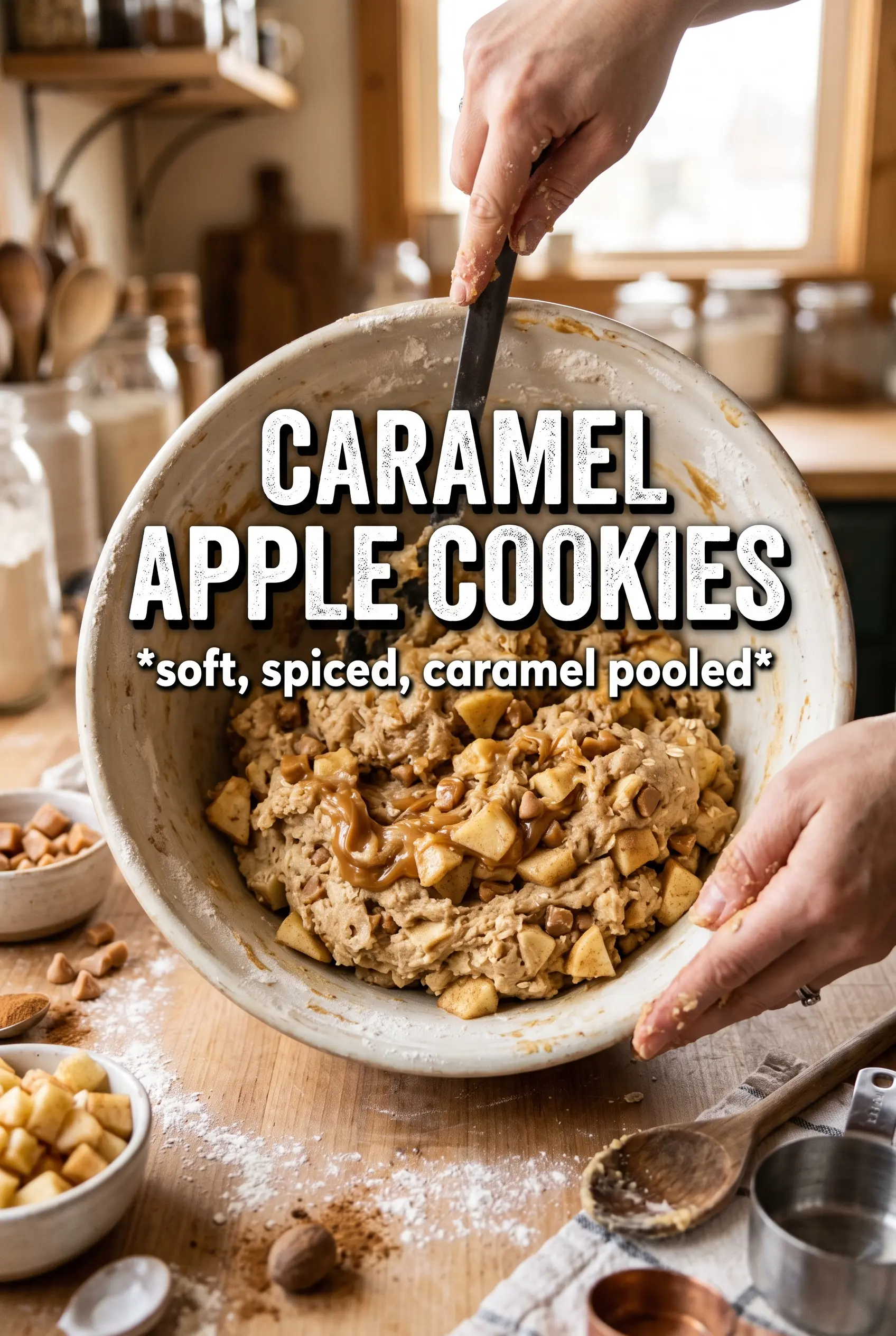
Once the flour mixture is almost fully mixed in, switch to folding so you don’t overwork the dough. Add the finely diced apple and caramel bits last so they stay intact and don’t get crushed into the batter. The dough should be thick and scoopable, not runny; if it looks loose, the apple probably still has too much moisture.
Bake just until the centers still look soft
Scoop the dough into 2-tablespoon rounds and bake until the edges are golden and the centers still look a little underdone. That slight underbake is what keeps the cookies tender after they cool. If you wait until the centers look fully set in the oven, they’ll dry out by the time they hit the rack.
Dairy-Free Version
Swap the butter for a plant-based baking stick, not a tub spread. Baking sticks hold structure better, so the cookies still spread and set the way they should. The flavor will be a little less rich, but the caramel and spices still come through clearly.
Gluten-Free Adjustment
Use a 1:1 gluten-free baking blend that includes xanthan gum. The texture will be a little more delicate, but the cookies still bake up soft and chewy if you don’t overmix the dough. Let them cool on the pan for the full 5 minutes so they can set before moving them.
Make Them More Caramel Forward
Add a few extra caramel bits on top of each dough ball before baking. They’ll melt into glossy little spots across the top of the cookies, which gives you a stronger caramel hit without changing the dough structure.
Storage and Reheating
- Refrigerator: Store in an airtight container for up to 5 days. The cookies stay soft, though the caramel will firm up a bit.
- Freezer: Freeze baked cookies for up to 2 months, or freeze scooped dough balls and bake from frozen with 1 to 2 extra minutes.
- Reheating: Warm a cookie in the microwave for 8 to 10 seconds if you want the caramel soft again. Too much heat will make the apple pieces turn mushy and the cookie lose its edge.
Answers to the Questions Worth Asking
Caramel Apple Cookies
Ingredients
Equipment
Method
- Preheat the oven to 375F, then line baking sheets with parchment as a nonstick surface and for easy release.
- Whisk the all-purpose flour, baking soda, cinnamon, nutmeg, allspice, and salt in a bowl until evenly combined.
- Beat the softened unsalted butter with the granulated sugar and brown sugar until fluffy, then beat in the eggs and vanilla extract until the mixture looks smooth.
- Stir the flour mixture into the wet ingredients until just combined, then fold in the very finely diced apples (well-patted dry) and the caramel bits until the dough is evenly speckled.
- Scoop the dough into 2-tablespoon rounds and place them on the prepared sheets with space between for spreading.
- Bake for 10-12 minutes, until the edges are golden but the centers look slightly underdone for a soft texture.
- Cool the cookies on the pan for 5 minutes, then drizzle with caramel sauce and sprinkle with flaky sea salt while they’re still warm.