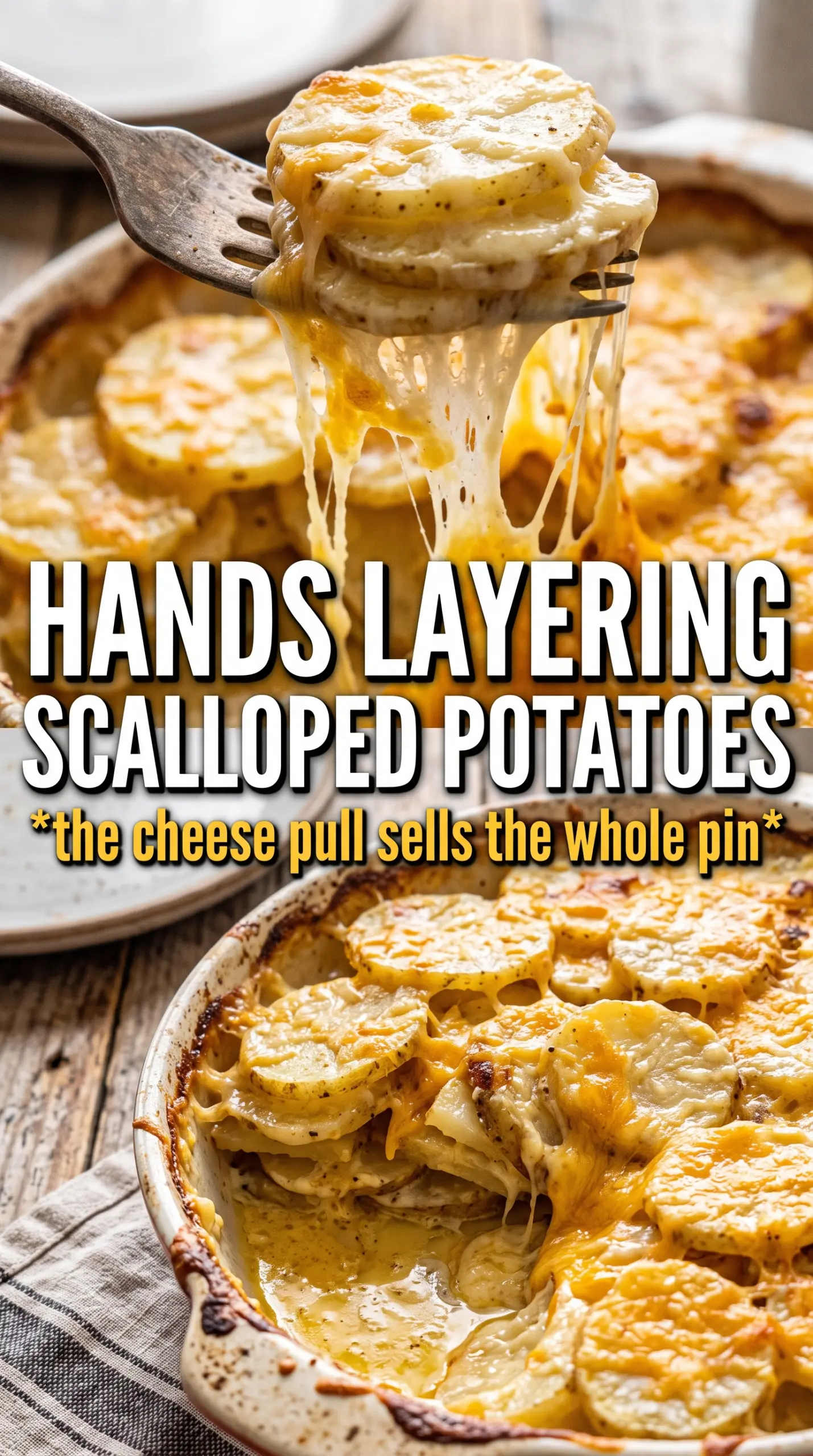
Cheesy scalloped potatoes earn their place on the table because the layers stay tender without turning mushy, and the top bakes into a bubbling, bronzed crust that cracks when the spoon goes through. The cream sauce settles between the potato slices and turns rich and silky instead of greasy, which is what makes a second scoop hard to resist.
The trick is using Yukon gold potatoes sliced very thin so they cook evenly and hold their shape. I also whisk the garlic, Dijon, thyme, and nutmeg straight into the cream before it ever hits the pan, which seasons every layer instead of leaving the flavor sitting on top. Gruyere brings the melt and the nutty edge; sharp cheddar adds the familiar cheesy finish.
Below, I’ve included the detail that matters most: how to keep the potatoes submerged so the center cooks through, plus a few smart swaps if you need to change the cheese or make the dish ahead.
The sauce soaked into every layer and the potatoes came out perfectly tender after the full bake. The gruyere and cheddar topping browned beautifully without getting oily.
Save these cheesy scalloped potatoes for the kind of dinner that needs a golden, bubbling side dish with a creamy center.
The Slice Size That Keeps the Middle Tender, Not Watery
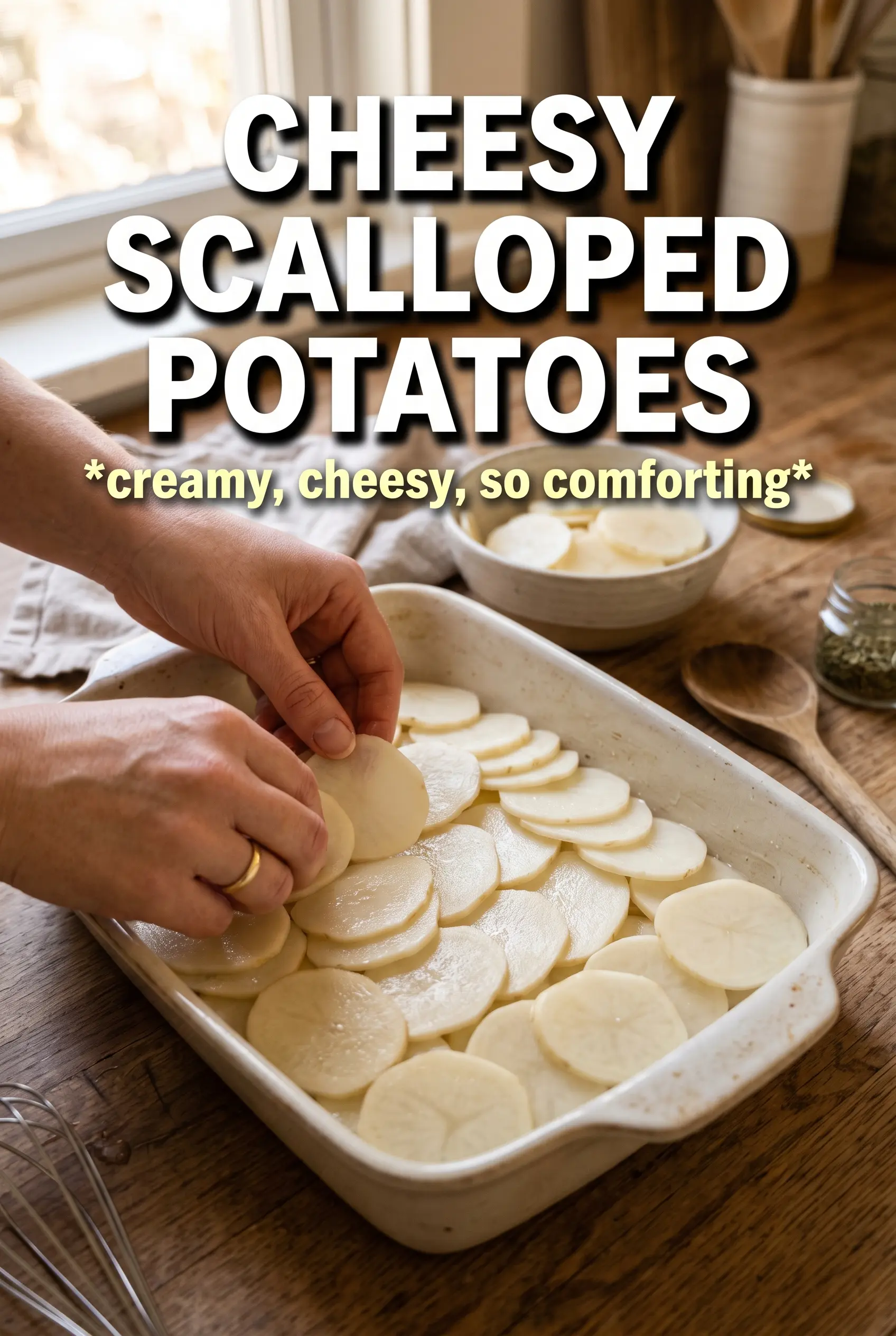
Cheesy scalloped potatoes fail most often because the slices are uneven. Thick pieces stay firm while the thin ones collapse, and you end up with a dish that looks done on top but still tastes raw in the center. A mandoline is handy here, but a sharp knife and steady hand work fine as long as every slice is close to the same thickness.
Yukon golds are the right potato for this job because they hold their shape and bring a naturally creamy texture. Russets can work, but they tend to break down faster and make the sauce feel thicker and heavier. If you rinse the cut potatoes, dry them well before layering; excess surface starch can turn the sauce gluey instead of silky.
What Each Ingredient Is Actually Doing in This Dish
- Yukon gold potatoes — These give you tender layers that stay intact after a long bake. They’re worth buying for this dish; a starchy potato can go soft before the sauce finishes reducing.
- Heavy cream and whole milk — The cream gives richness, while the milk keeps the sauce from feeling too dense. Using all cream makes the dish heavier and can mask the potato flavor.
- Dijon mustard, garlic, thyme, and nutmeg — These season the cream from the inside out. Dijon doesn’t make the dish taste mustardy; it sharpens the sauce and keeps the richness from tasting flat.
- Gruyere and sharp cheddar — Gruyere melts into a smooth, nutty blanket, and cheddar gives you that classic browned-cheese finish. If you swap in all cheddar, the top still tastes good, but the sauce loses some elegance and depth.
- Butter — Buttering the dish helps the edges brown and keeps the first layer from sticking. It also adds a little extra richness where the potatoes meet the pan.
Building the Cream Sauce So It Bakes, Not Breaks
Season the Cream Before It Hits the Dish
Whisk the cream, milk, garlic, Dijon, thyme, nutmeg, salt, and pepper together before you pour anything over the potatoes. That does more than save time; it spreads the seasoning through every layer instead of leaving the flavor concentrated on top. If the garlic is chopped too coarsely, it can stay harsh, so mince it fine enough to melt into the sauce as it bakes.
Stack the Potatoes Tightly
Layer the potato slices in overlapping rows and press them down as you go. You want them snug, not packed so tightly that the liquid can’t move between the layers. Once the cream mixture is in the dish, press the potatoes down again until they’re mostly submerged; dry edges are the sign the sauce level is too low.
Cover for the First Bake, Then Let the Top Color
The foil keeps the moisture in during the first 50 minutes so the potatoes can soften without the top burning. If the dish isn’t tightly covered, the upper layers can dry out before the centers are tender. After that first bake, uncover, add the cheese, and let the top finish in the oven until it’s deeply golden and bubbling around the edges. The potatoes are done when a knife slides through the center with no resistance.
Let It Rest Before Serving
Give the dish 10 minutes on the counter before you serve it. That short rest lets the sauce settle so it coats the potatoes instead of running everywhere when you cut in. If you serve it straight from the oven, it will taste just fine, but the layers will slump and the sauce will look thinner than it really is.
Make It With All Cheddar
If Gruyere isn’t in your budget, use all sharp cheddar. The flavor gets a little more familiar and less nutty, but the dish still melts beautifully and browns well. I’d keep at least some cheddar sharp, though, so the sauce doesn’t turn flat.
Dairy-Free Version
Use an unsweetened oat or cashew milk with a rich dairy-free cream and a good melting-style vegan cheese. The texture will be a little lighter and the top won’t brown the same way, but the potatoes will still bake up tender if you keep the foil on for the first part of cooking.
Make-Ahead for a Crowd
Assemble the dish up to a day ahead, cover it tightly, and refrigerate it before baking. Add about 10 to 15 extra minutes to the covered bake since it’s starting cold. The cheese on top still goes on during the final uncovered bake, not ahead of time, or it can turn dry before the potatoes are done.
Gluten-Free by Default
This recipe is naturally gluten-free as written, which makes it easy to serve to a mixed crowd. Just check the cheese labels if you’re cooking for someone highly sensitive, since some shredded cheeses include anti-caking additives.
Storage and Reheating
- Refrigerator: Store leftovers in an airtight container for up to 4 days. The sauce will thicken as it chills, but the flavor stays great.
- Freezer: It freezes, but the texture softens a bit after thawing. Freeze in portions, wrap well, and expect the potatoes to be a little less neat when reheated.
- Reheating: Reheat covered in a 325F oven until hot in the center. The biggest mistake is blasting it in the microwave, which can make the sauce separate and the potatoes turn unevenly soft.
Answers to the Questions Worth Asking
Cheesy Scalloped Potatoes
Ingredients
Equipment
Method
- Preheat the oven to 375F and butter a 9x13 baking dish.
- Whisk heavy cream, whole milk, minced garlic, Dijon mustard, fresh thyme, nutmeg, and salt and pepper until smooth.
- Layer the Yukon gold potatoes in overlapping rows in the dish, then pour the cream mixture over the top.
- Press the potatoes down to submerge as fully as possible, then cover tightly with foil.
- Bake for 50 minutes, then uncover and scatter the Gruyere and sharp cheddar over the top.
- Bake 18 to 22 more minutes at 375F until the top is golden and bubbling and the potatoes are completely tender.
- Rest the scalloped potatoes for 10 minutes before serving so the layers set and the cheese settles.