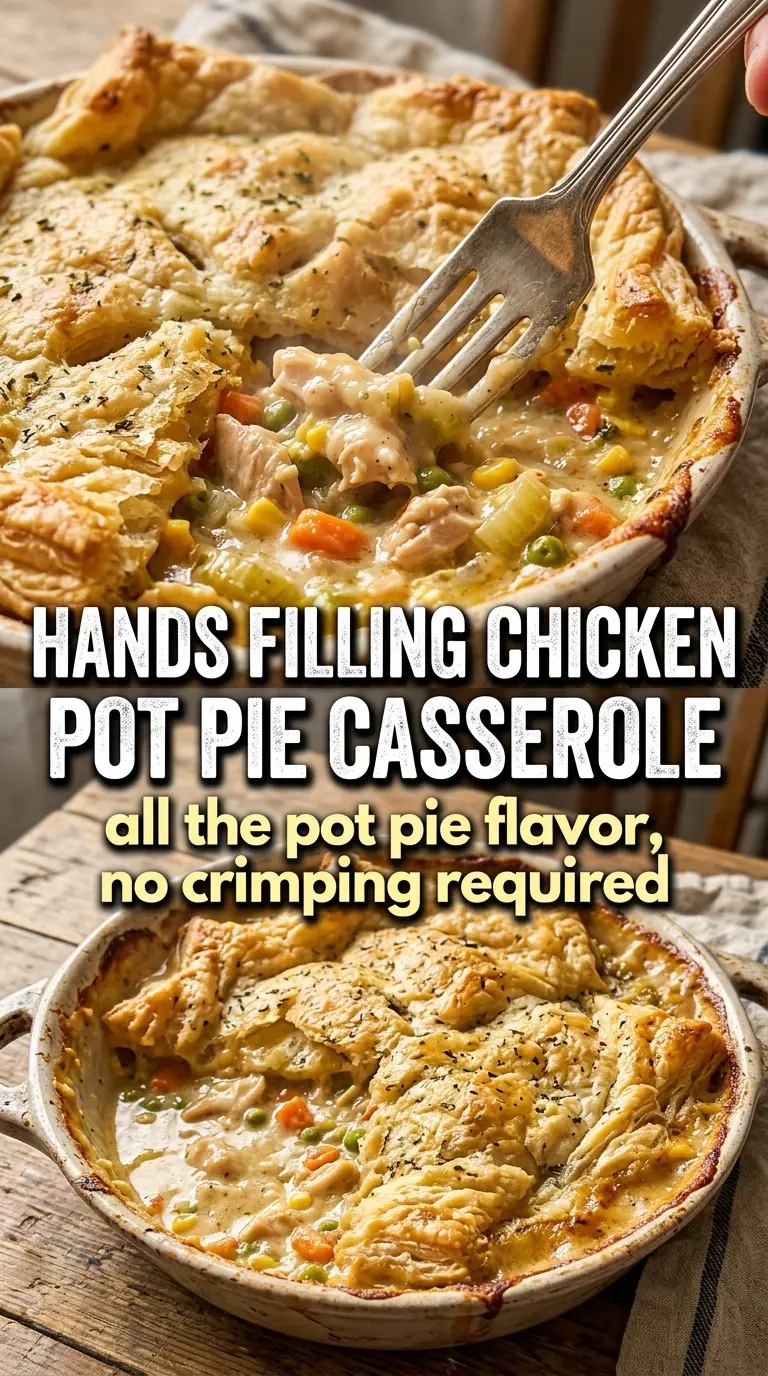
Golden biscuit topping, creamy chicken filling, and tender vegetables turn this chicken pot pie casserole into the kind of dinner that disappears fast and gets requested again before the dishes are even washed. It keeps everything people love about pot pie, but skips the fussy crust work and bakes up in one pan with a bubbling edge and a crisp, bronzed top.
The filling works because the vegetables are softened first, then coated in flour before the broth and cream go in. That gives you a sauce that thickens evenly instead of turning thin or grainy. The chicken gets folded in near the end so it stays juicy, and the biscuits or puff pastry finish the dish with a sturdy top that catches a little steam underneath without going soggy.
Below, I’ve included the small details that matter most: how thick the filling should look before it goes into the dish, what to do if you’re using puff pastry instead of biscuits, and the easiest ways to adapt this when you need to work with what’s already in the fridge.
The sauce thickened up beautifully and the biscuit topping stayed crisp on top while the filling stayed creamy underneath. I used leftover chicken and my husband went back for seconds before I even sat down.
Save this chicken pot pie casserole for the night you want creamy filling, golden biscuits, and one pan that feeds a crowd without extra fuss.
The sauce has to thicken before the topping goes on
The biggest mistake in a casserole like this is rushing the filling. If the broth and cream go into the dish while the sauce still looks loose, the biscuits or pastry trap that extra moisture and the whole thing turns soupy under the top. You want the sauce to coat the back of a spoon and hold a slow trail when you drag a spatula through it.
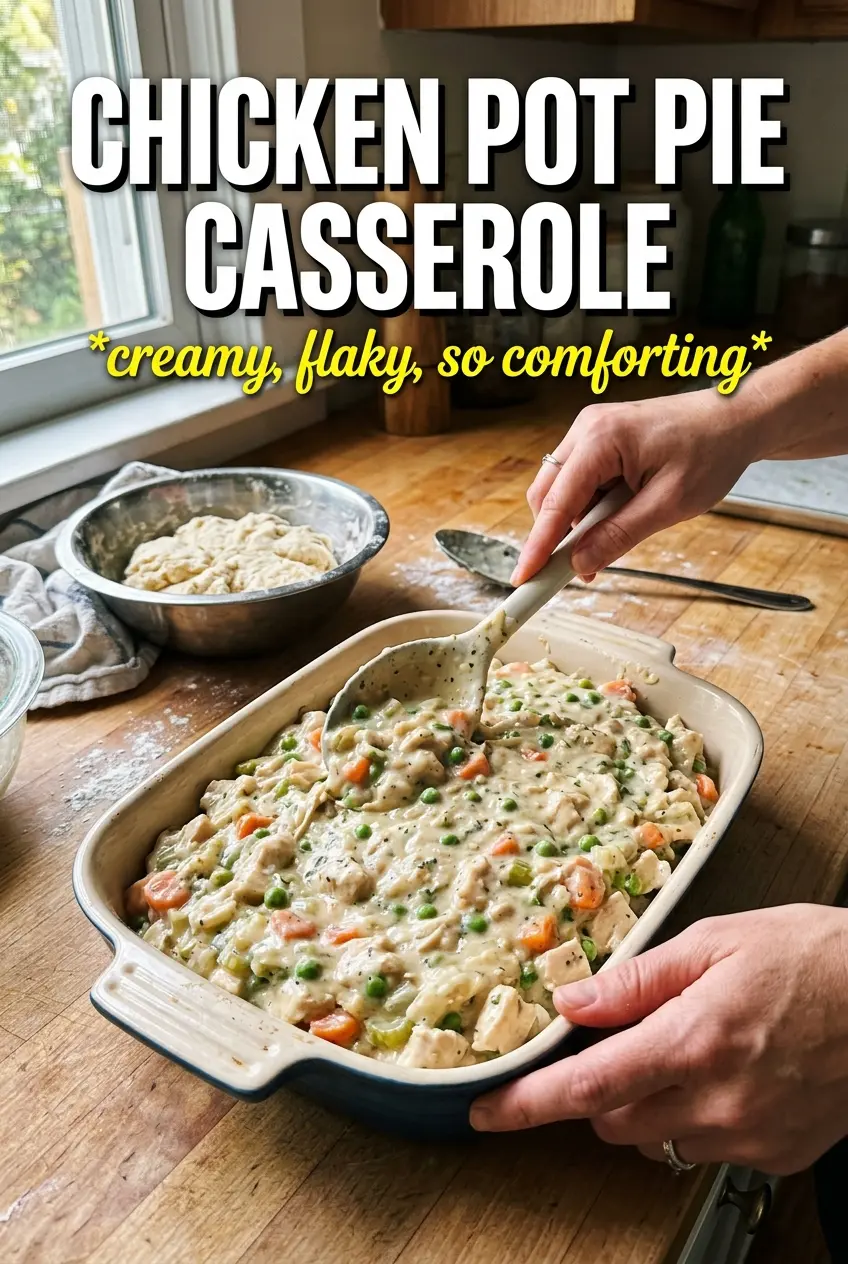
Cooking the flour for a full minute matters too. That takes the raw edge off and helps the sauce taste round instead of pasty. Once the chicken and vegetables are stirred in, the filling should look glossy and thick enough to mound slightly in the baking dish, not pool around the edges.
- Butter and flour — This is the base of the sauce, and it needs heat long enough to form a proper roux. Skip the flour or undercook it, and the filling will never set the way it should.
- Cooked chicken — Leftover roast chicken or rotisserie chicken works well here because it stays tender and absorbs the sauce. Freshly cooked chicken is fine too, but it needs to be fully cooked and shredded before it goes in.
- Frozen peas and corn — Frozen vegetables hold their shape better than canned ones and don’t water down the filling. No need to thaw them first.
- Heavy cream — This gives the sauce body and a rich finish that milk won’t fully match. Half-and-half works in a pinch, but the filling will be a little lighter and less plush.
What each ingredient is doing in the baking dish
- Carrots, celery, and onion — These build the classic pot pie base. Dice them small so they soften in the 5-minute sauté and don’t stay crunchy after baking.
- Fresh thyme — Thyme gives the filling that familiar pot-pie flavor without taking over. Dried thyme can replace it; use about half as much because dried herbs taste stronger.
- Garlic powder — It blends smoothly into the sauce and keeps the flavor savory without needing another pan step. Fresh garlic can work, but it should be cooked briefly with the vegetables so it doesn’t taste sharp.
- Biscuits or puff pastry — Biscuits give you a rustic, sturdy top with soft centers and crisp edges. Puff pastry bakes lighter and flakier, but it needs to stay cold before it hits the oven so it rises properly.
Building the filling so it stays creamy under the crust
Softening the vegetables first
Start with the onion, carrots, and celery in butter and give them the full five minutes over medium heat. You’re not looking for color here; you’re looking for softened edges and onions that turn translucent. If the vegetables stay raw at this stage, they’ll taste out of place in the finished casserole and the filling won’t have that slow-cooked comfort-food texture.
Turning the flour into a smooth base
Sprinkle in the flour and stir constantly for a minute so it disappears into the butter and vegetables. The mixture should look a little paste-like, not dry and dusty. When you add the broth, pour it in gradually while whisking so the sauce stays smooth. Dumping it all in at once is how lumps form.
Finishing the filling before it bakes
Let the broth and cream simmer until the sauce thickens before adding the chicken and vegetables back in. Once everything is combined, taste it while it’s hot and season with salt and pepper a little at a time. The filling should taste slightly over-seasoned on its own, because the biscuit or pastry top will soften that flavor once it bakes.
Getting the top deeply golden
Spoon the filling into a 9×13 dish and arrange the biscuits or pastry over the top with a little breathing room between pieces if you want more crisp edges. Bake until the top is deeply golden and the filling is bubbling up around the sides. If the top browns before the center bubbles, the casserole isn’t finished yet; bubbling is the sign that the filling underneath has fully heated and thickened.
How to adapt it when dinner needs to bend a little
Use puff pastry for a lighter, flakier top
Puff pastry gives this casserole a more elegant finish, but it needs to stay cold until the oven is ready. Lay it over the filling in one sheet, cut a few vents in the top, and bake until it’s puffed and deep golden. The result is flakier than biscuits, but less substantial for soaking up sauce.
Make it dairy-free without losing the creamy texture
Swap the butter for a good dairy-free butter and use full-fat unsweetened coconut cream or a plain unsweetened oat cooking cream in place of the heavy cream. The filling will still thicken, but it will taste a little less rich and more savory. Keep the seasoning bold so the sauce doesn’t taste flat.
Make it gluten-free with a flour swap
Use a 1:1 gluten-free flour blend in the roux and top the casserole with gluten-free biscuits if you can find them. Some blends thicken a little slower, so let the sauce simmer for an extra minute or two before you add the chicken. The texture stays close to the original as long as the sauce has time to finish thickening.
Stretch it for a bigger crowd
Add another cup of chicken and an extra handful of vegetables if you need to feed more people, but increase the sauce slightly too or the casserole will turn dry at the edges. A splash more broth and a little more cream keep the filling balanced. Bake in a second smaller dish instead of overfilling one pan.
Storage and Reheating
- Refrigerator: Store leftovers covered for up to 4 days. The biscuit topping softens a bit, but the filling stays creamy.
- Freezer: Freeze the baked filling without the biscuit topping for best texture, or freeze individual portions tightly wrapped for up to 2 months. Biscuits and puff pastry get less crisp after freezing.
- Reheating: Reheat covered in a 350F oven until hot in the center, then uncover for a few minutes to re-crisp the top. The common mistake is blasting it in the microwave from the start, which makes the topping chewy and can leave the center cold.
Questions I Get Asked About This Recipe
Chicken Pot Pie Casserole
Ingredients
Equipment
Method
- Preheat the oven to 400F. (Visual cue: the oven should be hot before baking.)
- In a Dutch oven, sauté the onion, carrots, and celery in the butter for 5 minutes. (Visual cue: the vegetables soften and turn glossy.)
- Whisk in the flour and cook for 1 minute. (Visual cue: the mixture looks slightly thicker and smells toasted.)
- Gradually add the broth and heavy cream, then simmer until thick. (Visual cue: the sauce coats the back of a spoon.)
- Stir in the chicken, peas, corn, thyme, and garlic powder, then season with salt and pepper to taste. (Visual cue: the filling looks evenly combined and saucy.)
- Pour the filling into a 9x13 dish. (Visual cue: the surface is level.)
- Top with refrigerated biscuits or puff pastry. (Visual cue: topping covers the filling with minimal gaps.)
- Bake for 25-30 minutes at 400F until golden and the filling is bubbling. (Visual cue: steam rises and the center bubbles through the crust.)