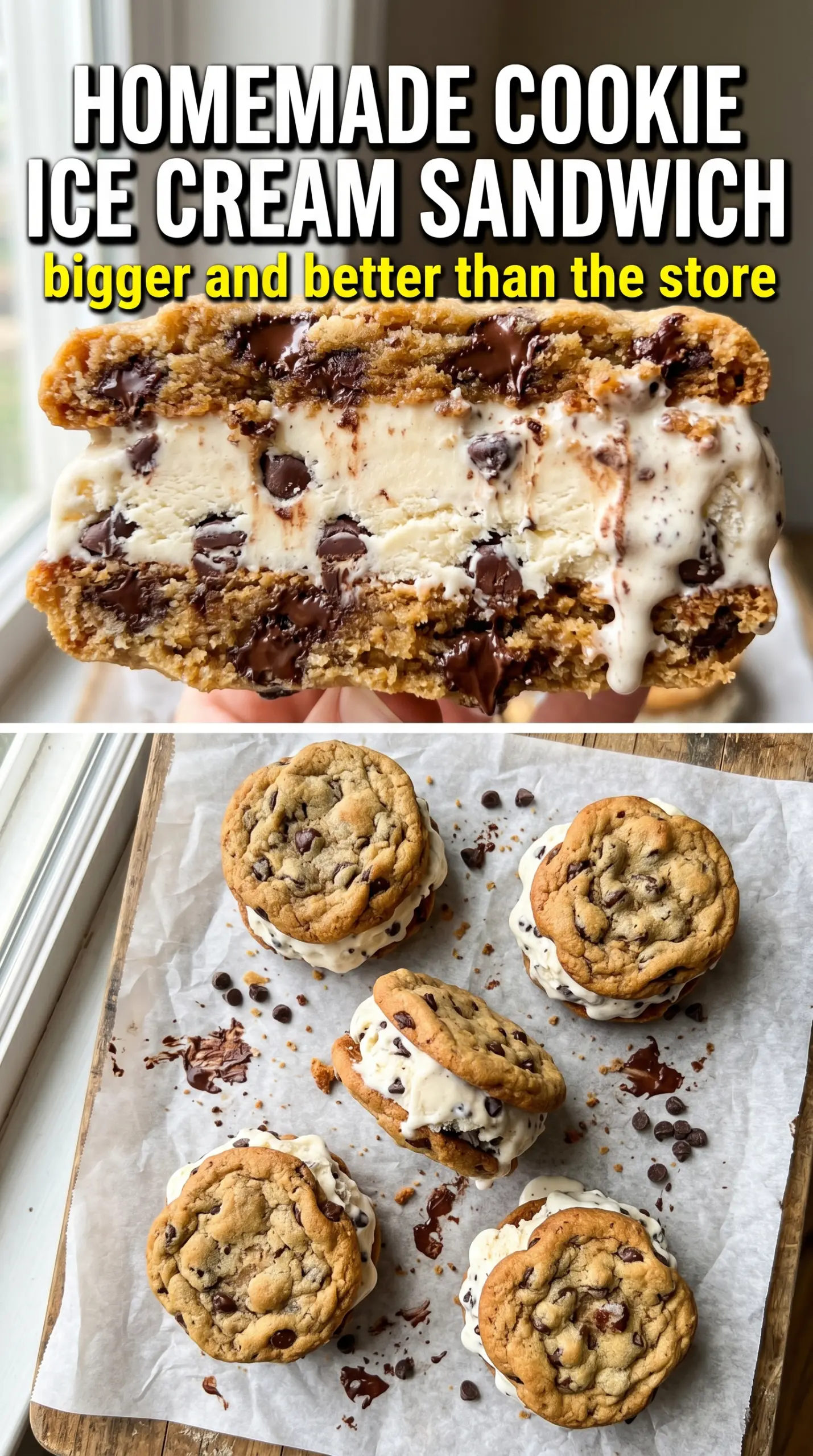
Chocolate chip cookie ice cream sandwiches hit the mark because they give you everything a store-bought version usually misses: crisp edges, a chewy middle, and enough structure to hold a thick layer of ice cream without turning soggy on the first bite. The cookies bake up with those bakery-style ripples and just enough softness in the center to stay pleasant straight from the freezer.
The trick is baking the cookies a touch underdone and letting them cool all the way before adding the ice cream. That keeps the texture balanced after freezing. A full-bodied vanilla ice cream works best here because it slices cleanly and gives you that classic contrast against the warm, buttery cookie dough flavor. If you’ve ever had homemade ice cream sandwiches fall apart the second you bite into them, the method below solves that.
You’ll also find a few practical notes on sizing the cookies, cutting the ice cream cleanly, and keeping the sandwiches neat while they freeze. Those little details matter more than they sound.
The cookies stayed soft after freezing, and the ice cream sliced neatly into discs instead of melting everywhere. My kids ate two each before I could even wrap the rest.
Save these chocolate chip cookie ice cream sandwiches for the day you want thick cookies, cold vanilla ice cream, and clean layers that freeze up beautifully.
The Part That Keeps These from Turning Into a Mess
The biggest mistake with ice cream sandwiches is using cookies that are either too thin or baked too hard. Thin cookies snap when frozen, and hard cookies go brittle instead of giving you that soft bite that makes the whole dessert work. These need to be baked until the edges are set and the centers still look a little underdone; they finish as they cool and stay flexible enough to eat cleanly after freezing.
Size matters here, too. If the cookies are much larger than the ice cream discs, the filling squeezes out the sides. If they’re too small, the ice cream bulges past the edge and melts unevenly in your hand. Matching the scoop size to the cookie size is what gives you those neat, bakery-style sandwiches that hold together from the first bite to the last.
What Each Ingredient Is Doing in the Cookie Base
- Butter — Softened butter gives these cookies their rich flavor and tender texture. Cold butter won’t cream properly, and melted butter makes the dough spread too much in the oven.
- Brown sugar — This is what gives the cookies that chewy center and deeper caramel note. Packed brown sugar matters here; loose measuring throws off the texture.
- Granulated sugar — It helps the edges bake crisp and gives the cookies enough structure to hold the ice cream. Using all brown sugar would make them softer, but not as sturdy.
- Eggs — They bind the dough and keep the cookies from crumbling after freezing. Room-temperature eggs blend more smoothly into the butter mixture, which helps the dough stay even.
- Vanilla extract — Since the filling is simple vanilla ice cream, the cookie base needs enough vanilla to carry its own flavor. Use the real stuff here; imitation vanilla tastes flat in a dessert this simple.
- Semi-sweet chocolate chips — These give you the classic cookie flavor without making the dough overly sweet. Mini chips can work for rolling the edges, but the larger chips inside the dough give better texture.
- Vanilla ice cream — A firmer, full-fat ice cream slices cleanly and stays thick between the cookies. Soft-serve style ice cream gets messy fast and won’t freeze into a neat disc.
How to Build the Sandwiches So They Freeze Cleanly
Mixing the Dough Until It’s Fluffy, Not Greasy
Start by beating the butter with both sugars until the mixture looks lighter in color and a little fluffy around the edges of the bowl. That step traps air and gives the cookies a better chew. Add the eggs and vanilla only after the butter-sugar mixture loosens up; if you add them too soon, the dough can look curdled and won’t bake as evenly. Once the dry ingredients go in, stop mixing as soon as you don’t see dry flour streaks.
Baking for Soft Centers and Strong Edges
Scoop the dough into large mounds, then flatten them before baking so they spread in a controlled way instead of doming up like little hockey pucks. Pull them from the oven when the edges are set and the centers still look a touch soft. That slightly underbaked middle is what keeps them pleasant after freezing. Let them cool completely on the pan or a rack before you even think about adding the ice cream, because any leftover warmth will melt the filling and make the sandwiches slide apart.
Cutting and Assembling Without the Ice Cream Smearing
Use a round cutter or glass that matches the cookie size to cut thick discs from the ice cream. If the ice cream is too hard, let it sit for a few minutes until it slices cleanly; if it’s too soft, it’ll smear and lose shape. Work quickly once you start assembling. Press the second cookie on gently, just until the ice cream meets the edges, then roll the sides in mini chips if you want that classic finished look.
Freezing Until the Centers Set
Wrap each sandwich individually and freeze them for at least an hour before serving. That short freeze locks the layers together and gives the ice cream enough structure to bite cleanly. If you skip this rest, the sandwiches can squish when you pick them up. For the best texture, let them sit at room temperature for a minute or two before eating so the cookies soften just enough.
How to Adapt These Without Losing the Texture
Gluten-Free Cookie Sandwiches
Swap in a 1:1 gluten-free baking flour that includes xanthan gum. The cookies will still hold together, though they may bake a little more tender and need a careful eye near the end so they don’t dry out. Let them cool fully before filling, because gluten-free cookies can feel fragile while warm.
Dairy-Free Version
Use a plant-based butter with a high fat content and a dairy-free vanilla ice cream that freezes firm. The cookies will still bake up with good spread and chew, but the flavor will be a little less rich, so the vanilla matters more. Choose a dairy-free ice cream that slices cleanly instead of one that stays soft in the freezer.
Smaller, Party-Ready Sandwiches
Scoop the dough smaller and reduce the bake time by a minute or two so the cookies stay soft enough to bite cleanly. Mini sandwiches are easier to serve at a party and freeze faster, but they need more careful matching between cookie size and ice cream thickness. If the cookies are much smaller than the filling, the ice cream will spill out as soon as you press them together.
Chocolate Chip Swaps
Use chopped dark chocolate, milk chocolate chips, or a mix if you want a different sweetness level. Dark chocolate gives a more grown-up bite, while milk chocolate makes the sandwiches sweeter and softer-tasting. Keep the total amount about the same so the dough still holds together.
Storage and Reheating
- Refrigerator: Not recommended. The ice cream softens too fast and the cookies lose their best texture.
- Freezer: Wrap individually and freeze up to 2 weeks for best texture. After that, the cookies can start to pick up freezer flavor.
- Reheating: No reheating needed. For the best bite, let a sandwich sit at room temperature for 2 to 3 minutes before serving so the cookies soften slightly without the ice cream melting.
Answers to the Questions Worth Asking
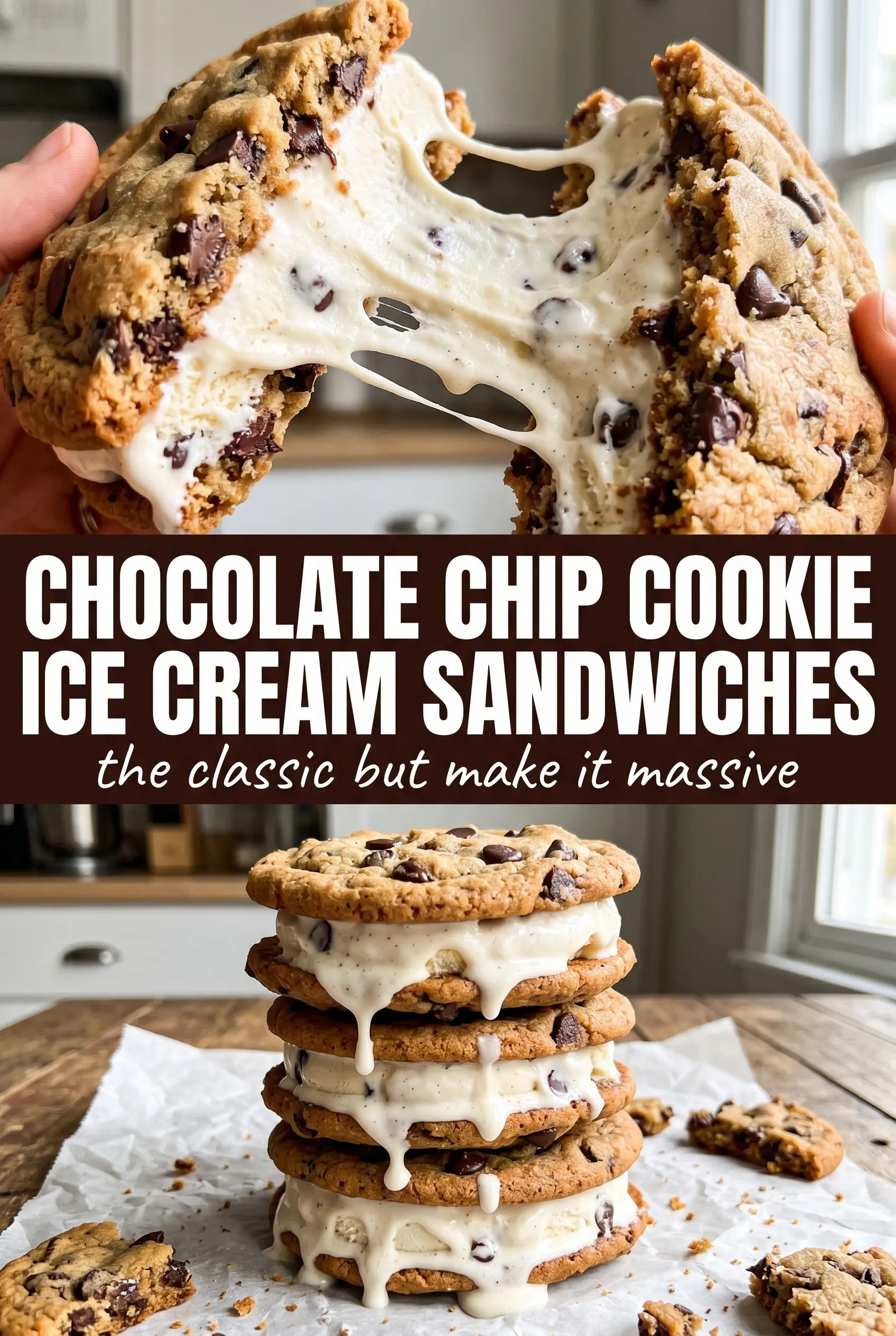
Chocolate Chip Cookie Ice Cream Sandwiches
Ingredients
Equipment
Method
- Preheat the oven to 375F. Beat the softened unsalted butter, granulated sugar, and brown sugar until fluffy, then beat in the eggs and vanilla extract until smooth.
- Whisk the all-purpose flour, baking soda, and salt in a bowl, then stir into the butter mixture until a thick dough forms.
- Fold in the semi-sweet chocolate chips until evenly distributed with no dry flour streaks.
- Scoop dough into large rounds (3 tablespoons each) and press flat to about 3.5 inches wide on lined baking sheets.
- Bake for 10–12 minutes until the edges are set but the centers are still slightly soft. Cool completely before assembling.
- Slice the vanilla ice cream into 1-inch thick discs using a round cookie cutter matching the cookie size.
- Sandwich an ice cream disc between two cookies and press gently. Roll the edges in mini chips for a clean, chocolatey border.
- Wrap each cookie ice cream sandwich individually in plastic wrap and freeze at least 1 hour before serving.