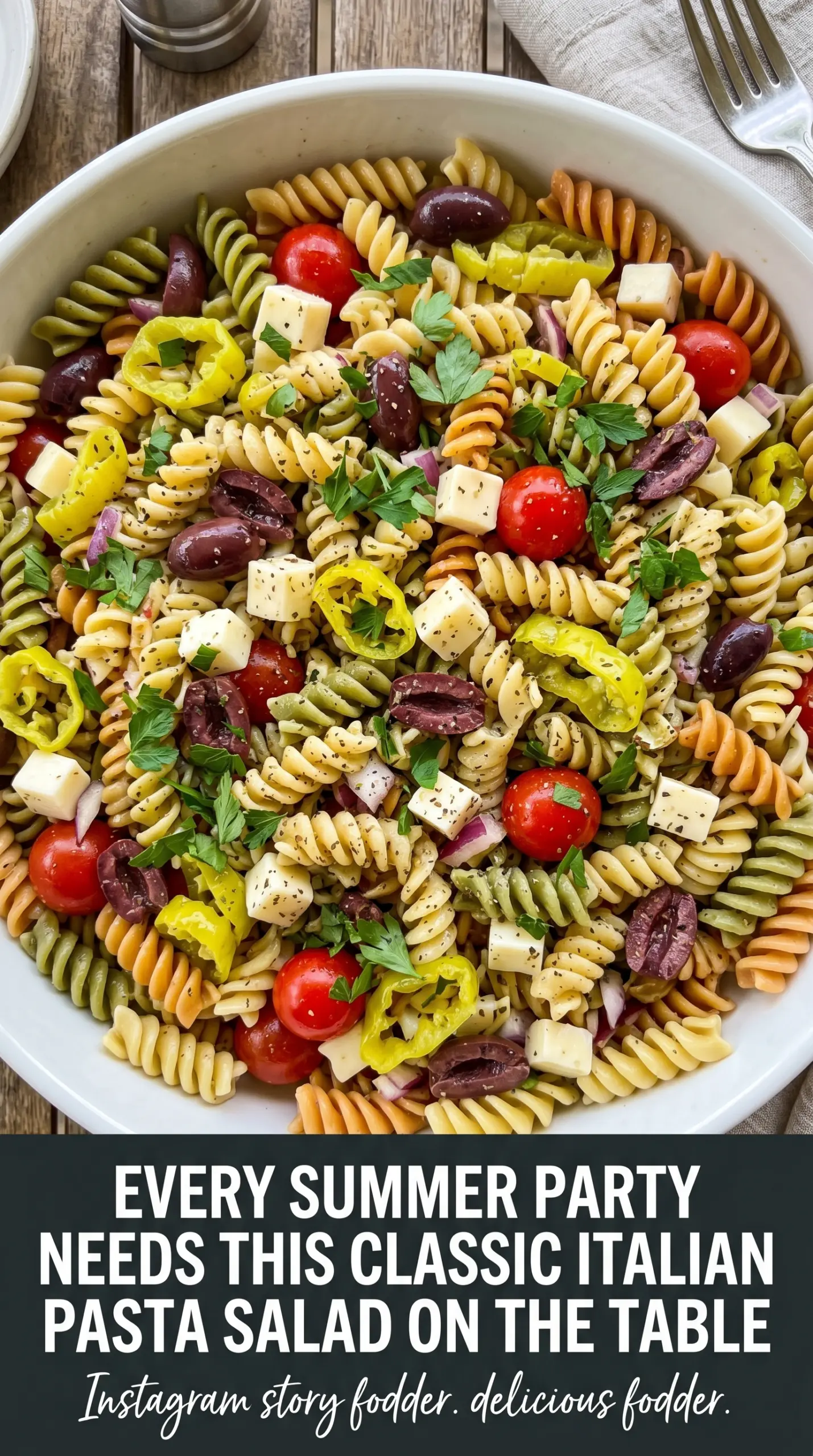
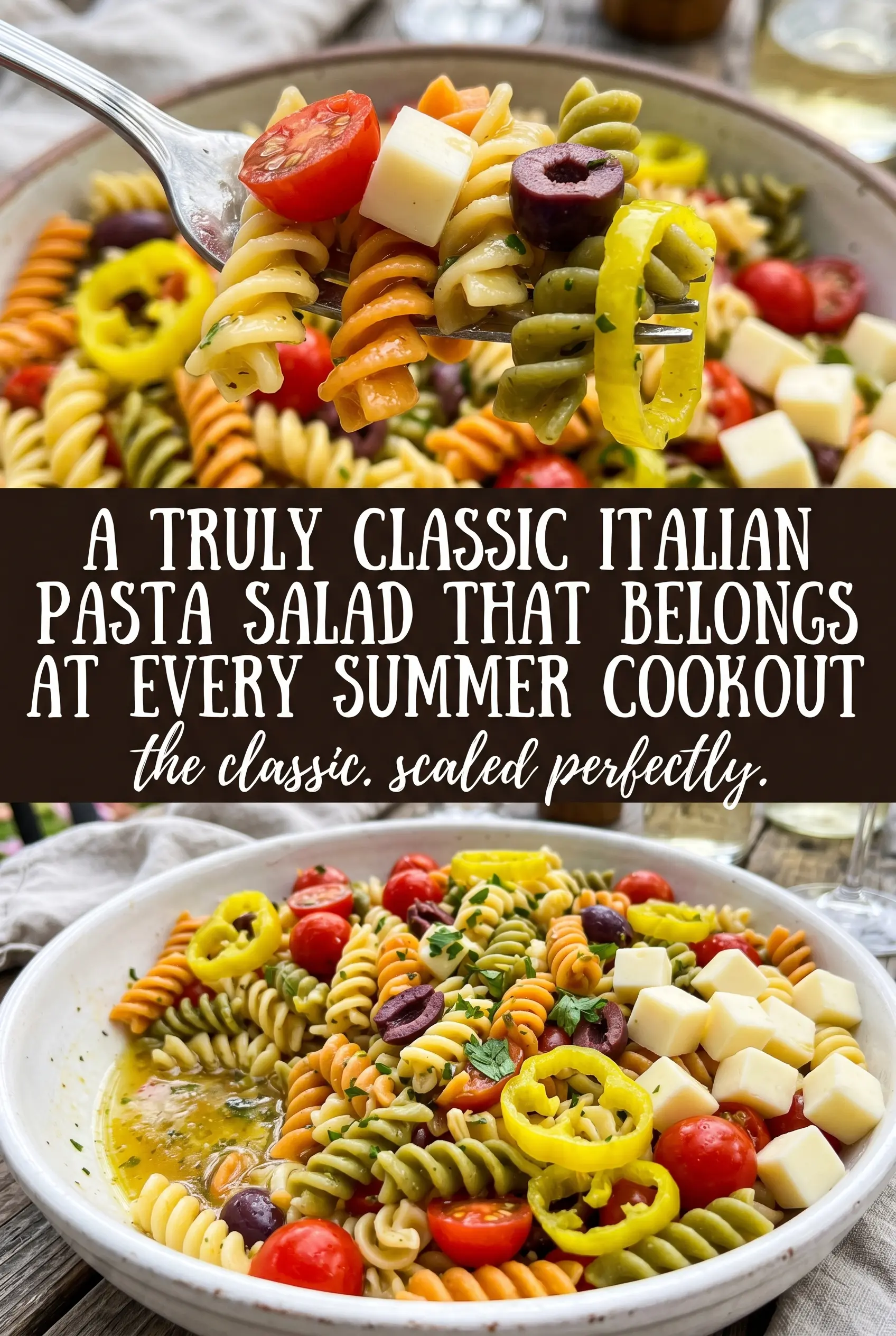
Classic Italian pasta salad earns its place because the best bites are cold, tangy, and packed with enough texture to keep every forkful interesting. The rotini grabs onto the dressing, the pepperoni brings a salty edge, and the mozzarella softens everything with little creamy pockets that settle in after the chill time. It tastes like the version people remember from potlucks, only fresher and better balanced.
The trick is treating the dressing like part of the recipe, not just a pour-over at the end. A good Italian dressing needs time to soak into the pasta and vegetables, which is why this salad gets better after a few hours in the fridge. Rinsing the pasta cold stops the cooking fast and keeps the noodles from turning sticky, while the Parmesan and seasoning add a little extra backbone so the whole bowl doesn’t taste flat.
Below, I’ve included the small details that make this salad hold up: how to keep the pasta from going mushy, what to do if it drinks up too much dressing, and the variations I use when I want to stretch it for a crowd or lighten it up a bit.
I let it chill overnight and the dressing soaked into the rotini without making it soggy. The pepperoni stayed chewy, and the mozzarella held its shape even after tossing it again before serving.
Save this classic Italian pasta salad for the next potluck — the pepperoni, mozzarella, and chilled Italian dressing make it a dependable make-ahead side.
The Part Most Pasta Salads Get Wrong: Dressing the Pasta While It’s Still Warm
The biggest mistake with pasta salad is letting the noodles sit around and cool completely before they meet the dressing. Warm pasta absorbs flavor better, and that first toss helps the rotini catch the Italian dressing instead of letting it slide off the surface. If you rinse the pasta cold, drain it well, and dress it while it’s still a little warm, the salad tastes seasoned all the way through instead of only on the outside.
That said, don’t use hot pasta straight from the pot. Hot pasta melts the mozzarella edges too fast and can make the dressing taste oily instead of bright. You want the noodles cool enough that the cheese stays intact, but warm enough that the dressing starts working into the creases of the rotini.
- Tri-color rotini — The spirals catch dressing in every curve. Any short pasta with ridges can work, but rotini gives you the best texture for a cold dressed salad.
- Italian dressing — This is doing the heavy lifting for flavor and moisture. Bottled dressing is fine here, but use one you actually like because it becomes the backbone of the whole dish.
- Pepperoni — It adds salt, spice, and a little chew that keeps the salad from leaning too soft. Halving the slices helps every bite pick up a little of it instead of getting whole rounds all at once.
- Mozzarella — Cubed mozzarella gives you those mellow, creamy bites that balance the sharper dressing. Fresh mozzarella gets too delicate for long chilling, so low-moisture mozzarella is the smarter choice.
What Each Ingredient Is Actually Doing When Pasta and Dressing Meet
- Cooled pasta (never warm) — Warm pasta absorbs liquid too fast and can become mushy. Cooling the pasta first lets the dressing coat it gently and evenly.
- Oil-based dressing component — Oil coats the pasta and prevents clumping. It also slows how fast the pasta absorbs liquid, protecting the texture as the salad sits.
- Vinegar or acid — The acid brings brightness and balance. Added to cooled pasta, it penetrates evenly instead of creating hot spots or concentration.
- Fresh vegetables with texture — These should be cut into similar-sized pieces so they cook in the dressing at the same rate. They release subtle flavors as they sit.
- Herbs and aromatics — Fresh herbs distribute through the salad more evenly when added to cooled pasta. They stay fresher longer and flavor each bite consistently.
- Cheese (hard varieties like Parmesan work best) — Hard cheese won’t melt or disappear into the dressing. It stays distinct and adds saltiness and umami to every component.
- Salt and pepper — These season the dressing so the pasta absorbs balanced flavor as it sits. Taste after the salad has chilled because cold food needs more seasoning.
- Optional: a small amount of stock or water — This helps distribute the dressing more evenly without making the salad heavy, letting flavors travel through every pasta piece.
How to Build the Bowl So It Tastes Better After Chilling
Cook the pasta just past al dente
Boil the rotini until it still has a little bite, then drain it right away and rinse under cold water until the steam is gone. Pasta salad needs noodles that can handle chilling without turning soft and pasty, and slightly firmer pasta holds up best once the dressing sits on it for hours. Shake off as much water as you can; extra water is what dilutes the dressing and leaves the salad bland.
Layer in the vegetables and cheese
Add the pepperoni, mozzarella, tomatoes, bell pepper, olives, and red onion to a large bowl before the dressing goes in. The vegetables and cheese need space so they don’t get crushed while you toss everything together. If your onion is sharp, soak it in cold water for 10 minutes first, then drain well; it keeps the bite but takes the harsh edge off.
Dress, chill, and finish with a second toss
Pour in the Italian dressing, Parmesan, and seasoning, then toss until every piece is coated. Chill the salad for at least 3 hours so the pasta can drink in the flavor, and stir it once or twice during that time if you remember. Right before serving, toss again and add a splash more dressing if the noodles have absorbed most of it; that last refresh is what makes cold pasta salad taste lively instead of dry.
How to Adapt This for Different Tables
Dairy-free version
Leave out the mozzarella and Parmesan, then add extra olives or a handful of chopped roasted red peppers for more body. The salad still tastes complete because the dressing and pepperoni carry most of the flavor, but the texture will be a little leaner and less creamy.
Vegetarian version
Skip the pepperoni and add chopped salami-style vegetarian slices or marinated artichoke hearts if you want more savory weight. Without the pepperoni, the salad gets milder, so taste it after chilling and add a little extra Parmesan, salt, or dressing to keep it from feeling flat.
Gluten-free version
Use a sturdy gluten-free rotini and stop cooking it the moment it loses the raw center. Gluten-free pasta can go soft faster than wheat pasta, so chill it promptly and toss gently when you dress it to keep the noodles intact.
Make it heartier for a crowd
Add diced salami, more mozzarella, or a can of drained chickpeas if you want the bowl to stretch farther. The salad turns into more of a meal-side hybrid, and you may need an extra splash of dressing after chilling because the added ingredients soak up some of the seasoning.
Storage and Reheating
- Refrigerator: Keep covered for up to 4 days. The pasta softens a little as it sits, and the dressing will settle at the bottom, so give it a toss before serving.
- Freezer: Don’t freeze it. The tomatoes, mozzarella, and pasta all change texture in a bad way once thawed.
- Reheating: This salad is meant to be served cold, not warmed up. If it’s dry after refrigeration, stir in a small splash of Italian dressing instead of trying to bring it to room temperature for too long.
Answers to the Questions Worth Asking
Classic Italian Pasta Salad
Ingredients
Equipment
Method
- Cook tri-color rotini pasta according to package directions, then drain.
- Rinse the pasta with cold water until cool, and spread it out on a sheet pan to help it cool quickly.
- Add the cooked pasta to a large bowl.
- Add halved pepperoni slices, cubed mozzarella cheese, halved cherry tomatoes, diced green bell pepper, sliced black olives, and diced red onion to the bowl.
- Pour in Italian dressing, then add grated Parmesan cheese and Italian seasoning.
- Toss until everything is evenly coated.
- Season with salt and pepper, then toss once more to distribute the seasoning.
- Refrigerate the pasta salad for at least 3 hours or overnight, tossing occasionally during chilling.
- Right before serving, toss again and add more Italian dressing if needed for the right consistency.