Snow-white vanilla custard loaded with big chocolate cookie pieces is one of those desserts that disappears faster than anything else in the freezer. The base stays smooth and rich, while the cookies soften just enough to give you little pockets of crunch and cocoa in every scoop. It tastes like the store-bought classic, but the homemade version has a cleaner vanilla note and a creamier melt.
The trick here is treating the base like real custard, not just sweetened milk. Egg yolks give the ice cream body and that dense, scoopable texture people expect from a good carton, and cooking it gently to 175°F keeps the eggs from scrambling. I also like to strain the custard after cooking, because even careful stirring can leave tiny bits behind, and those bits show up once the ice cream is frozen.
Below, I’ll walk through the point where the custard can go grainy, why the cookies go in near the end, and what to do if you want a softer scoop or a darker cookie-heavy version.
The custard turned out ultra-smooth and the cookie pieces stayed chunky instead of getting soggy. I churned it just like the timing said and it froze into the perfect scoopable texture.
Save this cookies and cream ice cream for when you want a custard-style base with big Oreo chunks and a clean vanilla finish.
The Custard Point That Keeps This Ice Cream Smooth
Most homemade ice creams get trouble when the base is rushed. If the custard is heated too hard, the yolks turn grainy before you notice, and that texture stays with you after freezing. The target here is 175°F, which is hot enough to thicken the base but gentle enough to keep it silky.
The other mistake is skipping the chill. A warm base churns poorly, picks up too much air in the wrong way, and freezes with an icy edge instead of a dense scoop. Once the custard is cold, the machine can do its job and the texture stays tight and creamy.
- Egg yolks — These are what turn the base into custard. Whole eggs won’t give the same richness or that smooth, scoopable body.
- Heavy cream — This carries the richness and keeps the ice cream soft enough to scoop straight from the freezer. Lower-fat cream doesn’t freeze with the same plush texture.
- Whole milk — This balances the richness so the ice cream doesn’t taste heavy. You can swap in 2% in a pinch, but the finished texture will be a little less creamy.
- Chocolate sandwich cookies — Roughly crushed cookies give the best mix of chunks and fine pieces. If you crush them too finely, they mostly disappear into the base instead of giving you those cookie bites.
What the Custard Needs Before It Ever Hits the Ice Cream Maker

Heavy cream and whole milk build the base, and the ratio matters. Too much milk and the ice cream starts to taste thin; too much cream and it can freeze into something overly rich and a little greasy. This balance gives you a scoop that feels full without coating your mouth.
The sugar does more than sweeten. It lowers the freezing point, which keeps the finished ice cream from turning into a brick. If you cut it too much, the custard tastes flatter and freezes harder than you want.
- Vanilla extract — This should taste like vanilla, not just sweetness. Use the good stuff if you have it, because the base is simple and the vanilla shows.
- Salt — The small amount here sharpens the cream and keeps the cookies from tasting one-note. Leave it out and the ice cream tastes flatter, even if it’s still sweet.
- Chocolate sandwich cookies — Add them at the end of churning so some stay intact. If you stir them in too early, they soak up the custard and lose the contrast that makes this dessert work.
Churning, Folding, and Freezing Without Losing the Cookies
Heating the Dairy and Tempering the Yolks
Warm the cream and milk until you see steam and tiny bubbles around the edge, not a rolling boil. Whisk the hot dairy into the yolks and sugar slowly so the eggs warm up gradually. If you dump it all in at once, you get sweet scrambled eggs instead of custard.
Cooking to the Right Thickness
Return the mixture to the pan and stir constantly over medium-low heat. It should thicken enough to coat the back of a spoon, and a thermometer should read 175°F. Pull it off the heat as soon as it gets there; the carryover heat in the pan can push it too far if you keep going.
Straining and Chilling the Base
Pour the custard through a fine mesh sieve into a clean bowl, then stir in the vanilla and salt. That quick strain catches any cooked egg bits and gives you a smoother freeze later. Chill it completely in the fridge for at least 4 hours, because churned warm custard never sets up with the same fine texture.
Adding the Cookies at the End
Churn the cold custard according to your machine’s instructions, then add the crushed cookies during the last 2 minutes. That timing keeps them from dissolving into gray streaks before the ice cream has thickened. Transfer the churned ice cream to a container and freeze until firm, then let it sit out for a few minutes before scooping if it feels too hard.
How to Tweak Cookies and Cream Ice Cream Without Losing the Texture
Dairy-Free Version
Use full-fat canned coconut milk in place of the cream and milk, but expect a faint coconut note in the finished ice cream. The base will still churn well, though it won’t taste quite as neutral as the dairy version. Use the same cookie amount, and check the cookies for dairy ingredients if that matters for your kitchen.
Extra Cookie-Heavy Batch
Go up to 24 cookies if you want more crunch in every bite. Crush them roughly, not into crumbs, or the base gets muddy and you lose the contrast between cream and cookie. The ice cream will freeze a little firmer with the extra mix-in, so give it a few minutes on the counter before scooping.
No Ice Cream Maker
Freeze the chilled custard in a shallow container and stir it every 30 to 45 minutes until it starts to thicken, then fold in the cookies near the end. The texture won’t be as airy as churned ice cream, but it will still be smooth if you keep the stirring consistent. The key is breaking up ice crystals early before they get large.
Storage and Reheating
- Refrigerator: Not applicable once churned; keep the custard base chilled up to 24 hours before freezing if needed.
- Freezer: Freeze in a covered container for up to 2 weeks for the best texture. After that, the cookies soften more and the ice cream can start to pick up freezer flavor.
- Reheating: Not needed. For scooping, let the container sit at room temperature for 5 to 10 minutes so the edges soften first instead of chipping off in hard shards.
Answers to the Questions Worth Asking
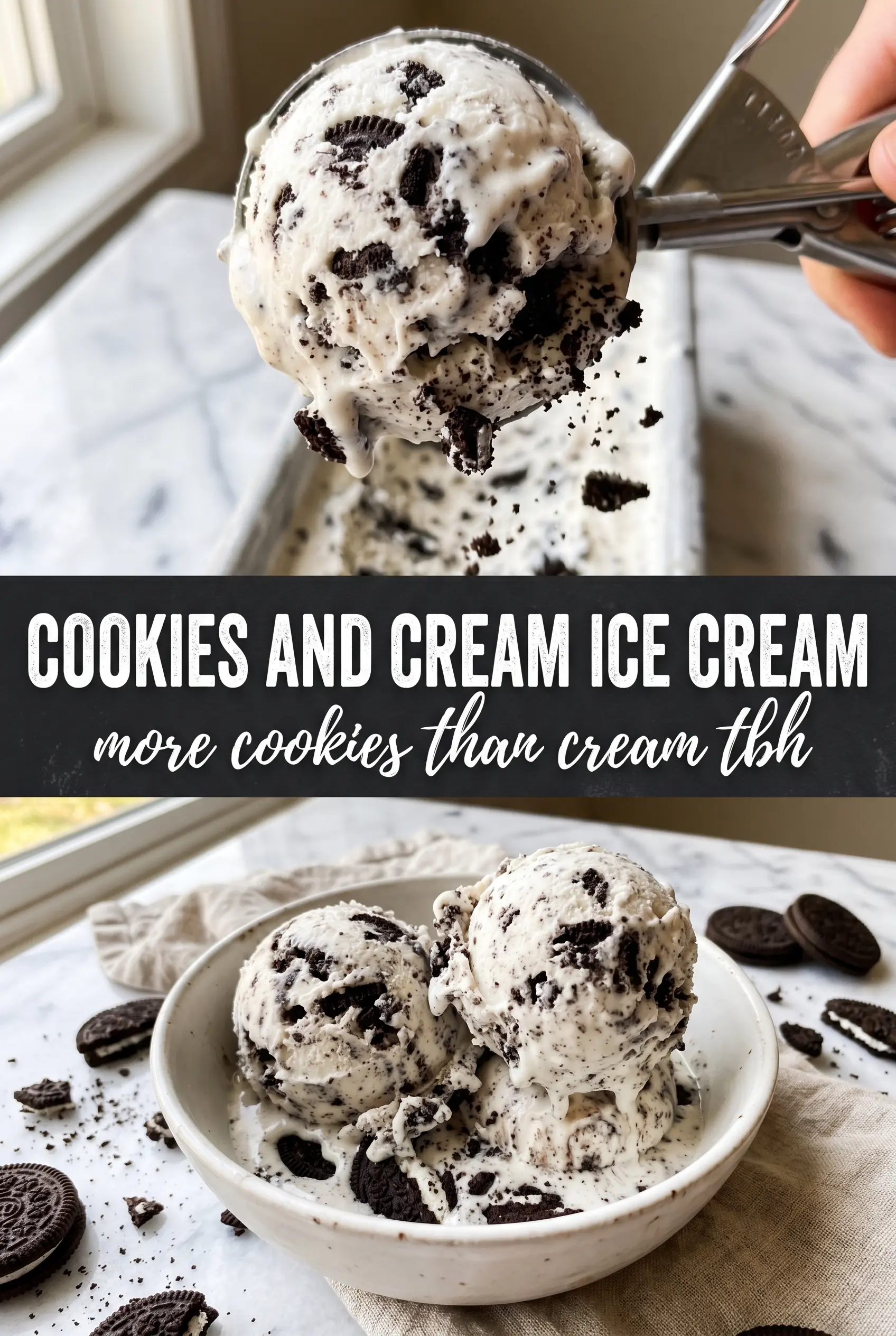
Cookies and Cream Ice Cream
Ingredients
Equipment
Method
- In a saucepan, heat the heavy cream and whole milk until steaming, not boiling. Visual cue: small bubbles form around the edges and the surface looks steamy.
- Whisk the steaming cream mixture slowly into the egg yolks beaten with granulated sugar. Visual cue: the mixture turns smooth and slightly lighter as you add it in a steady stream.
- Return everything to the saucepan and cook over medium-low heat, stirring constantly, until the custard reaches 175F. Time: about 10 minutes; visual cue: it thickens and coats the back of a spoon.
- Strain the custard through a fine mesh sieve into a clean container. Visual cue: you remove any bits of cooked egg for a smooth, snow-white base.
- Stir in the vanilla extract and salt, then cool completely to room temperature. Visual cue: the custard looks glossy and uniform.
- Refrigerate the custard at least 4 hours until thoroughly chilled. Visual cue: it is cold throughout and holds its shape when stirred.
- Churn the chilled custard in an ice cream maker according to the manufacturer’s instructions until it reaches a thick, soft-serve consistency. Visual cue: it looks creamy and light while still holding ridges.
- During the last 2 minutes of churning, add the crushed chocolate sandwich cookies. Visual cue: some cookie pieces stay chunky while others dissolve slightly to create a cookies-and-cream swirl effect.
- Transfer the churned ice cream to a container with a lid and freeze until firm. Time: until scoopable and set, about 4 hours; visual cue: it becomes dense with minimal movement when the container is shaken.