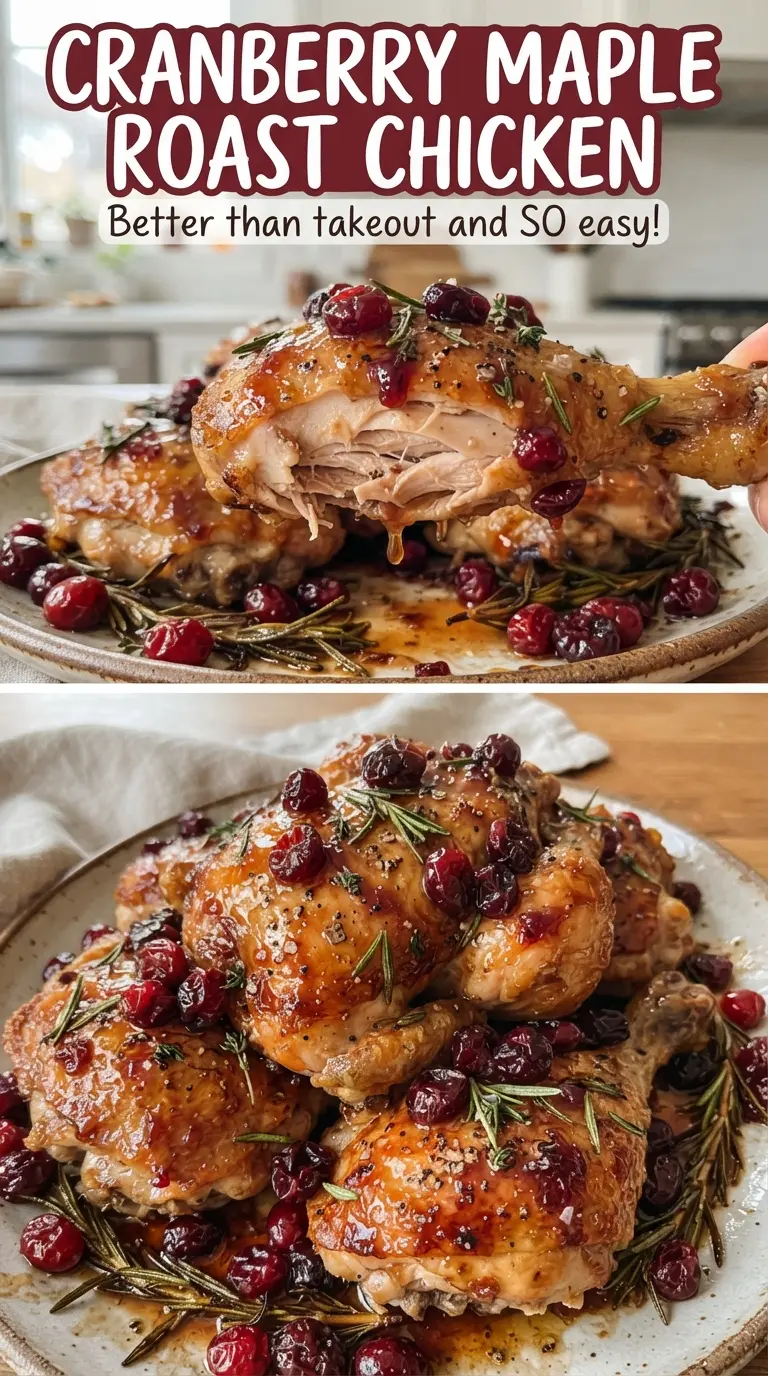
Golden roast chicken with cranberry maple glaze earns its place on the table because the skin turns lacquered and crisp while the pan juices cook down into a tart-sweet sauce that tastes like you worked much harder than you did. The cranberries burst late in the roast, the maple syrup browns instead of burning, and the whole bird comes out with the kind of glossy finish that makes carving feel a little ceremonial.
The trick is building layers of flavor right from the start. Butter goes under and over the skin so the breast stays moist and the skin browns evenly, while rosemary, orange, and garlic perfume the chicken from the inside out. The maple and Dijon glaze gets added partway through roasting, which keeps the sugars from scorching and gives the cranberries time to soften into the pan sauce instead of turning jammy too soon.
Below, I’ve included the timing cue that matters most, the easiest way to keep the glaze from burning, and a few swaps if you need to adjust for what’s in your kitchen.
The glaze went on halfway through and the skin stayed crisp instead of getting sticky, and the cranberries burst into the best pan sauce I’ve made with a roast chicken.
Cranberry Maple Roast Chicken is the kind of dinner that gives you crisp skin, a glossy pan sauce, and barely any cleanup.
The Reason the Glaze Goes On Halfway Through
Maple syrup is the ingredient that can help this chicken shine or ruin the skin if it goes on too early. Sugars brown fast at high heat, and a whole chicken needs long enough in the oven to cook through before the glaze has a chance to turn bitter. That’s why the first roast is all about rendering the skin and getting the bird mostly cooked before the sweet glaze enters the picture.
The other thing that matters here is airflow around the chicken. A roasting pan with space for the onion wedges and cranberries gives the chicken enough room to brown instead of steam in its own juices. If the bird sits crowded in a shallow dish, the skin softens and the glaze slides off instead of forming that sticky, amber finish.
- Butter under and over the skin — This keeps the breast meat from drying out and helps the skin brown evenly. Softened butter mixes cleanly with rosemary and spreads without tearing the skin.
- Fresh cranberries — They hold their shape until the last stretch of roasting, then burst into a tart sauce. Frozen cranberries work in a pinch, but don’t thaw them first or they’ll go mushy before the glaze is ready.
- Dijon mustard — It cuts the sweetness and helps the glaze cling. Plain mustard works, but Dijon gives a sharper, cleaner edge that stands up to the maple.
- Chicken broth — This loosens the pan juices just enough to keep them spoonable. If you skip it, the cranberries can reduce into something too thick and sticky before the chicken is done.
What Each Ingredient Is Actually Doing in This Recipe
- Primary ingredient (the star) — Quality matters most. Choose the best you can find.
- Cooking medium (oil, butter, or broth) — This carries flavors and prevents dryness.
- Seasonings (salt, pepper, spices, herbs) — Layer flavors so nothing overpowers. Build depth gradually.
- Aromatics (garlic, onion, herbs) — Cook with fat to bloom flavors. Become the foundation.
- Supporting ingredients — Complement the main ingredient without overpowering it.
- Sauce or liquid (if applicable) — Brings flavors together. Balance richness with acid.
- Acid (lemon, vinegar, wine, or other) — Brightens and prevents flat-tasting results.
- Final finish (garnish, glaze, or sauce) — Prevents one-dimensional taste and adds visual appeal.
How to Roast It So the Skin Stays Crisp and the Sauce Stays Silky
Seasoning and Herb Butter
Pat the chicken dry first, then season it inside and out with salt and pepper. Dry skin is what browns; damp skin steams. Work the rosemary butter under the skin over the breast and onto the outside of the bird, pressing it into an even layer so every bite gets flavor and moisture. If the butter is too cold, it tears the skin instead of sliding underneath, so let it soften fully before you start.
Building the Pan
Set the orange halves and garlic inside the cavity, then tuck the onion wedges around the chicken in the roasting pan. This is more than aromatics floating around for show: the orange and garlic perfume the meat from the inside, and the onion helps keep the pan juices from tasting flat. Keep the chicken centered and not buried under the vegetables, or it will roast unevenly and the skin underneath won’t crisp.
The First Roast
Roast the chicken for 50 minutes at 425°F before glazing. At this point, the skin should be lightly bronzed and the fat starting to render, but the bird will not be finished. If it looks pale, your oven is probably running cool or the chicken went in wet; give it a few more minutes before adding the glaze so the maple doesn’t trap moisture underneath.
Glazing and Finishing
Whisk the maple syrup and Dijon together, brush on half, then add the cranberries and broth to the pan. Roast for another 25 to 30 minutes, brushing with the remaining glaze once more during the finish. The best sign it’s done is a deep golden skin and an instant-read thermometer in the thigh reading 165°F without touching bone. Rest the chicken for 15 minutes before carving so the juices stay in the meat instead of flooding the cutting board.
How to Adapt This for a Different Table
Dairy-Free Version
Swap the butter for olive oil or a plant-based butter that bakes well. You’ll lose a little richness, but the rosemary, citrus, and maple still carry the dish, and the skin can still crisp if you pat the chicken dry and roast it uncovered.
No Fresh Cranberries
Use frozen cranberries straight from the freezer. They’ll release a little more juice, which gives you a looser pan sauce, but the flavor stays the same. Dried cranberries won’t give you the same burst or tartness, so they’re not a true stand-in here.
Lower-Sugar Glaze
Cut the maple syrup to 1/4 cup and add a splash more broth so the glaze still brushes on easily. The finish will be less sticky and a touch more savory, but the mustard and cranberry acidity keep it balanced.
Storage and Reheating
- Refrigerator: Store leftovers in an airtight container for 3 to 4 days. The skin softens in the fridge, but the flavor deepens overnight.
- Freezer: Freeze carved chicken with a little pan sauce for up to 2 months. The cranberry sauce freezes well; the skin won’t stay crisp, but the meat reheats nicely.
- Reheating: Reheat covered in a 325°F oven with a spoonful of broth or pan juices until warmed through. Microwaving dries the breast meat and turns the glaze tacky, so the oven is the better call.
Questions I Get Asked About This Recipe
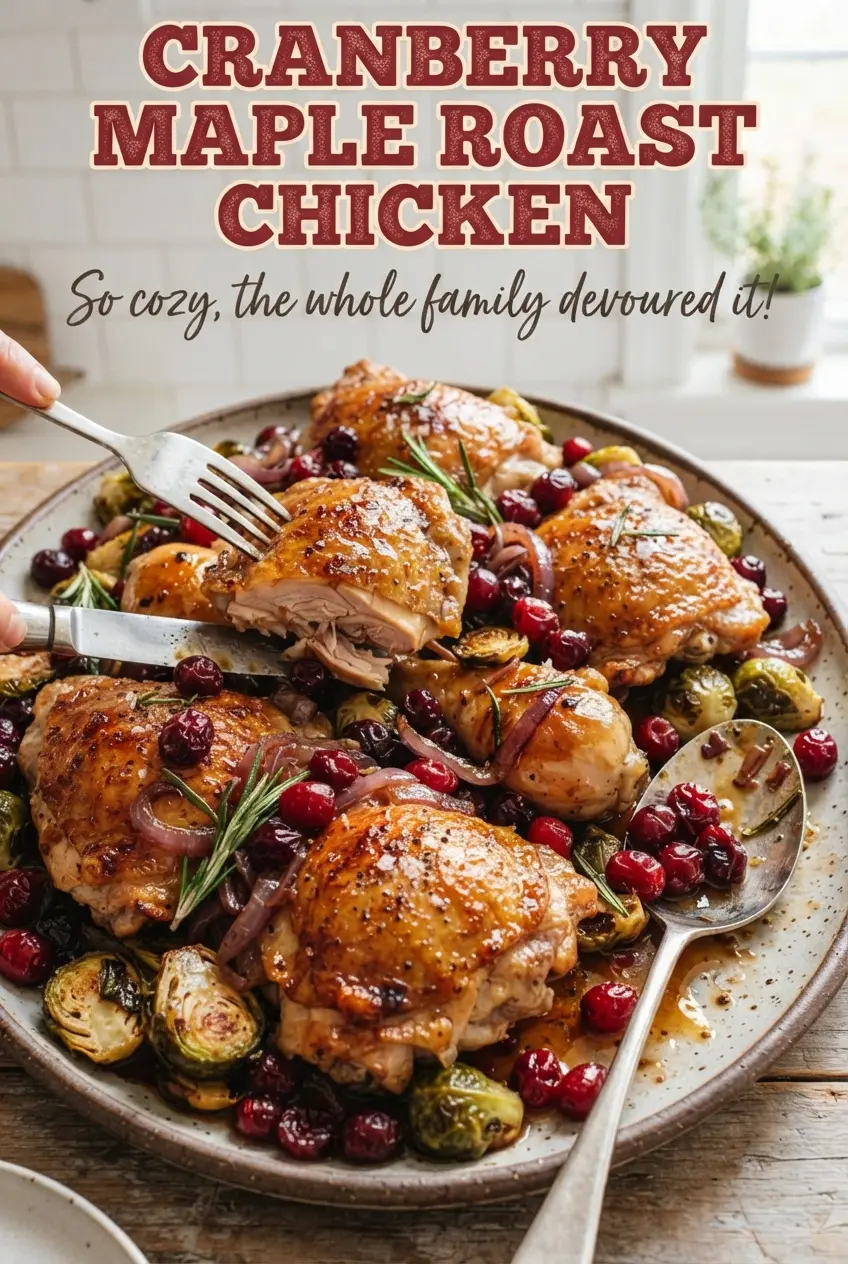
Cranberry Maple Roast Chicken
Ingredients
Equipment
Method
- Preheat the oven to 425F.
- Season the chicken inside and out with salt and pepper, then rub the butter mixed with rosemary under and over the skin.
- Stuff the cavity with orange halves and garlic, then set the chicken in a roasting pan with the onion wedges around it.
- Roast for 50 minutes at 425F.
- Whisk the maple syrup and Dijon mustard, then brush half over the chicken.
- Add the cranberries and chicken broth to the pan, letting the mixture surround the chicken as it starts to bubble.
- Roast for 25-30 minutes more at 425F, brushing with the remaining glaze until the thigh reaches 165F.
- Rest the chicken for 15 minutes so the juices settle, then carve.
- Spoon the cranberry pan sauce over the top for a glossy maple-red finish.