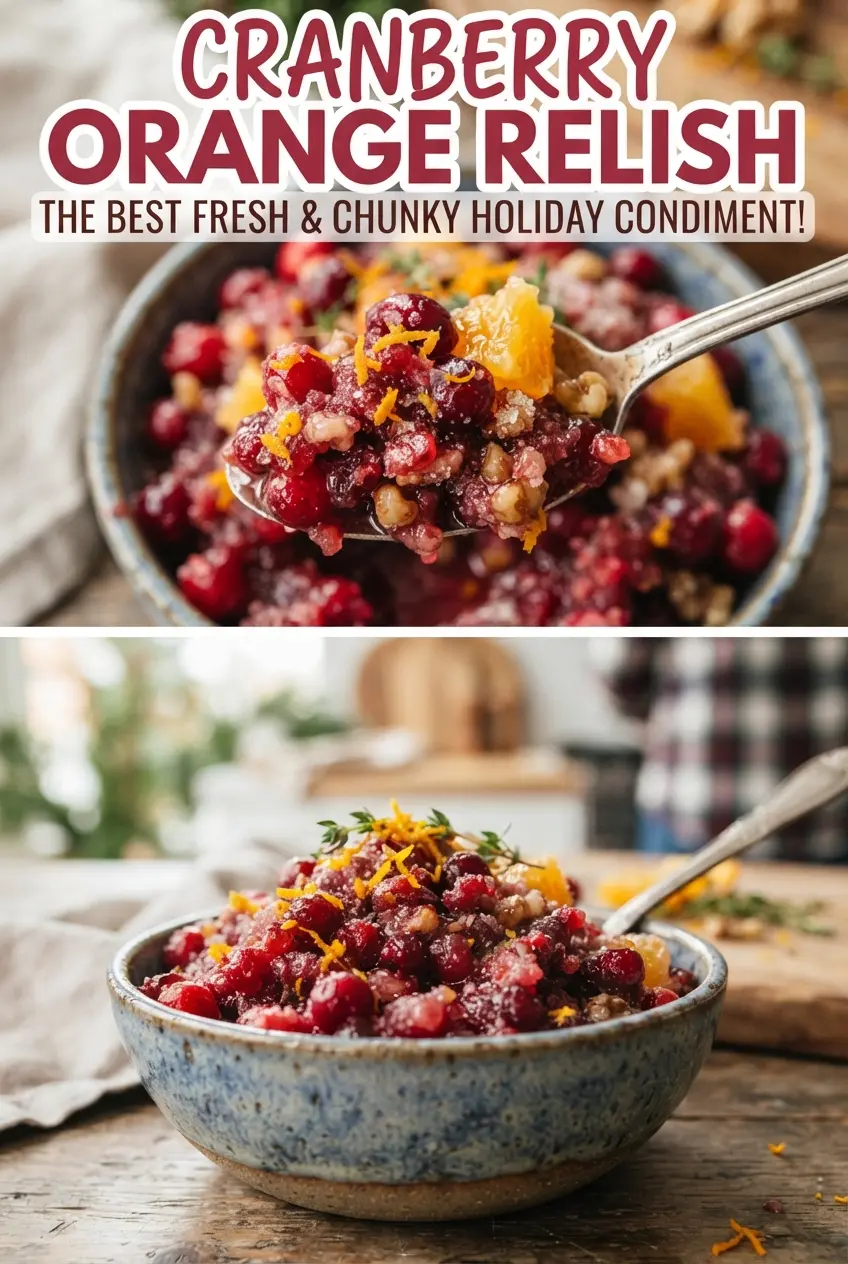
Cranberry orange relish comes alive after it chills: tart cranberries soften just enough, the orange brightens every bite, and the sugar turns the whole thing glossy without dulling the fruit. It’s the kind of side that cuts through rich mains and wakes up a plate that might otherwise feel heavy. The texture should be finely chopped and spoonable, not smooth like a purée, with little bursts of cranberry still holding their shape.
The trick is using the whole orange, peel and all, after seeding it and cutting it into chunks. That’s where the depth comes from. The peel brings a little bitterness and perfume, which keeps the relish from tasting flat or overly sweet. A food processor does the hard work fast, but you want short pulses, not a continuous blitz, because once it turns into paste, you lose the bright, chunky finish that makes this relish worth serving.
Below, I’ve included the little details that matter most: how fine to chop it, why the chilling time changes the flavor, and a few easy ways to adjust the sweetness or swap the liqueur.
I pulsed it just until the cranberries were chopped and let it sit overnight. The orange peel mellowed out and the relish got that perfect jammy-but-still-fresh texture by the next day.
Cranberry Orange Relish is even better after an overnight chill, when the citrus and cranberries settle into a bright, spoonable balance.
The Chopping Point That Keeps Cranberry Relish Bright Instead of Jammy
The biggest mistake with cranberry relish is overprocessing. Once the cranberries and orange start to release too much juice, the mixture turns wet and muddy instead of fresh and textured. Short pulses give you tiny pieces that still look distinct, and that matters because the relish needs both bite and juice.
The sugar doesn’t just sweeten the fruit. It pulls out moisture as the relish rests, which is why the mixture seems a little dry at first and then turns glossy after chilling. Don’t rush that part. The flavor opens up after a few hours, and the orange peel loses its sharp edge.
- Fresh cranberries — Use fresh, firm berries for the best chop and the cleanest tart flavor. Frozen cranberries can work if thawed and drained first, but they tend to leak more liquid and soften faster.
- Navel orange — The peel is part of the recipe, so scrub the fruit well before chopping. Seed it carefully or you’ll end up with bitterness from the pith plus an accidental crunch from a stray seed.
- Sugar — Regular granulated sugar is the right choice here because it dissolves cleanly into the fruit juices. Honey makes the mixture looser and changes the flavor in a way that reads more like sauce than relish.
- Orange liqueur or orange juice — The liqueur adds a round, fragrant depth, but orange juice keeps it family-friendly and still bright. If you use juice, keep the full tablespoon so the mixture stays balanced after chilling.
What Each Ingredient Is Actually Doing in This Relish

- Fresh cranberries — They bring the sharp, tart backbone that keeps this relish from tasting like sweet jam. Their natural pectin also helps the mixture thicken a little as it rests.
- Orange — The flesh adds juiciness, and the peel brings perfume and a tiny bitter edge that makes the whole dish taste layered instead of one-note. That peel is the reason this tastes like more than cranberries tossed with sugar.
- Sugar — It softens the tartness and draws out the fruit juices during chilling. The relish will taste too sharp right after mixing, so don’t judge it before the rest time is up.
- Orange liqueur or orange juice — Either one deepens the citrus note, but the liqueur gives a warmer finish while juice keeps the flavor cleaner and lighter. Use the one that matches the meal you’re serving it with.
- Fresh mint — This is a garnish, but it matters. It adds a cool aroma right at the end and makes the relish look fresh on the table.
Pulse, Chill, and Let the Flavor Settle
Getting the Texture Right
Pulse the cranberries and orange chunks in a food processor in short bursts until everything is finely chopped. Stop before it turns into a puree. You want visible pieces and a little juice, not a paste that slides around the bowl.
Sweetening the Bowl
Transfer the chopped fruit to a bowl and stir in the sugar, orange liqueur or orange juice, and salt. It will look loose at first, then the sugar will start pulling juice from the fruit. If it seems dry, that’s normal; the chilling time finishes the job.
The Rest That Makes It Taste Finished
Cover and chill the relish for at least 4 hours, though overnight is better. This is when the sharpness softens and the citrus flavor spreads through the cranberries. Stir it well before serving so the juices redistribute and the texture looks evenly spoonable.
Finishing Touches
Spoon the relish into a serving bowl and garnish with fresh mint. The mint should go on at the end so it stays bright and doesn’t wilt into the fruit. Serve it cold, when the cranberry pieces still hold their shape and the orange zest scent is strongest.
How to Adjust the Sweetness, Citrus, and Make-Ahead Timing
Less Sweet, More Tart
Cut the sugar back by 1/4 cup if you like a sharper relish, especially for serving with rich meats. The texture will still set up, but the final taste will lean brighter and more puckery.
Orange Juice Instead of Liqueur
Use orange juice in place of the liqueur for a non-alcoholic version. You’ll lose a little depth, but the relish stays fresh and family-friendly, and the orange flavor still comes through clearly.
Make It Ahead for the Table
This relish is best made the day before you need it. The flavor improves as it sits, and the texture becomes more cohesive after a long chill, which means less sharpness and a cleaner spoonful when you serve it.
Storage and Reheating
- Refrigerator: Store covered for up to 5 days. The flavor gets a little softer and the juices loosen slightly as it sits.
- Freezer: It can be frozen, but the texture softens a lot after thawing, so it’s better for spooning over yogurt or oatmeal than for a clean side dish.
- Reheating: No reheating needed. Serve it cold or cool, and stir before serving because the juices settle at the bottom. If it looks watery, drain off a little liquid rather than trying to warm it up.
Questions I Get Asked About This Recipe
Cranberry Orange Relish
Ingredients
Equipment
Method
- Pulse the fresh cranberries and orange chunks in a food processor until finely chopped but not pureed, stopping to scrape down as needed; aim for even, small pieces with visible texture.
- Transfer the chopped mixture to a bowl.
- Stir in the sugar, orange liqueur or orange juice, and salt until the sugar looks slightly dissolved and everything is evenly coated.
- Cover and chill for at least 4 hours or overnight, until the relish thickens slightly and tastes well combined.
- Stir well before serving to redistribute any liquid and brighten the texture.
- Garnish with fresh mint just before serving.