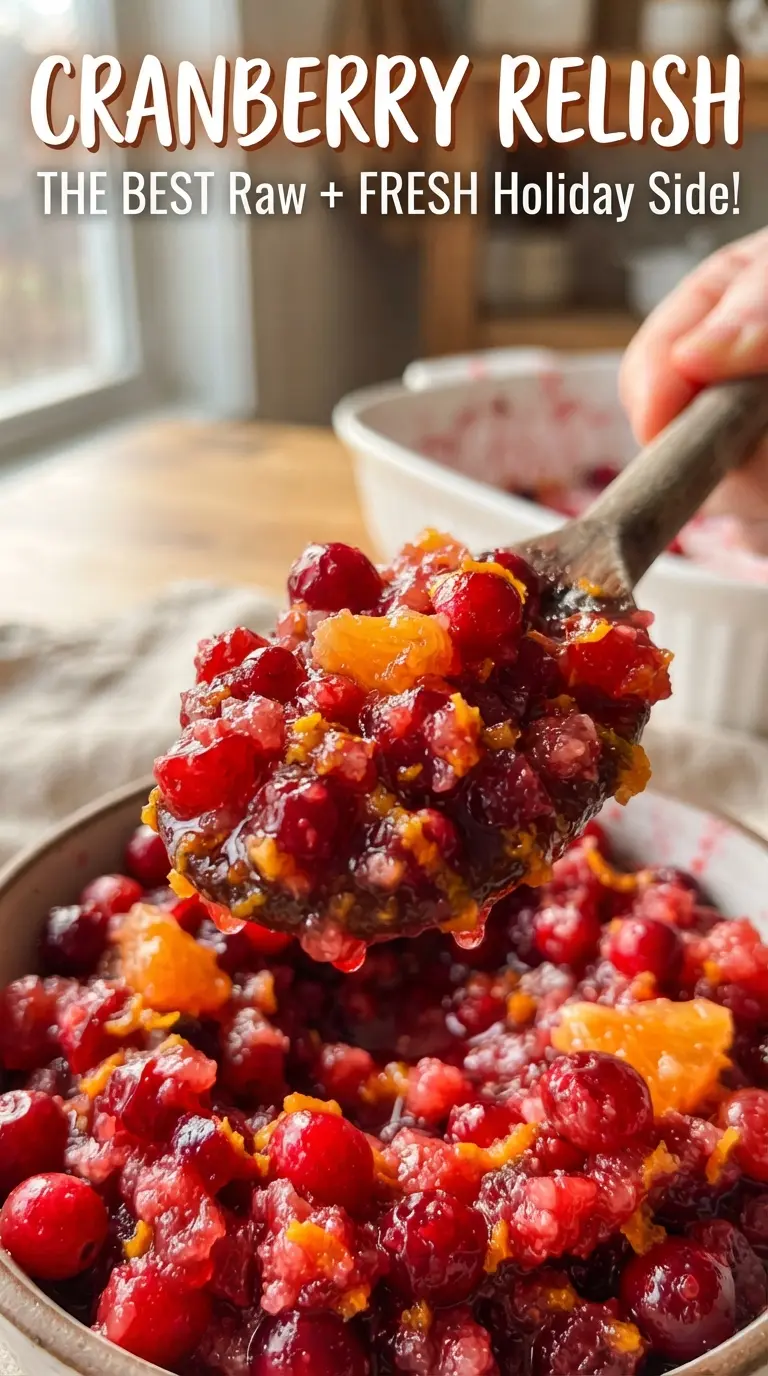
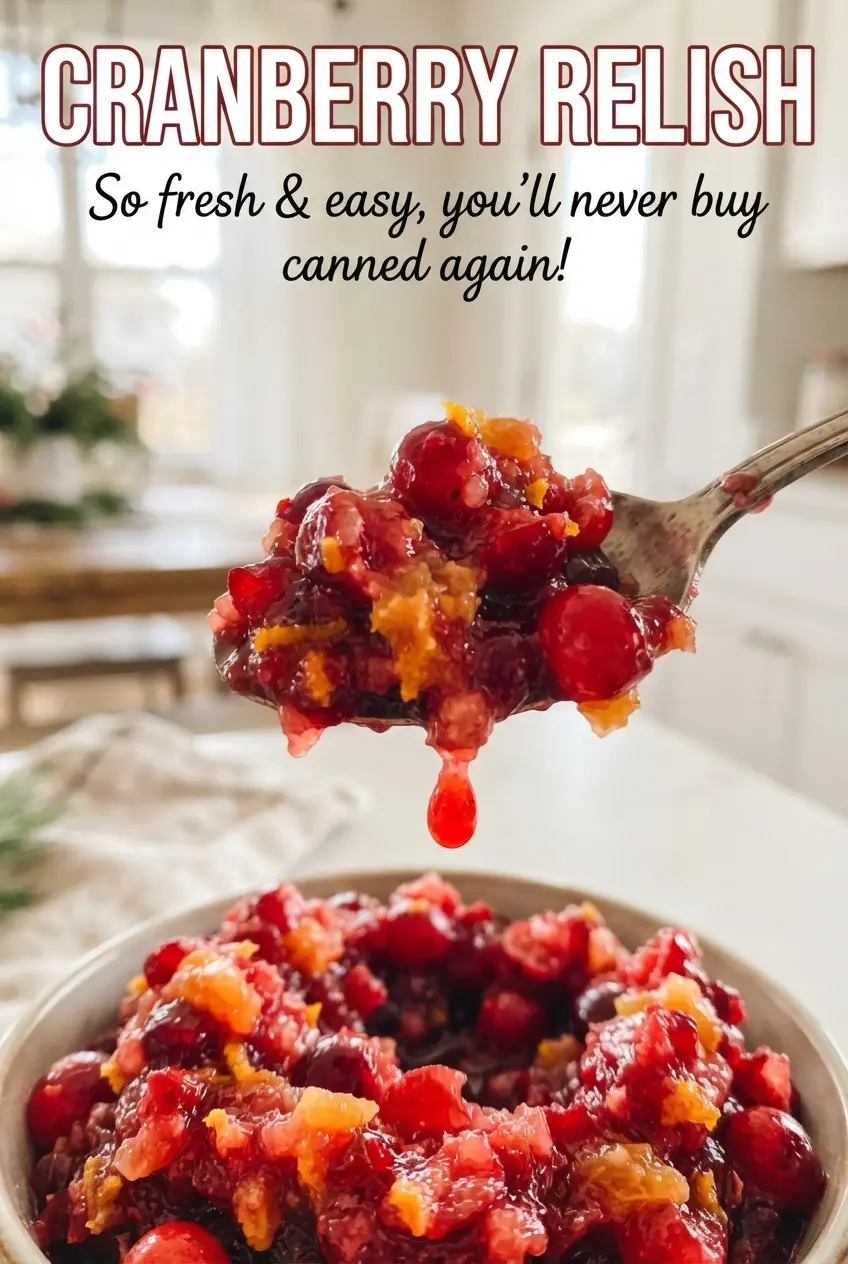
Bright, crunchy cranberry relish earns its place on the table because it wakes everything else up. The cranberries stay raw, so you get that sharp pop instead of the softer, saucier texture of cooked chutneys and compotes. Orange adds fragrance, apple brings a little sweetness and body, and the whole thing settles into a glossy, jewel-toned side dish that cuts through rich mains without feeling heavy.
The key here is the chop. Pulse the cranberries just enough to break them down, then keep the orange and apple fine so the relish eats like a spoonable condiment instead of a pile of uneven chunks. The sugar needs time to dissolve in the fruit juices, which is why the chilling step matters as much as the mixing. Skip that rest and the texture tastes gritty; give it a few hours and everything turns bright, juicy, and balanced.
Below, I’ve included the small details that keep this relish crisp instead of watery, plus a few easy swaps if you’re working around what’s in the pantry.
I left it overnight and the sugar melted into the fruit perfectly. The orange came through without overpowering the cranberries, and the pecans stayed crunchy when I added them right before serving.
Save this bright cranberry relish for holiday dinners, roast turkey, and any meal that needs a fresh, tangy bite.
The Trick to Keeping Cranberry Relish Bright Instead of Watery
Raw cranberry relish lives or dies by how much you process the fruit. If you run the cranberries too long, they turn pasty and release more juice than you want, which makes the relish sink into a wet mound instead of staying fluffy and spoonable. The goal is a coarse chop with distinct pieces still visible.
The other place people go wrong is the rest time. Sugar needs several hours to draw moisture from the fruit and dissolve fully, and that short chill is what transforms the sharp, sandy mixture into something polished. If the bowl looks loose at first, that’s normal; it firms up in the fridge as the fruit settles.
- Cranberries — Fresh cranberries give the relish its snap and tartness. Frozen cranberries can work straight from the freezer, but let them thaw just enough to pulse cleanly.
- Orange — The whole orange, peel and all, adds aroma and a little bitterness that keeps the relish from tasting candy-sweet. Seed it well, or you’ll get a harsh, accidental crunch.
- Apple — The apple softens the tart edges and adds natural pectin, which helps the mixture hold together. A crisp apple like Granny Smith or Honeycrisp works best; mealy apples disappear into the mix.
- Sugar — This isn’t just for sweetness. It pulls juices out of the fruit and mellows the cranberry bite after chilling. Cutting it much lower changes the texture and leaves the relish sharper and looser.
- Pecans — These are optional, but they add a toasty finish and a little crunch. Stir them in at the end so they stay crisp instead of softening in the fruit juices.
What Each Ingredient Is Actually Doing in This Recipe
- Primary ingredient (the star) — Quality matters most. Choose the best you can find.
- Cooking medium (oil, butter, or broth) — This carries flavors and prevents dryness.
- Seasonings (salt, pepper, spices, herbs) — Layer flavors so nothing overpowers. Build depth gradually.
- Aromatics (garlic, onion, herbs) — Cook with fat to bloom flavors. Become the foundation.
- Supporting ingredients — Complement the main ingredient without overpowering it.
- Sauce or liquid (if applicable) — Brings flavors together. Balance richness with acid.
- Acid (lemon, vinegar, wine, or other) — Brightens and prevents flat-tasting results.
- Final finish (garnish, glaze, or sauce) — Prevents one-dimensional taste and adds visual appeal.
How to Pulse, Chill, and Finish the Relish So It Stays Chunky
Breaking Down the Cranberries
Add the cranberries to the food processor and pulse until they’re coarsely chopped. Stop before the berries turn into a puree; you want little shards and chunks, not cranberry paste. If you hear the motor straining, you’ve gone too far and need to scrape the bowl less often, not process longer.
Finely Chopping the Orange and Apple
Pulse the orange chunks and apple until they’re finely chopped and fairly even. The peel on the orange is important, but it needs to be broken down small enough that no one gets a big bitter bite. Uneven pieces make the relish feel rough, so a quick, controlled pulse beats a long spin every time.
Letting the Sugar Do Its Work
Stir the fruit and sugar together until everything looks evenly coated, then cover and chill. Four hours is the minimum; overnight gives the cleanest texture and the best balance. If the mixture looks dry at first, don’t add liquid. The sugar is pulling moisture from the fruit right on schedule.
Adding the Crunch at the End
Fold in the pecans just before serving so they keep their bite. Once they sit in the fruit for too long, they soften and disappear into the mixture. Give the relish one final stir and taste it cold, because that’s when the sweetness and tartness settle into their final balance.
How to Adapt This Cranberry Relish for Different Tables
No-Nut Version
Leave out the pecans and the relish stays bright, clean, and a little softer in texture. Nothing else needs to change. This is the best version if you’re serving a crowd with nut allergies or you want the cranberry flavor to stay front and center.
Lower-Sugar Cranberry Relish
You can reduce the sugar a bit, but don’t cut it too far or the relish turns sharp and wet. Start by reducing it by a quarter cup, then chill and taste before deciding whether it needs more sweetness. The texture will be looser because sugar helps draw out and balance the juices.
Apple Swap
Pear can stand in for the apple if that’s what you have, but choose a firm one so it holds some texture after chopping. The result is a little softer and more floral. A very ripe pear will disappear into the relish and make it taste muddled.
Make-Ahead Storage
- Refrigerator: Keeps well for 4 to 5 days in a covered container. The flavor deepens after the first day, and the juices stay glossy.
- Freezer: It freezes, but the texture softens after thawing, so I only freeze it if I’m using it for spooning over yogurt or spreading into baked goods later. Thaw in the fridge overnight.
- Reheating: No reheating needed. Serve it chilled or at cool room temperature. If it seems too stiff after refrigeration, let it sit out for 15 to 20 minutes and stir before serving.
Questions I Get Asked About This Cranberry Relish
Cranberry Relish
Ingredients
Equipment
Method
- Pulse the fresh cranberries in a food processor until coarsely chopped, then transfer to a bowl. Stop when the pieces are chunky rather than smooth so the relish keeps texture.
- Pulse the small orange and apple in the food processor until finely chopped. Process just until uniformly small to distribute orange peel flecks through the relish.
- Stir the orange, apple, and sugar into the coarsely chopped cranberries. Cover and chill at 40°F for at least 4 hours or overnight so the sugar dissolves and flavors meld.
- Stir the chopped pecans into the cranberry relish just before serving. Mix briefly so the pieces stay crisp and evenly distributed.