Thick, glossy cranberry sauce with orange and cinnamon earns its place on the table because it tastes bright, not cloying. The berries burst just enough to give you that classic jammy texture, while orange juice and zest keep the whole thing lively. It’s the kind of side dish that cuts through rich food instead of disappearing next to it.
What makes this version worth making is the balance. Sugar softens the cranberries, but the orange juice brings enough acidity to keep the sauce from tasting flat. Cinnamon sticks steep in the pot for warmth without turning the sauce muddy, and the zest goes in at the end so the citrus stays fresh instead of cooking off. That small detail makes a bigger difference than people expect.
Below, I’ll walk you through the one timing choice that matters most, plus a few smart swaps if you need to adjust the sweetness or make it ahead. Once you’ve made cranberry sauce this way, it’s hard to go back to the canned stuff.
The sauce thickened beautifully as it cooled, and the orange flavor came through without making it too sweet. I loved that the cinnamon stayed warm and subtle instead of overpowering the cranberries.
This cranberry sauce with orange and cinnamon sets up with that perfect spoonable texture you want beside roasted turkey or ham.
The Part That Keeps This Cranberry Sauce from Turning Flat
Cranberries need enough heat to burst, but not so much that they cook down into a dull, over-reduced paste. The mistake people make most often is letting the pan boil hard the whole time. That pushes the sauce past glossy and into stiff territory before the berries have released enough of their own pectin.
The sweet spot is a boil first, then a steady simmer once the cranberries go in. You want to hear the berries pop and see the liquid thicken around them, but there should still be some loose movement in the pan. The sauce will look thinner than you expect when it comes off the heat, and that’s right; it sets as it cools.
- Simmer, don’t rush. A harder boil breaks down the berries too fast and can make the sauce taste sharp instead of rounded.
- Let it cool before judging thickness. Cranberry sauce tightens a lot in the fridge.
- Keep the cinnamon sticks in while cooling. That extra steeping time deepens the spice without making the sauce taste dusty.
What the Orange and Cinnamon Are Actually Doing Here
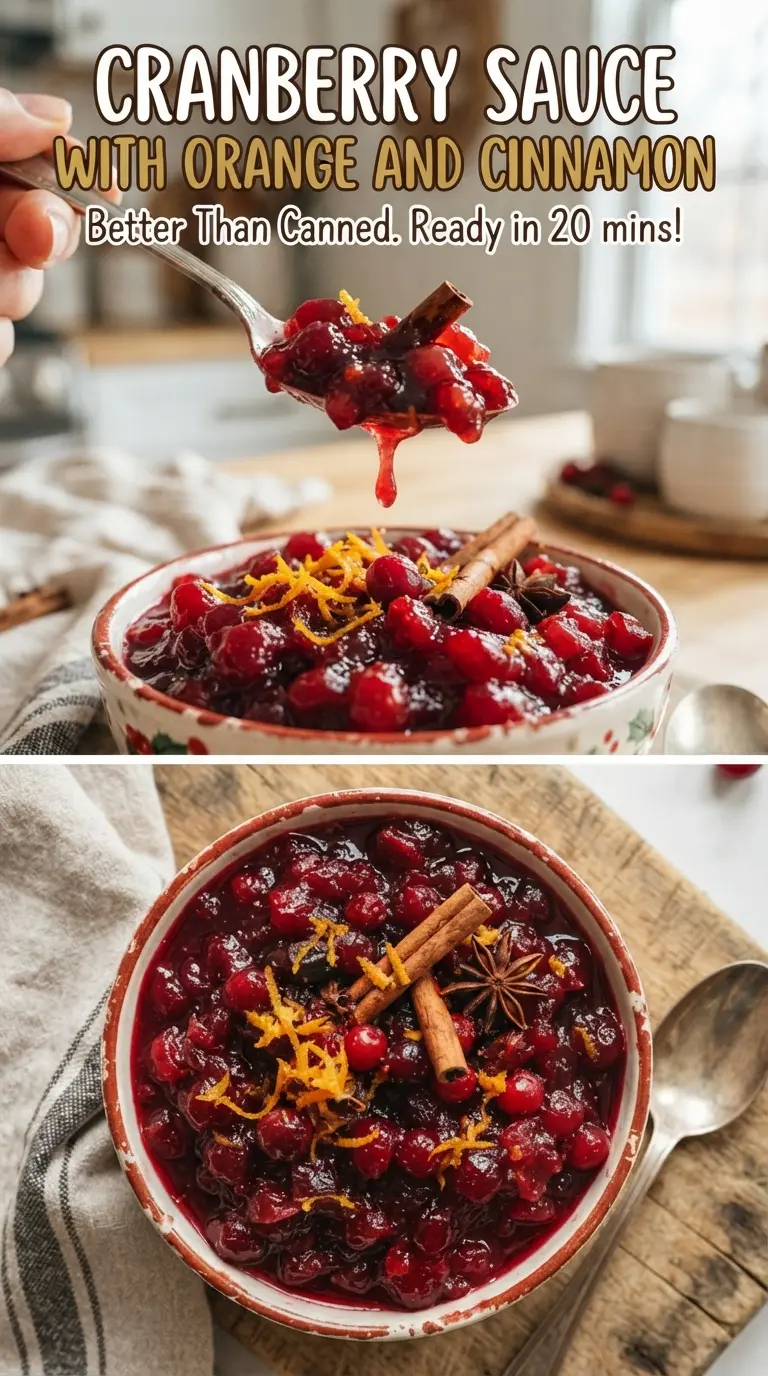
- Fresh cranberries — These bring the tart backbone and the natural pectin that gives the sauce its set. Frozen cranberries work too; use them straight from the freezer and add a minute or two to the simmer.
- Orange juice and zest — Juice sweetens and brightens the pan, but zest is what makes the orange taste fresh instead of sugary. Don’t skip the zest unless you have to; it lifts the whole sauce at the end.
- Cinnamon sticks and ground cinnamon — The sticks perfume the syrup gently, while the ground cinnamon adds immediate warmth. If you only have one or the other, use what you’ve got, but the combination gives the best balance.
- Sugar — This doesn’t just sweeten; it softens the cranberry bite and helps the sauce thicken cleanly. Reducing it too far makes the sauce taste aggressively tart.
Building the Sauce So It Cooks Down Right
Starting With the Syrup Base
Combine the sugar, orange juice, water, cinnamon sticks, ground cinnamon, and salt first, and bring that mixture to a boil before the cranberries go in. This gives the sugar a head start dissolving, so you don’t end up with gritty spots at the bottom of the pan. Once it boils, the kitchen will smell citrusy and spiced almost immediately. That’s your cue that the base is ready.
Cooking Until the Berries Burst
Add the cranberries and drop the heat to a simmer. In a few minutes, the berries will start popping open and the liquid will turn a deep ruby red. Stir now and then, but don’t mash everything together; you want some berries to break and some to stay partially intact for texture. If the pan starts drying out before the berries burst, the heat is too high.
Finishing for Freshness
Take the pan off the heat and stir in the orange zest right away. The residual heat wakes up the citrus oils without dulling them. Leave the cinnamon sticks in as the sauce cools, then pull them once the flavor has deepened to your liking. Chill the sauce before serving so it can thicken into that spoonable, jammy consistency.
How to Adjust This Sauce Without Losing What Makes It Good
Make It Less Sweet
Cut the sugar back by a couple of tablespoons if you like a sharper sauce, but don’t remove it completely. Cranberries need sugar to round out their bite and help the sauce set with a smoother finish.
Use Maple for a Deeper Sweetness
Swap a few tablespoons of the sugar for maple syrup if you want a warmer, rounder flavor. The sauce will be a little looser at first, so give it the full cool-down time before deciding if it needs more reduction.
Make It Vegan and Gluten-Free
This recipe already fits both without any changes, which is one reason it’s such a useful side dish. Just check that your sugar is the kind you’re comfortable using, since some brands process differently, but the method itself stays the same.
Storage and Reheating
- Refrigerator: Keep it in an airtight container for up to 1 week. It thickens as it chills, so don’t panic if it seems loose on day one.
- Freezer: It freezes well for up to 2 months. Thaw overnight in the fridge and stir well before serving.
- Reheating: Cranberry sauce is usually best served cold or at room temperature, but if you want it warm, heat it gently over low heat. A hard boil after chilling can make it split a little and dull the texture.
Answers to the Questions Worth Asking
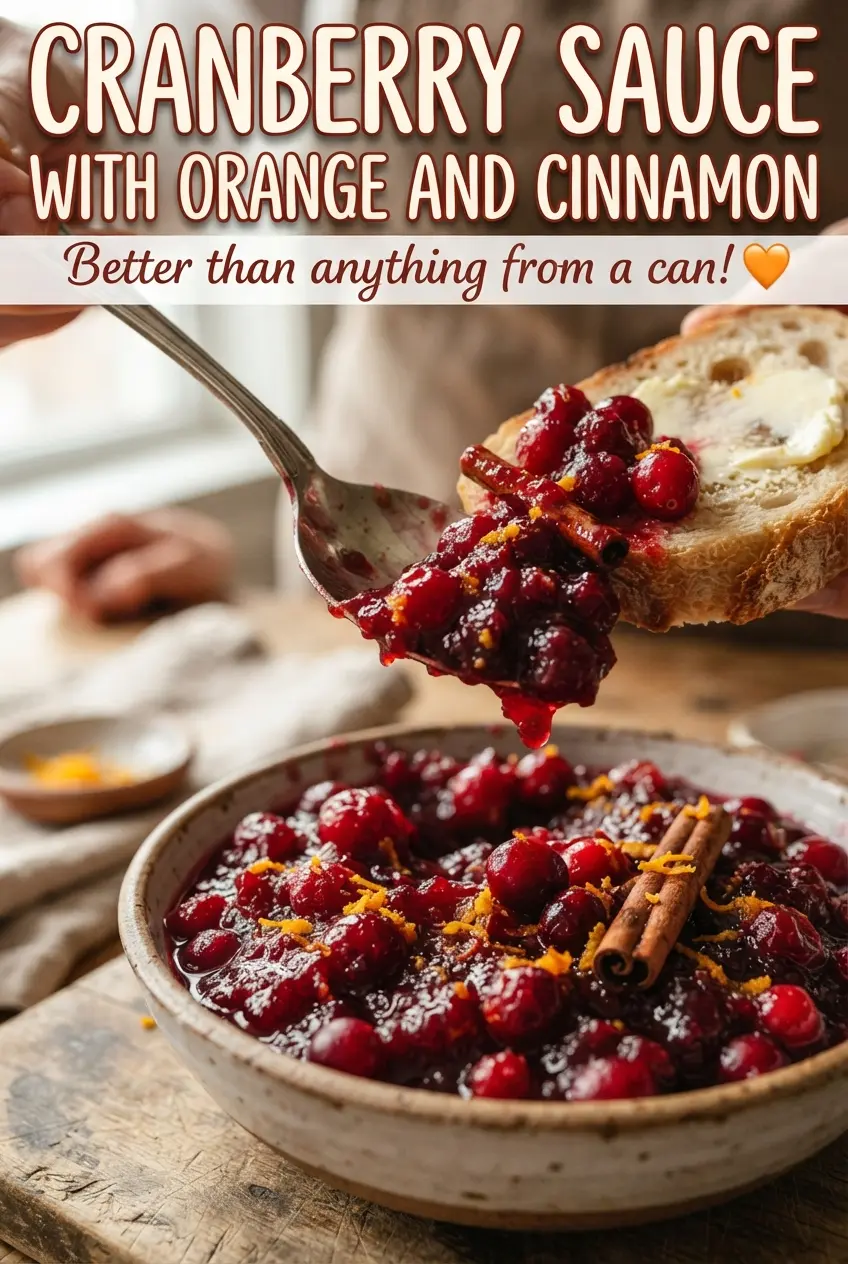
Cranberry Sauce with Orange and Cinnamon
Ingredients
Equipment
Method
- Combine sugar, orange juice, water, cinnamon sticks, ground cinnamon, and salt in a saucepan, then bring to a boil over medium-high heat. You should see steady bubbling across the surface.
- Add fresh cranberries and simmer for 10-12 minutes, stirring occasionally, until the berries burst and the mixture looks thicker. The sauce will start to look glossy and studded with softened fruit.
- Remove from the heat and stir in the orange zest until evenly distributed. The zest should create bright flecks throughout the sauce.
- Leave the cinnamon sticks in as it cools for extra spice, then remove them before serving. You should notice the sauce deepen in color as it cools.
- Chill before serving so the sauce thickens to a spoonable consistency. It should feel set and dense when served cold.