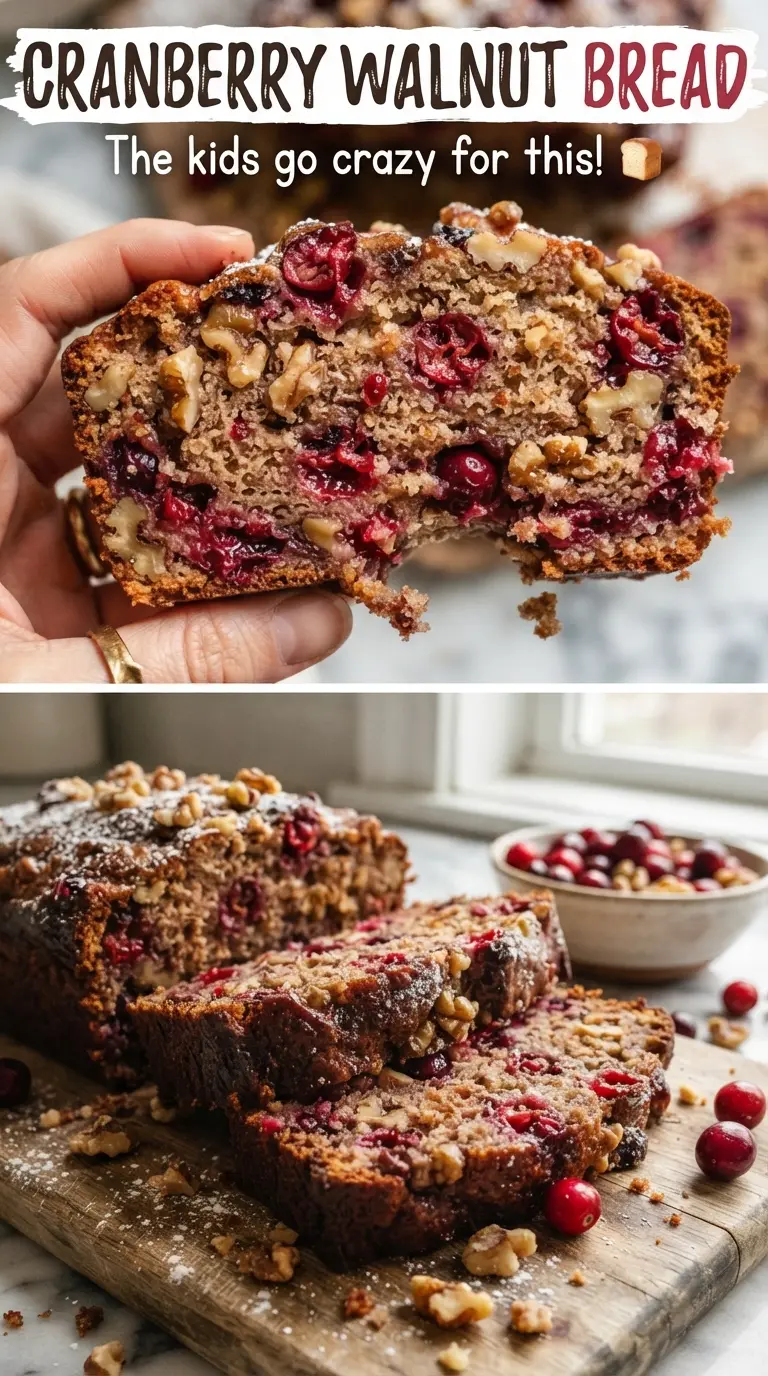
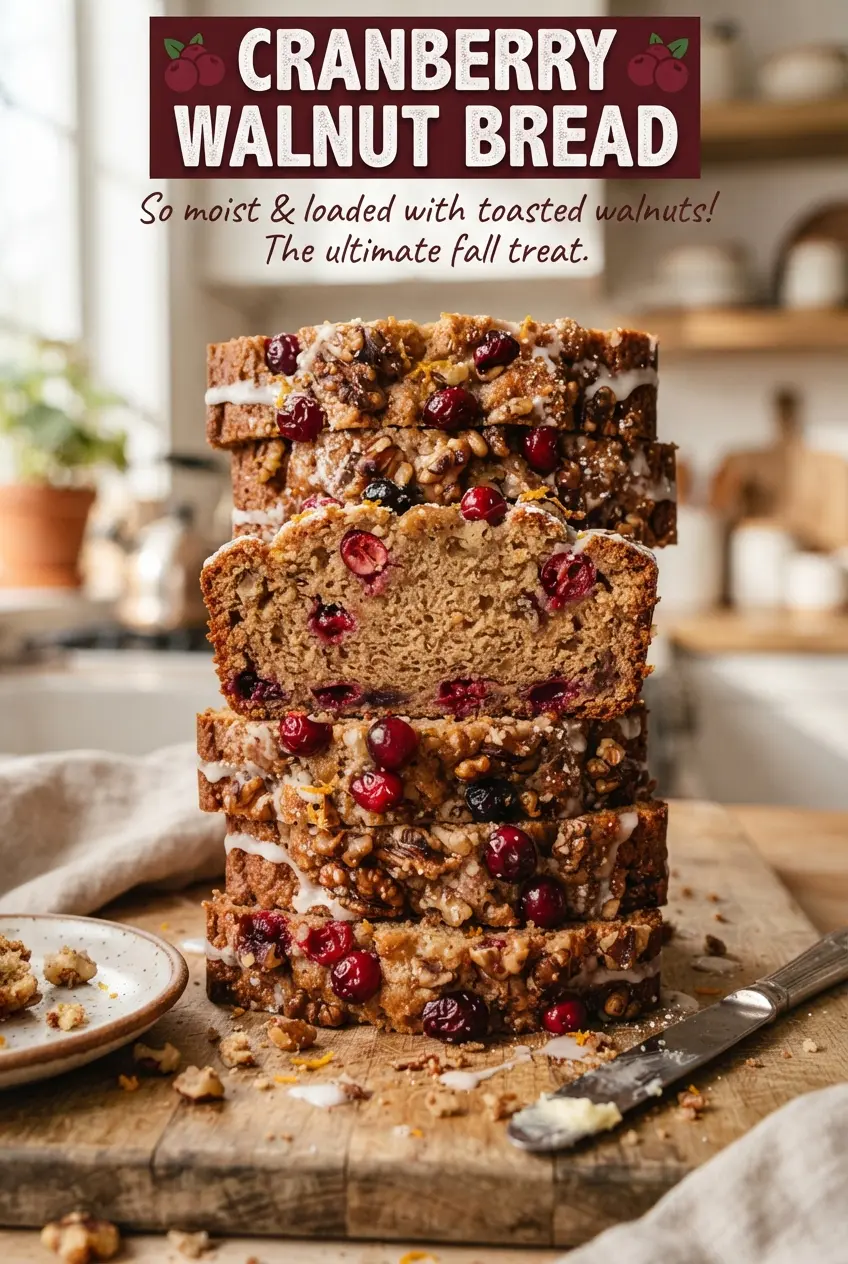
Golden cranberry walnut bread slices up with a tender crumb, bright citrus, and little bursts of tart fruit in every bite. The walnuts bring a toasted richness that keeps each slice from tasting flat, and the orange zest lifts the whole loaf so it feels fresh instead of heavy. It’s the kind of quick bread that disappears one slice at a time while it’s still warm from the rack.
What makes this version work is the balance: enough sugar to soften the cranberry tartness, enough orange juice to keep the loaf moist, and just enough mixing to bring the batter together without turning it tough. That last part matters. Quick bread rewards a light hand, and the difference between tender and dense usually comes down to stopping the moment the flour disappears.
Below, you’ll find the small details that keep the loaf from sinking in the middle, plus the little adjustments that help if you’re baking with frozen cranberries or want a slightly sweeter slice for serving with butter.
The loaf baked up with a soft, even crumb and the cranberries stayed bright instead of bleeding everywhere. Toasting the walnuts made a huge difference, and the orange really came through without tasting too sweet.
Save this cranberry walnut bread for the days when you want a tart, nutty quick bread with a soft crumb and bright orange flavor.
The Part That Keeps Quick Bread Tender Instead of Heavy
The biggest mistake with quick bread is treating it like cake batter and beating it smooth. Once the flour goes in, the batter should still look a little rough and uneven, with streaks disappearing only after a few gentle turns. Overmixing develops the gluten in the flour and gives you a tighter, rubbery slice instead of that soft, tender crumb you want.
The other place this loaf goes wrong is the fruit. Cranberries carry a lot of moisture, and if they’re added in big pieces they can sink or leave wet pockets. Rough chopping helps distribute them, and tossing them in at the very end keeps the batter from turning pink and muddy before it hits the oven.
What Each Ingredient Is Doing in This Loaf
- Orange juice and zest — These carry the loaf. The zest gives you the strongest orange flavor, while the juice adds moisture and a little acidity that helps the crumb stay soft. Bottled juice works in a pinch, but fresh zest is the part worth doing right.
- Cranberries — Fresh or frozen both work. If you use frozen, don’t thaw them first or the batter will pick up too much liquid and streak. Rough chopping keeps the fruit from creating giant wet pockets in the loaf.
- Walnuts — Toast them if you can. It deepens the flavor and keeps the nuts from tasting raw against the sweet crumb. If you skip the toasting step, the bread still works, but it loses some of its warmth and crunch.
- Butter — Melted butter gives the loaf a richer taste than neutral oil and helps it slice cleanly once cooled. Let it cool slightly before whisking it with the egg so you don’t accidentally curdle the mixture.
Mixing the Batter Without Beating the Life Out of It
Building the dry base
Whisk the flour, sugar, baking powder, baking soda, salt, and orange zest together until the zest is evenly distributed. That rubbing and whisking pulls the oils from the zest into the sugar and gives the loaf a brighter citrus flavor throughout, not just in isolated bites. If you leave the zest clumped in one corner, the orange flavor comes across patchy instead of blended.
Bringing the wet ingredients together
Whisk the orange juice, egg, melted butter, and vanilla until the mixture looks smooth and fully combined. The butter should be warm, not hot; if it’s too hot, it can start cooking the egg or form greasy streaks that won’t disappear in the batter. This mixture should look glossy and fluid before it goes into the dry ingredients.
Stopping at the right moment
Pour the wet ingredients into the dry and stir just until the flour is moistened. A few streaks are fine at this stage because the cranberries and walnuts will finish the job. Once you fold in the fruit and nuts, stop as soon as everything looks evenly scattered and transfer the batter to the pan. If you keep stirring after that, the loaf tightens up in the oven and loses its tender crumb.
Baking for a clean rise
Bake until the top is deeply golden and a toothpick in the center comes out clean or with just a few moist crumbs. If the top browns before the center is done, lay a loose sheet of foil over the loaf for the last part of baking. The pan should feel set in the middle, not jiggly, before you pull it out.
Cooling before slicing
Let the loaf rest in the pan for 10 minutes, then move it to a rack and let it cool all the way through before slicing. Cutting too soon traps steam inside and makes the crumb gummy. A fully cooled loaf slices cleanly and holds together instead of crumbling at the first swipe of a knife.
Three Ways to Adjust the Loaf Without Losing What Makes It Good
Make it dairy-free
Swap the melted butter for an equal amount of neutral oil or a plant-based butter that melts cleanly. Oil gives you a slightly softer crumb and keeps the loaf moist for longer, while plant butter gets you closer to the original buttery flavor. Either way, let the fat cool before mixing it with the egg.
Make it nut-free
Leave out the walnuts and add an extra 1/2 cup of cranberries if you want the same bulk without the crunch. You’ll lose the toasted, savory note that balances the fruit, so the loaf will taste a little sweeter and softer. If you still want texture, pumpkin seeds are a sturdy swap.
Use frozen cranberries
Frozen cranberries work without thawing. Chop them while still frozen if they’re large, then fold them in quickly so they don’t bleed too much color into the batter. The loaf may need an extra few minutes in the oven if the fruit goes in straight from the freezer.
Storage and Reheating
- Refrigerator: Store wrapped or in an airtight container for up to 5 days. The crumb stays moist, but the nuts soften a little after day two.
- Freezer: Freeze whole or in slices, tightly wrapped, for up to 3 months. Slices thaw faster and keep the best texture.
- Reheating: Warm slices in a toaster oven or low oven for a few minutes. High heat dries quick bread out fast, so go gently and stop once the center is just warmed through.
Answers to the Questions Worth Asking
Cranberry Walnut Bread
Ingredients
Equipment
Method
- Preheat the oven to 350F, then grease and line a 9x5-inch loaf pan. Slide the pan into place so it’s ready when batter is mixed.
- Whisk all-purpose flour, sugar, baking powder, baking soda, salt, and orange zest in a bowl until evenly combined. The mixture should look uniform and lightly speckled from zest.
- Whisk orange juice, large egg, melted butter, and vanilla extract together in another bowl. Blend until glossy and smooth with no visible butter streaks.
- Stir wet into dry just until moistened. Stop as soon as you don’t see dry flour—this keeps the crumb tender.
- Fold in fresh or frozen cranberries, then fold in toasted and chopped walnuts. Distribute them so berries and nuts are spread through the batter.
- Spread the batter into the lined loaf pan and level the top. The batter should reach the corners for even baking.
- Bake at 350F for 55-60 minutes, until golden and a toothpick comes out clean. Look for a firm top and a deep golden edge color.
- Cool for 10 minutes in the pan, then turn out fully onto a rack before slicing. Let it cool so the loaf sets and doesn’t crumble.