Bright lemon ice cream with a custardy, scoopable body earns its place fast because it tastes clean and bold instead of muddled or flat. The first spoonful hits with real citrus, then the cream steps in and softens the edges so it never reads like frozen lemon curd. That balance is what makes a batch worth churning.
The trick is in the base. Egg yolks give the ice cream its rich texture, but the lemon juice goes in after the custard is strained and slightly cooled so the acid doesn’t interfere with the cooking process. That keeps the custard smooth and lets the lemon stay vivid instead of turning dull or cooked-tasting.
Below you’ll find the small details that matter here: when to add the lemon so the base stays silky, how to judge the custard before it goes over the line, and what to do if you want a sharper citrus finish or a softer set straight from the freezer.
The custard stayed silky and the lemon flavor was bright all the way through. I churned it for the full time and it set up with that perfect scoopable texture after a few hours in the freezer.
Save this creamy lemon ice cream for the kind of dessert that tastes like pure citrus and churns into a smooth, custardy scoop.
The Step That Keeps Lemon Ice Cream Smooth Instead of Grainy
The fastest way to ruin a lemon custard ice cream is to dump the acid in too early or push the heat too hard. Lemon juice can make the dairy seem split if it gets added before the custard is finished, and high heat can turn the yolks grainy before you notice what’s happening. The answer is simple: cook the base gently until it coats the spoon, strain it, then stir in the lemon once the heat is off the burner.
That order matters because the custard needs to set first on its own terms. Once the lemon goes in, the mixture should taste bright and clean, not cooked or dusty. If you see tiny flecks or hear the custard starting to bubble aggressively, the pan is too hot and you’re already past the point where a silky texture is guaranteed.
What the Yolks, Zest, and Juice Are Each Doing Here
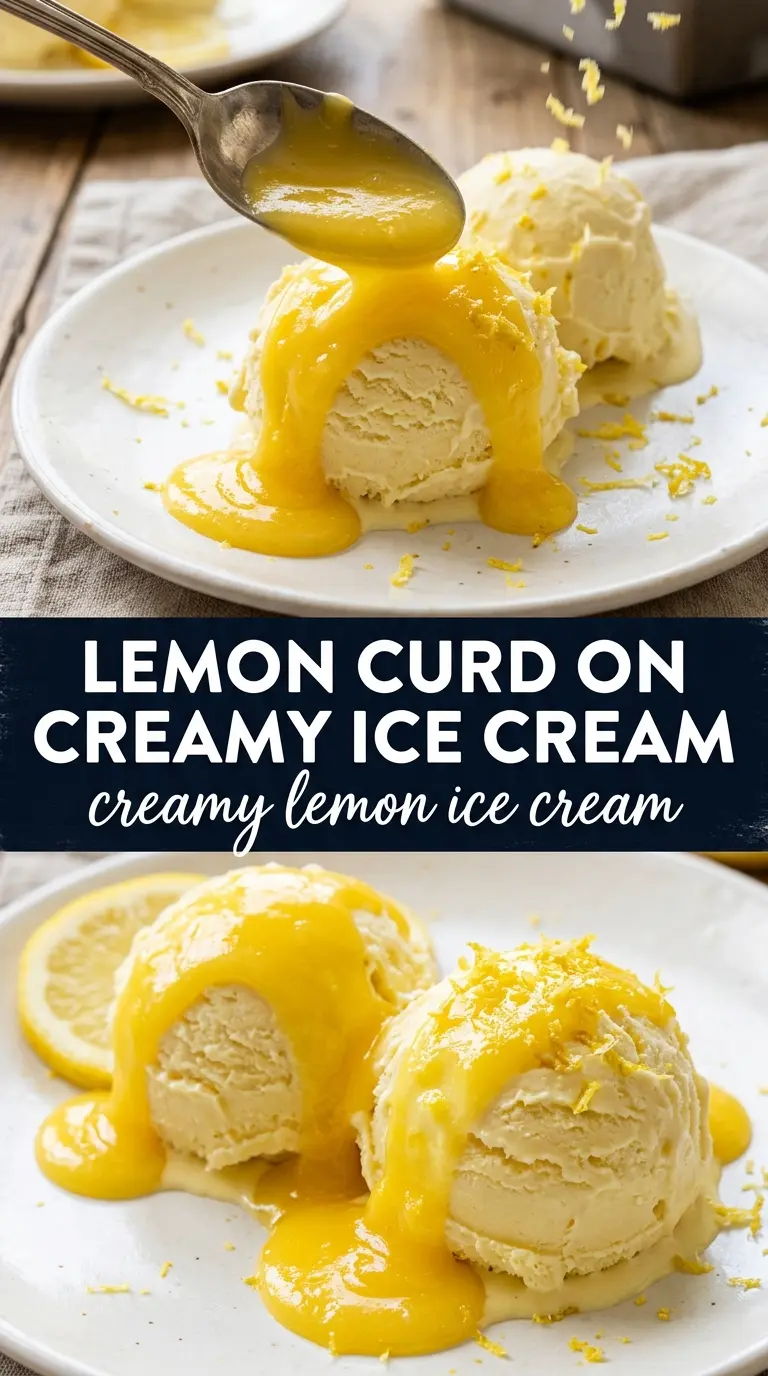
- Heavy cream — This brings the lush, scoopable texture and keeps the final ice cream from freezing into a hard block. If you use a lighter cream, expect a icier result.
- Whole milk — Milk keeps the base from feeling overly heavy. You can swap in half-and-half in a pinch, but the texture will be richer and a little less clean on the finish.
- Egg yolks — Yolks are what turn this from lemon-flavored frozen cream into true custard ice cream. They thicken the base and give it that soft, velvety mouthfeel that holds up after freezing.
- Fresh lemon juice and zest — Use fresh lemons here. Bottled juice tastes flatter, and the zest carries the bright aromatic lemon oil that makes the flavor taste layered instead of one-note.
- Sugar — Sugar does more than sweeten; it also keeps the ice cream softer in the freezer. Cutting it down too much makes the final texture icy and hard to scoop.
Building the Custard Before the Citrus Goes In
Warming the Dairy
Heat the cream and milk until they are steaming and just starting to move around the edges, not boiling. You want enough heat to temper the yolks gradually, but not so much that the dairy scalds or picks up a cooked flavor. If the mixture is bubbling hard, pull it off the heat and let it cool for a minute before whisking.
Tempering the Yolks
Whisk the yolks and sugar until they look smooth and slightly paler, then drizzle in the hot dairy in a slow stream while whisking constantly. That steady stream keeps the eggs from scrambling. If you pour too fast, you’ll get bits of cooked yolk instead of a silk-smooth base.
Cooking to the Right Thickness
Return the mixture to the saucepan and cook over medium-low heat, stirring constantly and scraping the bottom and corners. The custard is ready at 175F, when it coats the back of a spoon and leaves a clear line when you run a finger through it. If you stop too early, the ice cream will churn up thin; if you push it much hotter, the texture can turn eggy and grainy.
Adding Lemon Without Breaking the Base
Strain the custard through a fine mesh sieve, then stir in the lemon juice, zest, vanilla, and salt off the heat. Straining catches any tiny cooked bits before they can show up in the finished ice cream. The base should smell intensely lemony at this point, but still taste balanced and creamy rather than sharp.
How to Adjust Creamy Lemon Ice Cream for Your Kitchen
Make It Extra Tart
Add an extra tablespoon of lemon zest or another tablespoon of lemon juice after tasting the chilled base. More juice makes the flavor sharper, but too much can thin the mixture, so increase it in small amounts and taste before churning.
Dairy-Free Version
Use full-fat coconut milk in place of the cream and milk, then churn as usual. The ice cream will be a little softer and the coconut flavor will show through, but it still gives you a creamy frozen dessert with a bright lemon finish.
No Ice Cream Maker
Pour the chilled base into a shallow metal pan and freeze, stirring vigorously every 30 minutes for the first 3 hours. You won’t get the same airy texture as churning, but the stirring breaks up ice crystals and keeps the result much creamier than a still freeze.
Storage and Reheating
- Refrigerator: The churned base shouldn’t be stored in the fridge once frozen, but the uncooked custard base can chill up to 24 hours before churning.
- Freezer: Freeze in an airtight container for up to 2 weeks. After that, the texture starts to pick up more ice crystals and the lemon flavor dulls.
- Reheating: Let it sit at room temperature for 5 to 10 minutes before scooping. If it’s rock hard, the freezer was set too cold or the sugar was reduced too much.
Answers to the Questions Worth Asking
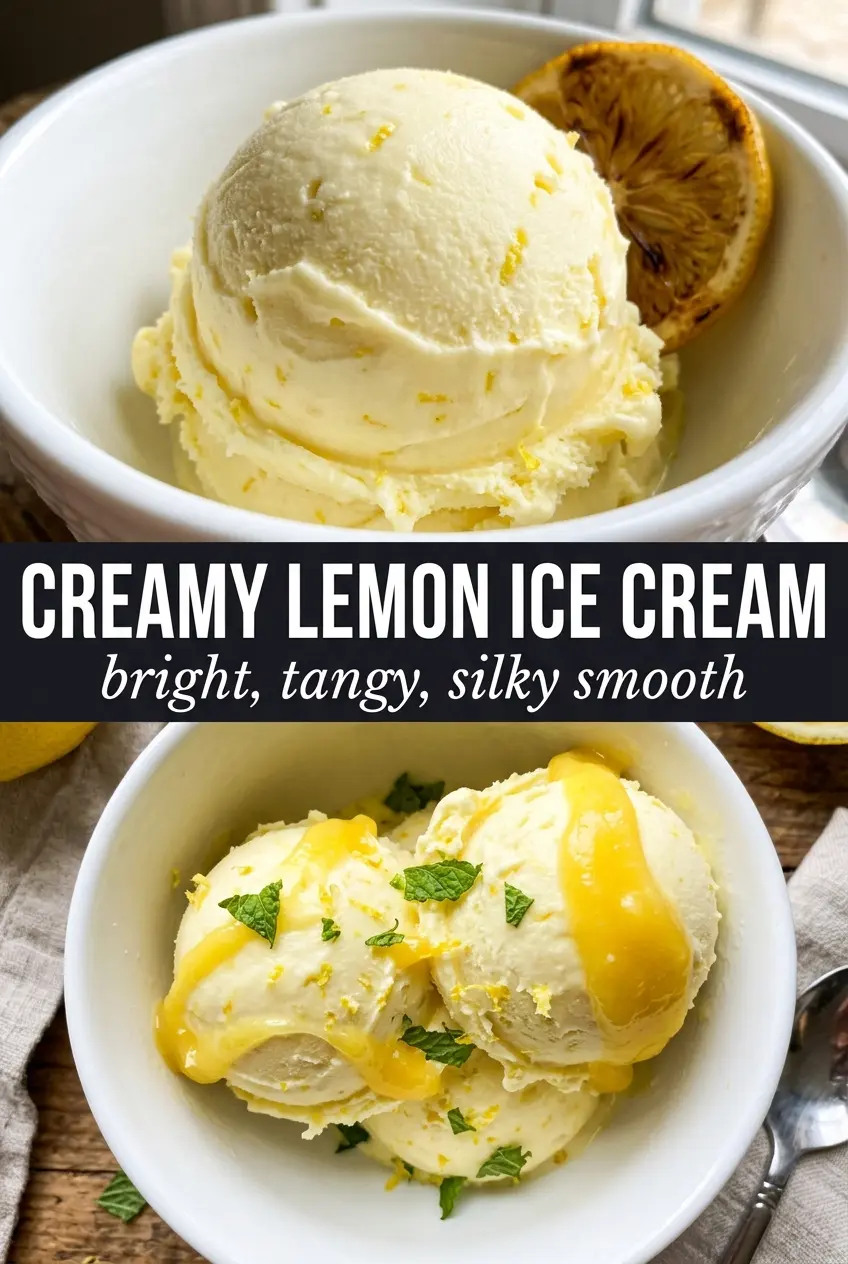
Creamy Lemon Ice Cream
Ingredients
Equipment
Method
- Heat the heavy cream and whole milk in a saucepan over medium heat until steaming, 3–5 minutes, with small bubbles forming at the edges (do not boil).
- In a bowl, whisk the egg yolks and granulated sugar until smooth, then slowly whisk the hot cream mixture into the yolks in a thin stream.
- Return the custard to the saucepan and cook over medium-low heat, stirring constantly, until it reaches 175°F, 8–12 minutes, and coats the back of a spoon.
- Strain the custard through a fine mesh sieve, 1–2 minutes, into a clean bowl for a silky texture.
- Stir in the fresh lemon juice, lemon zest, vanilla extract, and salt until fully combined, with the mixture turning a pale golden color.
- Cool completely over an ice bath, 10–15 minutes, stirring occasionally until the custard feels cool to the touch, then refrigerate at least 4 hours until thoroughly chilled.
- Churn the chilled custard in an ice cream maker until it thickens to the texture of soft-serve, 20–25 minutes, and holds ridges.
- Transfer to a freezer-safe container and freeze until firm, 2–4 hours, with the surface set and scoopable.