Ultra-creamy potato salad earns its place on the table when the dressing clings to every bite and the potatoes hold just enough shape to keep the bowl from turning mushy. This version lands in that sweet spot: rich, tangy, and sturdy enough for a cookout, but still soft and plush the way a proper potato salad should be.
The key is choosing potatoes that can soak up dressing without collapsing, then cooling them enough that the mayonnaise-based dressing stays thick instead of slipping off. A little sour cream sharpens the finish, yellow mustard keeps the salad from tasting flat, and the relish adds that classic sweet crunch people expect from a traditional bowl.
Below, you’ll find the small details that matter: how to keep the potatoes from breaking down, why the salad needs time in the fridge, and a few practical swaps if you want to adjust the texture or make it work with what you already have.
The dressing thickened up after chilling and the potatoes stayed creamy instead of turning watery. I used the relish exactly as written and got that classic deli-style taste I was hoping for.
Creamy Potato Salad with that thick, classic dressing and deli-style finish
The Reason Potato Salad Turns Watery Before It Ever Hits the Table
The biggest mistake with potato salad is dressing hot potatoes and calling it done. Steam keeps coming off the cubes long after they’ve been drained, and that moisture loosens the mayonnaise until the salad goes slack and glossy instead of creamy. Let the potatoes cool enough that they’re no longer shedding heat, then fold the dressing in gently so the cubes stay intact.
Russet potatoes are the right choice here because they break down a little at the edges and help thicken the salad naturally. That’s what gives this style its plush texture. If you use waxy potatoes, the salad stays firmer and cleaner, which is fine, but you lose some of that old-school creamy body that makes this bowl taste like the classic version people keep going back for.
- Cooling time matters — Warm potatoes absorb dressing unevenly and can turn it loose. A short rest after draining makes the texture far better.
- Gentle folding beats stirring — Spoon the dressing over the potato mixture and fold it in. Aggressive mixing breaks the cubes and turns the salad pasty.
- Chilling finishes the job — The salad thickens as it sits, and the flavors settle into each other instead of tasting separate.
What the Dressing Ingredients Are Doing in This Bowl
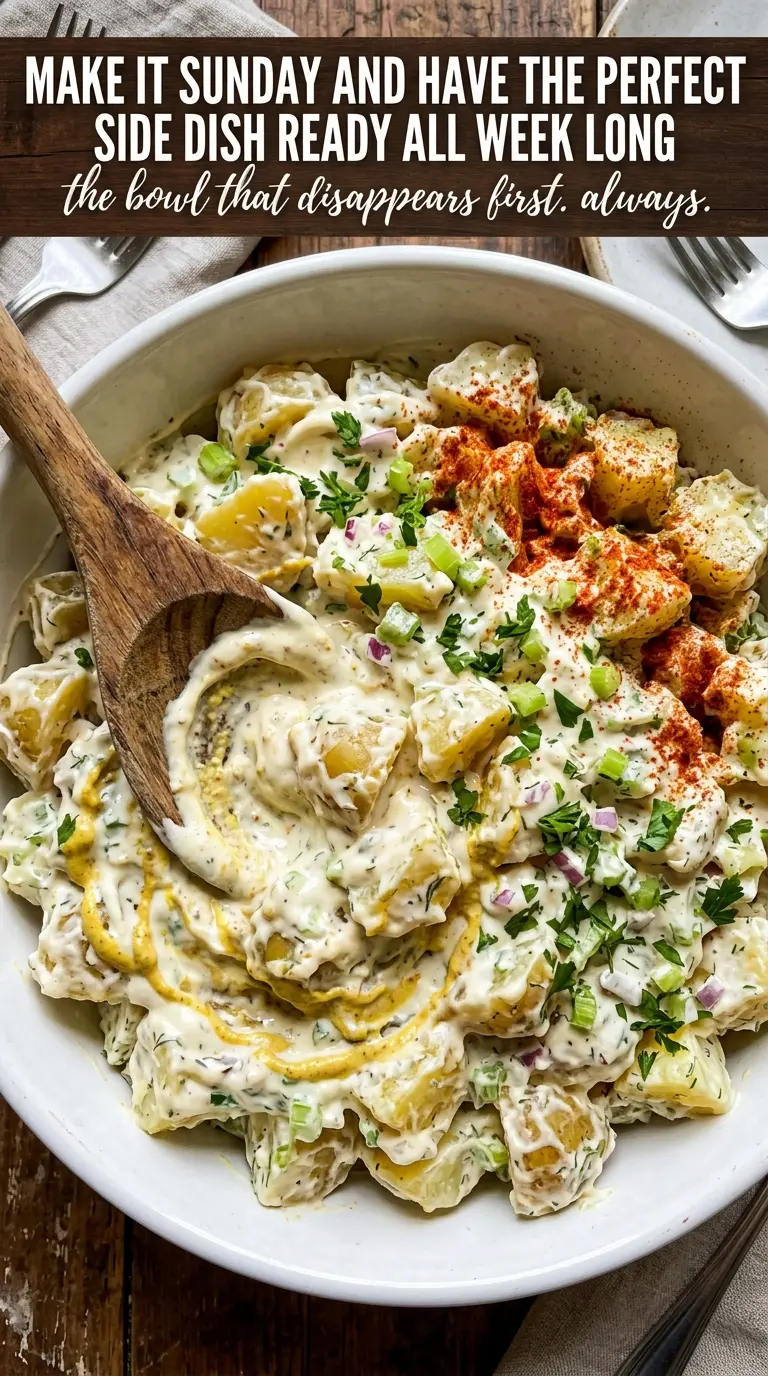
- Mayonnaise — This is the base that gives the salad its body and richness. Use a good full-fat mayo if you want that thick, stable texture; light mayo tends to taste thinner and can loosen more after chilling.
- Sour cream — It sharpens the dressing and keeps it from tasting heavy. You can swap in plain Greek yogurt, but the finish will be tangier and a little less velvety.
- Yellow mustard — This adds the familiar deli-style bite and keeps the salad from tasting flat. Dijon works in a pinch, but it pulls the flavor in a more adult, less classic direction.
- Sweet pickle relish — The sweet-tangy crunch is part of what makes this salad taste traditional. Drain it lightly if it looks watery, or it can thin the dressing more than you want.
- White vinegar and sugar — Together they brighten the dressing and round out the mustard and mayo. Don’t skip them; even small amounts make the whole bowl taste more finished.
The Quiet Steps That Give You a Creamy, Not Mushy, Salad
Boiling the Potatoes Until They Yield Cleanly
Start the potatoes in cold water and cook them until a fork slides in without resistance, but the cubes still hold their edges. If they’re cooked past that point, they’ll collapse when you fold in the dressing and the salad will turn gluey. Drain them well and let them steam off in the colander for a few minutes so excess water doesn’t end up in the bowl.
Mixing the Dressing Before It Touches the Potatoes
Stir the mayonnaise, sour cream, mustard, vinegar, sugar, salt, and pepper together in a separate bowl until the mixture looks smooth and uniform. That step keeps the seasoning even, so you don’t get pockets of mustard or sour cream in the finished salad. If the dressing tastes a touch sharper than you want, don’t fix it yet; the chilled potatoes will mellow it out.
Folding Everything Together Without Beating It Up
Add the potatoes, eggs, celery, onion, and relish to a large bowl, then pour the dressing over the top. Fold with a spatula until every piece is coated and the salad looks creamy, but stop before the potatoes start breaking apart. The texture should look thick and lush, not mashed; if it seems a little loose at first, the refrigerator will tighten it up.
Letting the Fridge Do the Final Work
Cover the bowl and chill it for at least 2 hours before serving. That rest lets the potatoes absorb the dressing and gives the salad its proper spoonable texture. If you taste it right after mixing, it’ll seem underdeveloped; after chilling, the mustard, pickle relish, and creamy base come together the way they should.
Dairy-Free Version With the Same Creamy Finish
Swap the sour cream for a dairy-free plain yogurt or an unsweetened vegan sour cream and use a mayonnaise made without eggs if needed. The salad still turns out creamy, but the flavor will be a little brighter and less rich than the original.
Firmer Potato Salad for Make-Ahead Serving
Use Yukon Gold potatoes instead of russets if you want cleaner cubes that hold up longer on a buffet. The salad won’t feel quite as plush, but it will slice and scoop more neatly after a full day in the fridge.
Lower-Tang, More Classic Picnic Flavor
Cut the vinegar back slightly and lean a little harder on the relish if you want a sweeter, old-fashioned picnic style. That gives you a softer finish and a less sharp bite, which works well when the salad is serving alongside smoky or salty mains.
Storage and Reheating
- Refrigerator: Store covered for up to 4 days. The salad gets a little tighter and more seasoned as it sits.
- Freezer: Don’t freeze it. The mayonnaise dressing separates and the potatoes turn grainy once thawed.
- Reheating: This salad is meant to be served cold. If it’s been in the fridge too long, let it sit out for 15 to 20 minutes before serving so the dressing loosens and the flavor opens up.
Answers to the Questions Worth Asking
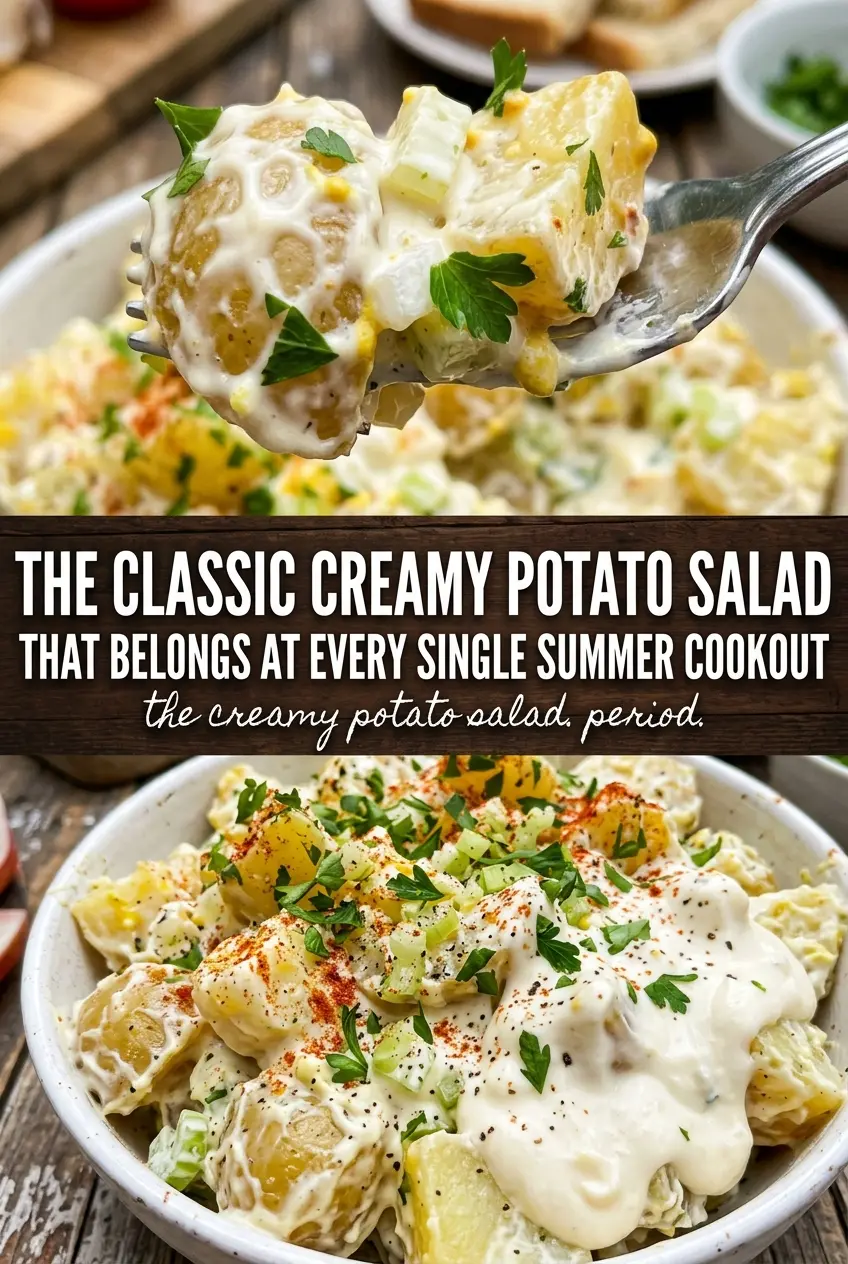
Creamy Potato Salad
Ingredients
Equipment
Method
- Bring a large pot of water to a boil in a Dutch oven, then add the peeled and cubed russet potatoes. Boil for 12-15 minutes, until a knife slides in easily with little resistance, and cover becomes slightly translucent around the edges.
- Drain the potatoes and cool them on a sheet pan for 10 minutes. Let the surface lose steam so the salad stays creamy rather than watery.
- Add the cooled potatoes to a mixing bowl, then fold in the chopped hard-boiled eggs, finely diced celery, finely diced onion, and sweet pickle relish. Stop when everything looks evenly distributed and no dry pockets remain.
- In the same bowl, whisk mayonnaise, sour cream, yellow mustard, white vinegar, sugar, salt, and pepper until smooth. The dressing should look glossy and pourable with no mustard streaks visible.
- Pour the dressing over the potato mixture and fold gently until every cube is coated. Keep folding slowly so the potatoes hold their shape while the texture turns very creamy.
- Cover and refrigerate the salad for at least 2 hours before serving. Chill until cold in the center and the dressing thickens to a smooth, clingy coating.